Photo: Wikipedia
Demographics of Gallup, NM
Affluence Level in Gallup, NM
A low-income area with significant economic hardship. Household wealth and educational attainment are well below national averages.
People of Gallup, NM
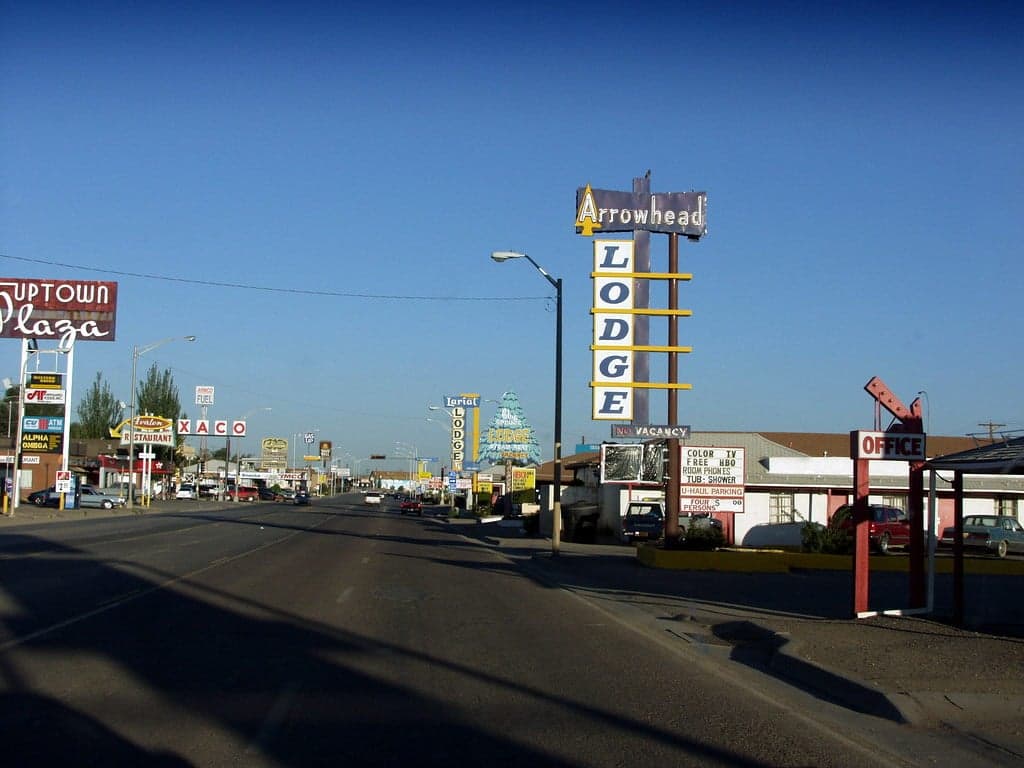
The people of Gallup, New Mexico, today form a community of roughly 21,333 residents defined by its role as a commercial and cultural hub for the surrounding Navajo Nation and Zuni Pueblo. The city is notably diverse, with a population that is 24.6% Hispanic, 17.6% White, and a significant Native American presence not fully captured in standard census categories, alongside small but established East/Southeast Asian (1.8%) and Indian subcontinent (1.8%) communities. Gallup’s identity is shaped by its location on historic Route 66 and the Burlington Northern Santa Fe railway, giving it a distinctive blend of frontier toughness, Native American heritage, and a working-class, politically moderate character. With only 22.6% of adults holding a college degree, the city leans practical and community-oriented, with a population density that feels compact and walkable in its historic core.
How the city was settled and grew
Gallup’s founding and early growth were driven entirely by the railroad and coal mining. Established in 1881 as a rail stop on the Atlantic and Pacific Railroad, the city was named after David Gallup, a paymaster for the railroad. The first wave of settlers were Anglo-American railroad workers and merchants, who built the Old Town district around the train depot, now a historic area with brick storefronts and saloons. Simultaneously, the discovery of coal in the nearby McKinley County coalfields drew a second wave: Mexican and Mexican-American laborers, who settled in what became Chaco Heights and the Southside neighborhoods, establishing the city’s enduring Hispanic community. By the early 1900s, the railroad also brought a small number of Chinese and Japanese workers, who formed a tiny enclave near the tracks in the Railroad District, though their numbers never rivaled those in larger Western cities. The Navajo and Zuni peoples, who had lived in the region for centuries, began moving into Gallup in significant numbers during the 1930s and 1940s, drawn by federal Indian relocation programs and jobs in the coal mines and railroad yards. They concentrated in the Navajo Addition and East Gallup neighborhoods, areas that remain heavily Native American today. By 1950, Gallup’s population had reached roughly 7,000, with a tri-ethnic character of Anglos, Hispanics, and Native Americans that would define the city for decades.
Modern era (post-1965)
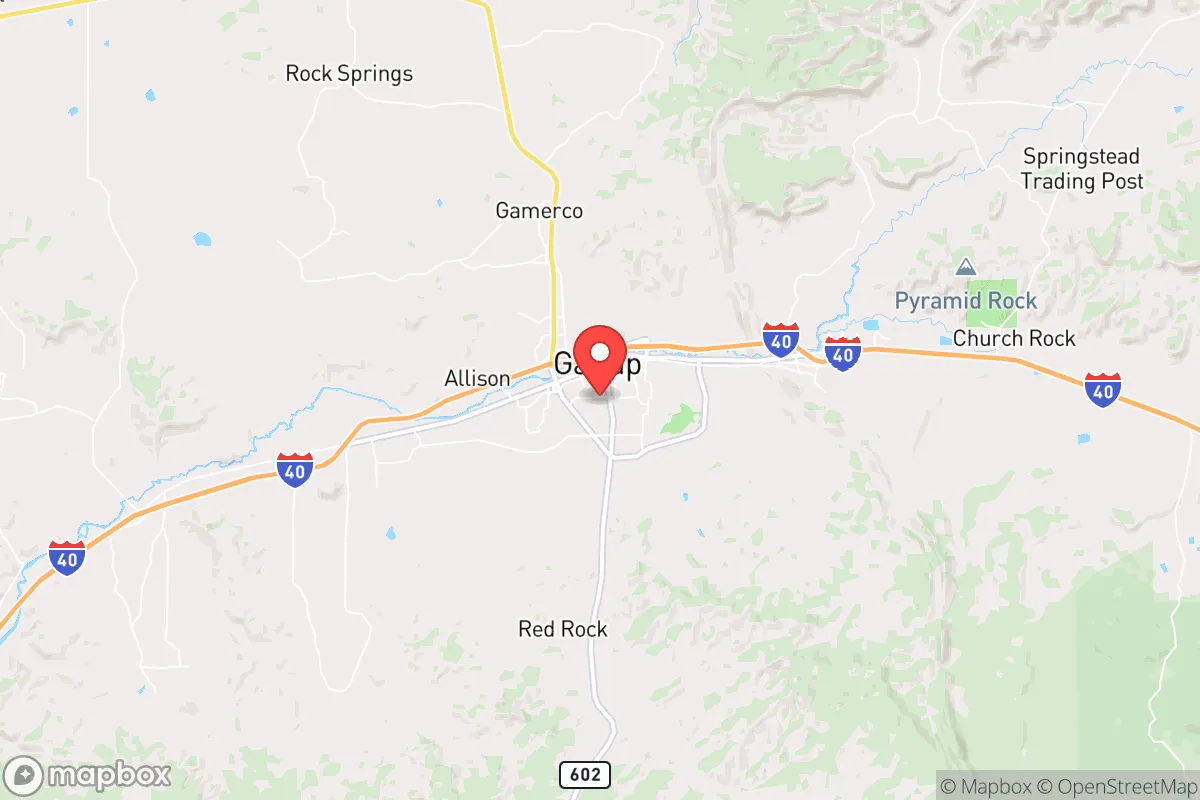
The post-1965 period brought significant demographic shifts, though not from the Hart-Cellar Act’s immigration reforms, which had minimal direct impact on this inland, non-agricultural city. Instead, the major change was the growth of the Native American population through higher birth rates and continued in-migration from the reservation. By the 1980s, Native Americans had become the largest single ethnic group in Gallup, though census data often undercounts them due to mixed-race reporting. The Hispanic population remained stable, concentrated in Chaco Heights and the Southside, while the White population began a slow decline as younger Anglos left for college and jobs in Albuquerque or Phoenix. The small East/Southeast Asian community, primarily Vietnamese and Filipino families, grew modestly after the Vietnam War, settling in the Westside near the hospital and the university branch campus. The Indian subcontinent community, mostly professionals in healthcare and motel management, arrived in the 1990s and 2000s, clustering in the Historic Route 66 corridor where many own motels and convenience stores. Suburbanization was limited; Gallup’s geography—hemmed in by mesas and the Navajo Nation—meant that new development pushed outward into areas like Mentmore and Sunset Hills, which attracted a mix of White and Hispanic middle-class families seeking newer homes and better schools.
The future
Gallup’s population is heading toward greater Native American plurality, with the White share likely to continue its gradual decline as older residents age out and younger ones leave. The Hispanic population is stable, with some assimilation into the broader working-class identity of the city. The East/Southeast Asian and Indian subcontinent communities are small but stable, with little new immigration due to the lack of high-skilled job growth; they are likely to plateau or slowly assimilate. The city is not tribalizing into distinct enclaves—neighborhoods like Navajo Addition remain heavily Native, but Chaco Heights and the Southside are increasingly mixed Hispanic and Native. The biggest demographic wildcard is the potential for new energy or manufacturing projects on the reservation, which could draw younger Native families back from cities. Over the next 10–20 years, Gallup will likely become more Native American and older, with a shrinking tax base unless economic diversification succeeds.
For someone moving in now, Gallup offers a community where Native American culture is central, Hispanic traditions are strong, and the White and Asian populations are small but established. It is a place where the railroad and coal economy have faded, but the people remain resilient, practical, and deeply rooted in the land. Newcomers should expect a slower pace, a tight-knit social fabric, and a population that values family, faith, and local loyalty over transient trends.

* Values derived from national, state, county, city and local statistics and may differ in a specific area. Last updated: 2026-05-04T02:06:52.000Z
Narrative content on this page is AI-generated and may contain mistakes. Verify any details that matter before acting on them.
ReloMaps may earn a commission from affiliate links at no extra cost to you.

