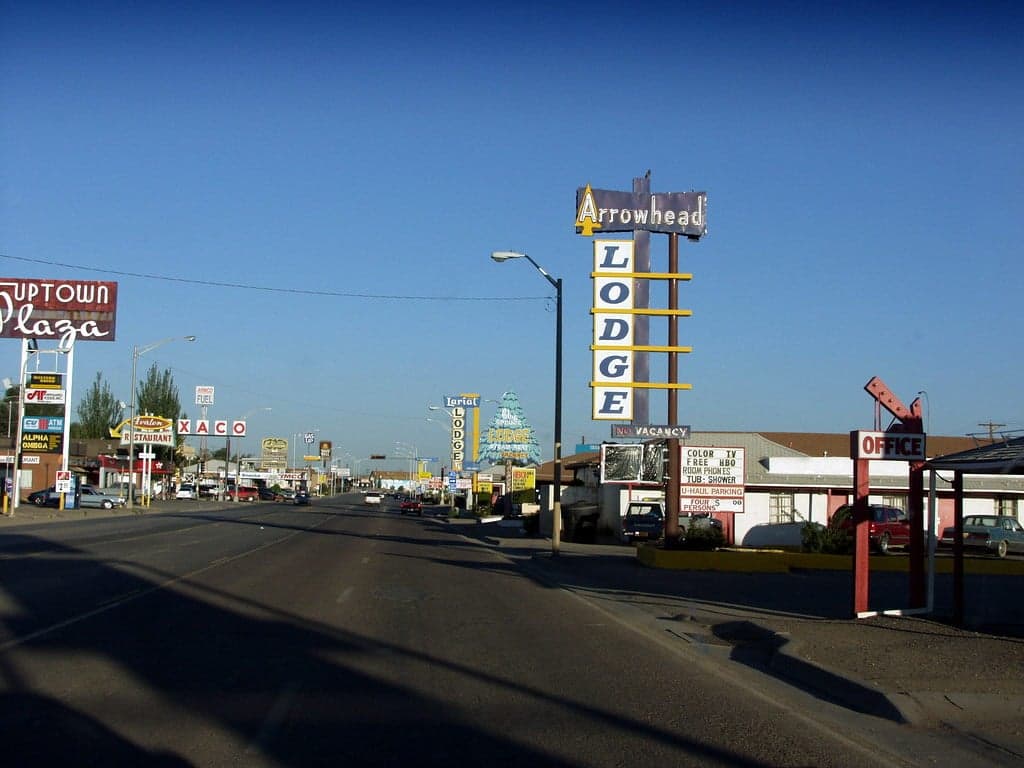
Photo: Wikipedia
Political ClimatePolitical Climate in Gallup, NM
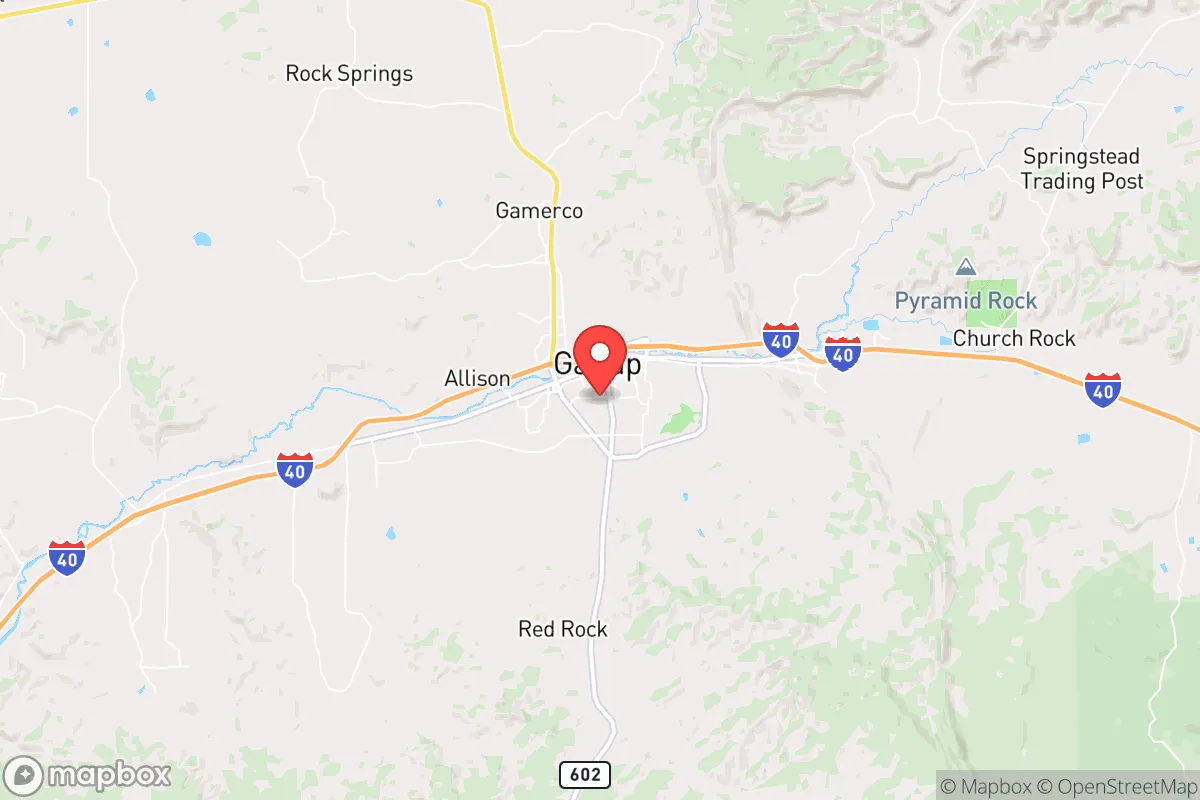
District shown is the primary district for this city’s centroid. Cities may span multiple districts.
Local Political AnalysisPolitical Analysis of Gallup, NM
Gallup, New Mexico, has a Cook PVI of D+3, meaning it leans Democratic by a modest three points compared to the national average, but that number doesn't tell the whole story of what it's like to live here. For a long time, this was a place where folks voted their conscience, not a party line—practical, independent, and wary of big government telling you how to run your life. But over the last decade or so, you've seen a real shift, with progressive policies creeping in from Santa Fe and even from some local council members who seem more interested in national trends than local common sense. The trajectory feels like it's heading toward more regulation, more taxes, and less room for the kind of personal freedom that made this area work for generations.
How it compares
Drive an hour east to Grants, and you'll find a town that's still pretty conservative—folks there value their Second Amendment rights and don't take kindly to government overreach. Same goes for Farmington, about two hours north, which is solidly red and feels like a different world. But Gallup sits right on the edge of the Navajo Nation, and that brings a unique political mix. The reservation has its own government and priorities, which often align with Democratic policies on federal funding and tribal sovereignty, but many Navajo families I know are deeply conservative on social issues—pro-life, pro-family, and skeptical of the federal government telling them what to do. The D+3 rating masks that tension; it's not a liberal stronghold by any stretch, but it's getting pulled left by outside money and state mandates. Surrounding McKinley County voted for Biden in 2020, but the margins were tighter than you'd expect for a D+3 area, and local elections often hinge on who promises to stay out of your business.
What this means for residents
For the average person living here, the biggest concern is how much the government is getting into your daily life. Property taxes have crept up, and there's talk of more zoning rules that would make it harder to run a small business out of your home or sell handmade goods at the flea market without a pile of permits. The school board has been pushing progressive curriculum changes that don't sit well with parents who want their kids taught basics, not ideology. And on the Second Amendment front, while New Mexico hasn't gone as far as some states, there's always a bill in Santa Fe trying to chip away at gun rights—magazine limits, red flag laws, that sort of thing. If you value personal responsibility and want to be left alone to raise your family your way, you're going to find yourself voting more and more against the tide in local elections. The long-term outlook? If the trend keeps up, Gallup could become a place where the government's hand feels heavier every year, and that's a real shame for a town that used to pride itself on self-reliance.
Culturally, Gallup still has a strong independent streak—you see it in the local rodeo, the gun shows, and the way people help each other out without asking for a handout. But there's a growing divide between the old-timers and the newcomers who moved here for the cheap housing and brought big-city ideas with them. Policy-wise, the biggest red flag is the push for "equity" initiatives in local government hiring and contracting, which sounds good on paper but often means more bureaucracy and less merit. If you're thinking of moving here, keep an eye on the city council meetings—if they start passing more ordinances that tell you what you can do on your own property, that's your sign the political climate is shifting in a direction you might not like.

State Political ClimatePolitical Climate in New Mexico
State Political AnalysisPolitical Environment in the State
New Mexico has been a reliably blue state in presidential elections since 2004, but don’t let that fool you—it’s a deeply divided place politically, and the leftward drift has accelerated in the last decade. The dominant coalition is a mix of urban progressives in Albuquerque and Santa Fe, unionized government workers, and a growing Hispanic electorate that leans Democratic, though many Hispanic voters in rural areas are more conservative on social issues. The state’s overall partisan lean is about D+6, but that masks a fierce urban-rural split and a recent trajectory that has seen the legislature pass a wave of progressive laws that would make a conservative’s hair stand on end.
Urban vs. rural divide
The political map of New Mexico is a tale of two worlds. The urban core—Albuquerque (Bernalillo County) and Santa Fe (Santa Fe County)—drives the state’s blue lean. Bernalillo County alone casts about a third of the state’s votes and went +18 for Biden in 2020. Santa Fe County is even more lopsided, voting +45 Democratic. These metros are home to the state’s government apparatus, the University of New Mexico, and a thick layer of nonprofit and arts professionals who push for progressive policies. Meanwhile, the rural eastern plains and southern counties—places like Lea County (Hobbs), Eddy County (Carlsbad), and Chaves County (Roswell)—are deep red, often voting 70-80% Republican. The oil and gas boom in the Permian Basin has made these areas economic powerhouses, and they resent the progressive agenda coming out of Santa Fe. Doña Ana County (Las Cruces) is a swing county, leaning blue but with a strong conservative Hispanic vote that keeps it competitive. The divide is stark: drive 30 minutes outside Albuquerque and you’re in Trump country.
Policy environment
New Mexico’s policy environment has shifted hard left in the last five years. The state has a progressive income tax (top rate 5.9%) and a gross receipts tax that can hit 9% in some cities, making it one of the higher-tax states in the Southwest. The regulatory posture is hostile to business—permitting for oil and gas can take months, and the state has imposed methane rules that go beyond federal standards. On education, the legislature passed a universal pre-K program and expanded funding for public schools, but school choice is virtually nonexistent; charter schools are limited, and there’s no voucher program. Healthcare is dominated by the state’s Medicaid expansion (over 40% of residents are on Medicaid), and the legislature recently passed a public option health insurance bill that could crowd out private plans. Election laws are a mixed bag: the state has same-day voter registration, automatic voter registration, and no voter ID requirement, which conservatives see as an integrity risk. The governor, Michelle Lujan Grisham, has used executive orders aggressively, including during COVID, which rankled many residents.
Trajectory & freedom
New Mexico is becoming less free by any conservative measure. The 2021 legislative session was a watershed: the state passed a red flag law (extreme risk protection orders) that allows police to seize firearms without a conviction, and a universal background check law for private gun sales. In 2023, the legislature banned carrying firearms at polling places and government buildings. On parental rights, the state passed a transgender youth sanctuary law in 2023 that blocks out-of-state parents from seeking legal action against New Mexico doctors who provide gender-affirming care to minors—a direct challenge to parental authority from other states. Medical autonomy took a hit with the state’s strict COVID mandates, which were among the longest-lasting in the country. Property rights are under pressure from a 2023 law that allows local governments to impose rent control, and the state’s Land Use Planning Act gives counties more power to restrict development. Taxation is creeping up: the state’s top income tax rate was cut slightly in 2022, but the gross receipts tax remains high, and a new wealth tax proposal is being floated for 2025. The trend is clear: more regulation, less individual liberty.
Civil unrest & political movements
New Mexico has seen its share of political flashpoints. The 2020 protests in Albuquerque over George Floyd’s death turned violent, with the city’s police department under federal consent decree for excessive force. The Sanctuary State law (2019) prohibits state and local law enforcement from cooperating with federal immigration authorities, which has created tension with border communities like Sunland Park and Columbus. In 2023, the governor declared a public health emergency over gun violence in Albuquerque, which critics saw as a pretext for restricting Second Amendment rights. On the right, the New Mexico Civil Guard and other militia groups have been active in rural areas, particularly around the Otero County area, where there was a standoff over a county commissioner’s refusal to certify 2022 election results. Election integrity remains a hot-button issue: the state’s use of same-day voter registration and lack of voter ID has led to lawsuits and accusations of fraud, though no major scandals have been proven. The 2022 Otero County election dispute was a national story, with the county commission initially refusing to certify primary results over Dominion voting machine concerns.
Projection
Over the next 5-10 years, New Mexico is likely to continue its leftward drift, but with a ceiling. The urban cores of Albuquerque and Santa Fe are growing slowly, while the rural oil and gas counties are actually losing population as automation reduces jobs. In-migration is coming from California and Colorado—people fleeing high costs but bringing progressive voting habits. The Hispanic vote, which has been trending Democratic, could shift if the national party moves too far left on cultural issues, but for now, the state’s Democratic machine is entrenched. The real wildcard is the Permian Basin economy: if oil prices crash, the rural red counties lose their economic leverage, and the state becomes even more dependent on federal spending (it’s already one of the most federally dependent states). A conservative moving in now should expect higher taxes, more gun restrictions, and a political environment where their voice is marginalized in state government. The state’s constitution does allow for ballot initiatives, but the legislature has made it harder to get them on the ballot.
For a conservative looking to relocate, New Mexico offers beautiful landscapes and a lower cost of living than neighboring Colorado or Arizona, but the political climate is a serious headwind. If you’re a single individual or parent who values gun rights, school choice, and low taxes, you’ll find yourself fighting an uphill battle in Santa Fe. The rural counties—Eddy, Lea, Chaves—are your best bet for a like-minded community, but you’ll still be subject to state laws that feel like they were written in Portland. Bottom line: New Mexico is a beautiful state with a broken political system, and it’s not getting fixed anytime soon. Come for the sunsets, but be ready to vote with your feet if the legislature keeps pushing.
* Values derived from national, state, county, city and local statistics and may differ in a specific area. Last updated: 2026-05-04T02:06:52.000Z
Narrative content on this page is AI-generated and may contain mistakes. Verify any details that matter before acting on them.
ReloMaps may earn a commission from affiliate links at no extra cost to you.

