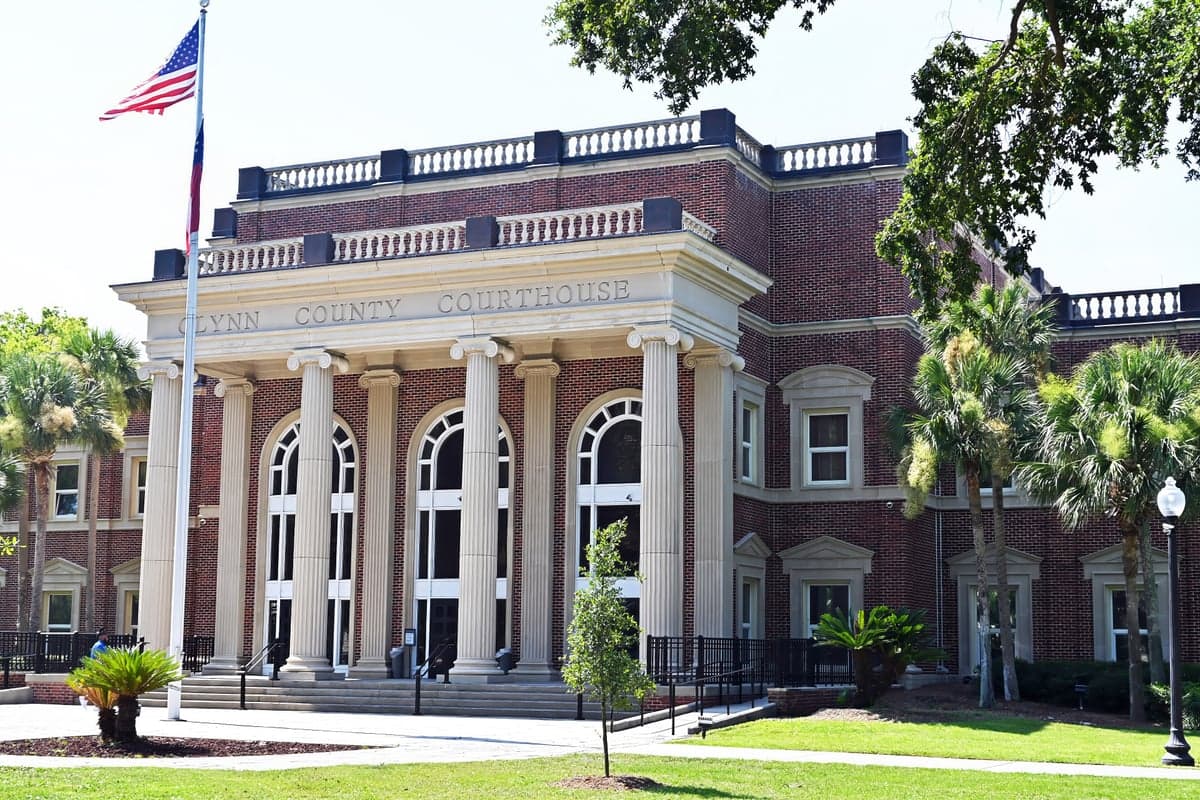

Photo: Wikipedia
Personal Sovereignty in Glynn County
Viable for self-reliance. Generally workable, though some barriers may limit total independence.
What does Personal Sovereignty tell us?
Personal Sovereignty measures your capacity for self-reliance and independence with minimal government friction. Higher scores mean fewer barriers between you and the way you want to live... but it assumes you have the space you need and good neighbors.
What does this tell us?
Personal Sovereignty measures your capacity for self-reliance and independence with minimal government friction. Higher scores mean fewer barriers between you and the way you want to live... but it assumes you have the space you need and good neighbors.
State Policy
Energy independence: Importer (12% of energy produced in-state)
Personal Liberty
Homesteading

Personal Liberty Analysis
Glynn County, Georgia, offers a notably higher degree of personal sovereignty than many coastal or metro-adjacent areas in the Southeast, largely due to Georgia’s generally permissive state-level framework on taxes, firearms, and property rights. However, the county’s autonomy environment is not uniform—it varies significantly between the city of Brunswick, the unincorporated areas like Sterling and Country Club Estates, and the more rural reaches near Darien and the Altamaha River basin. For a conservative-leaning individual or family prioritizing maximum personal freedom, the key is understanding where local ordinances and zoning codes either amplify or constrain the state’s baseline protections.
Tax burden and regulatory posture in Glynn County vs. surrounding areas
Georgia’s state-level tax structure is relatively friendly to personal sovereignty. There is no state estate tax, no intangible tax, and a flat income tax rate of 5.49% (as of 2026). Glynn County itself imposes a county sales tax of 7% (4% state, 3% local), which is standard for coastal Georgia but slightly higher than inland counties like Wayne or Appling. Property taxes are the main concern: the county’s millage rate for unincorporated areas hovers around 12.5 mills, while the City of Brunswick adds its own levy, pushing the combined rate closer to 15 mills. This means a $250,000 home in Brunswick carries roughly $3,750 in annual property tax, versus about $3,125 in unincorporated Sterling or the rural outskirts near St. Simons Island’s backside. Regulatory posture is generally light-touch in unincorporated areas—no county-wide building moratoriums, no stormwater utility fees (as of 2026), and no county-level rent control. However, the City of Brunswick enforces stricter rental inspection and short-term rental ordinances, which can feel like overreach to property-rights-minded individuals. The Georgia Department of Natural Resources also exerts significant authority over tidal creeks and marshlands, meaning any construction near the coast or the Altamaha River requires state permits—a notable constraint on land use that does not exist in inland counties like Toombs or Jeff Davis.
Self-defense and gun law specifics in Glynn County
Georgia is a constitutional carry state, meaning no permit is required to carry a concealed firearm for anyone 21 or older who is legally allowed to possess a gun. Glynn County’s sheriff’s office has historically been supportive of Second Amendment rights, with no county-specific restrictions on magazine capacity, firearm types, or storage requirements. The county does not impose a waiting period beyond the state’s background check system. However, there are practical differences by location. In Brunswick, discharging a firearm within city limits is prohibited except on a licensed range or in self-defense, which effectively limits backyard target practice. In unincorporated areas like Sterling, Country Club Estates, or the rural tracts near the Altamaha River, target shooting on private property is generally legal as long as it does not violate noise ordinances or endanger others. The Glynn County Police Department and the Brunswick Police Department both maintain a cooperative posture with law-abiding gun owners, but the county’s proximity to the federal port and the Glynco Naval Submarine Base means occasional federal law enforcement presence—something to consider for those with any legal complexities. Stand-your-ground laws apply statewide, and Glynn County courts have not shown a pattern of anti-self-defense bias in published rulings.
Self-reliance and homesteading viability: lot sizes, zoning, and off-grid feasibility
Homesteading viability in Glynn County is heavily location-dependent. In unincorporated areas, the minimum lot size for a single-family home is typically one acre in most residential zones, but agricultural zoning (A-1) requires a minimum of five acres. This makes the rural fringes near Darien, the Altamaha River corridor, and the western parts of the county near the Wayne County line the most viable for serious self-reliance. In these areas, keeping chickens, goats, and even a few head of cattle is generally permitted without a special use permit. Off-grid feasibility is mixed: Georgia law does not require connection to municipal water or sewer on rural parcels, but Glynn County’s environmental health department mandates a septic system permit and well water testing. Solar panels are allowed without county-level restrictions, but the county does enforce building codes for structural loads, so a DIY off-grid cabin still requires a permit. The City of Brunswick and the densely developed St. Simons Island have strict zoning that effectively prohibits homesteading—no livestock, no large gardens in front yards, and mandatory connection to municipal utilities. For a prepper or survivalist, the best parcels are in the unincorporated western half of the county, particularly around the Altamaha River Wildlife Management Area, where five-acre minimums and light enforcement create a de facto buffer from government oversight. However, note that the county does have a nuisance ordinance that can be used against unkempt properties, so a “wild” homestead may still draw complaints from neighbors.
Personal liberties: parental rights, medical autonomy, speech, and property
Georgia’s state-level protections for parental rights are strong. The Georgia Parental Rights Act (2022) gives parents the explicit right to direct the upbringing, education, and healthcare of their children, and Glynn County schools have not been a hotspot for controversial curriculum battles compared to metro Atlanta districts. Medical autonomy is more constrained: Georgia has a strict certificate-of-need (CON) law that limits the number of hospitals and surgical centers, which some view as a restriction on healthcare choice. However, the county has no local vaccine mandates or mask mandates as of 2026, and the Brunswick-Glynn County Health Department does not enforce any county-specific public health orders beyond state guidance. Speech is fully protected under the First Amendment, and Glynn County has no local ordinances restricting political signage or public assembly beyond standard time-place-manner rules. Property rights are generally strong, but there is a notable exception: the county’s land development regulations require a special use permit for any “home occupation” that generates customer traffic, which can be a barrier for those wanting to run a small business from a rural homestead. Additionally, the Georgia Department of Transportation has eminent domain authority for road projects, and the county has used it for the widening of Highway 17 and the Brunswick bypass—something to check before buying land near planned corridors.
Overall, Glynn County offers a solid baseline of personal sovereignty that is above average for coastal Georgia but below the libertarian-friendly environments of inland counties like Appling or Bacon. The main trade-off is access to the coast versus regulatory density: the rural western parts of the county near the Altamaha River provide the highest degree of autonomy for preppers and homesteaders, while the City of Brunswick and St. Simons Island impose more typical municipal constraints. For a conservative individual or family seeking a balance of economic opportunity, coastal access, and personal freedom, Glynn County is a viable choice—provided you choose your specific location carefully and avoid the more regulated enclaves.

* Values derived from national, state, county, city and local statistics and may differ in a specific area. Last updated: 2026-06-06T07:39:50.000Z
Narrative content on this page is AI-generated and may contain mistakes. Verify any details that matter before acting on them.
ReloMaps may earn a commission from affiliate links at no extra cost to you.

