

Photo by Joshua J. Cotten on Unsplash
Demographics of Gillis, LA
Affluence Level in Gillis, LA
A below-average socioeconomic profile. Incomes, home values, and educational attainment trail the U.S., with higher poverty and unemployment.
People of Gillis, LA
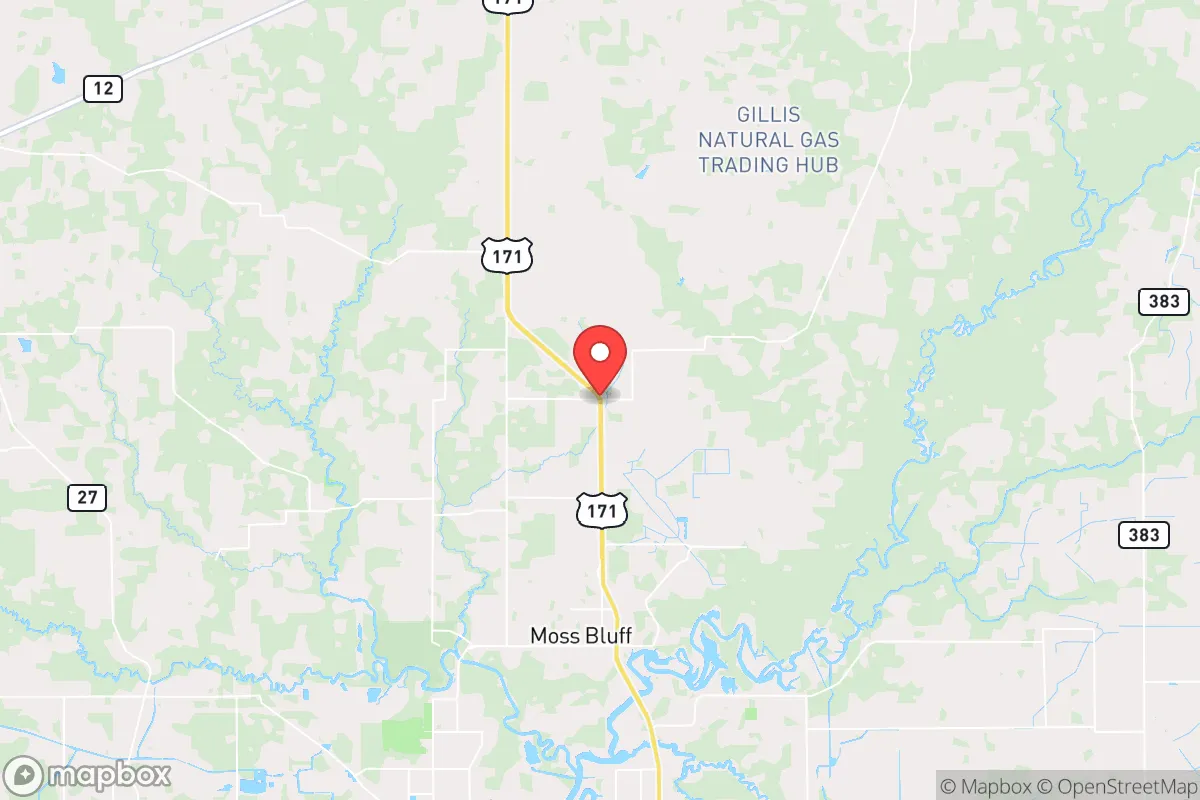
The 763 residents of Gillis, Louisiana form a small, tightly-knit community where racial homogeneity and low educational attainment define the population's character. With a population that is 88.5% White and 11.5% Black, and zero foreign-born residents, Gillis is a racially binary, non-diverse rural town where nearly everyone was born in the United States. The town's identity is rooted in its deep Southern heritage, with a distinctive lack of the suburban or immigrant-driven growth seen in larger Louisiana cities.
How the city was settled and grew
Gillis was founded in the late 19th century as a railroad stop along the Kansas City Southern Railway, which opened the area to timber and agricultural development. The original settlers were primarily Anglo-American farmers and loggers from the Deep South, drawn by cheap land and the promise of work in the pine forests and rice fields of Calcasieu Parish. The earliest neighborhoods, such as Old Gillis (the original cluster around the depot) and Railroad Row (the strip of homes and boarding houses along the tracks), were built by these working-class White families. A small Black population, comprising about 11% of the town's early residents, settled in the Back Quarters area (now often called South Gillis), a historically segregated enclave where descendants of sharecroppers and domestic workers lived. The town remained a quiet, rural hamlet through the Great Depression and World War II, with no significant industrial boom or land grant program altering its character.
Modern era (post-1965)
After the 1965 Hart-Cellar Act, Gillis experienced no immigration wave—the foreign-born population remains at 0.0% today. The post-1965 period instead saw domestic out-migration as young adults left for jobs in Lake Charles (15 miles south) or Houston. The town's Black population, which had been stable at roughly 12-15% through the 1970s, declined slightly as some families moved to larger cities for better opportunities. The Piney Woods Addition, a small subdivision built in the 1970s on the town's western edge, absorbed most of the new White families who moved in from surrounding rural areas. Meanwhile, South Gillis remained predominantly Black, though its population aged as younger generations left. The 2020s data shows a stark racial binary: no Hispanic, Asian, or Indian residents, and a White population that has held steady at nearly 89% for decades. The college-educated share is just 6.0%, reflecting a population that works primarily in blue-collar trades, agriculture, and local services.
The future
Gillis is homogenizing rather than diversifying. With zero foreign-born residents and no Hispanic or Asian growth, the town is becoming more racially binary over time. The White population is aging, and the Black population is slowly declining as younger Black residents move to Lake Charles or beyond. The Gillis Estates subdivision, a small development of single-family homes built in the 2010s, has attracted a few White families from outside the parish, but the overall population has shrunk from roughly 850 in 2000 to 763 today. The next 10-20 years will likely see continued population decline, with the town becoming older and more White, as the Black community's younger cohort leaves for urban centers. No significant immigrant or minority influx is expected, given the lack of economic drivers or housing stock to attract newcomers.
For someone moving in now, Gillis offers a stable, racially homogeneous, and deeply rooted community where change is slow and the population is shrinking. It is a place for those seeking a quiet, rural life with strong local ties, but not for anyone looking for diversity, educational opportunity, or a growing job market. The town's future is one of gentle decline, with its character remaining largely unchanged from its 20th-century roots.

* Values derived from national, state, county, city and local statistics and may differ in a specific area. Last updated: 2026-04-23T04:52:30.000Z
Narrative content on this page is AI-generated and may contain mistakes. Verify any details that matter before acting on them.
ReloMaps may earn a commission from affiliate links at no extra cost to you.

