
Photo by Joshua J. Cotten on Unsplash
Political ClimatePolitical Climate in Gillis, LA
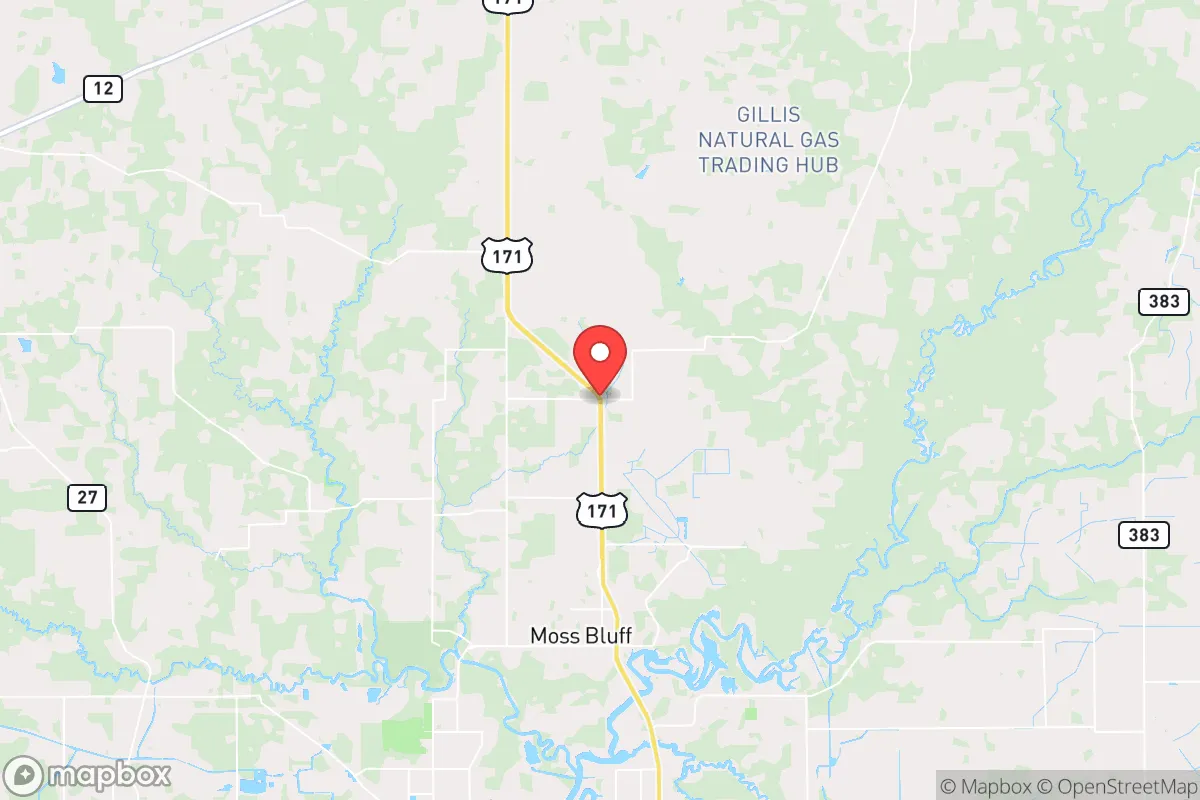
District shown is the primary district for this city’s centroid. Cities may span multiple districts.
Local Political AnalysisPolitical Analysis of Gillis, LA
Gillis, Louisiana, sits deep in the heart of Cajun country, and politically, it’s about as red as the crawfish boils that define the local culture. With a Cook Partisan Voting Index of R+26, this isn’t just a conservative area—it’s one of the most reliably Republican pockets in the state, and that’s been the case for as long as anyone can remember. The trajectory here is steady, but there’s a quiet unease among folks who’ve watched nearby Lake Charles and even smaller towns like Sulphur start to flirt with more progressive policies, especially around energy regulation and local zoning. For now, Gillis holds firm, but the winds of change are blowing from the coast, and not everyone is comfortable with where they’re headed.
How it compares
When you stack Gillis up against its neighbors, the contrast is stark. Lake Charles, just a 20-minute drive south, has a Cook PVI of R+15—still solidly red, but noticeably less so than Gillis. That gap reflects a real cultural divide: Lake Charles has seen an influx of out-of-state workers tied to the petrochemical and casino industries, bringing more diverse political views and a push for things like expanded public transit and downtown redevelopment. Head east to Lafayette, and you’re looking at a college town with a PVI around R+18, where the University of Louisiana campus injects a steady dose of progressive energy into local elections. Gillis, by contrast, remains a rural stronghold where the Second Amendment isn’t debated, property rights are sacred, and the idea of government telling a farmer what he can do with his land is met with a hard “no.” The surrounding Calcasieu Parish votes red, but Gillis is the anchor—the place where conservative values aren’t just a preference, they’re the baseline.
What this means for residents
For the people who live here, the political climate translates into a daily life that feels, for now, free from the kind of government overreach that’s creeping into bigger cities. You won’t find mask mandates or vaccine passports being enforced at the local diner, and the school board isn’t entertaining critical race theory or gender ideology in the curriculum. Property taxes stay low, and there’s no appetite for the kind of zoning laws that would tell a family they can’t keep a boat in the front yard or run a small welding shop out of their barn. But here’s the worry: as the state legislature in Baton Rouge gets more pressure from national progressive groups, there’s a real fear that mandates on energy production or land use could trickle down. The long-term concern is that Gillis could lose its character—not through a sudden political flip, but through a slow erosion of local control. If you value being left alone to live your life without a bureaucrat’s permission slip, this is still one of the best places in Louisiana to do it, but you’ve got to keep an eye on the ballot box every election cycle.
Culturally, Gillis stands apart from its neighbors in a few key ways. The local economy is still rooted in agriculture and small-scale oilfield work, not the corporate energy giants that dominate Lake Charles. That means the politics here are personal—your neighbor’s vote affects your livelihood directly. There’s also a strong Catholic and Baptist influence that shapes community norms, from Sunday closures to a general skepticism of government programs that promise help but deliver strings. The biggest policy distinction is the near-total absence of any progressive tax or spending initiatives; the parish keeps its budget lean, and the expectation is that families handle their own problems. If you’re looking for a place where the government stays out of your business and the people next door share your values, Gillis is a rare holdout. Just don’t expect it to stay that way without a fight.

State Political ClimatePolitical Climate in Louisiana
State Political AnalysisPolitical Environment in the State
Louisiana has long been a reliably Republican state at the presidential level, voting for the GOP candidate in every election since 2000, but it’s far from a monolithic red bastion. The state’s political climate is a complex mix of deep-red rural conservatism, culturally distinct Cajun and Creole regions, and a few stubbornly Democratic urban strongholds, particularly in New Orleans and Baton Rouge. Over the last 20 years, the overall partisan lean has shifted rightward, driven by the exodus of moderate white Democrats from the party and the growing influence of evangelical and pro-business coalitions, but the state’s unique history of populism and corruption means the political landscape is less about ideological purity and more about local personalities and patronage networks.
Urban vs. rural divide
The political map of Louisiana is starkly divided. The rural parishes—like Rapides (Alexandria), Ouachita (Monroe), and Bossier (Bossier City)—are reliably Republican, often delivering 70-80% of the vote for GOP candidates. These areas are driven by evangelical churches, oil and gas interests, and a strong gun culture. In contrast, Orleans Parish (New Orleans) is a deep-blue enclave, consistently voting 80%+ Democratic, powered by a large African American population, progressive white transplants, and a strong union presence in the port and tourism sectors. East Baton Rouge Parish (Baton Rouge) is a bellwether, swinging between parties depending on the race, but trending blue as the state capital’s government and university workforce grows. The Acadiana region, centered on Lafayette, is a fascinating mix—culturally Cajun and historically Democratic, but now reliably Republican in federal elections, though local races often hinge on family names and oil industry ties rather than national party labels. The Northshore suburbs of New Orleans, like Covington and Mandeville, have become a conservative stronghold as white flight from the city accelerated after Hurricane Katrina.
Policy environment
Louisiana’s policy environment is a mixed bag for conservatives. On the plus side, the state has no personal property tax, and the homestead exemption shields the first $75,000 of a home’s value from parish property taxes. The corporate tax rate was cut from 8% to 4% in 2022, and the state has a right-to-work law, keeping union influence relatively weak outside of New Orleans and Baton Rouge. However, the state’s sales tax burden is among the highest in the nation, with combined state and local rates often exceeding 10%. Education policy is a bright spot: Louisiana has a robust school choice program, including the Louisiana Scholarship Program (vouchers) and a thriving charter school sector, especially in New Orleans, which is now nearly 100% charter. On the concerning side for conservatives, the state’s healthcare system is heavily reliant on the Medicaid expansion under the Affordable Care Act, which then-Governor Bobby Jindal initially rejected but was later accepted by Governor John Bel Edwards. This has created a large government-dependent population. Election laws are relatively secure—voter ID is required, and the state uses paper ballots—but the closed primary system for state and local offices (only registered party members can vote in their party’s primary) can frustrate independents.
Trajectory & freedom
On personal freedom, Louisiana has moved in a decidedly conservative direction over the past decade, but with some worrying caveats. The state enacted constitutional carry (permitless concealed carry) in 2021, a major win for gun rights. In 2024, the legislature passed a near-total abortion ban with no exceptions for rape or incest, which aligns with the state’s strong pro-life stance. Parental rights were bolstered by the Parents’ Bill of Rights (Act 466 of 2023), which requires schools to notify parents of any changes to a child’s mental, emotional, or physical health—a direct response to transgender policies. However, the state’s freedom is undermined by its high incarceration rate (the highest in the world per capita), driven by harsh sentencing laws and a lucrative private prison system. The Louisiana Justice Reinvestment Task Force has made modest reforms, but the state still locks people up at alarming rates for nonviolent offenses. Property rights are generally strong, but the state’s coastal erosion crisis has led to aggressive government action on land use and oil and gas regulations, which some landowners see as overreach. The state also has a strong eminent domain record, often used for industrial projects like the Dr. Martin Luther King Jr. Bridge expansion in Baton Rouge.
Civil unrest & political movements
Louisiana has a history of political flashpoints, but recent years have been relatively quiet compared to other states. The Black Lives Matter protests in 2020 were significant in New Orleans and Baton Rouge, particularly after the death of Alton Sterling in 2016, but they did not reach the scale or destruction seen in Portland or Seattle. The state has seen a rise in election integrity activism since 2020, with groups like the Louisiana Election Integrity Network pushing for stricter voter roll maintenance and audits. Immigration politics are less heated here than in border states, but there is growing concern about sanctuary city policies in New Orleans, where the city council passed a resolution in 2023 limiting cooperation with ICE. The secessionist rhetoric that flares up in Texas is largely absent in Louisiana, though there is a strong nullification tradition—the state has passed laws asserting the right to ignore federal gun control mandates. The most visible political movement is the Coastal Protection and Restoration Authority, which has become a powerful, quasi-governmental entity that often clashes with local landowners over flood control projects.
Projection
Over the next 5-10 years, Louisiana is likely to remain a Republican-leaning state, but the margin may narrow slightly as New Orleans continues to attract progressive transplants and the Baton Rouge area becomes more diverse. The Northshore and Acadiana will remain conservative anchors, but the state’s population decline (it lost a congressional seat after the 2020 census) means the political power of rural areas is shrinking relative to the growing suburbs. The biggest wildcard is the coastal crisis: as more land is lost, the state government will be forced to spend billions on infrastructure, potentially raising taxes or cutting services. The oil and gas industry, which has long been the state’s economic and political backbone, is facing long-term decline due to the global energy transition, which could shift the political calculus. For a conservative moving in now, expect the state to remain a solidly red vote in presidential elections, but with more competitive state-level races as the Democratic base in New Orleans and Baton Rouge grows. The school choice and gun rights gains are likely safe, but the Medicaid expansion and high sales taxes are structural issues that won’t be easily reversed.
For a new resident, the bottom line is that Louisiana offers a genuinely conservative culture in most of the state, with low property taxes, strong gun rights, and school choice. But you’ll also have to contend with a high sales tax burden, a government that is often inefficient and corrupt (the state consistently ranks near the bottom in transparency), and a healthcare system that is heavily dependent on federal dollars. If you’re moving to Lafayette or Bossier City, you’ll find a community that shares your values. If you’re considering New Orleans, be prepared for a blue island with its own unique political culture. The state is not trending toward the progressive chaos of California or New York, but it’s also not the libertarian paradise some might hope for—it’s a deeply Southern, pragmatic conservatism that values tradition and local control, even if it sometimes comes with a side of inefficiency.
* Values derived from national, state, county, city and local statistics and may differ in a specific area. Last updated: 2026-04-23T04:52:30.000Z
Narrative content on this page is AI-generated and may contain mistakes. Verify any details that matter before acting on them.
ReloMaps may earn a commission from affiliate links at no extra cost to you.

