Photo: Wikipedia
Demographics of Glenarden, MD
Affluence Level in Glenarden, MD
A middle-class area roughly in line with national averages across income, home values, education, and employment.
People of Glenarden, MD
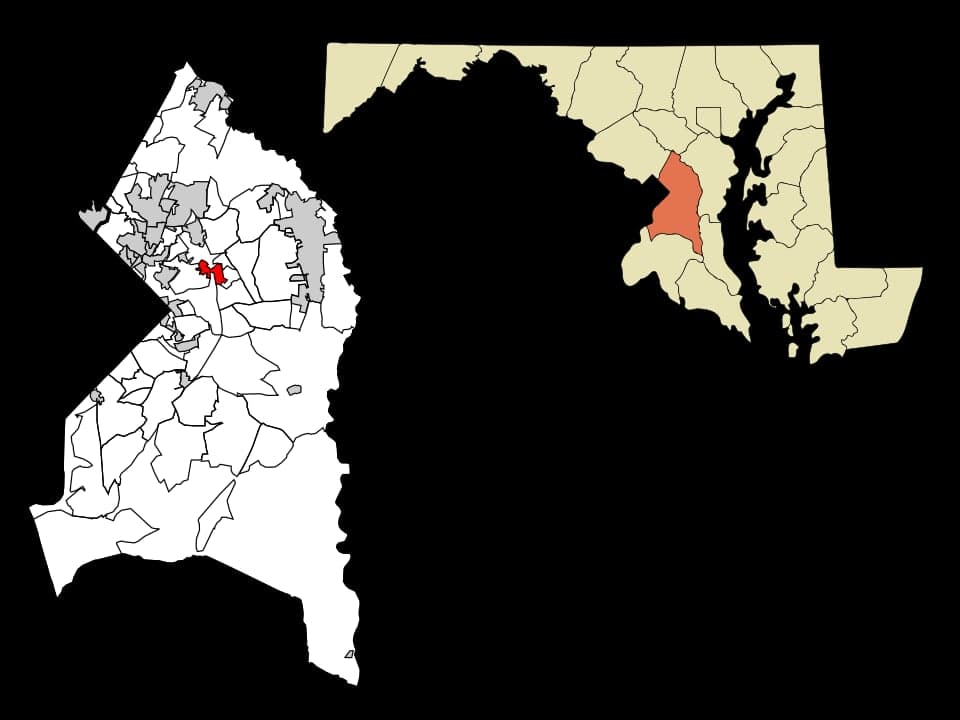
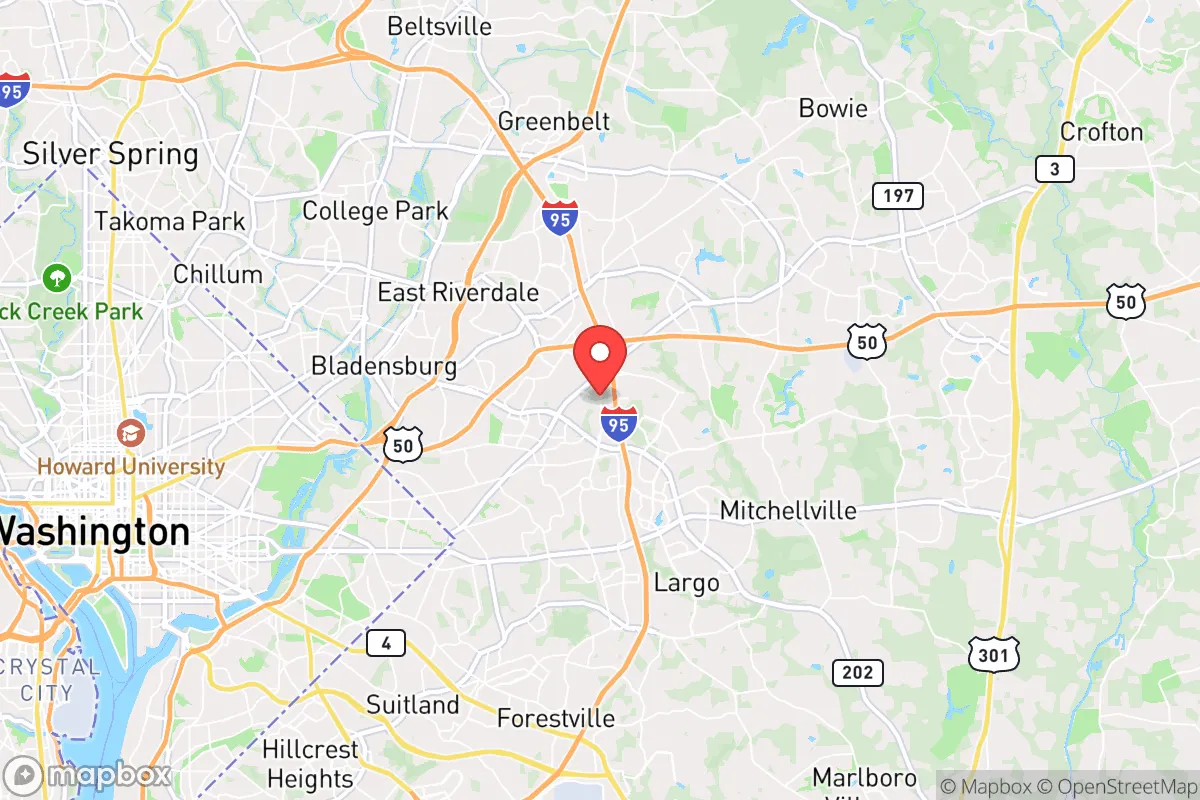
Glenarden, Maryland, is a predominantly Black, middle-class suburb of 6,320 residents, with a distinctive identity as a historically Black-planned community that has maintained its core character even as its Hispanic population has grown to nearly 18%. The city is densely settled—roughly 2,500 people per square mile—and its residents are notably well-educated, with 36% holding a bachelor’s degree or higher, well above the national average. Today, Glenarden feels like a stable, family-oriented enclave where homeownership is high and the legacy of its founding as a haven for Black professionals remains visible in its architecture and civic life.
How the city was settled and grew
Glenarden was founded in 1919 as one of the earliest planned suburban communities for African Americans in the Washington, D.C., region. The land, originally part of a larger tract owned by the Glenarden Development Corporation, was subdivided and sold to Black families who were systematically excluded from white suburbs due to racially restrictive covenants. The original settlers were largely domestic workers, Pullman porters, and government employees who commuted to D.C. via the nearby Pennsylvania Railroad station. The earliest neighborhoods—Glenarden Heights and Glenarden Hills—were built by these families, many of whom constructed their own homes with help from church congregations and mutual-aid societies. By the 1940s, the city had become a tight-knit community of roughly 500 residents, almost entirely Black, with its own schools, churches, and small businesses along Glenn Dale Road.
Modern era (post-1965)
The 1965 Hart-Cellar Act and the Fair Housing Act of 1968 reshaped Glenarden’s demographics, though less dramatically than in many neighboring suburbs. The city’s Black majority remained intact, but the character shifted as second- and third-generation residents moved outward to newer subdivisions in Prince George’s County, while new Black middle-class families—many from D.C. and the Caribbean—moved in. The Ardwick-Ardmore area, annexed in the 1970s, absorbed many of these newcomers, bringing a more diverse Black population that included immigrants from Jamaica, Haiti, and West Africa. The Hispanic population began to grow noticeably after 2000, concentrated in the Glenarden Woods and Enterprise Estates neighborhoods, driven by employment in construction, landscaping, and service industries tied to the D.C. metro economy. Today, the city’s foreign-born share stands at 13.4%, with most immigrants arriving from Central America and the Caribbean, not from Asia or the Indian subcontinent (East/Southeast Asian: 0.4%; Indian: 0.0%).
The future
Glenarden’s population is likely to remain predominantly Black, but the Hispanic share—now 17.8%—is projected to grow modestly over the next decade, driven by family reunification and the area’s relative affordability compared to closer-in D.C. suburbs. The city is not tribalizing into distinct ethnic enclaves; rather, Hispanic families are dispersing across existing neighborhoods, particularly in Glenarden Woods and the newer Woodmore Towne Centre area, where mixed-income townhomes have been built. The Black population, while still the overwhelming majority (74.8%), is aging slightly, as younger Black professionals increasingly choose newer subdivisions in Bowie or Upper Marlboro. The white population (2.6%) is negligible and stable, mostly long-term residents who predate the city’s Black majority. No significant Asian or Indian growth is expected given the data. The city’s future is one of slow, organic diversification within a Black-led civic framework—not rapid ethnic turnover.
For a conservative-leaning mover—whether single or raising a family—Glenarden offers a stable, safe, and historically rooted community where property values have appreciated steadily (median home value ~$350,000) and crime rates are low relative to Prince George’s County averages. The city is becoming slightly more Hispanic but remains overwhelmingly Black and middle-class, with a strong sense of local identity and minimal cultural friction. It is not a melting pot in the traditional sense, but a place where one dominant group has successfully integrated a growing minority without losing its character. If you value a community with deep institutional memory, good schools (Glenarden Woods Elementary is highly rated), and a quiet suburban lifestyle within 30 minutes of D.C., this is a practical choice—not a trendy one.

* Values derived from national, state, county, city and local statistics and may differ in a specific area. Last updated: 2026-04-19T07:41:47.000Z
Narrative content on this page is AI-generated and may contain mistakes. Verify any details that matter before acting on them.
ReloMaps may earn a commission from affiliate links at no extra cost to you.

