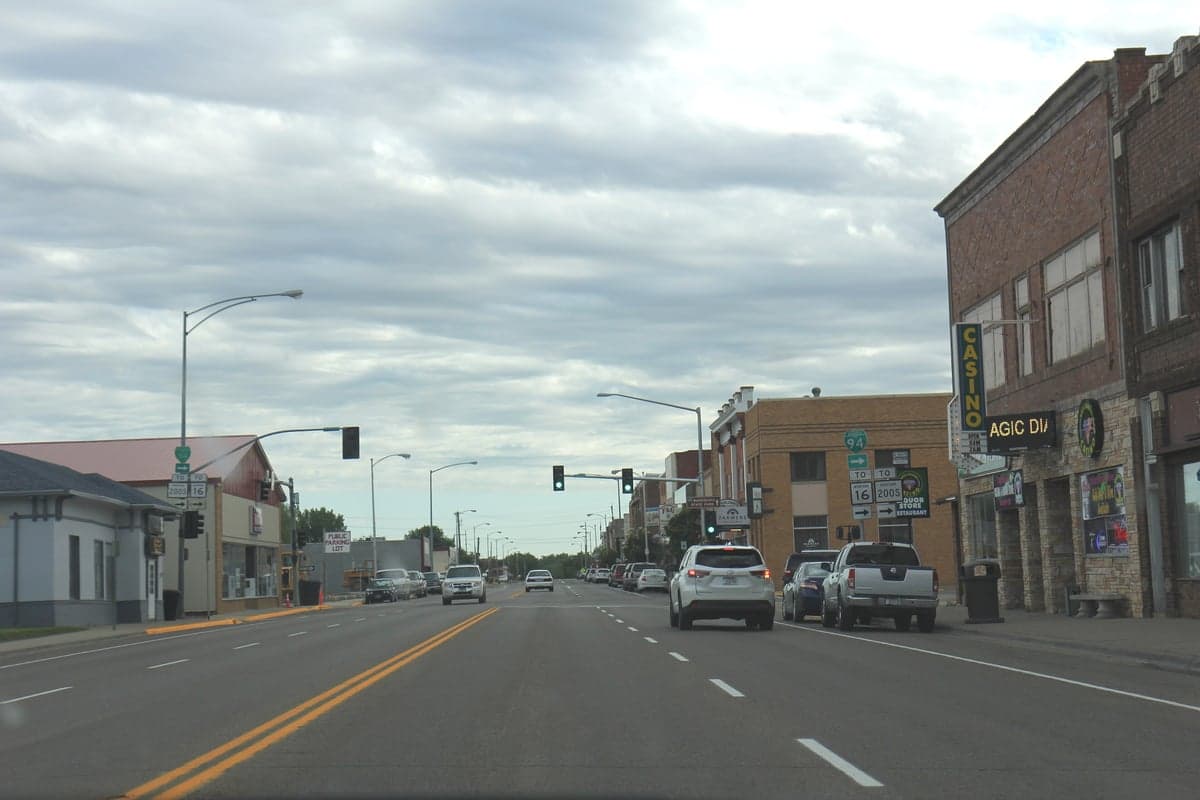
Photo: Wikipedia
Strategic Assessment of Glendive, MT
Workable tactical position. Some exposure to population density or targets, but generally defensible in a crisis.
What does the Strategic Assessment tell us?
Our Strategic Assessment grades tactical survivability of an area. Major population centers, military targets, fallout zones, natural disasters, and border exposure all drive risk — lower exposure means a more defensible position in a crisis.
This is heavily inspired by Joel Skousen's Strategic Relocation book. Highly recommended you checkout the book ($)What does this tell us?
Our Strategic Assessment grades tactical survivability of an area. Major population centers, military targets, fallout zones, natural disasters, and border exposure all drive risk — lower exposure means a more defensible position in a crisis.
This is heavily inspired by Joel Skousen's Strategic Relocation book. Highly recommended you checkout the book ($)Strategic Pillars

Key Distances
Regional Safe Places
Below is our recommended "safe zones" in Montana and the surrounding area based on our strategic heuristics. For most people, it's unrealistic to live in a “safe zone” full-time due to work, family or other personal reasons. They tend to be more rural. However, many of these areas are perfect for second homes and retreat properties that double as a vacation home or even a short-term rental.
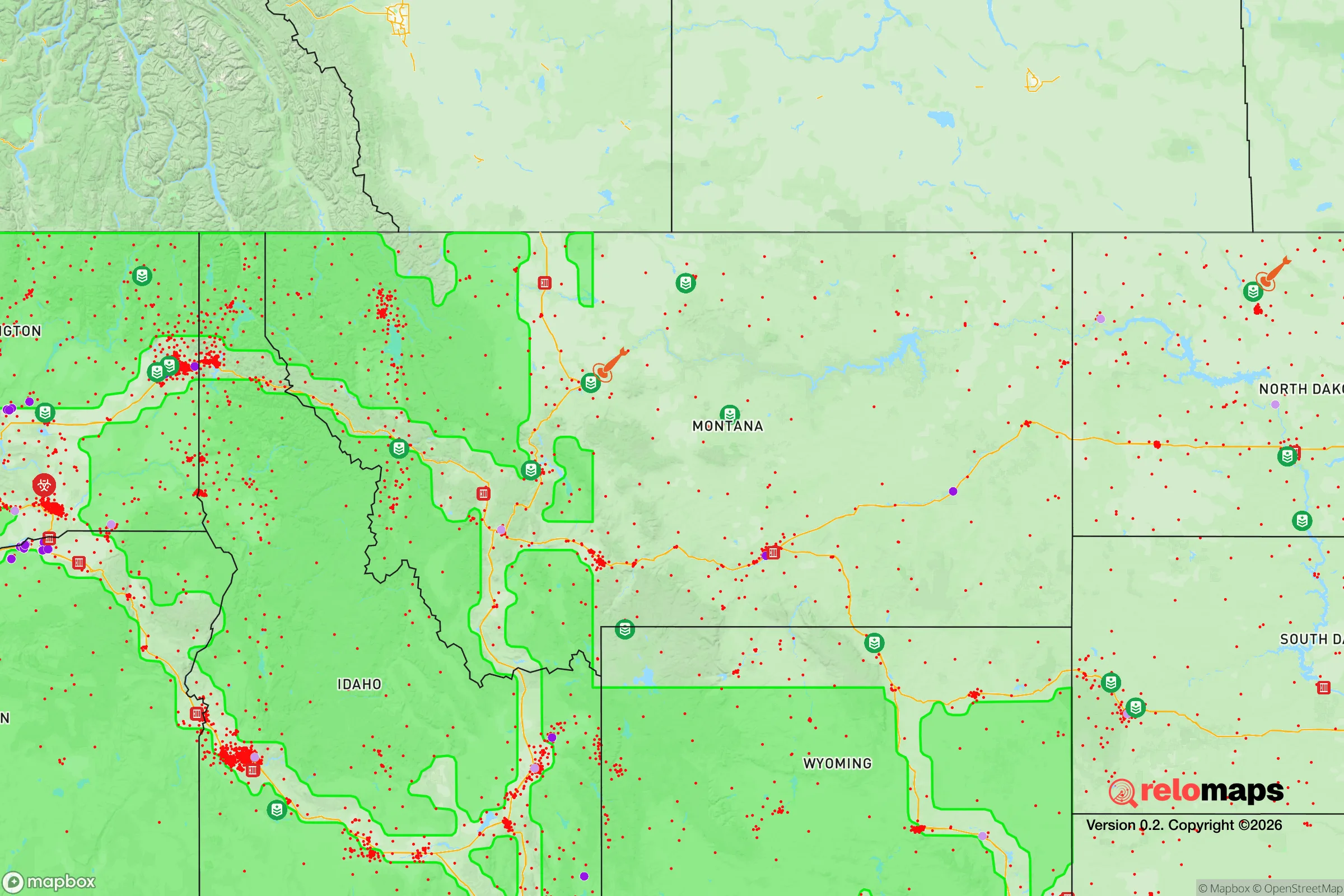


Important Note: For informational purposes only. This does not mean nothing bad ever happens in the green zones. Please use common sense. This is based on public data and modeled with AI. We tried to take a conservative approach but mistakes happen. We update this regularly as new information becomes available.
Solar Generator Recommendations
Backup power matters more here than in safer locations. We've picked three solar generators across budgets and capacity tiers — start with the budget unit if you only need a few essentials, or step up if you want to run a fridge and HVAC for days at a time.

Jackery Portable Power Station Explorer 300
Budget OptionPower on the Go: Weighing only 11 lbs, it's convenient to set up and store with book-sized foldable solar panels

BLUETTI Portable Power Station AC180
Designed for both indoor and outdoor scenarios, AC180 is highly capable as it has a robost capacity and continuous output power.

EF ECOFLOW DELTA Pro Ultra Power Station
Upgraded PickEcoFlow DELTA Pro Ultra is a whole-home energy system designed to grow with your family. Integrated with the Smart Home Panel 2, it scales to meet your evolving energy needs — keeping your home powered, intelligent, and secure through every stage of life.
We earn a commission, at no additional cost to you.
Strategic Assessment Analysis
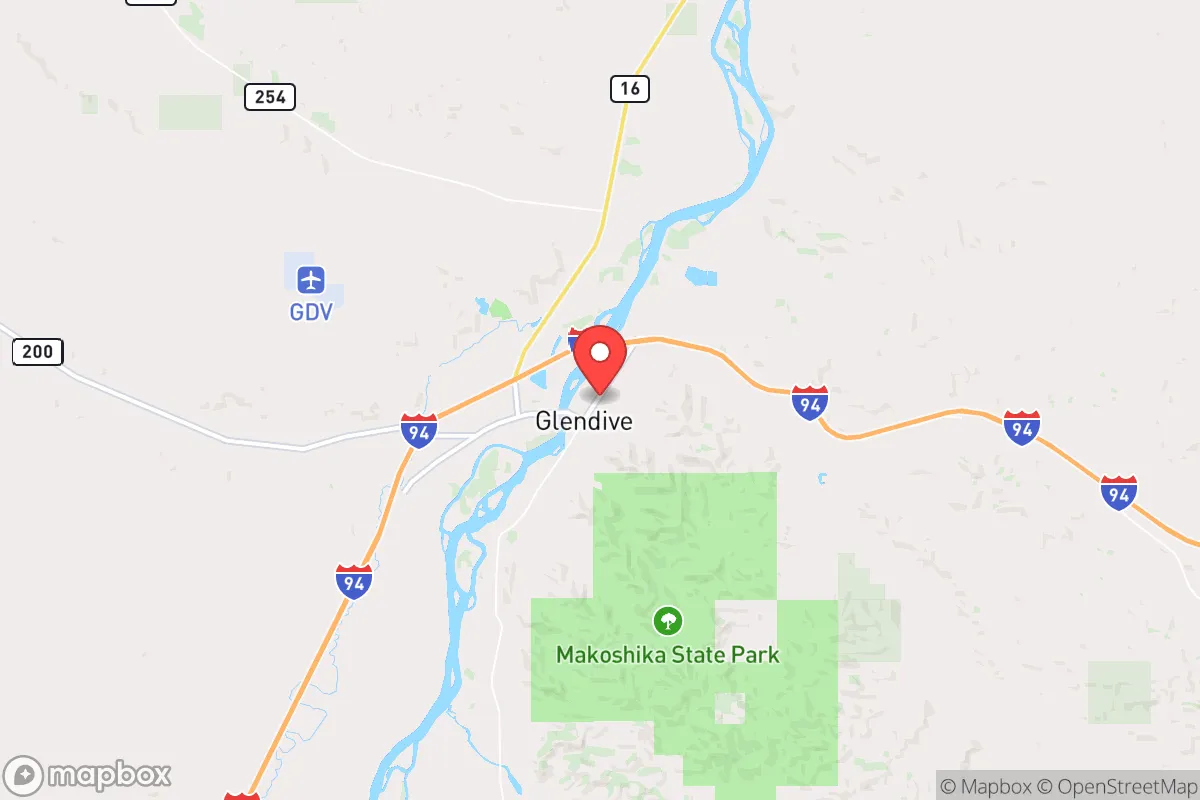
Glendive, Montana, sits as a strategic outlier in the lower 48—a town of roughly 5,000 people that offers genuine resilience advantages for those planning for civic unrest, supply chain collapse, or mass casualty events. Its location along the Yellowstone River and Interstate 94 provides a rare combination of isolation and logistical access, making it a viable relocation target for preppers and conservative-minded families seeking to avoid the vulnerabilities of urban centers. While no place is immune to risk, Glendive’s low population density, agricultural self-sufficiency, and distance from major fallout zones make it a serious contender for a long-term survival posture.
Geographic position and natural advantages for long-term survival
Glendive sits in eastern Montana, roughly 30 miles from the North Dakota border, placing it far from the nation’s major population corridors. The nearest city of any size is Billings, 200 miles west, while Bismarck is 180 miles east. This buffer means that in the event of a major disaster—whether nuclear, biological, or economic—Glendive is unlikely to see the immediate chaos of urban evacuation or refugee flows. The town is situated on the Yellowstone River, a major tributary of the Missouri, providing a reliable freshwater source that doesn’t depend on municipal infrastructure. The surrounding landscape is a mix of badlands and prairie, offering natural defensibility: the rugged terrain limits vehicle access from most directions, and the open country allows for long-range visibility. The area’s agricultural base—wheat, barley, cattle—means that local food production is a reality, not a hypothetical. For a relocator, this translates into the ability to source calories without relying on a national supply chain that could fail in a crisis.
Risks, exposures, and proximity to fallout-relevant landmarks
Glendive’s primary risk exposure comes from its proximity to the Bakken oil fields in North Dakota, roughly 60 miles northeast. While the oil infrastructure is a potential target for sabotage or accident, the sparse population means a localized event is unlikely to threaten the town itself. More critically, Glendive is far from any major military installations, nuclear power plants, or high-value strategic targets like missile silos—the nearest Minuteman silos are in central Montana, over 200 miles away. This distance from primary and secondary targets is a significant advantage for those concerned with nuclear fallout patterns. The prevailing winds in the region blow from west to east, meaning that any fallout from a West Coast event would be carried away from Glendive. However, the town is within 100 miles of the Fort Peck Dam, a large hydroelectric facility that could be a target for sabotage or a source of downstream flooding if compromised. The risk is low but worth noting. For the prepper, the biggest exposure is not man-made but natural: severe winter storms can isolate the town for days, and the area is in a moderate drought zone. These are manageable with proper preparation but require serious planning for food and fuel storage.
Practical resilience for a relocator: food, water, energy, and defensibility
For a family or individual moving to Glendive with a survivalist mindset, the practical resilience factors are strong. Water is the biggest win: the Yellowstone River runs year-round and is accessible for filtration or treatment. The town’s municipal water comes from groundwater wells, but a private well on a rural property is the gold standard here—drilling costs are reasonable, and water tables are stable. Food production is viable: the growing season is short (about 120 frost-free days), but cold-hardy crops like potatoes, carrots, and kale do well. Local ranchers sell beef and bison directly, and there are several small-scale farms within 20 miles. For long-term storage, the dry climate (average annual precipitation under 15 inches) reduces spoilage risks for grains and dried goods. Energy independence is achievable: the area has good solar potential, with over 200 sunny days per year, and wind is a constant resource—small wind turbines are common on rural properties. Natural gas is available in town, but off-grid options like propane or wood are more reliable in a collapse scenario. Defensibility is a mixed bag: the open prairie offers clear sightlines but limited cover. A rural property with a creek or badlands terrain provides natural chokepoints. The town itself is small enough that a tight-knit community could organize mutual defense, but the local law enforcement presence is minimal—the Dawson County Sheriff’s Office has fewer than a dozen deputies. For the relocator, the key is to buy land outside town limits, ideally with a water source and a southern slope for solar exposure. The local real estate market is affordable, with rural acreage often under $2,000 per acre, making it accessible for those with modest savings.
The overall strategic picture for a conservative prepper
Glendive offers a rare combination of isolation, resource availability, and low strategic risk that makes it a strong candidate for a long-term relocation. It is not a bug-out location for a weekend—it’s a place to build a life that can withstand systemic shocks. The conservative culture of eastern Montana aligns with self-reliance: gun ownership is the norm, local government is minimal, and the community is suspicious of federal overreach. The downsides are real: the harsh winters require serious preparation, the nearest major medical center is in Billings (a 3-hour drive), and the social scene is limited for singles. For parents, the schools are adequate but not exceptional, and the lack of diverse job opportunities means most relocators will need remote work or a pre-existing income stream. But for those who prioritize resilience over convenience, Glendive is a solid bet. It’s far enough from the chaos to buy you time, close enough to the Yellowstone to keep you alive, and cheap enough to let you build the infrastructure you need. In a world where the grid is fragile and the cities are tinderboxes, that’s a strategic advantage worth considering.

* Values derived from national, state, county, city and local statistics and may differ in a specific area. Last updated: 2026-04-30T01:39:28.000Z
Narrative content on this page is AI-generated and may contain mistakes. Verify any details that matter before acting on them.
ReloMaps may earn a commission from affiliate links at no extra cost to you.

