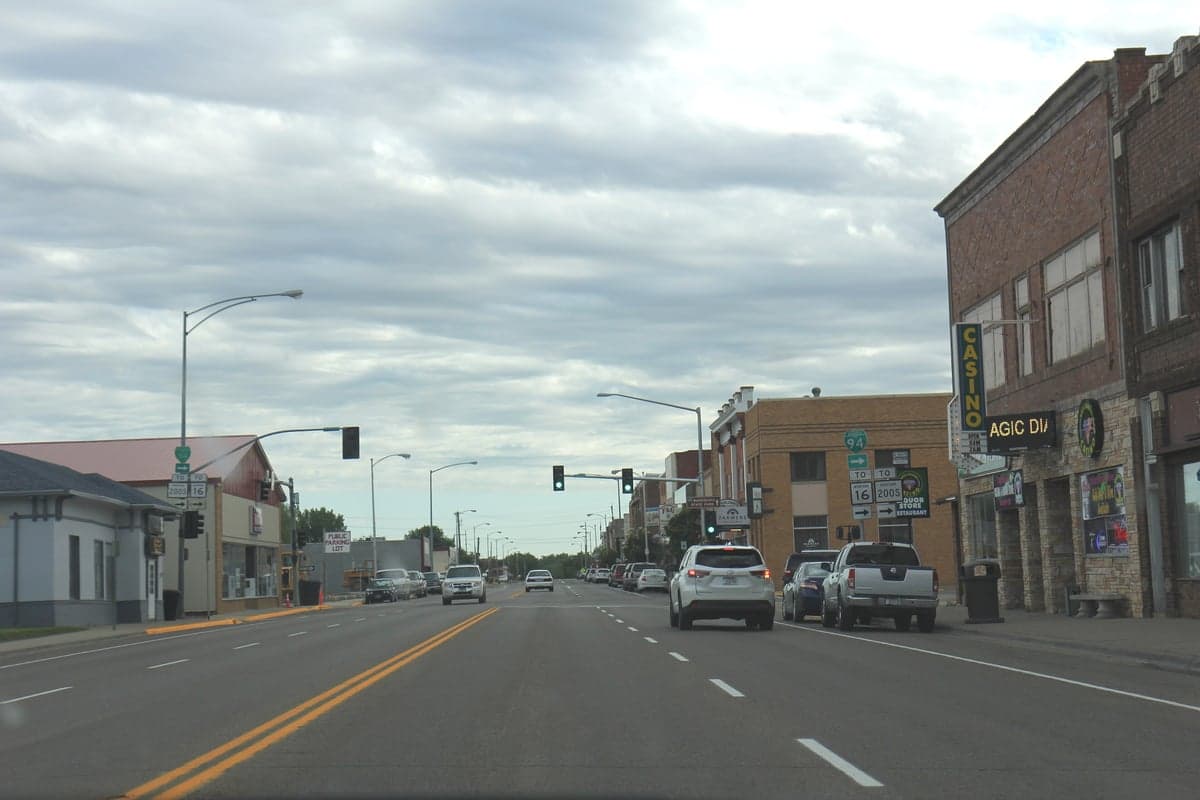
Photo: Wikipedia
Political ClimatePolitical Climate in Glendive, MT
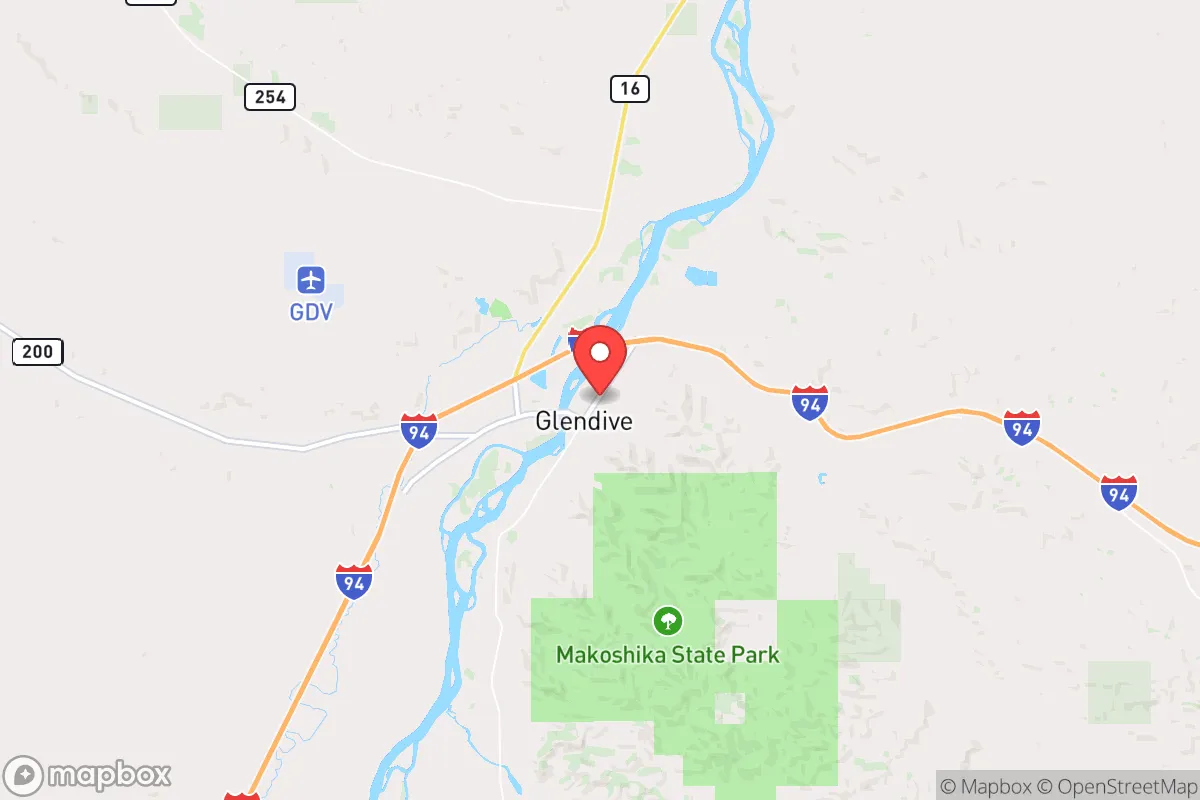
District shown is the primary district for this city’s centroid. Cities may span multiple districts.
Local Political AnalysisPolitical Analysis of Glendive, MT
Glendive is about as solidly conservative as it gets in Montana, and that’s not changing anytime soon. With a Cook PVI of R+15, this town votes red by a wider margin than most of the state, and it’s been that way for as long as anyone can remember. You won’t find much hand-wringing over progressive policies here—folks tend to see them as a threat to the way of life that’s kept this community strong for generations. If anything, the political trajectory is holding steady, maybe even hardening, as national trends push more people to value local control and personal liberty.
How it compares
Drive an hour west to Miles City, and you’ll find a similar conservative vibe, though it’s a bit more tempered by the college crowd and some state government workers. Head east into North Dakota, and places like Dickinson feel like a mirror image—oil boom money hasn’t changed the politics much. But the real contrast is with Montana’s western cities. Bozeman and Missoula are practically a different country politically, with their progressive city councils and green-energy mandates that would never fly here. Glendive residents watch those places with a mix of pity and concern, seeing them as cautionary tales of what happens when government overreach takes hold. The local county commission and school board elections here are still won by candidates who talk about cutting taxes, protecting gun rights, and keeping federal bureaucrats out of local land-use decisions.
What this means for residents
For the people living here, the political climate means a lot of day-to-day freedoms that are getting squeezed elsewhere. You can still buy a hunting rifle without a waiting period, build a shed on your own property without a dozen permits, and send your kids to a school that doesn’t push critical race theory or gender ideology. The local economy runs on agriculture, oil, and healthcare, and most folks see government regulation as a direct threat to their livelihoods. Property taxes are low compared to the national average, and there’s no state income tax, which keeps more money in your pocket. The downside? If you’re not on board with the conservative consensus, you might feel isolated. But for the majority, that’s a feature, not a bug—it means the community stays tight-knit and self-reliant.
One thing that sets Glendive apart is its cultural resistance to the kind of coastal influence that’s creeping into other parts of Montana. You won’t find a Whole Foods or a bike-share program here, and that’s exactly how people like it. The local newspaper, the Glendive Ranger-Review, still runs editorials defending the Second Amendment and criticizing federal land management. There’s a strong sense that the town’s values are under siege from outside forces—whether it’s the EPA trying to restrict farming practices or the state government in Helena flirting with renewable energy mandates. Longtime residents remember when the biggest political fights were about school funding and road maintenance; now, it’s about keeping the federal government out of your backyard. If the trend toward progressive ideology keeps accelerating nationally, Glendive will likely double down on its conservative identity, becoming an even stronger redoubt for those who value personal freedom over government control.

State Political ClimatePolitical Climate in Montana
State Political AnalysisPolitical Environment in the State
Montana has long been a reliably Republican state at the presidential level, voting for the GOP candidate in every election since 1968 except for Bill Clinton’s 1992 win, but the state’s internal politics are far more nuanced than the red-state label suggests. The dominant coalition is a mix of libertarian-leaning ranchers, conservative small-business owners, and a growing number of out-of-state transplants, creating a tension between traditional Western independence and newer, more suburbanized conservatism. Over the last 10-20 years, the state has shifted rightward in presidential races—Trump won by 20 points in 2016 and 16 points in 2020—but the state legislature has seen a hardening of Republican control, with a supermajority in both chambers since 2020, while local races in growing counties like Gallatin and Missoula have become increasingly competitive.
Urban vs. rural divide
The political map of Montana is a textbook study in the urban-rural split. The state’s two largest cities, Billings and Missoula, sit on opposite ends of the spectrum: Billings, the largest city, leans Republican but is not a lock—Yellowstone County went 57% for Trump in 2020, while Missoula County went 60% for Biden. Bozeman and Helena are the real battlegrounds: Gallatin County (Bozeman) flipped from red to blue in 2020 for the first time in decades, driven by an influx of tech workers and remote professionals, while Lewis and Clark County (Helena) has trended purple, with the state capital’s government workforce creating a more moderate electorate. The rural counties—like Wibaux, Garfield, and Petroleum—routinely deliver 80-90% Republican margins, while the Flathead Reservation and counties like Lake County show more mixed results due to Native American voting blocs. The Flathead Valley (Kalispell, Whitefish) is a microcosm: Whitefish has become a liberal enclave of wealthy newcomers, while Kalispell remains deeply conservative, creating a visible cultural tension in the same region.
Policy environment
Montana’s policy environment is a mixed bag for conservatives. On the plus side, there is no state sales tax, and the income tax was flattened to a single rate of 5.9% in 2021 under Governor Greg Gianforte, with further cuts to 5.4% phased in by 2026. Property taxes are relatively low by national standards, but they have been rising fast in high-growth areas like Bozeman and Missoula, sparking local backlash. The state has a strong right-to-work law and is a “constitutional carry” state for firearms—no permit needed for concealed carry since 2021. Education policy is a flashpoint: Montana has a robust school choice movement, with a new tax-credit scholarship program passed in 2023, but public school funding remains a perennial fight, especially in rural districts. Healthcare is a sore spot—the state expanded Medicaid under the ACA in 2015, and while the program is popular, conservatives have pushed work requirements and tighter eligibility. Election laws have tightened: voter ID requirements were strengthened in 2021, and same-day voter registration was eliminated in 2023, moves that conservatives see as integrity measures but progressives call suppression.
Trajectory & freedom
Montana’s trajectory on personal freedom is a tug-of-war between expanding liberty and new restrictions. On the positive side, the 2021 legislature passed a sweeping preemption law that bars local governments from enacting gun control measures stricter than state law—a direct response to Missoula’s attempted local ordinances. Parental rights were strengthened with the 2023 “Parents Bill of Rights,” which requires schools to notify parents about curriculum changes and medical services. Medical autonomy took a hit, however: the 2023 legislature passed a near-total abortion ban (with exceptions for rape, incest, and life of the mother), which was blocked by the state Supreme Court under a 1999 privacy ruling, leaving the issue in legal limbo. Property rights are a major concern—the state has seen a surge in short-term rental regulations in tourist towns like Whitefish and Big Sky, and a 2023 law limiting local control over short-term rentals was a win for property owners. The biggest freedom concern is the growing influence of the state government in local land-use decisions, with Gianforte’s administration pushing for more housing density in cities, which some conservatives see as a top-down overreach.
Civil unrest & political movements
Montana is not a hotbed of street protests, but there have been notable flashpoints. The 2020 Black Lives Matter protests in Missoula and Bozeman were relatively small and peaceful, but they sparked a strong counter-movement of “Back the Blue” rallies and a surge in local Republican activism. The most visible political movement in recent years is the “Freedom Caucus” faction within the state legislature, which has pushed hard on election integrity, anti-vaccine mandates, and critical race theory bans. Immigration politics are less heated than in border states, but there have been skirmishes over sanctuary policies—Missoula declared itself a “welcoming city” in 2017, prompting a state-level bill in 2023 to ban sanctuary cities statewide, which passed. Election integrity controversies flared after 2020, with a GOP-led audit of the 2020 election in Flathead County finding no fraud but fueling ongoing distrust. The most visible flashpoint for a new resident would be the culture war in school boards, particularly in Bozeman and Kalispell, where conservative parents have organized to challenge library books and curriculum.
Projection
Over the next 5-10 years, Montana is likely to become more politically polarized, not less. The in-migration wave—driven by remote workers from California, Washington, and Oregon—is concentrated in the western counties (Gallatin, Missoula, Flathead), which are trending blue or purple, while the eastern and rural counties are aging and shrinking. This demographic shift means the state’s overall partisan lean may soften at the presidential level—expect future races to be closer than the 16-point margin of 2020. However, the state legislature will likely remain under strong Republican control due to gerrymandered districts and the rural tilt of the state Senate. The biggest wildcard is the state Supreme Court: with three of seven justices up for election in 2024 and 2026, conservatives are pushing to flip the court, which would unlock the abortion ban and potentially reshape education and property rights rulings. A new resident moving in now should expect a state where the cultural and political battles of the coasts are increasingly playing out in local school boards, county commissions, and city councils, especially in the growing western corridor from Missoula to Bozeman.
For a conservative-leaning individual or family considering a move, Montana still offers a strong baseline of freedom—low taxes, constitutional carry, and a culture of self-reliance—but the trend lines are concerning. The influx of new residents is slowly shifting the political center of gravity in the most desirable areas, and the state government’s willingness to preempt local control is a double-edged sword. The bottom line: Montana is still a great bet for someone who values personal liberty and wants to be part of a community that fights for it, but you’ll need to be engaged in local politics to keep it that way. If you’re looking for a place where the government stays out of your life, the rural counties east of the Rockies are your best bet; if you want a mix of amenities and conservative values, stick to the smaller towns in the Flathead or the Bitterroot Valley, and keep an eye on the school board meetings.
* Values derived from national, state, county, city and local statistics and may differ in a specific area. Last updated: 2026-04-30T01:39:28.000Z
Narrative content on this page is AI-generated and may contain mistakes. Verify any details that matter before acting on them.
ReloMaps may earn a commission from affiliate links at no extra cost to you.

