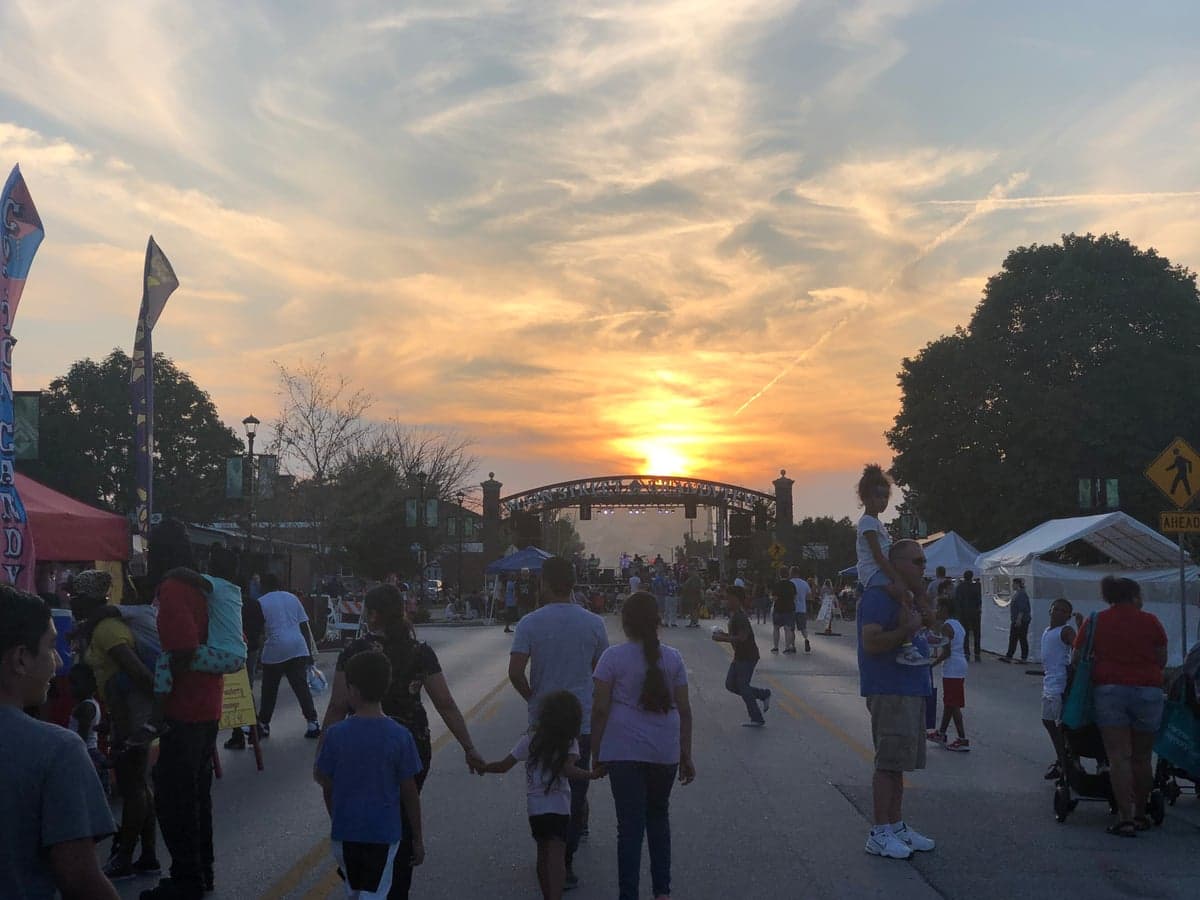
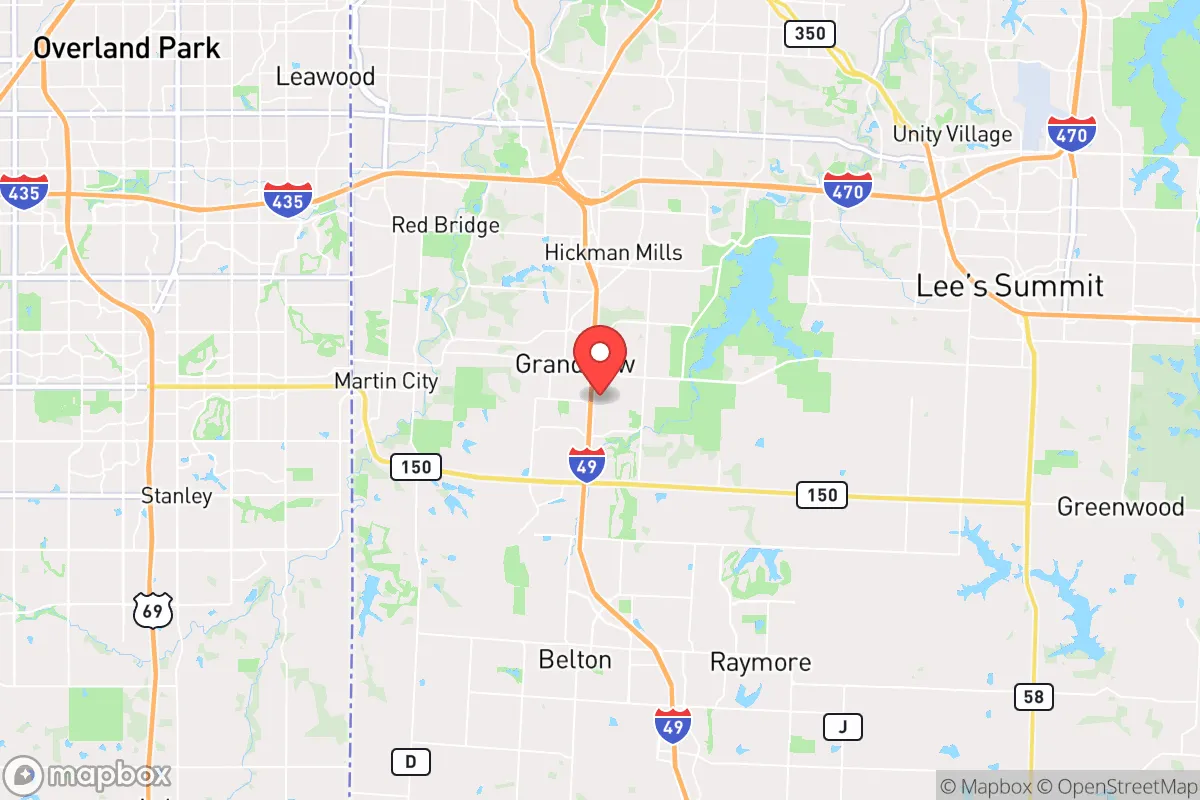
Photo: Wikipedia
Demographics of Grandview, MO
Affluence Level in Grandview, MO
A below-average socioeconomic profile. Incomes, home values, and educational attainment trail the U.S., with higher poverty and unemployment.
People of Grandview, MO
Grandview, Missouri, is a suburban city of 25,821 residents that sits just south of Kansas City, defined by its racial and ethnic diversity and a strong sense of local identity. The population is 43.8% White, 32.7% Black, 14.3% Hispanic, 2.4% East/Southeast Asian, and 5.1% foreign-born, with a modest 24.0% holding a college degree. This is a community of working- and middle-class families, many of whom have deep roots in the area, living in a mix of post-war subdivisions and newer developments. The city’s character is shaped by its history as a destination for successive waves of domestic migrants and, more recently, immigrant families seeking affordable housing and proximity to Kansas City jobs.
How the city was settled and grew
Grandview’s population history begins with its founding in the mid-19th century as a farming and railroad town. The area was originally settled by White American farmers of German and English descent, drawn by the fertile land along the Blue River and the promise of rail access via the Missouri Pacific Railroad. The city was officially incorporated in 1912, but its growth remained modest through the early 1900s, with a population hovering around a few hundred. The first major wave of growth came after World War II, when returning veterans and their families moved into new subdivisions like Hickman Mills (an unincorporated area later annexed) and Bannister Hills, attracted by affordable housing and the expansion of Kansas City’s industrial base. These neighborhoods were predominantly White and built around the automobile, with ranch-style homes and large lots that defined the postwar suburban ideal.
Modern era (post-1965)
The post-1965 era brought profound demographic change to Grandview, driven by two forces: the suburbanization of Black families from Kansas City’s urban core and the arrival of Hispanic and East/Southeast Asian immigrants. The 1968 Fair Housing Act and the subsequent construction of Interstate 435 made Grandview more accessible, and Black families began moving south from neighborhoods like Kansas City’s 18th and Vine district into subdivisions such as Southview Estates and Grandview Heights. By the 1990s, the Black population had grown to roughly 25%, and it now stands at 32.7%, concentrated in the central and eastern parts of the city. Hispanic families, primarily of Mexican origin, began arriving in the 1980s and 1990s, drawn by construction and service jobs in the Kansas City metro. They settled in areas like Belvidere Park and along the Blue Ridge Boulevard corridor, where older, more affordable housing stock and proximity to Hispanic-owned businesses created a stable enclave. East/Southeast Asian communities—predominantly Vietnamese and Filipino—arrived in smaller numbers after 2000, often as part of family reunification or through employment in healthcare and manufacturing, and are scattered across the city rather than concentrated in a single neighborhood. The White population, which was over 90% in 1970, has declined to 43.8%, with many older White residents aging in place in the original postwar subdivisions like Hickman Mills.
The future
Grandview’s population is slowly diversifying further, but the trend is toward stabilization rather than rapid change. The Hispanic share (14.3%) is growing steadily, driven by both births and continued migration, and is likely to reach 18-20% within a decade, with new arrivals settling in the same Belvidere Park and Blue Ridge areas. The Black population appears to be plateauing, as younger Black families increasingly choose farther-out suburbs like Lee’s Summit or Raymore for newer housing and better schools. The East/Southeast Asian share (2.4%) is stable, with little new immigration expected. The White population is aging and declining slowly, as younger White families are drawn to more affluent suburbs. The city is not tribalizing into hostile enclaves, but distinct residential patterns persist: older White residents in the western subdivisions, Black families in the central and eastern neighborhoods, and Hispanic families in the south. The foreign-born share (5.1%) is below the national average, and most immigrants are assimilating into the broader community through schools and local employment. The next 10-20 years will likely see Grandview become a majority-minority city with a growing Hispanic plurality, while retaining its character as a middle-class, family-oriented suburb.
For someone moving in now, Grandview offers a genuinely diverse, affordable community with strong ties to Kansas City’s economy. The city is becoming more Hispanic and more multiracial, but it remains a place where long-term residents—Black, White, and Hispanic—share a common identity rooted in the city’s postwar suburban history. New arrivals will find a stable, working-class environment with good highway access and a slower pace of change than the inner suburbs to the north.

* Values derived from national, state, county, city and local statistics and may differ in a specific area. Last updated: 2026-04-29T21:39:31.000Z
Narrative content on this page is AI-generated and may contain mistakes. Verify any details that matter before acting on them.
ReloMaps may earn a commission from affiliate links at no extra cost to you.

