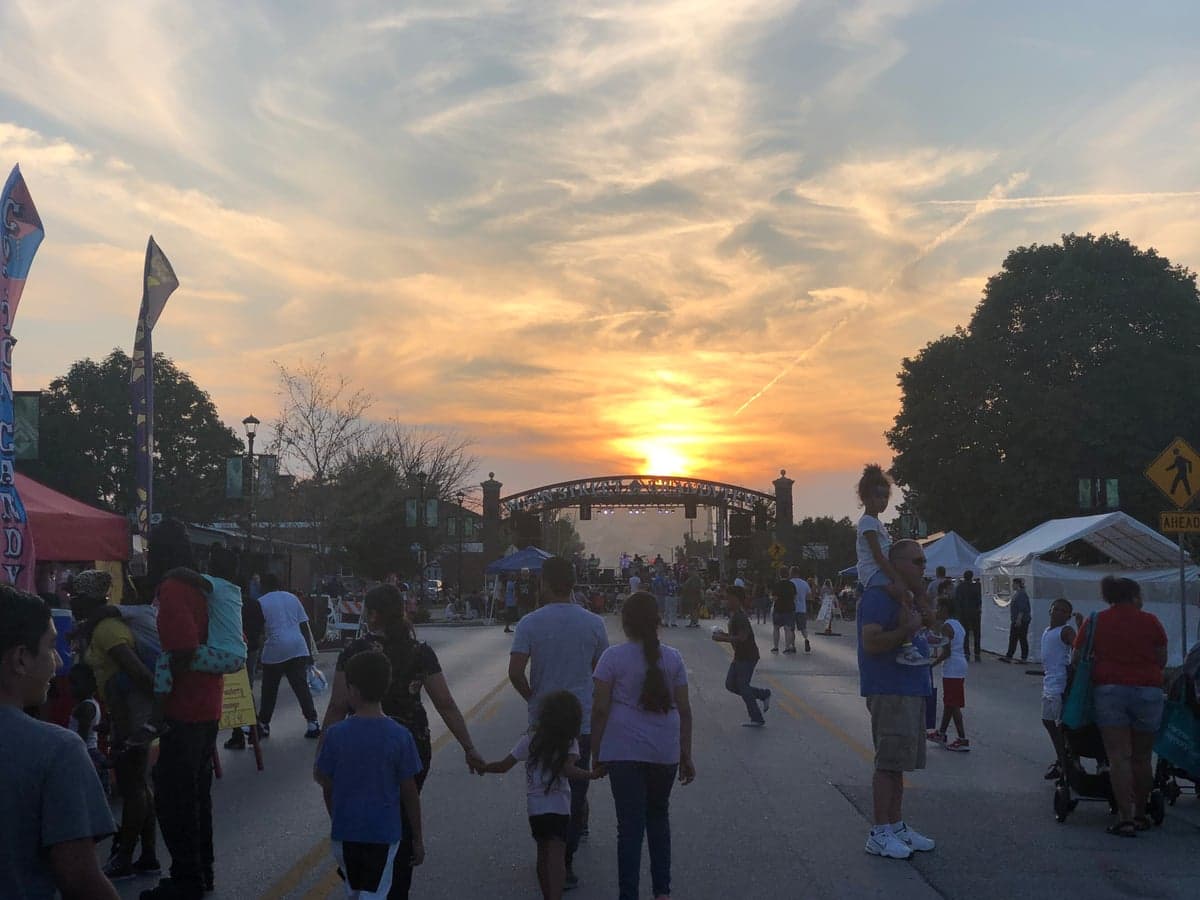

Photo: Wikipedia
Political ClimatePolitical Climate in Grandview, MO
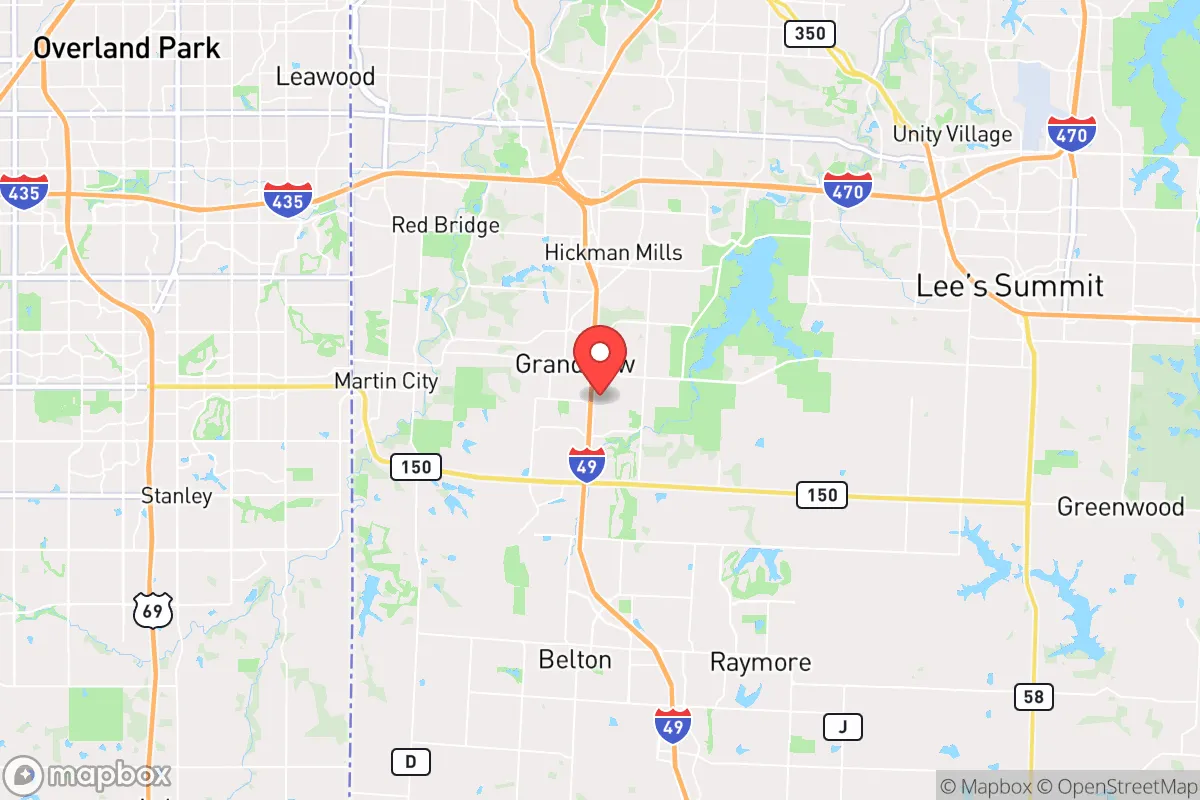
District shown is the primary district for this city’s centroid. Cities may span multiple districts.
Local Political AnalysisPolitical Analysis of Grandview, MO
Grandview, Missouri, sits in a political bubble that’s become more pronounced over the last decade. With a Cook PVI of D+12, this Jackson County suburb leans heavily Democratic, and that tilt has only deepened as the Kansas City metro area’s progressive influence has spread south. If you’ve lived here as long as I have, you remember when Grandview was more of a purple patch—working-class folks who voted for the person, not the party. Now, it’s a solid blue stronghold, and the shift hasn’t been subtle. The local elections, school board races, and even zoning decisions all carry that partisan weight, and it’s hard to ignore how much the political climate has changed from the independent-minded community it used to be.
How it compares
Drive ten miles north into Kansas City proper, and you’ll find an even deeper blue—places like the Plaza or midtown are D+20 or worse. But head south or east to places like Lee’s Summit or Raymore, and the landscape flips. Lee’s Summit leans Republican, with a PVI around R+5, and Raymore is even more conservative. That contrast is stark when you cross the county line into Cass County, where the politics feel like a different state. Grandview, stuck between these two worlds, has absorbed the worst of both: the tax-and-spend mentality of Kansas City without the economic boom, and the cultural drift away from traditional values that’s become common in urban centers. It’s a reminder that where you live in this metro area determines a lot more than just your commute.
What this means for residents
For folks who value personal freedoms and limited government, Grandview’s current trajectory is a red flag. The local government has been quick to adopt progressive policies—think zoning ordinances that prioritize density over property rights, and a school district that’s embraced DEI initiatives and critical race theory in curriculum. Property taxes have crept up year after year, and there’s a sense that the city council is more interested in following national trends than listening to the folks who’ve been here for generations. If you’re a small business owner or a homeowner who wants to be left alone, you’ll feel the squeeze. The police department, while professional, has been pressured to adopt “reform” measures that make it harder to keep the streets safe. It’s not the Grandview I grew up in, where the biggest political fights were about potholes and park maintenance.
What this means for residents
Looking ahead, the long-term outlook is concerning. As the Kansas City metro continues to grow, Grandview is likely to become even more of a bedroom community for progressive transplants who work downtown. That means more pressure for light rail extensions, higher density housing, and policies that prioritize “equity” over common sense. The school district, already struggling with enrollment declines and budget shortfalls, will probably double down on ideological programming rather than focusing on reading, writing, and arithmetic. If you’re considering a move here, I’d suggest paying close attention to the next few city council elections—they’ll tell you whether Grandview can pull back from the edge or if it’s destined to become another cookie-cutter progressive suburb.
One cultural distinction worth noting: Grandview has a strong African American community that’s been here for decades, and that’s shaped its political identity in ways that aren’t always captured by the PVI number. But the progressive activism you see now isn’t coming from that long-time base—it’s driven by newer arrivals and outside groups. The old guard, the folks who remember when Grandview was a place where neighbors helped neighbors without a government program, are being drowned out. If you value that kind of independence, you might find yourself feeling like a stranger in your own hometown.

State Political ClimatePolitical Climate in Missouri
State Political AnalysisPolitical Environment in the State
Missouri has long been considered a bellwether state, but over the past two decades it has shifted decisively from a classic swing state to a reliably red one, with a strong conservative tilt that now feels baked into the state’s DNA. The last time Missouri backed a Democrat for president was Bill Clinton in 1996, and since then the GOP has built a durable coalition that runs the governor’s mansion, both chambers of the legislature, and holds a 6-2 advantage in the U.S. House. The shift accelerated after 2010, driven by rural and exurban voters who feel increasingly alienated from coastal progressivism, and by 2024, Donald Trump carried the state by nearly 19 points. For a conservative-leaning individual or family looking to relocate, Missouri offers a political environment that is broadly aligned with traditional values, though the picture is more nuanced than a simple red-state label suggests.
Urban vs. rural divide
The political map of Missouri is a textbook study in the urban-rural chasm. The two major metros—St. Louis and Kansas City—are deep blue islands in a sea of red. St. Louis City and County, along with Jackson County (Kansas City), reliably deliver 60-70% of their votes to Democrats, driven by diverse populations, union households, and a strong progressive activist base. But once you leave the I-70 corridor, the landscape shifts dramatically. The rural Ozarks, including counties like Christian, Taney, and Stone near Branson, routinely vote 75-80% Republican. The real story, though, is the exurbs and smaller cities that have flipped hard red in the last decade. Places like St. Charles County (just west of St. Louis) and Jefferson County (south of the city) were once competitive; now they are solidly GOP, with St. Charles County voting +22 points for Trump in 2024. Similarly, Greene County (Springfield) and Boone County (Columbia) are fascinating—Springfield is a conservative stronghold, while Columbia, home to the University of Missouri, is a liberal outlier that votes blue but is surrounded by deep-red territory. The divide isn’t just about geography; it’s about culture, economics, and a growing sense that the two Missouris barely speak the same language.
Policy environment
Missouri’s policy environment is a mixed bag that leans conservative on most fronts, but with some notable exceptions that should give a freedom-minded newcomer pause. On the positive side, the state has no income tax on Social Security benefits, a flat income tax rate that was recently cut from 5.3% to 4.8% (with a trigger to drop further as revenue allows), and a corporate tax rate of 4%. Property taxes are among the lowest in the nation, averaging about 0.87% of home value. The state is a “right-to-work” state (though the law was repealed by ballot initiative in 2018, the legislature has since passed a new version that is being litigated), and it has a strong Castle Doctrine and Stand Your Ground law. On education, Missouri offers a robust charter school program in Kansas City and St. Louis, and the Missouri Empowerment Scholarship Accounts program provides tax-credit scholarships for low-income students. However, the state’s healthcare landscape is concerning: Missouri has not expanded Medicaid (despite a 2020 ballot initiative that passed, the legislature has resisted full implementation), and the state’s maternal mortality rate is among the worst in the nation. Election laws are solid—voter ID is required, and the state has a clean voter roll maintenance process—but the 2020 election saw some controversies over absentee ballot handling that have since been tightened. For a conservative, the tax and regulatory environment is generally favorable, but the healthcare and education outcomes are areas where the state’s libertarian lean can feel like neglect rather than freedom.
Trajectory & freedom
Missouri has been on a clear trajectory toward greater personal freedom over the past decade, but the path is not without its bumps. The most significant expansion of liberty came in 2016 with the passage of Constitutional Carry (permitless concealed carry), making Missouri one of the first states to allow law-abiding citizens to carry a firearm without a permit. In 2021, the legislature passed the Second Amendment Preservation Act (SAPA), which purports to nullify federal gun laws—a bold move that has been partially blocked by federal courts but signals the state’s commitment to gun rights. On parental rights, Missouri passed the Parental Bill of Rights in 2022, requiring schools to notify parents of any changes to a child’s health or well-being, and the Save Adolescents from Experimentation (SAFE) Act, which bans gender transition procedures for minors. These are major wins for families. However, the state has also seen overreach in other areas: the 2020 COVID-19 lockdowns were unevenly enforced, with St. Louis and Kansas City imposing strict mandates while rural counties largely ignored them, creating a patchwork that frustrated many. More recently, the legislature has been debating a school choice expansion that would allow state funds to follow students to private or homeschool settings—a move that would dramatically increase educational freedom. On the whole, Missouri is trending more free, but the fight is ongoing, especially in the urban centers where local governments often push back against state preemption laws.
Civil unrest & political movements
Missouri has a history of civil unrest that is impossible to ignore, particularly in the St. Louis region. The 2014 Ferguson protests after the shooting of Michael Brown were a national flashpoint, and they left a lasting scar on the state’s image. Since then, St. Louis has seen periodic protests over police shootings and racial justice issues, though the intensity has waned. More recently, the political energy has shifted to the right. The Missouri Freedom Caucus, a group of hardline conservative state legislators, has been a driving force in pushing for school choice, gun rights, and anti-abortion legislation. They’ve clashed with more moderate Republicans, particularly over budget priorities and the pace of tax cuts. On the immigration front, Missouri has no sanctuary cities—in fact, the state passed a law in 2023 requiring local law enforcement to cooperate with federal immigration authorities, and any city that tries to declare itself a sanctuary risks losing state funding. There has been some talk of “nullification” rhetoric around federal gun laws and vaccine mandates, but it remains mostly symbolic. The most visible flashpoint for a new resident would likely be the ongoing debate over abortion: after the Dobbs decision, Missouri became the first state to effectively ban abortion with no exceptions for rape or incest, and the issue remains deeply polarizing, especially in the suburbs of St. Louis and Kansas City.
Projection
Looking ahead five to ten years, Missouri is likely to become even more conservative, but with a growing tension between the rural base and the suburban swing voters who are increasingly uncomfortable with the hardline stance on abortion and the lack of Medicaid expansion. The state is seeing modest in-migration from Illinois, particularly from the Metro East area, as people flee high taxes and crime in Chicago and East St. Louis. These newcomers tend to be conservative-leaning but not necessarily culture-warriors—they want low taxes, good schools, and safe neighborhoods. The suburbs of St. Louis, like Wildwood and Chesterfield, are likely to remain red-leaning but could become more competitive if the GOP continues to push on abortion. Meanwhile, the rural areas will only get redder as younger, more liberal residents move to the cities. The biggest wildcard is the state’s demographic stagnation—Missouri’s population growth is anemic, and the state is aging faster than the national average. This could lead to a political environment that is increasingly focused on tax cuts and limited government, but also one that struggles to fund infrastructure and education. For someone moving in now, expect a state that is firmly conservative on most issues, but with a simmering urban-rural conflict that will occasionally boil over into legislative battles and local elections.
For a conservative individual or family, Missouri offers a strong alignment on the core issues: low taxes, gun rights, parental control in education, and a general distrust of federal overreach. The practical takeaway is that you’ll find a welcoming environment in the suburbs and rural areas, but you’ll need to be strategic about where you settle. If you want the best schools and a more moderate conservative vibe, look at St. Charles County or the Springfield suburbs. If you want a more libertarian, rural lifestyle, the Ozarks are hard to beat. Just be aware that the urban centers—St. Louis and Kansas City—are politically and culturally a different world, and the state’s policy battles will continue to reflect that divide. Missouri is a good bet for freedom-minded people, but it’s not a utopia—it’s a place where the fight for liberty is ongoing, and your vote and voice will matter.
* Values derived from national, state, county, city and local statistics and may differ in a specific area. Last updated: 2026-04-29T21:39:31.000Z
Narrative content on this page is AI-generated and may contain mistakes. Verify any details that matter before acting on them.
ReloMaps may earn a commission from affiliate links at no extra cost to you.

