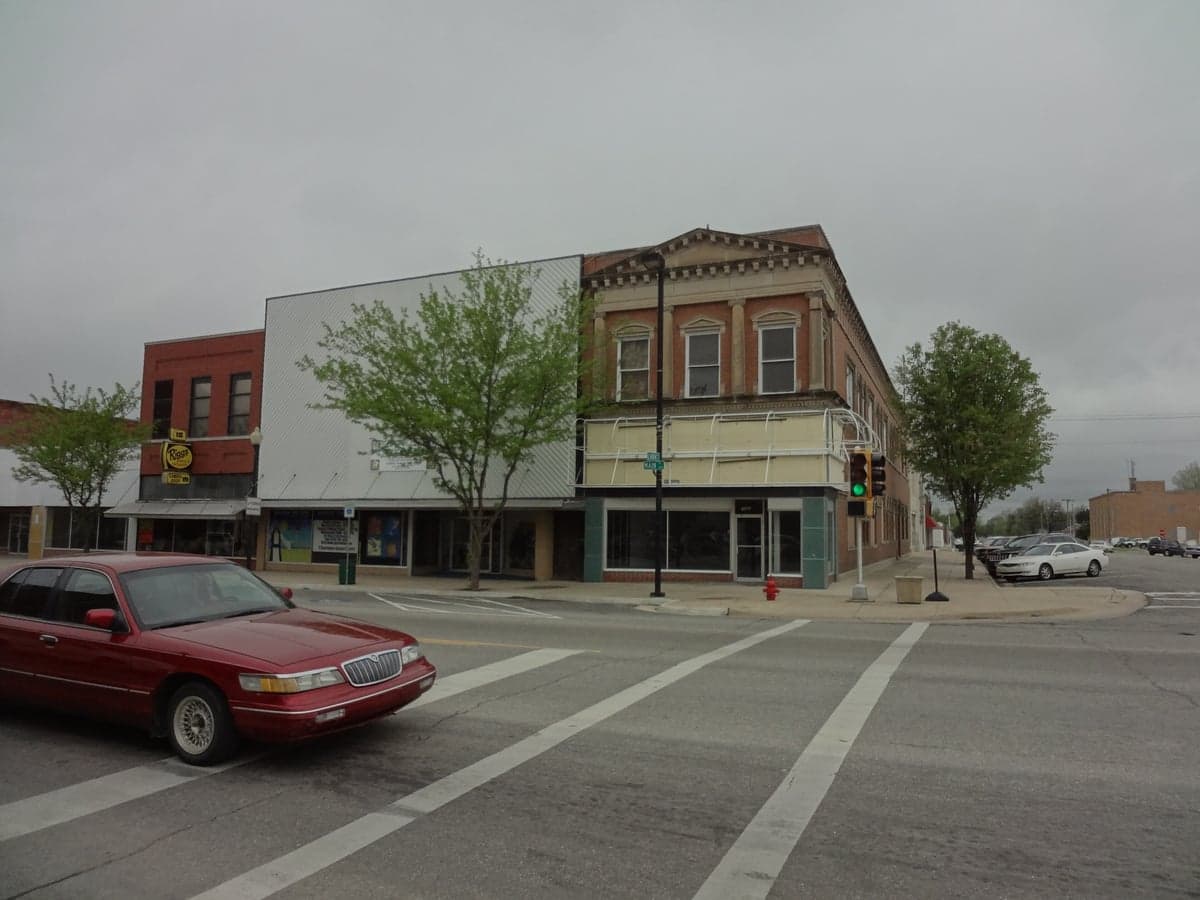
Photo: Wikipedia
Strategic Assessment of Great Bend, KS
Workable tactical position. Some exposure to population density or targets, but generally defensible in a crisis.
What does the Strategic Assessment tell us?
Our Strategic Assessment grades tactical survivability of an area. Major population centers, military targets, fallout zones, natural disasters, and border exposure all drive risk — lower exposure means a more defensible position in a crisis.
This is heavily inspired by Joel Skousen's Strategic Relocation book. Highly recommended you checkout the book ($)What does this tell us?
Our Strategic Assessment grades tactical survivability of an area. Major population centers, military targets, fallout zones, natural disasters, and border exposure all drive risk — lower exposure means a more defensible position in a crisis.
This is heavily inspired by Joel Skousen's Strategic Relocation book. Highly recommended you checkout the book ($)Strategic Pillars

Key Distances
Regional Safe Places
Below is our recommended "safe zones" in Kansas and the surrounding area based on our strategic heuristics. For most people, it's unrealistic to live in a “safe zone” full-time due to work, family or other personal reasons. They tend to be more rural. However, many of these areas are perfect for second homes and retreat properties that double as a vacation home or even a short-term rental.
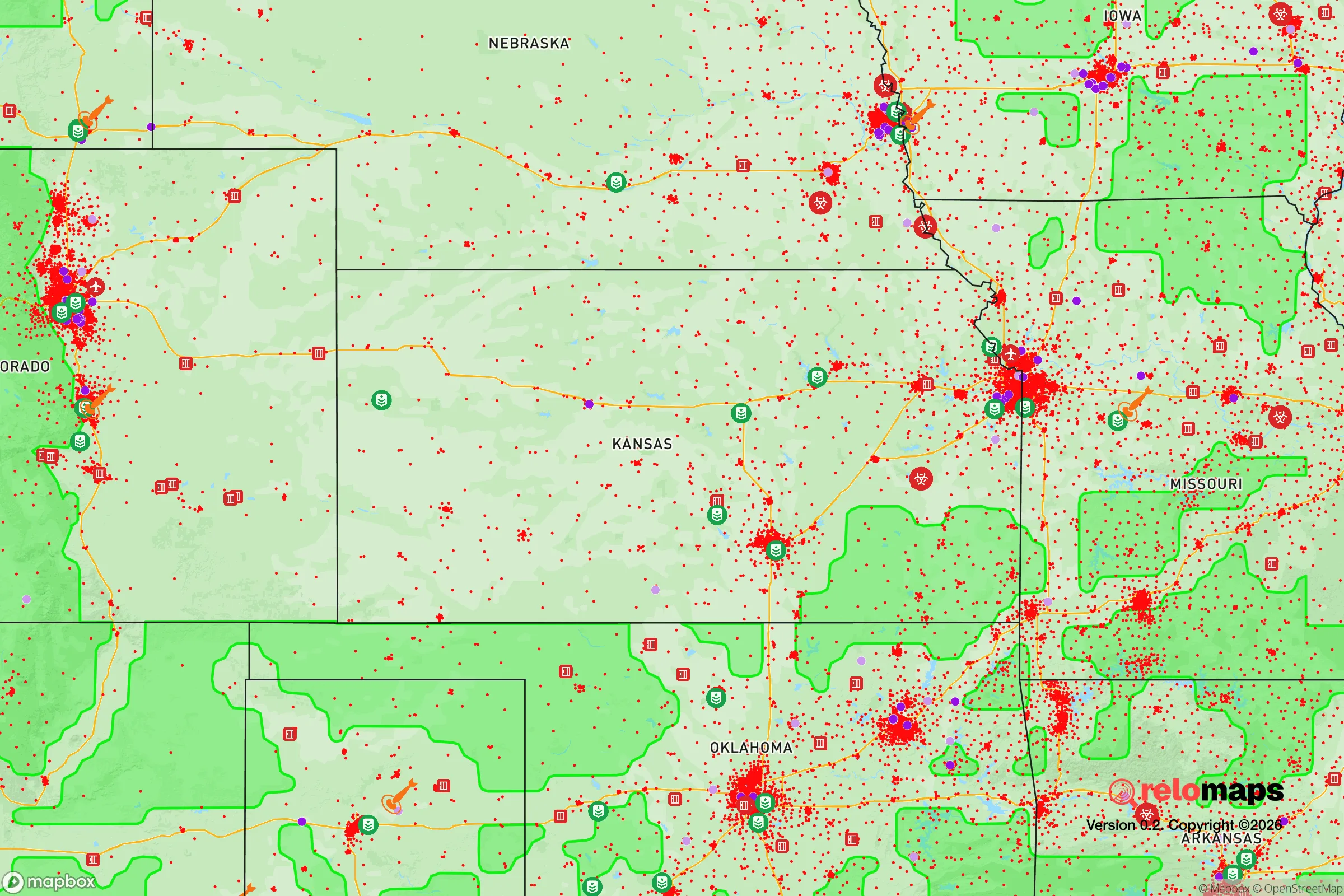
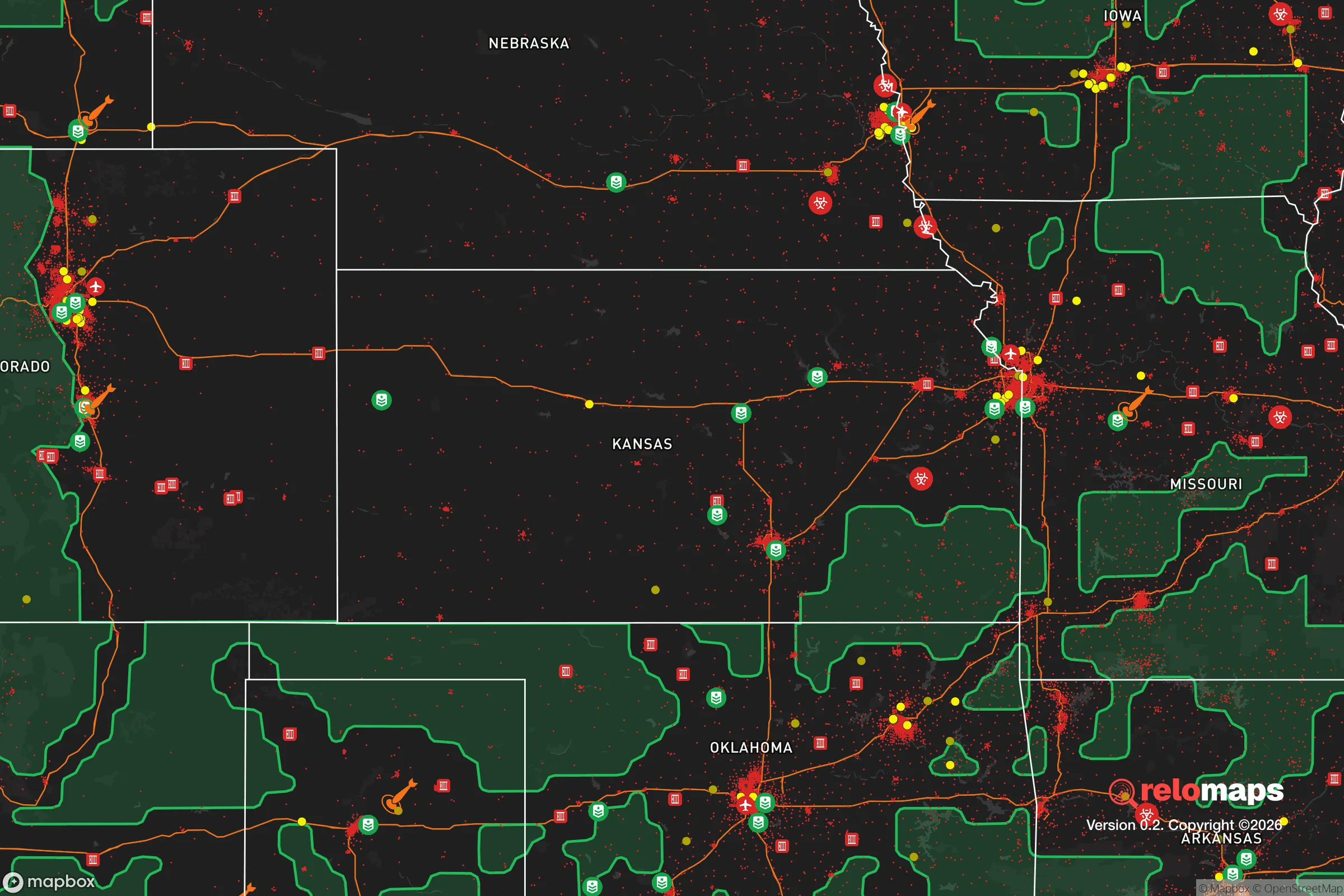


Important Note: For informational purposes only. This does not mean nothing bad ever happens in the green zones. Please use common sense. This is based on public data and modeled with AI. We tried to take a conservative approach but mistakes happen. We update this regularly as new information becomes available.
Solar Generator Recommendations
Backup power matters more here than in safer locations. We've picked three solar generators across budgets and capacity tiers — start with the budget unit if you only need a few essentials, or step up if you want to run a fridge and HVAC for days at a time.

Jackery Portable Power Station Explorer 300
Budget OptionPower on the Go: Weighing only 11 lbs, it's convenient to set up and store with book-sized foldable solar panels

BLUETTI Portable Power Station AC180
Designed for both indoor and outdoor scenarios, AC180 is highly capable as it has a robost capacity and continuous output power.

EF ECOFLOW DELTA Pro Ultra Power Station
Upgraded PickEcoFlow DELTA Pro Ultra is a whole-home energy system designed to grow with your family. Integrated with the Smart Home Panel 2, it scales to meet your evolving energy needs — keeping your home powered, intelligent, and secure through every stage of life.
We earn a commission, at no additional cost to you.
Strategic Assessment Analysis
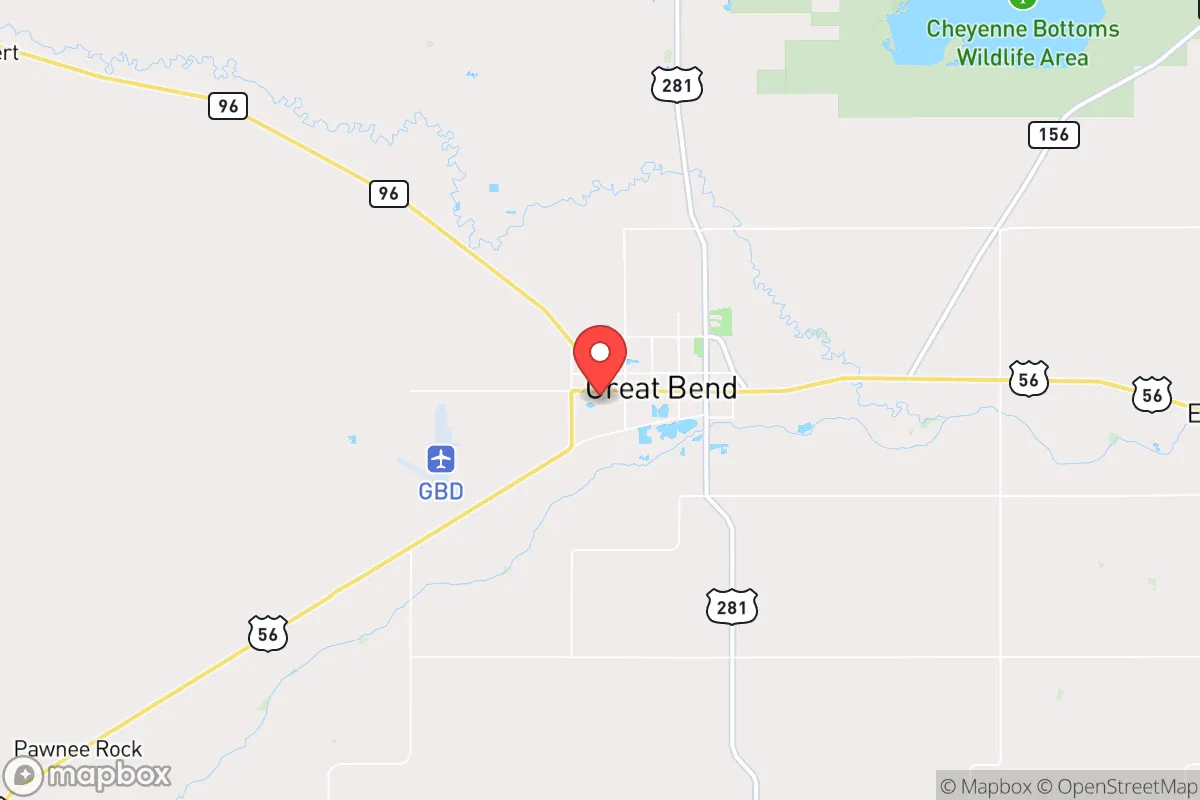
Great Bend, Kansas, offers a compelling strategic position for those prioritizing resilience and long-term stability, largely because of its location deep in the central plains, far from the coastal and urban chokepoints that will likely become unmanageable during a crisis. The city sits at the intersection of U.S. Highway 281 and U.S. Highway 56, providing multiple egress routes without funneling through a single major interstate corridor, a key advantage when considering mass evacuation scenarios. With a population hovering around 15,000, Great Bend is large enough to maintain essential services and a local economy, but small enough to avoid the cascading failures that plague major metropolitan areas during grid-down events. The surrounding Barton County is sparsely populated, offering a buffer of open land that reduces the risk of spillover from urban unrest or disease vectors.
Geographic position and natural advantages for long-term survival
Great Bend’s location in the Arkansas River Valley provides a reliable freshwater source, which is the single most critical resource for any extended disruption. The Arkansas River runs directly through the southern edge of the city, and the region sits atop the High Plains Aquifer system, meaning groundwater is accessible via wells for those who secure property outside city limits. The surrounding terrain is flat to gently rolling, which simplifies construction, gardening, and livestock management compared to mountainous or heavily forested areas. The climate is semi-arid, with an average of 20 inches of precipitation annually, enough for dryland farming but requiring irrigation for consistent yields—something the river and aquifer can support. The area is also far from active fault lines, hurricane zones, and major wildfire corridors, reducing the likelihood of natural disaster compounding a man-made crisis. For a relocator, this means the land itself is forgiving: you can dig a root cellar, build a berm house, or set up solar panels with minimal engineering challenges.
Risks, exposures, and proximity to fallout-relevant landmarks
The most significant risk for Great Bend is its proximity to the McConnell Air Force Base in Wichita, roughly 90 miles southeast, which houses KC-135 tankers and is a potential target in a conflict involving strategic bombing. While 90 miles provides a substantial buffer against blast effects, fallout patterns depend entirely on wind direction; prevailing winds in Kansas are from the south and southwest, meaning a strike on McConnell could push radioactive debris toward the Wichita metro area but likely away from Great Bend. More concerning is the presence of the Wolf Creek Nuclear Generating Station near Burlington, about 150 miles east—a meltdown or attack there could contaminate the Arkansas River watershed if prevailing winds carry fallout westward. The city itself has no major military installations, no chemical plants, and no rail hubs for hazardous materials, which is a net positive. However, the nearby Kansas Army Ammunition Plant in Parsons (120 miles southeast) and the Sunflower Army Ammunition Plant near De Soto (150 miles northeast) are secondary concerns for ground contamination. The real exposure is not direct blast but the influx of refugees from Wichita (population 400,000) and Hutchinson (40,000) if those cities become uninhabitable. Great Bend sits on Highway 56, a direct route from Wichita, so a pre-planned checkpoint or diversion strategy would be wise.
Practical resilience for a relocator: food, water, energy, and defensibility
Great Bend’s agricultural base makes it one of the few places where a relocator can realistically achieve food sovereignty. The surrounding county is dominated by wheat, corn, and sorghum fields, with cattle feedlots and dairies within a 20-mile radius. The Barton County Fairgrounds and local co-ops provide access to livestock auctions, seed suppliers, and farm equipment, meaning you can transition from suburban prepper to working homesteader without a cross-country supply chain. Water is the standout advantage: the Arkansas River is perennial, and the city’s municipal water supply draws from wells tapping the Equus Beds aquifer, which has decades of capacity even during drought. For off-grid setups, a shallow well (50-100 feet) can yield 10-20 gallons per minute in most of the county. Energy resilience is moderate—the area has strong solar insolation (5.5 peak sun hours per day on average), and wind speeds are consistent enough for small turbines, but the flat terrain offers no natural windbreaks, so mounting systems must be engineered for gusts. Natural gas is abundant in the region, with pipelines running through the county, but a grid-down scenario would require propane or diesel backup. Defensibility is the weak point: the terrain offers no high ground, no forests for concealment, and the open plains mean any approach is visible for miles. A single homestead is vulnerable to roving groups, but a small community with coordinated watch rotations and a perimeter of fields (which can be flooded or burned as barriers) can hold ground. The local sheriff’s office is understaffed (about 20 deputies for the county), so self-reliance in security is non-negotiable.
The overall strategic picture for Great Bend is that of a solid B-tier relocation destination for the conservative prepper: it lacks the natural fortress qualities of mountain valleys or remote islands, but it compensates with abundant water, arable land, and a low-profile economy that won’t attract attention during a collapse. The city’s distance from major military targets and its position in the breadbasket of the country mean that food and water will be the last things to run out here, even if the power grid fails permanently. The biggest threat is not external attack but internal migration—if Wichita empties, Great Bend will become a pressure point. A relocator should plan for that by securing property on the north or west side of town, away from the Highway 56 corridor, and by building relationships with local farmers and ranchers before any crisis. The community itself is culturally aligned with the conservative values of self-sufficiency, gun ownership, and local governance, which reduces friction for newcomers who share those priorities. In short, Great Bend won’t save you from a direct nuclear exchange, but it will keep you fed, hydrated, and free from the chaos of the cities for the long haul—provided you arrive prepared and stay low.

* Values derived from national, state, county, city and local statistics and may differ in a specific area. Last updated: 2026-04-29T18:44:47.000Z
Narrative content on this page is AI-generated and may contain mistakes. Verify any details that matter before acting on them.
ReloMaps may earn a commission from affiliate links at no extra cost to you.

