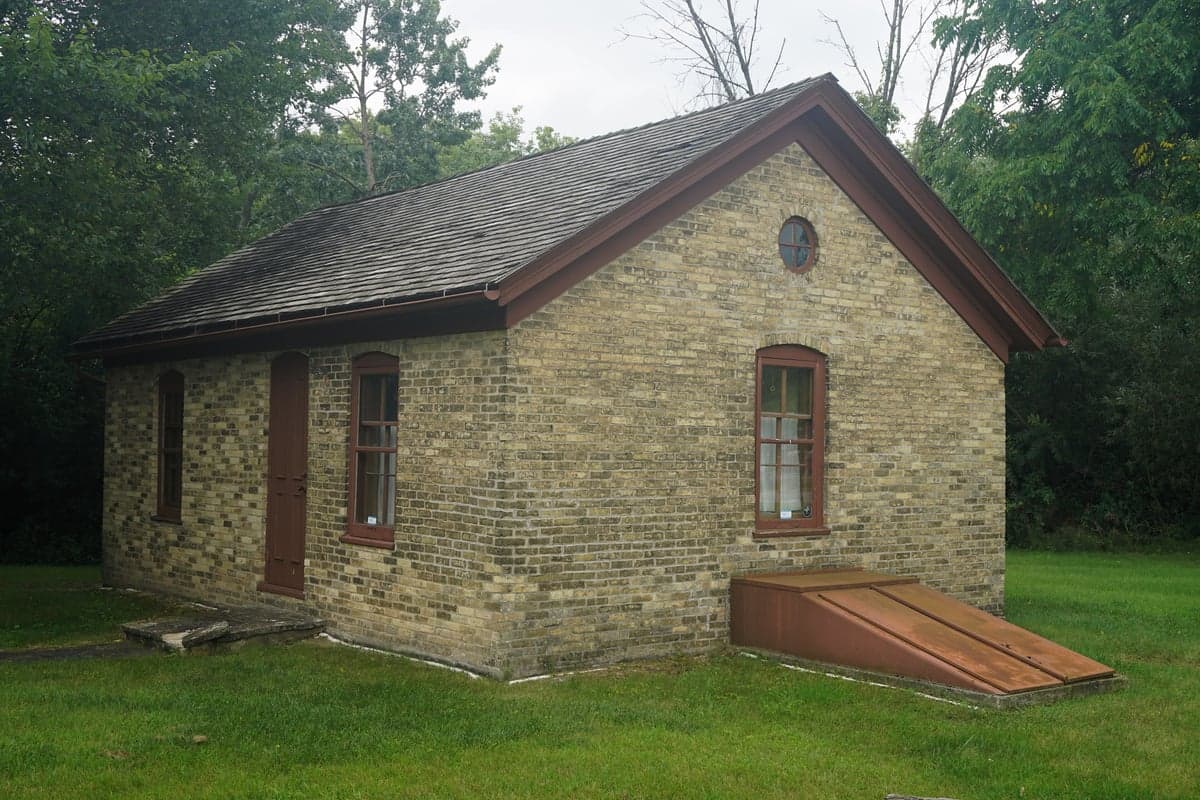
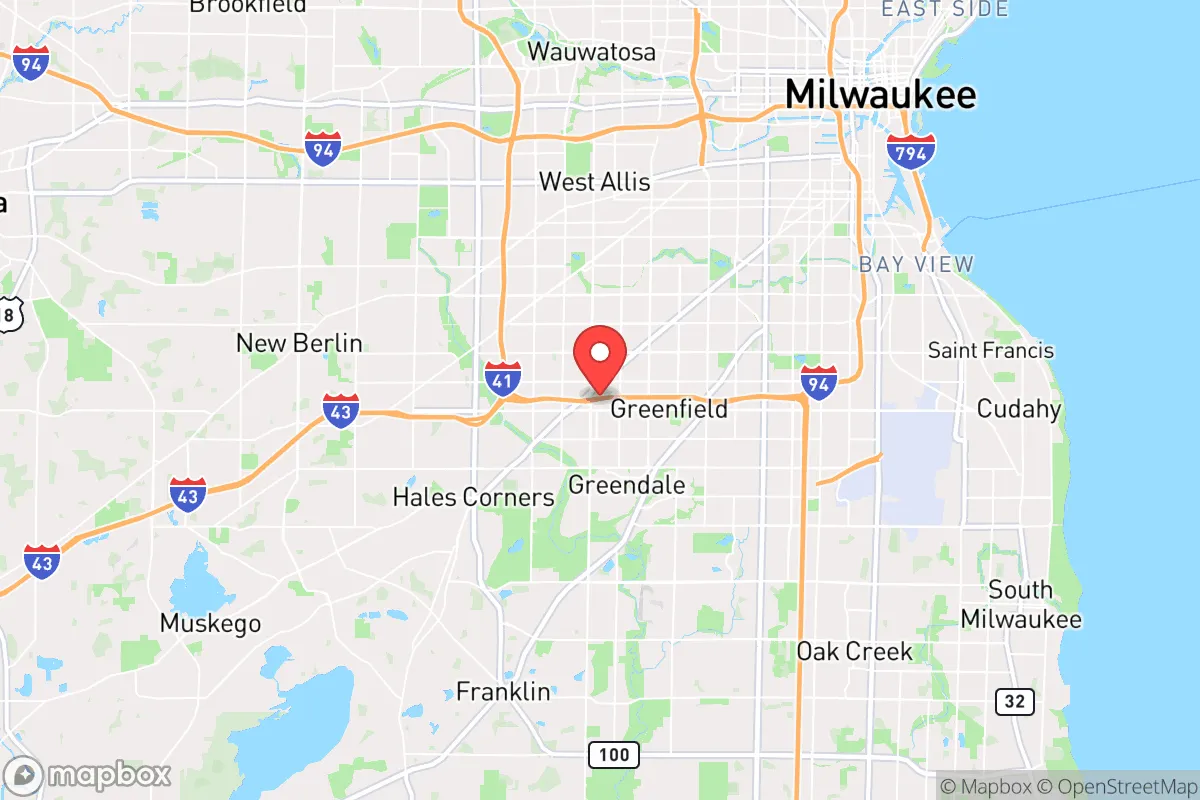
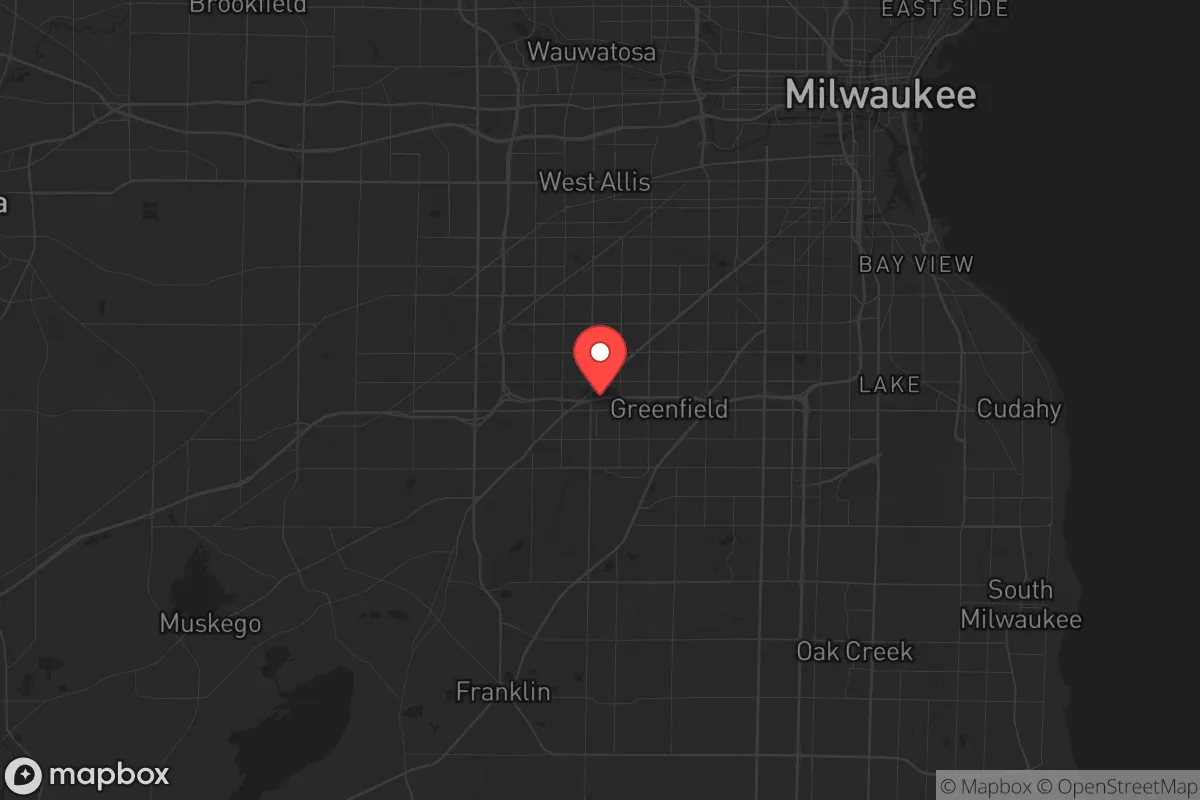
Photo: Wikipedia
Political ClimatePolitical Climate in Greenfield, WI
District shown is the primary district for this city’s centroid. Cities may span multiple districts.
Local Political AnalysisPolitical Analysis of Greenfield, WI
Greenfield, Wisconsin, has long been a solidly conservative community, and the numbers back that up with a Cook PVI of R+11. For decades, this has been a place where folks value their independence and don't take kindly to government telling them how to live their lives. You could feel it in the air at local diners and town halls—a real sense that people wanted to be left alone to work hard and raise their families without unnecessary interference. Lately, though, there's been a noticeable shift, and it's got a lot of us who've lived here a while feeling a bit uneasy. The old-school, live-and-let-live vibe is being challenged by a wave of progressive ideas that seem to be creeping in from Milwaukee and other nearby cities, and it's changing the character of the place.
How it compares
To really understand Greenfield, you have to look at its neighbors. Head north into Milwaukee proper, and you're in a very different world—a deep blue city where progressive policies on everything from policing to taxes are the norm. That influence is seeping south, and you can see it in some of the newer developments and the chatter at city council meetings. Compare that to places like Waukesha or Brookfield to the west, which are even more conservative than Greenfield and have held the line much more firmly. Greenfield sits right in the middle, a kind of battleground suburb where the old conservative values are still strong, but the pressure to conform to the Milwaukee metro area's liberal agenda is real. It's a stark contrast, and it means every local election feels like a fight to keep our community from being swallowed up by the city's way of thinking.
What this means for residents
For the average person living here, this political tug-of-war has direct consequences. The biggest worry is government overreach—seeing more regulations on small businesses, higher property taxes to fund programs you didn't ask for, and a general attitude that the government knows better than you do. There's a real concern that the personal freedoms we've always taken for granted, like the right to make your own choices about your property or your kids' education, are being chipped away. A lot of us are watching the school board meetings closely, because that's where the culture wars are hitting home. If you value your privacy and your right to live without a bunch of red tape, you're probably feeling the same pressure I am. The long-term worry is that if we don't stay vigilant, Greenfield could slowly turn into just another suburb of Milwaukee, losing the independent, conservative spirit that made it a great place to settle down.
Culturally, Greenfield still holds onto some distinctions that set it apart. You'll find a lot of veteran-owned businesses and churches that are still the backbone of the community. There's a strong sense of neighbor helping neighbor, without the government needing to step in. But the policy battles are real. The push for more "equity" initiatives in local government and the talk of zoning changes that could bring more high-density housing are red flags for many of us. It feels like a slow erosion of the values that built this town. In the near term, I see the fight getting tougher, but I also see a lot of people waking up and getting involved. The long-term future of Greenfield depends on whether the folks who believe in limited government and personal responsibility can hold the line against the tide of progressive change coming from the north. It's a battle for the soul of the community, and it's far from over.

State Political ClimatePolitical Climate in Wisconsin
State Political AnalysisPolitical Environment in the State
Wisconsin has long been a classic swing state, but over the past decade it has hardened into a deeply polarized battleground where the rural-urban divide defines nearly every election. The state’s overall partisan lean is essentially 50-50, with statewide races often decided by less than a single percentage point—Donald Trump won it by 0.7 points in 2016, Joe Biden by 0.6 in 2020, and Trump by 0.9 in 2024. The dominant coalitions are a reliably Republican exurban and rural base concentrated in the WOW counties (Waukesha, Ozaukee, Washington) outside Milwaukee, and a Democratic stronghold anchored by Milwaukee, Madison, and the college towns. Over the last 20 years, the state has shifted from a more moderate, union-heavy swing state to one where cultural and economic grievances drive turnout, with the GOP consolidating its hold on the northern and western regions while Democrats tighten their grip on the urban cores.
Urban vs. rural divide
The political map of Wisconsin is a textbook case of geographic sorting. The Democratic vote is overwhelmingly concentrated in two metros: Milwaukee County, which delivered 69% for Biden in 2020, and Dane County (Madison), which hit 75%. These two counties alone produce a massive Democratic margin that Republicans must overcome everywhere else. The GOP counterweight comes from the WOW counties—Waukesha, Ozaukee, and Washington—which together gave Trump 60% or more. Beyond that, the rural northwoods counties like Vilas, Oneida, and Lincoln have become reliably red, while the western driftless region counties such as Crawford and Grant have trended Republican as well. The key swing areas are the suburban Milwaukee counties of Racine and Kenosha, which flipped from Obama to Trump and then back to Biden in 2020, and the Green Bay area (Brown County), which has become a perennial toss-up. The divide isn’t just about population density—it’s about economic identity. The rural areas feel left behind by the knowledge-economy boom in Madison and Milwaukee, while the urban cores see rural voters as culturally backward. This split has made Wisconsin the most gerrymandered state in the nation, with the GOP holding a 64-35 Assembly majority despite losing statewide races.
Policy environment
Wisconsin’s policy environment is a mixed bag for conservatives. On the plus side, the state has a flat income tax rate of 4.4% (down from 7.65% a decade ago), and property taxes are relatively moderate compared to Illinois or Minnesota. The state is a right-to-work state (passed in 2015), and Act 10 (2011) effectively ended collective bargaining for most public employees, which has kept union influence in check. However, the state has a high sales tax of 5% (plus local add-ons), and the gas tax is among the highest in the Midwest. On education, Wisconsin has a robust school choice program—the Milwaukee Parental Choice Program is the oldest in the nation—and voucher programs have expanded to Racine and the rest of the state. But the state also has a strong public school system, and Madison’s schools are among the most progressive in the country. Healthcare is a flashpoint: Wisconsin did not expand Medicaid under the Affordable Care Act until 2023, when Governor Tony Evers finally pushed it through, but the state still has a relatively high uninsured rate. Election laws are a constant battleground—the state has voter ID requirements, but also allows no-excuse absentee voting and has a bipartisan election commission that has been under fire from both sides. The state’s Supreme Court flipped to a 4-3 liberal majority in 2023 after the election of Janet Protasiewicz, which has already led to the overturning of the GOP-drawn legislative maps and could reshape election laws further.
Trajectory & freedom
Wisconsin’s trajectory on personal freedom is a tug-of-war. On the positive side for conservatives, the state has strong Second Amendment protections—it’s a shall-issue state for concealed carry, and there are no magazine capacity bans or assault weapon restrictions. In 2024, the legislature passed a bill allowing permitless carry, though Governor Evers vetoed it. Parental rights have been a major issue: in 2023, the state passed a law requiring schools to notify parents if a student requests a name or pronoun change, and the legislature has repeatedly tried to ban gender-affirming care for minors (vetoed by Evers). Medical freedom took a hit during COVID—Wisconsin had one of the longest-running statewide mask mandates and a stay-at-home order that lasted until May 2020, though the state Supreme Court struck down the extension of that order in a landmark 4-3 ruling. Property rights are generally strong, but the state has a high property tax burden, and the recent redistricting fight has created uncertainty about local zoning. The biggest freedom concern is the erosion of election integrity: the 2020 election saw widespread use of drop boxes and private funding for election administration (the Zuckerberg-funded Center for Tech and Civic Life), which the legislature has since banned. But the liberal Supreme Court could overturn those bans. Overall, Wisconsin is a state where freedom is constantly being negotiated—you have more liberty than in Illinois or Minnesota, but less than in Iowa or South Dakota.
Civil unrest & political movements
Wisconsin has a long history of political activism, from the 2011 Act 10 protests that occupied the state capitol for weeks to the 2020 Kenosha unrest following the Jacob Blake shooting, which saw two nights of rioting, arson, and the fatal shooting of two protesters by Kyle Rittenhouse. The Rittenhouse trial became a national flashpoint for self-defense rights and the breakdown of public order. On the left, the state has a strong progressive activist network centered in Madison, with groups like the Wisconsin Democracy Campaign pushing for voting rights and the Wisconsin Conservation Voters on environmental issues. On the right, the Wisconsin Institute for Law & Liberty (WILL) has been a major force in litigation over school choice, election laws, and legislative maps. Immigration politics are less intense than in border states, but the issue flared up in 2024 when the state considered a bill to require local law enforcement to cooperate with ICE (vetoed by Evers). There is no sanctuary city policy in Wisconsin, but Milwaukee has a “welcoming city” ordinance that limits cooperation with federal immigration authorities. Election integrity remains the hottest issue—the 2020 election saw Trump’s legal team file multiple lawsuits, and the subsequent investigation by former state Supreme Court Justice Michael Gableman (hired by the GOP-controlled Assembly) found no evidence of widespread fraud but did highlight administrative irregularities. The 2024 election saw record turnout and no major incidents, but the trust deficit remains deep.
Projection
Over the next 5-10 years, Wisconsin is likely to become even more polarized. The demographic trends favor Democrats in the long run—Milwaukee and Madison are growing, while rural areas are shrinking. However, the in-migration patterns are mixed: people moving from Illinois tend to be more conservative (fleeing high taxes), while those from Minnesota bring progressive leanings. The state’s economy is diversifying, with Foxconn’s failed project in Racine being replaced by a Microsoft data center and a growing lithium-ion battery industry in Kenosha, which could bring in new voters from both parties. The biggest wildcard is the state Supreme Court: with the liberal majority now in control, expect new legislative maps that could give Democrats a chance to win the Assembly, which would shift the policy environment significantly. If Democrats gain control of the legislature, expect a repeal of right-to-work, a higher minimum wage, expanded Medicaid, and stricter gun laws. If Republicans hold the line, expect further tax cuts, school choice expansion, and election integrity measures. The most likely outcome is continued gridlock, with the state remaining a purple battleground where every election is a knife fight. A new resident should expect that their vote will matter more here than almost anywhere else in the country.
For a conservative considering a move to Wisconsin, the bottom line is this: you’ll find a state that respects your gun rights and keeps taxes relatively low, but you’ll also be living in a perpetual political war zone. Your local school board, county board, and state legislative races will be contested every cycle, and the outcome will directly affect your property taxes, your kids’ education, and your personal freedoms. If you’re willing to stay engaged and vote in every election, Wisconsin offers a high quality of life with good hunting, fishing, and outdoor recreation, plus a cost of living that’s still reasonable compared to the coasts. But if you’re looking for a place where conservative values are baked into the culture and policy, you’d be better off in Iowa or South Dakota. Wisconsin is a state where freedom is earned, not given—and it’s earned at the ballot box.
* Values derived from national, state, county, city and local statistics and may differ in a specific area. Last updated: 2026-04-21T10:31:17.000Z
Narrative content on this page is AI-generated and may contain mistakes. Verify any details that matter before acting on them.
ReloMaps may earn a commission from affiliate links at no extra cost to you.

