 Popular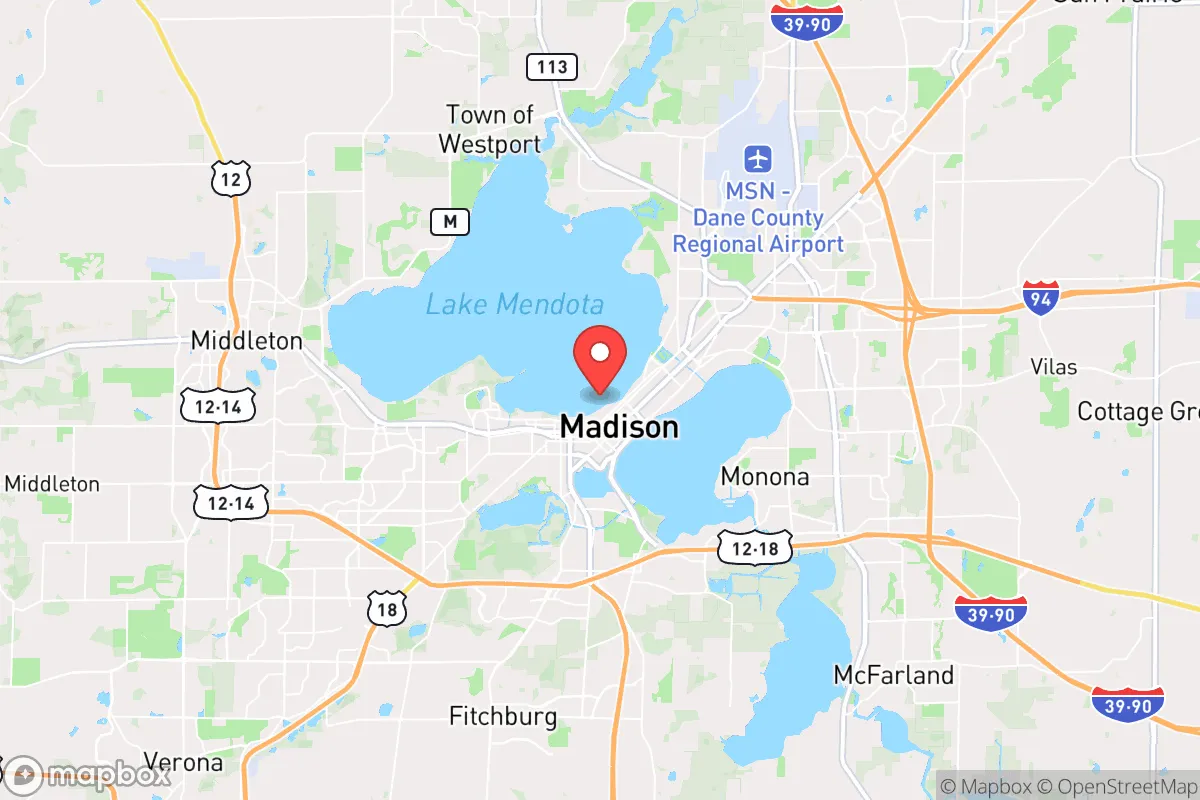
Photo: Wikipedia
Find The Best Places To Live
in Madison
PRO TIP! You can paste a Zillow or Redfin link to get info on that property.
What It's Like Living in Madison, WI
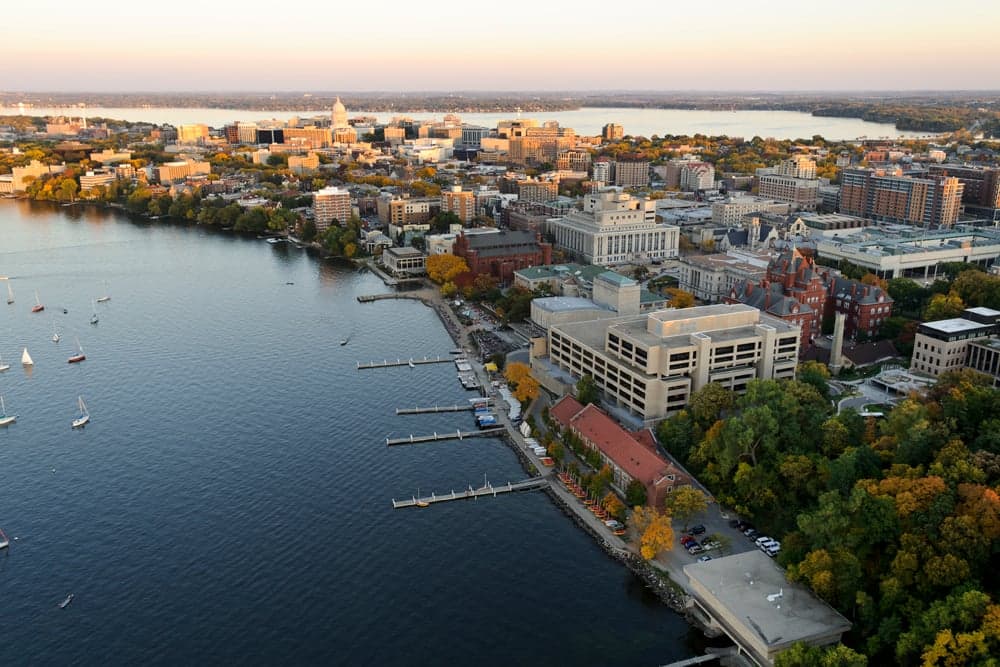
Madison has a way of surprising people. It’s the state capital, home to the University of Wisconsin, and sits on an isthmus between two lakes—Mendota and Monona—which gives it a geography you don’t see anywhere else in the Midwest. The vibe is a mix of college-town energy, state government seriousness, and a surprisingly strong outdoors culture, all packed into a city of about 275,000 that feels smaller than it is. For a conservative-leaning audience, the honest picture is more nuanced than the state’s reputation might suggest: Madison leans heavily progressive politically, but the surrounding county and many of its neighborhoods offer a quieter, more family-oriented reality than the headlines imply.
The Daily Rhythm: Work, Errands, and the Lake Effect
Most people’s daily life here revolves around the isthmus—the narrow strip of land between the lakes where downtown, the Capitol, and the UW campus cluster. Commuting is genuinely easy: the average drive is about 19 minutes, which feels almost luxurious compared to bigger Midwestern cities. Traffic only gets annoying during Badger football home games or when construction on the Beltline (Highway 12/18) snarls things up. People shop at local co-ops like Willy Street Co-op for groceries, hit the Dane County Farmers’ Market on Saturday mornings (the largest producer-only market in the country), and grab coffee at places like Johnson Public House or Bradbury’s. Weekend routines often involve a walk around the Capitol Square, a bike ride along the Lake Monona loop, or a stop at the Memorial Union Terrace for a pitcher of Spotted Cow beer and live music. The median age here is just under 32, and with 59% of adults holding a college degree, the population skews educated and young—but there’s a solid core of families and longtime residents who’ve settled into neighborhoods like Nakoma, Shorewood Hills, or the west side near Middleton.
Sports, Festivals, and the Social Calendar
Sports are a huge deal, but not in the pro-sports sense. Badger football and men’s basketball dominate the fall and winter—Camp Randall Stadium on a Saturday afternoon is a sea of red, and the energy is genuinely electric even if you’re not a die-hard fan. High school sports, especially football and basketball at schools like Madison Memorial or Middleton, draw solid crowds, but they’re not the community-defining events you see in smaller towns. The city’s minor-league hockey team, the Madison Capitols, and the Forward Madison FC soccer club (which has a loyal, rowdy following) fill in the gaps. Beyond sports, the festival calendar is packed: the Dane County Farmers’ Market runs April through November, the Isthmus Beer and Cheese Fest in June is a local institution, and the Wisconsin Film Festival brings indie movies to campus venues. Summer means outdoor concerts at the Breese Stevens Field and the Overture Center for the Arts downtown, which hosts Broadway tours and the Madison Symphony Orchestra. For outdoor types, the Ice Age Trail runs through the area, the Arboretum offers miles of trails, and winter doesn’t stop anyone—ice fishing, cross-country skiing, and pond hockey are common sights.
What Works, What Grates, and Who Fits In
The pros are real: the job market is stable thanks to state government, UW Health, Epic Systems (in nearby Verona), and a growing biotech sector. Median household income sits around $77,000, which is solid for the region, though the cost of living index at 120 means housing is pricier than the national average—median home values are about $347,000, and rentals are tight. The schools, especially Madison Metropolitan School District and suburban districts like Middleton-Cross Plains, are well-regarded, and the community places a high value on education. The cons are equally honest: winters are long and gray, with lake-effect snow that can make driving tricky, and the political climate is overwhelmingly liberal, which can feel isolating if you lean conservative. Violent crime is relatively low at 226 per 100,000 (below the national average), but property crime—especially bike theft and car break-ins—is a real annoyance near campus and downtown. The biggest frustration longtime residents mention is the difficulty of finding affordable housing close to the isthmus, and the fact that the city’s growth has pushed development west toward Middleton and Verona, creating a bit of a suburban sprawl. The kind of person who fits in here is someone who values outdoor recreation, doesn’t mind a four-season calendar, and can navigate a politically mixed social circle—or is comfortable finding their own community within the broader city. It’s not for everyone, but for the right person, it’s a place that grows on you.

Similar mid-size cities to Madison
* Values derived from national, state, county, city and local statistics and may differ in a specific area. Last updated: 2026-04-21T10:04:44.000Z
Narrative content on this page is AI-generated and may contain mistakes. Verify any details that matter before acting on them.
ReloMaps may earn a commission from affiliate links at no extra cost to you.

