 Popular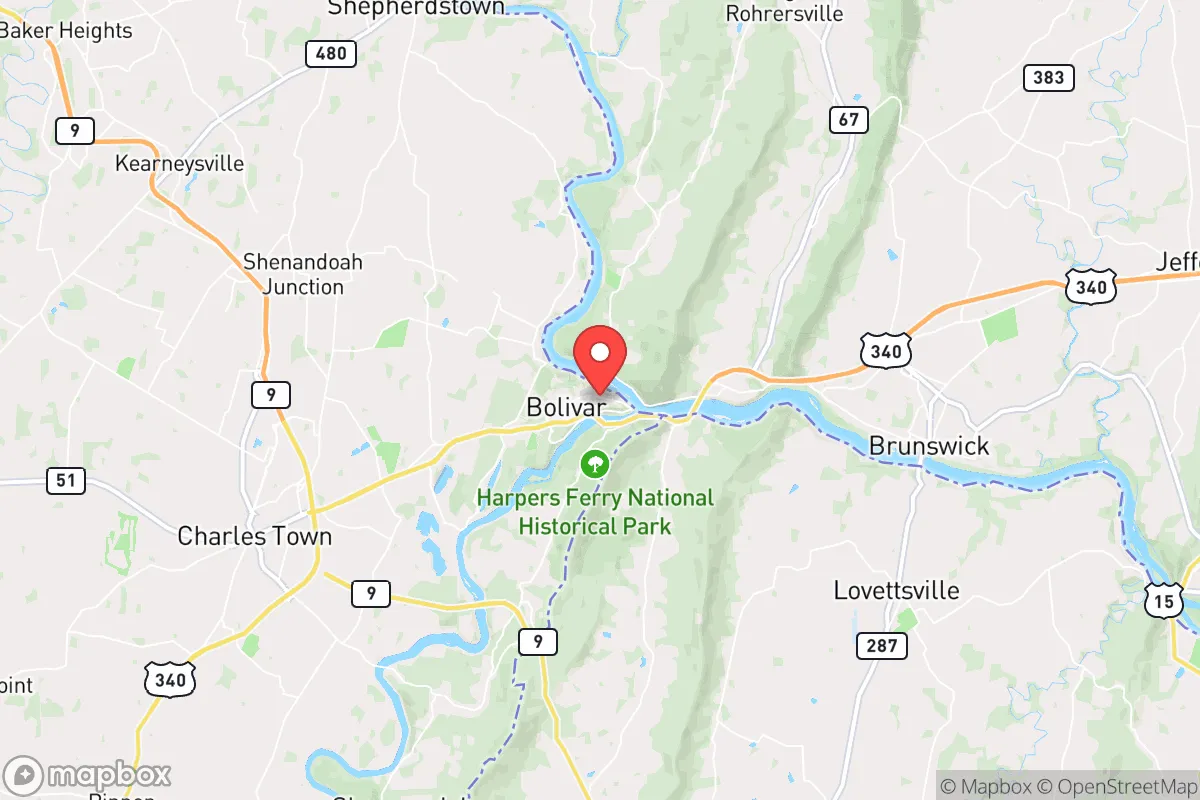
Personal Sovereignty in Harpers Ferry, WV
Strong independent fundamentals that actively favor personal liberty and low regulation.
What does Personal Sovereignty tell us?
Personal Sovereignty measures your capacity for self-reliance and independence with minimal government friction. Higher scores mean fewer barriers between you and the way you want to live... but it assumes you have the space you need and good neighbors.
What does this tell us?
Personal Sovereignty measures your capacity for self-reliance and independence with minimal government friction. Higher scores mean fewer barriers between you and the way you want to live... but it assumes you have the space you need and good neighbors.
State Policy
Energy independence: Net exporter (200% of energy produced in-state)
Personal Liberty
Homesteading

Personal Liberty Analysis
Harpers Ferry, West Virginia, offers a notably high degree of personal sovereignty compared to many mid-Atlantic destinations, largely due to the state’s consistently light-touch regulatory posture and strong protections for individual rights. While the town itself carries a historic, tourism-oriented character, its legal and economic environment is shaped by West Virginia’s broader commitment to limited government, low taxation, and expansive personal liberties. For a relocation-minded individual or family who prioritizes autonomy—whether in financial decisions, self-defense, medical choices, or daily life—Harpers Ferry presents a compelling balance of small-town atmosphere and structural freedom.
Tax burden and regulatory climate in Jefferson County
West Virginia ranks among the most tax-friendly states in the U.S., and Jefferson County—home to Harpers Ferry—reflects that posture. The state imposes a flat personal income tax rate of 3.15% as of 2026, following a multi-year phase-down from a previously graduated system. Property taxes are among the lowest in the nation, with effective rates averaging roughly 0.55% of assessed home value. Jefferson County’s levy rates are moderate by state standards, but the absence of a state-level property tax and caps on annual assessment increases keep the burden predictable. There is no state estate or inheritance tax, and the sales tax is a modest 6%, with groceries exempt. Business regulation is similarly light: West Virginia is a right-to-work state, and occupational licensing requirements are less extensive than in neighboring Maryland or Virginia. For a self-employed individual, remote worker, or small business owner, the administrative overhead is noticeably lower than across the Potomac. The county’s zoning in and around Harpers Ferry is relatively permissive outside the historic district, though the National Park Service overlay imposes some design and use restrictions within the town core. Overall, the tax and regulatory environment leans strongly toward personal financial autonomy.
Self-defense rights and gun law specifics in West Virginia
West Virginia is a constitutional carry state, meaning no permit is required to carry a concealed firearm for any law-abiding adult 21 or older. This policy, enacted in 2016 and expanded in subsequent sessions, reflects a broad legislative commitment to the right to keep and bear arms. The state also has a strong preemption law that prohibits local governments—including Jefferson County and the town of Harpers Ferry—from enacting their own firearm ordinances. This means gun laws are uniform statewide, and local officials cannot impose magazine capacity limits, waiting periods, or additional registration requirements. Stand-your-ground principles apply, with no duty to retreat in any place where a person has a legal right to be. The state also provides robust civil and criminal immunity for lawful self-defense actions. For a reader concerned with personal protection, West Virginia’s legal framework is among the most protective in the region. The only notable restriction is that carrying a firearm into a federal building—including Harpers Ferry National Historical Park visitor centers—is prohibited under federal law, though the park itself generally allows carry in accordance with state law. For daily life outside federal facilities, the legal environment strongly supports individual self-defense decisions.
Self-reliance and homesteading viability: lot sizes, zoning, and off-grid feasibility
Harpers Ferry’s location in the eastern panhandle places it within commuting distance of Washington, D.C., but its rural character still supports meaningful self-reliance. Outside the compact historic district, Jefferson County zoning allows for agricultural and residential uses on relatively large parcels. Minimum lot sizes in rural residential zones are typically 1 to 3 acres, and many properties in the surrounding area are 5 acres or more, providing space for gardens, small livestock, and personal food production. The county’s building code follows the state’s relatively minimal standards, and there is no county-wide prohibition on rainwater collection, composting toilets, or solar panel installation. Off-grid living is legally feasible, though the county does require a permit for a private well and septic system, which must meet state health department standards. The cost of these systems is moderate, and the permitting process is straightforward compared to more regulated jurisdictions. Internet access is generally reliable via fixed wireless or satellite, which supports remote work—a key enabler of self-reliant lifestyles. The local agricultural extension office offers resources for small-scale farming and livestock management. For a family seeking to reduce dependence on external systems, the regulatory environment in Jefferson County is accommodating without being permissive to the point of neglect. The main constraint is proximity to the Potomac River floodplain, which affects a small number of parcels and requires flood insurance in designated zones.
Personal liberties: parental rights, medical autonomy, speech, and property
West Virginia has enacted several laws that reinforce individual and family autonomy. Parental rights in education are explicitly protected under state law, including a Parents’ Bill of Rights that guarantees access to curriculum materials and the ability to opt children out of specific instruction. Homeschooling is straightforward, requiring only a simple notice and an annual assessment, with no mandated curriculum or teacher qualifications. The state also has a robust school choice program, including charter schools and education savings accounts for students with special needs. On medical autonomy, West Virginia does not mandate COVID-19 or childhood vaccination for school attendance, though individual school policies may vary. The state has not expanded Medicaid under the Affordable Care Act in a way that creates a coverage gap, but private health insurance remains the norm for most residents. There is no state-level mandate for health insurance coverage of specific treatments, and direct primary care arrangements are legal and increasingly common. Property rights are strongly protected: there is no statewide rent control, and the state’s eminent domain laws require just compensation and public use, with recent legislative efforts narrowing the definition of public use. Free speech protections are robust, and the state has not enacted hate speech laws that go beyond First Amendment standards. For a reader who values the ability to make independent decisions about family, health, and property without government interference, West Virginia’s legal environment is consistently supportive.
In the broader context of the mid-Atlantic region, Harpers Ferry stands out as a location where personal sovereignty is structurally embedded in state law and local practice. The combination of low taxes, constitutional carry, permissive land use, and strong protections for parental and property rights creates an environment where individuals and families can exercise a high degree of autonomy in daily life. While the town’s historic district imposes some aesthetic and use restrictions, these are narrow in scope and do not undermine the overall freedom of the area. For a relocation-minded reader who prioritizes independence and self-reliance, Harpers Ferry offers a rare blend of rural liberty and regional accessibility.

* Values derived from national, state, county, city and local statistics and may differ in a specific area. Last updated: 2026-07-21T20:00:45.000Z
Narrative content on this page is AI-generated and may contain mistakes. Verify any details that matter before acting on them.
ReloMaps may earn a commission from affiliate links at no extra cost to you.

