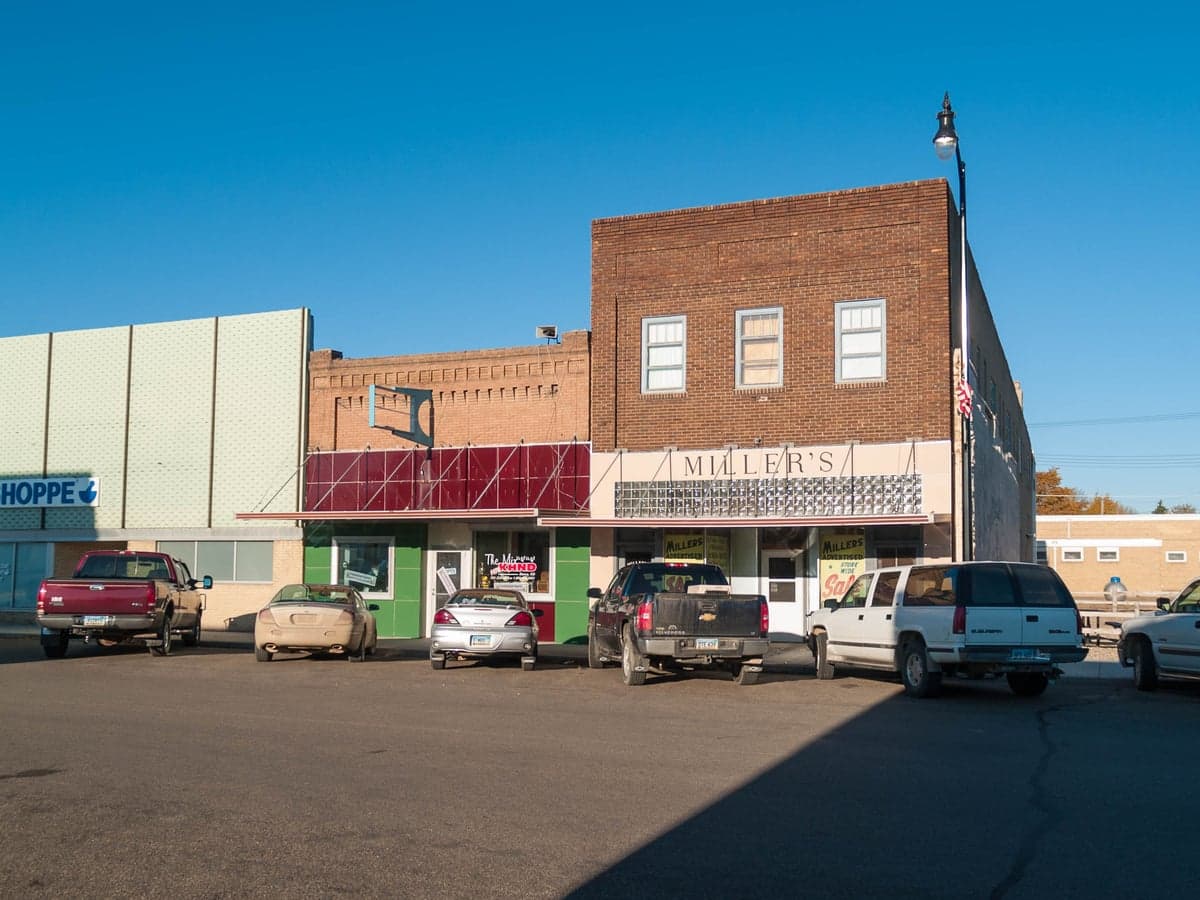
Photo: Wikipedia
Political ClimatePolitical Climate in Harvey, ND
District shown is the primary district for this city’s centroid. Cities may span multiple districts.
Inherited from parent state — no local data available.
Local Political AnalysisPolitical Analysis of Harvey, ND
Harvey, North Dakota, is about as solidly conservative as it gets, with a Cook PVI of R+18 that puts it deep in the red. This isn't a place that's drifted left over the years; it's held its ground, and if anything, the local sentiment has hardened against the kind of progressive overreach you see in bigger cities. The political lean here isn't just about voting patterns—it's a way of life, rooted in personal responsibility, limited government, and a healthy skepticism of anyone telling you how to live your life from Bismarck or Washington D.C.
How it compares
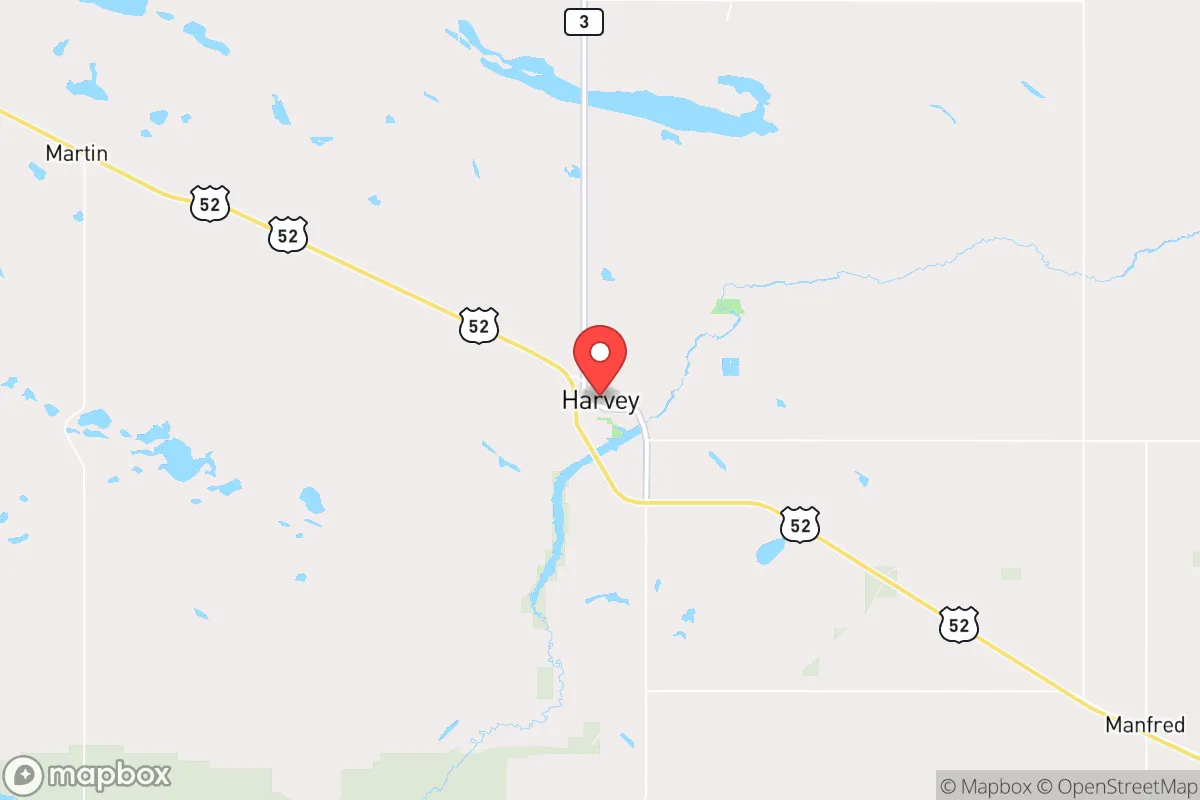
Drive an hour south to Bismarck, and you'll find a more moderate, business-friendly conservatism that's still solid but has a bit more of a "chamber of commerce" feel. Head west to Minot, and you get a similar rural conservative vibe, though the Air Force base brings in a transient population that can shift things slightly. But Harvey? It's surrounded by small towns like Fessenden and Bowdon that share the same values, making this whole region a conservative stronghold. The real contrast is with places like Fargo or Grand Forks, where you see more college-town influence and a creeping acceptance of progressive ideas—things like DEI initiatives in schools or local governments getting too cozy with federal grant strings attached. Harvey residents look at that and see a loss of freedom, plain and simple.
What this means for residents
For folks living here, the political climate means a lot less government interference in daily life. Property taxes are a perennial concern—everyone grumbles about them—but there's no talk of a city income tax or overreaching zoning rules that tell you what you can do with your own land. The local school board and city council are filled with people who believe in local control, not state mandates. You won't see mask mandates or vaccine passports being pushed here; that kind of thing was met with a collective eye-roll and a "we'll do what we think is best." The trade-off is that public services are lean—don't expect a lot of fancy parks or transit options—but most residents prefer it that way. They'd rather keep their tax money and their freedom than fund programs they didn't ask for.
That said, there's a quiet concern among long-time residents about the direction of the state as a whole. North Dakota's legislature has been reliably conservative, but there's been a slow creep of federal money into local projects, and with it, federal strings. Some worry that the next generation might be more open to "progressive" ideas if they spend too much time online or move away for college. For now, though, Harvey remains a place where the Second Amendment is a given, not a debate, and where the biggest political fights are about keeping the county commission from raising levies, not about social experiments. It's a good place to be if you value your privacy and your rights, and the people here intend to keep it that way.

State Political ClimatePolitical Climate in North Dakota
State Political AnalysisPolitical Environment in the State
North Dakota has long been one of the most reliably Republican states in the country, with a deep-rooted conservative culture that has only solidified over the past two decades. The state hasn’t voted for a Democratic presidential candidate since Lyndon B. Johnson in 1964, and in 2024, Donald Trump carried it by over 20 points. The dominant coalition is a mix of rural agricultural communities, energy-sector workers in the Bakken oil fields, and a growing population of conservative-leaning transplants fleeing higher-tax states. Over the last 10-20 years, the shift has been subtle but real: the old “prairie populist” Democrats who once held statewide offices have all but vanished, replaced by a solidly red legislature and a governor’s mansion that hasn’t seen a Democrat since 1992. That said, the state’s small population means local politics can still feel personal, and the political climate is more about quiet consensus than loud division.
Urban vs. rural divide
The political map of North Dakota is straightforward: the rural areas are deep red, and the few urban centers lean slightly more moderate but still vote Republican. Fargo, the largest city, is the state’s most politically diverse area—Cass County voted for Trump by about 12 points in 2024, down from 18 in 2020, reflecting some suburban drift. Bismarck and Mandan in Burleigh County are reliably red, with Trump winning by over 30 points. Grand Forks, home to the University of North Dakota, is a bit more moderate but still solidly Republican, thanks to a strong military and agricultural base. The real contrast is in the oil patch: Williston and Watford City in the northwest are among the most conservative areas in the state, driven by energy workers who value low taxes and minimal regulation. The only real blue dot is the Turtle Mountain Indian Reservation near Belcourt, which leans Democratic, but its population is too small to shift statewide results. If you’re moving here, expect your neighbors to be conservative regardless of whether you’re in town or country—the difference is just a matter of degree.
Policy environment
North Dakota’s policy environment is a conservative’s dream, with a focus on low taxes, limited regulation, and individual freedom. There is no state income tax—a major draw for relocators—and property taxes are among the lowest in the nation, though they vary by county. The state’s regulatory posture is business-friendly, especially in energy and agriculture; the oil boom in the Bakken was fueled by a “drill, baby, drill” ethos that kept permitting fast and red tape thin. Education policy is locally controlled, with school choice options like open enrollment and a growing charter school presence, though most families stick with traditional public schools. Healthcare is a mixed bag: the state expanded Medicaid under the Affordable Care Act in 2013, a move that still rankles some conservatives, but there’s no state-level push for government-run systems. Election laws are solid—voter ID is required, early voting is available, and there’s no evidence of the fraud controversies that plague other states. Governor Doug Burgum, a Republican, has signed pro-business and pro-energy bills, but he’s also been criticized by some on the right for not being aggressive enough on cultural issues. Overall, the policy environment is stable and predictable, with a strong presumption against government overreach.
Trajectory & freedom
North Dakota is trending toward more freedom, not less, especially compared to coastal states. Recent legislation has expanded gun rights: in 2023, the state passed a permitless carry law, allowing any legal resident to carry a concealed firearm without a license. Parental rights got a boost with the 2021 “Parents’ Bill of Rights,” which requires schools to notify parents about curriculum changes and medical services. On medical autonomy, the state has resisted COVID-19 mandates aggressively—Governor Burgum signed a law in 2021 banning vaccine passports, and the legislature has repeatedly blocked any state-level mask or vaccine requirements. Property rights are strong, with no state-level rent control and minimal eminent domain abuse. Taxation is trending downward: the legislature has cut income tax rates multiple times, and there’s a serious push to eliminate the corporate income tax entirely. The only area of concern for freedom advocates is the state’s reliance on federal farm subsidies and oil revenue, which creates a dependency that some see as a long-term risk. But for now, North Dakota is one of the few states where personal liberty is expanding, not contracting.
Civil unrest & political movements
North Dakota is remarkably stable compared to the rest of the country, but it’s not without its flashpoints. The most notable was the Standing Rock protests in 2016-2017, where thousands of activists—including many from out of state—clashed with law enforcement over the Dakota Access Pipeline. The protests were a major left-wing mobilization, but they also galvanized conservative support for energy development and law-and-order policies. Since then, the state has seen little civil unrest; the “Freedom Convoy” movement that hit Canada in 2022 had a small echo in North Dakota, with truckers rallying in Bismarck against vaccine mandates, but it fizzled quickly. Immigration politics are quiet—the state has a tiny foreign-born population (about 4%), and there’s no sanctuary city movement. Election integrity is a non-issue here; the state’s paper ballot system and voter ID laws are widely trusted. The only organized political movements are the usual conservative groups—local GOP clubs, pro-life organizations, and Second Amendment advocates—alongside a small but vocal progressive presence in Fargo and Grand Forks. A new resident would notice that political disagreements are handled with Midwestern civility, not street confrontations.
Projection
Over the next 5-10 years, North Dakota is likely to become more conservative, not less, driven by two trends. First, in-migration from blue states—especially California, Minnesota, and Illinois—is bringing people who are fleeing high taxes and progressive policies, and they tend to vote Republican once they arrive. Second, the energy sector continues to attract workers who value economic freedom and distrust government regulation. The biggest demographic shift is the aging of the rural population, which could lead to a slight moderation in the far-flung counties, but the growth of Fargo and the oil patch will keep the state red. The wildcard is the University of North Dakota and North Dakota State University—if they continue to attract out-of-state students who stay after graduation, they could inject a small liberalizing influence, but it’s unlikely to flip any statewide races. Expect the legislature to keep cutting taxes, expanding gun rights, and pushing back on federal overreach. If you’re moving here now, you’ll find a state that’s doubling down on its conservative identity, not drifting toward the center.
For a new resident, the bottom line is this: North Dakota offers a political climate where your freedoms are respected, your taxes are low, and your voice matters. The state is small enough that you can actually influence local politics—attend a town hall in Minot or Dickinson, and you’ll see your neighbors shaping policy. The trade-off is a slower pace of life and a climate that demands resilience, but if you value liberty and community, this is one of the last places in America where both are still thriving. Just be prepared for long winters and short conversations about politics—most folks here would rather talk about hunting or hockey than argue about the latest culture war.
* Values derived from national, state, county, city and local statistics and may differ in a specific area. Last updated: 2026-04-19T08:01:05.000Z
Narrative content on this page is AI-generated and may contain mistakes. Verify any details that matter before acting on them.
ReloMaps may earn a commission from affiliate links at no extra cost to you.

