Photo: Wikipedia
Quality of Life in Havre De Grace, MD
Above-average quality of iife. The area offers a reasonable cost of living, decent mobility, and a mix of neighborhood amenities.
What does Quality of Life tell us?
Quality of Life blends cost of living, nearby amenities, socioeconomic signals, and neighborhood character. City-level scores represent the whole municipality; individual neighborhoods can differ.
What does this tell us?
Quality of Life blends cost of living, nearby amenities, socioeconomic signals, and neighborhood character. City-level scores represent the whole municipality; individual neighborhoods can differ.
Cost of Living
17% above national average
The Real Cost of Living in Havre De Grace, MD for 2026
| Tier | Individual | Family (4) |
|---|---|---|
| Survival | $21k | $39k |
| Comfortable | $68k | $100k |
| Luxury | $171k+ | $265k+ |
| Elite (Top 5%) | $201k+ | $312k+ |
107%
The Area Signal
A metric tracking the socioeconomic signals of the area.


Hobbies
Explore the areaGroceries
2 within 10 miles
Gas
0 within 10 miles
Hospital
3 within 20 miles
Airport
BWI — Baltimore/Washington International Thurgood Marshall Airport (BWI)
Post Office
USPS — Bel Air, MD
Critical Amenities
Quality-of-Life Analysis
Havre de Grace is an affluent waterfront community in Harford County, Maryland, where the cost of living index of 117 sits 17% above the national average, attracting a mix of young professionals, retired military families, and second-home buyers drawn to its historic charm and Chesapeake Bay access. The city’s population of roughly 14,000 skews older and more educated than the state median, with a median household income near $75,000 that supports a stable, amenity-rich lifestyle. Residents often describe the town as a “small city with a big heart,” balancing tourist-friendly promenades with quiet residential streets lined with Victorian-era homes.
Cost of living, housing affordability, and how Havre de Grace compares to nearby cities
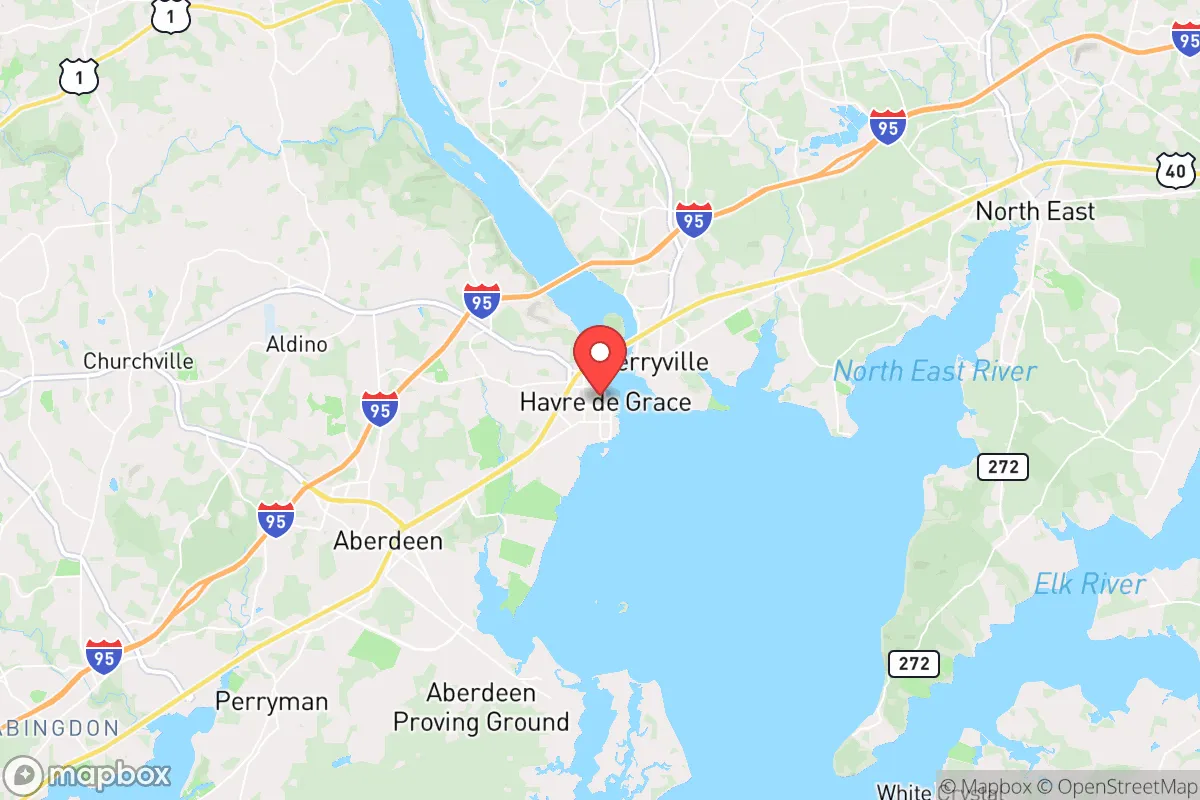
Housing in Havre de Grace is the primary driver of its above-average cost of living, with a median home value of $348,800 that is roughly 15% higher than the Harford County median of $303,000 and significantly above the national median of $280,000. Renters face a median rent of $1,314, which is competitive with nearby Aberdeen ($1,250) but notably cheaper than waterfront equivalents in Bel Air ($1,450) or Baltimore City ($1,600). The city’s housing stock is older—over 40% of homes were built before 1960—meaning buyers often pay a premium for historic character and walkable proximity to the Susquehanna River. Property taxes in Harford County average 1.02% of assessed value, slightly below the Maryland state average of 1.06%, which helps offset the higher purchase prices. For commuters, the average commute time of 27.9 minutes is shorter than the Baltimore metro average of 31 minutes, making the city a practical choice for workers at Aberdeen Proving Ground, the region’s largest employer, or those willing to take the MARC train into Baltimore (a 45-minute ride from the nearby Perryville station).
What daily life is like for families: schools, parks, and local amenities
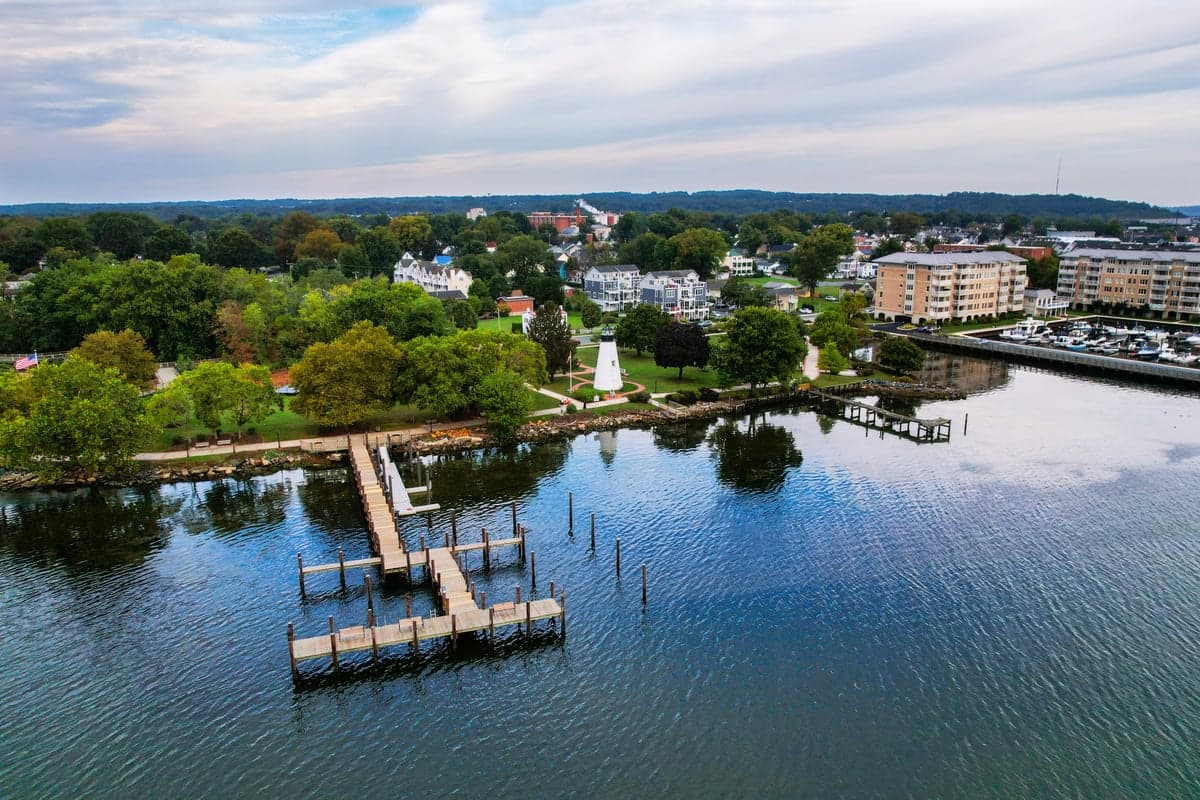
Daily life in Havre de Grace revolves around its compact, walkable downtown—a National Register Historic District—where residents can walk to the Havre de Grace Maritime Museum, the Concord Point Lighthouse, and a half-dozen waterfront parks like Tydings Memorial Park. The Harford County Public School system serves the city, with Havre de Grace Elementary and Middle Schools both rated above the state average on Maryland School Assessments, while Havre de Grace High School offers a 12:1 student-teacher ratio and a strong STEM pathway program in partnership with Aberdeen Proving Ground. For families, the city’s crime rate is 40% lower than the Maryland average, with property crime concentrated in the commercial corridor along Route 40 rather than residential neighborhoods. Weekend rhythms include the Havre de Grace Farmers Market (April–November), the annual Seafood Festival in August, and easy access to the Susquehanna State Park for hiking and kayaking. The city lacks a major hospital—the nearest is Harford Memorial Hospital in Havre de Grace itself, though it is a small critical-access facility; serious medical needs require a 20-minute drive to Upper Chesapeake Medical Center in Bel Air.
Havre de Grace is best suited for those who value historic character, waterfront recreation, and a slower pace of life without sacrificing access to Baltimore or Philadelphia (both within an hour’s drive). Retirees and remote workers will appreciate the walkable downtown and lower property taxes compared to Maryland’s Eastern Shore towns like St. Michaels or Easton. Families should weigh the higher home prices against the strong school ratings and low crime, while young professionals will find the commute to Aberdeen Proving Ground or the MARC line to Baltimore a practical trade-off for the city’s charm. Those seeking nightlife, diverse dining, or a large hospital within walking distance may find the city too quiet, but for a peaceful, history-rich lifestyle on the Chesapeake, Havre de Grace delivers a distinct quality of life that justifies its premium cost.

Crime in Havre De Grace, MD
Lower crime rates than 83% of comparable U.S. locations.
Violent CrimeViolent Crime Analysis
Property CrimeProperty Crime Analysis
Crime Analysis
Havre de Grace, Maryland, presents a mixed safety profile: its violent crime rate of 78.3 incidents per 100,000 residents is significantly lower than both the Maryland state average and national figures, while its property crime rate of 1,168.4 per 100,000 sits notably higher than the national median. This disparity means residents generally face a low risk of violent victimization but should remain vigilant about theft, burglary, and vehicle-related crime. The city’s location within Harford County, part of the broader Baltimore-Washington metropolitan area, places it under the jurisdiction of a state court system that has increasingly adopted progressive prosecutorial policies, a factor that directly impacts public safety outcomes.
Crime in context
Havre de Grace’s violent crime rate is roughly one-third the national average of approximately 380 per 100,000, and well below Maryland’s state rate of about 450 per 100,000. This places the city among the safer small municipalities in the region for violent offenses. However, property crime tells a different story: at 1,168.4 per 100,000, it exceeds the national average of roughly 1,950 per 100,000 but is still lower than many comparable towns in the metro area. The most common property crimes are larceny-theft and motor vehicle theft, with burglary occurring less frequently. These figures reflect a community where opportunistic property crime is a tangible concern, particularly in areas with higher foot traffic or transient populations.
What residents experience
Daily life in Havre de Grace feels relatively safe, especially in the historic downtown and waterfront districts where police presence is visible and community watch programs are active. Residents report feeling comfortable walking alone during daylight hours, though caution is advised after dark in less-trafficked residential streets. The city’s proximity to I-95 and the Amtrak station means transient crime—such as vehicle break-ins at park-and-ride lots—is a recurring issue. A more systemic concern is the influence of progressive criminal justice policies in Harford County and the broader Maryland court system. Liberal-leaning district attorneys and judges in the region have implemented bail reform, reduced sentencing guidelines for non-violent offenders, and expanded diversion programs. While intended to reduce incarceration, these policies have resulted in repeat property offenders cycling through the system quickly, directly undermining deterrence and increasing the likelihood of recidivism. For Havre de Grace residents, this means property crime rates may remain stubbornly high even as violent crime stays low, as offenders face fewer consequences for theft and burglary.
Neighborhood-level variation is modest but notable. The Concord Point and Tydings Island areas, with their higher property values and active neighborhood associations, report the lowest crime incidents. In contrast, the Route 40 corridor and areas near the city’s public housing complexes see elevated rates of both property crime and occasional drug-related offenses. The city’s overall safety is best described as strong for violent crime, but undermined by a property crime problem exacerbated by lenient regional justice policies. Prospective residents should weigh the low violent crime risk against the reality of a justice system that prioritizes offender rehabilitation over public protection, a trade-off that directly affects daily security in this otherwise charming Chesapeake Bay community.
* Values derived from national, state, county, city and local statistics and may differ in a specific area. Last updated: 2026-04-19T06:59:54.000Z
Narrative content on this page is AI-generated and may contain mistakes. Verify any details that matter before acting on them.
ReloMaps may earn a commission from affiliate links at no extra cost to you.

