Photo: Wikipedia
Demographics of Hedgesville, WV
Affluence Level in Hedgesville, WV
An upper-middle-class area. Household wealth, education levels, and homeownership run ahead of national benchmarks.
People of Hedgesville, WV
Hedgesville, West Virginia, is a small, tight-knit community of 349 residents where nearly nine in ten people are White (89.1%) and the foreign-born population stands at 0.0%. The town’s character is defined by its rural, family-oriented atmosphere, low population density, and a strong sense of local heritage rooted in its 19th-century founding. With a college-educated rate of 18.6%, the population is predominantly working-class, and the absence of significant racial or ethnic diversity reflects a community that has remained demographically stable for generations.
How the city was settled and grew
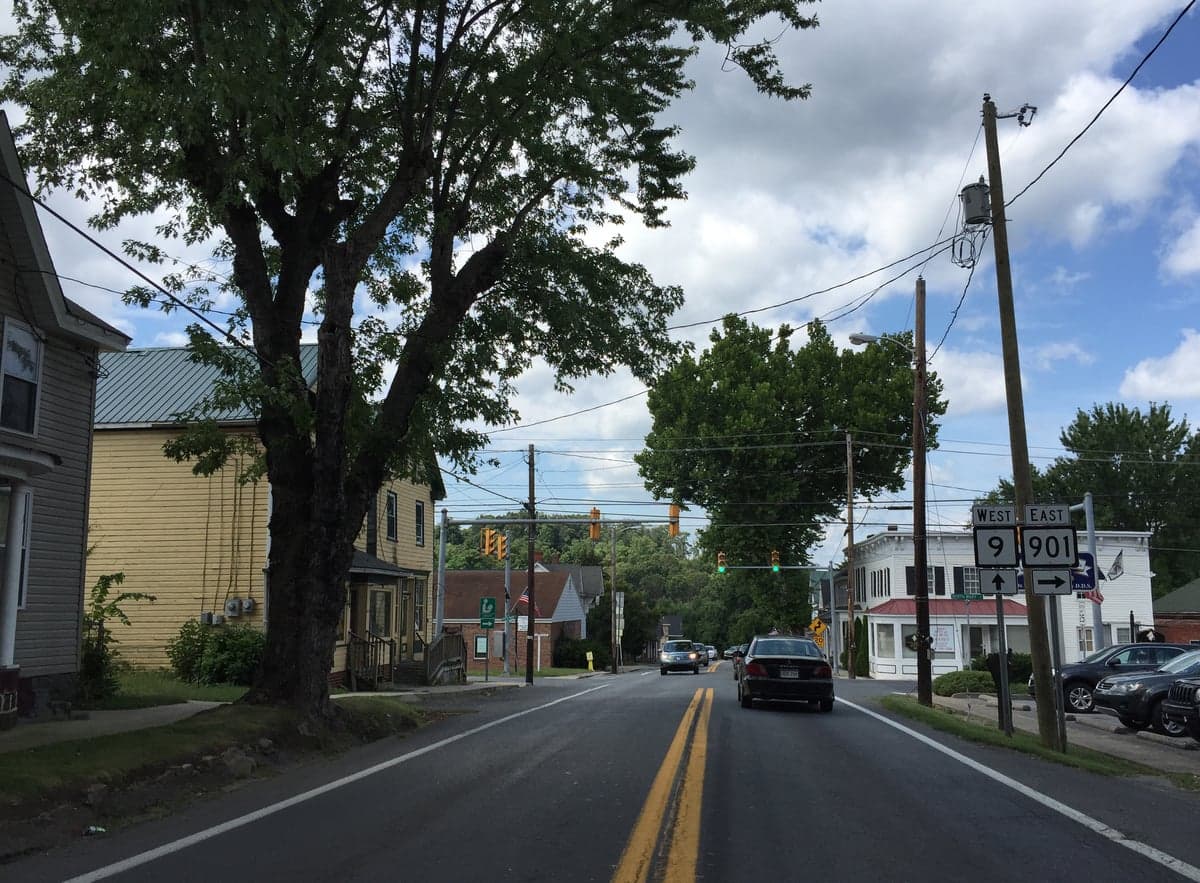
Hedgesville was originally settled in the late 1700s by European-American pioneers of English, Scottish, and German descent, drawn by the fertile land of the Shenandoah Valley and the promise of agricultural opportunity. The town was officially laid out in 1836 by the Hedges family, who owned much of the surrounding farmland and established the village as a trading post along the old Martinsburg-to-Winchester road. The earliest residents clustered around what is now Hedgesville Historic District, a small core of 19th-century homes and a single main street that still anchors the town. Through the 19th and early 20th centuries, the population grew slowly as families worked the land, operated gristmills, and served the local farming economy. The arrival of the Baltimore and Ohio Railroad in the late 1800s spurred modest growth, but Hedgesville never industrialized; it remained a quiet agricultural hamlet. By the mid-20th century, the population had barely reached a few hundred, with most residents living in the Old Town area along Hedgesville Road and the surrounding rural homesteads.
Modern era (post-1965)
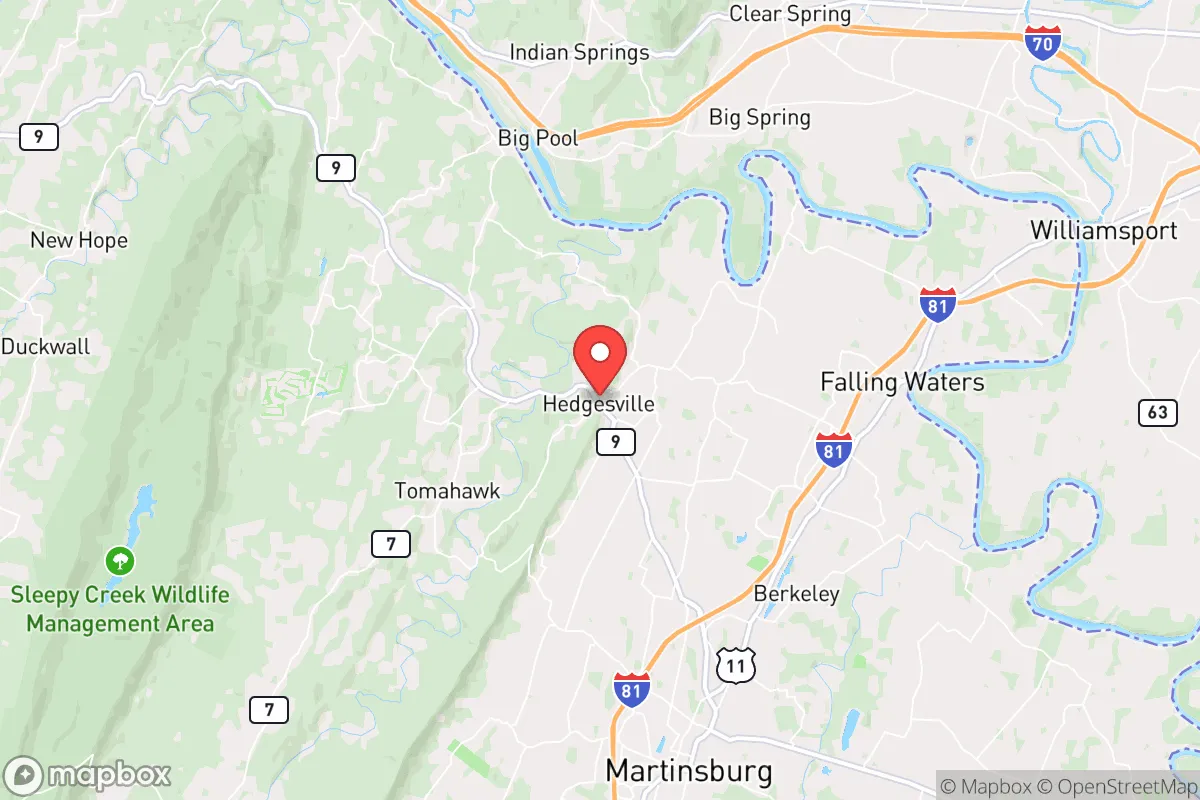
After the 1965 Hart-Cellar Act, Hedgesville saw virtually no change in its ethnic composition—the foreign-born population remains 0.0% today, and the town never attracted immigrant communities. Instead, the modern era has been defined by domestic in-migration from nearby urban centers, particularly from the Washington, D.C., and Baltimore metropolitan areas. Starting in the 1990s, families seeking lower taxes, safer schools, and a slower pace of life began moving into new subdivisions on the outskirts of town. These newcomers, overwhelmingly White and middle-class, settled in developments such as Hedgesville Estates and Mountain View Acres, which expanded the town’s footprint beyond the historic core. The Black population, at 3.2%, and the Hispanic population, at 2.3%, are small and largely concentrated in the South Hedgesville area, a modest cluster of homes near the Berkeley County line. The Asian population is 0.0%, and the Indian-subcontinent population is also 0.0%, reflecting the town’s lack of attraction for immigrant groups. The college-educated rate of 18.6% is significantly lower than the national average, indicating that most residents work in trades, agriculture, or service jobs in nearby Martinsburg or Hagerstown, Maryland.
The future
Hedgesville’s population is likely to remain small and predominantly White for the foreseeable future. The town lacks the economic drivers—major employers, universities, or transportation hubs—that attract diverse populations. The 0.0% foreign-born share is unlikely to rise significantly, as the area offers few jobs for immigrants and no established ethnic enclaves. The Hispanic and Black populations may grow slightly as spillover from Berkeley County’s modest diversification reaches the town, but these shifts will be incremental. The most notable trend is the continued in-migration of White families from the D.C. metro area, who are drawn by relatively affordable housing in subdivisions like Hedgesville Crossing and Willow Creek. This influx is slowly raising the town’s population but also creating a subtle divide between long-time residents in the historic district and newcomers in the newer subdivisions. Over the next 10-20 years, Hedgesville will likely become a more commuter-oriented bedroom community, but its demographic profile will remain overwhelmingly White and native-born.
For someone moving in now, Hedgesville offers a stable, low-diversity environment where community ties are strong and change comes slowly. The town is becoming a quiet refuge for families seeking escape from urban pressures, but it offers little in the way of cultural diversity or economic opportunity. It is a place where the past still shapes the present, and where the future will look much like today.

* Values derived from national, state, county, city and local statistics and may differ in a specific area. Last updated: 2026-04-23T06:09:08.000Z
Narrative content on this page is AI-generated and may contain mistakes. Verify any details that matter before acting on them.
ReloMaps may earn a commission from affiliate links at no extra cost to you.

