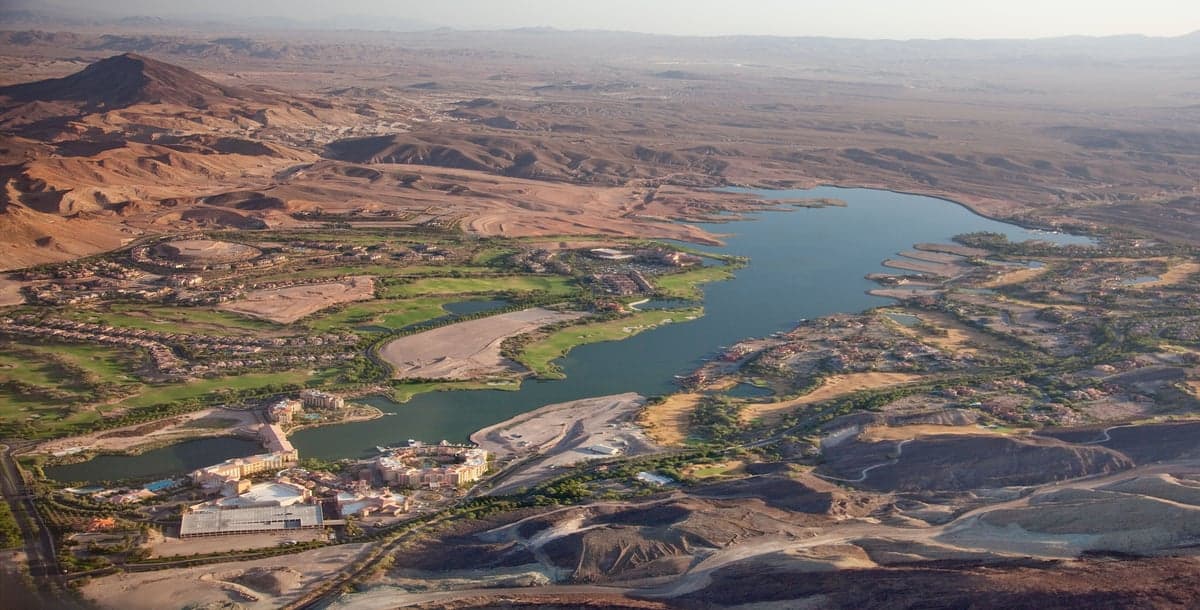
Photo: Wikipedia
Strategic Assessment of Henderson, NV
Multiple tactical vulnerabilities. Population density, target proximity, or disaster risk are likely compounding. A retreat property and exit planning is required.
What does the Strategic Assessment tell us?
Our Strategic Assessment grades tactical survivability of an area. Major population centers, military targets, fallout zones, natural disasters, and border exposure all drive risk — lower exposure means a more defensible position in a crisis.
This is heavily inspired by Joel Skousen's Strategic Relocation book. Highly recommended you checkout the book ($)What does this tell us?
Our Strategic Assessment grades tactical survivability of an area. Major population centers, military targets, fallout zones, natural disasters, and border exposure all drive risk — lower exposure means a more defensible position in a crisis.
This is heavily inspired by Joel Skousen's Strategic Relocation book. Highly recommended you checkout the book ($)Strategic Pillars

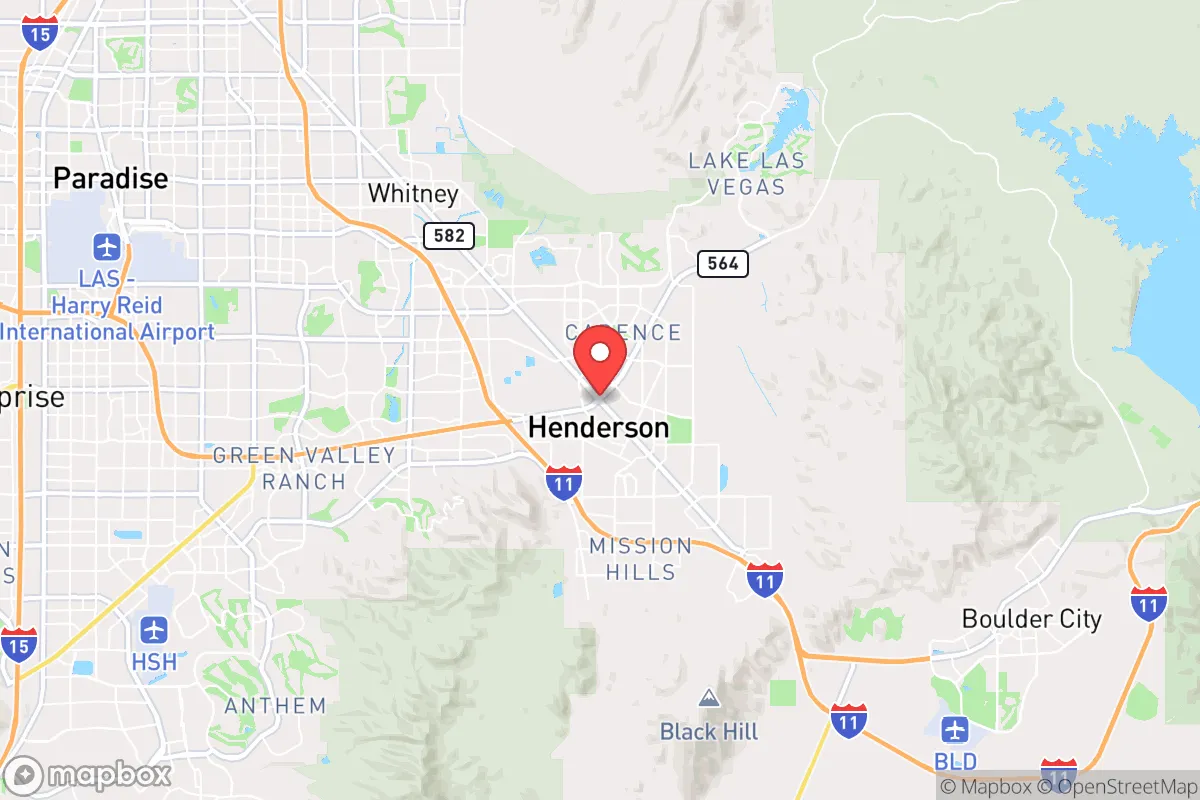
Key Distances
Regional Safe Places
Below is our recommended "safe zones" in Nevada and the surrounding area based on our strategic heuristics. For most people, it's unrealistic to live in a “safe zone” full-time due to work, family or other personal reasons. They tend to be more rural. However, many of these areas are perfect for second homes and retreat properties that double as a vacation home or even a short-term rental.
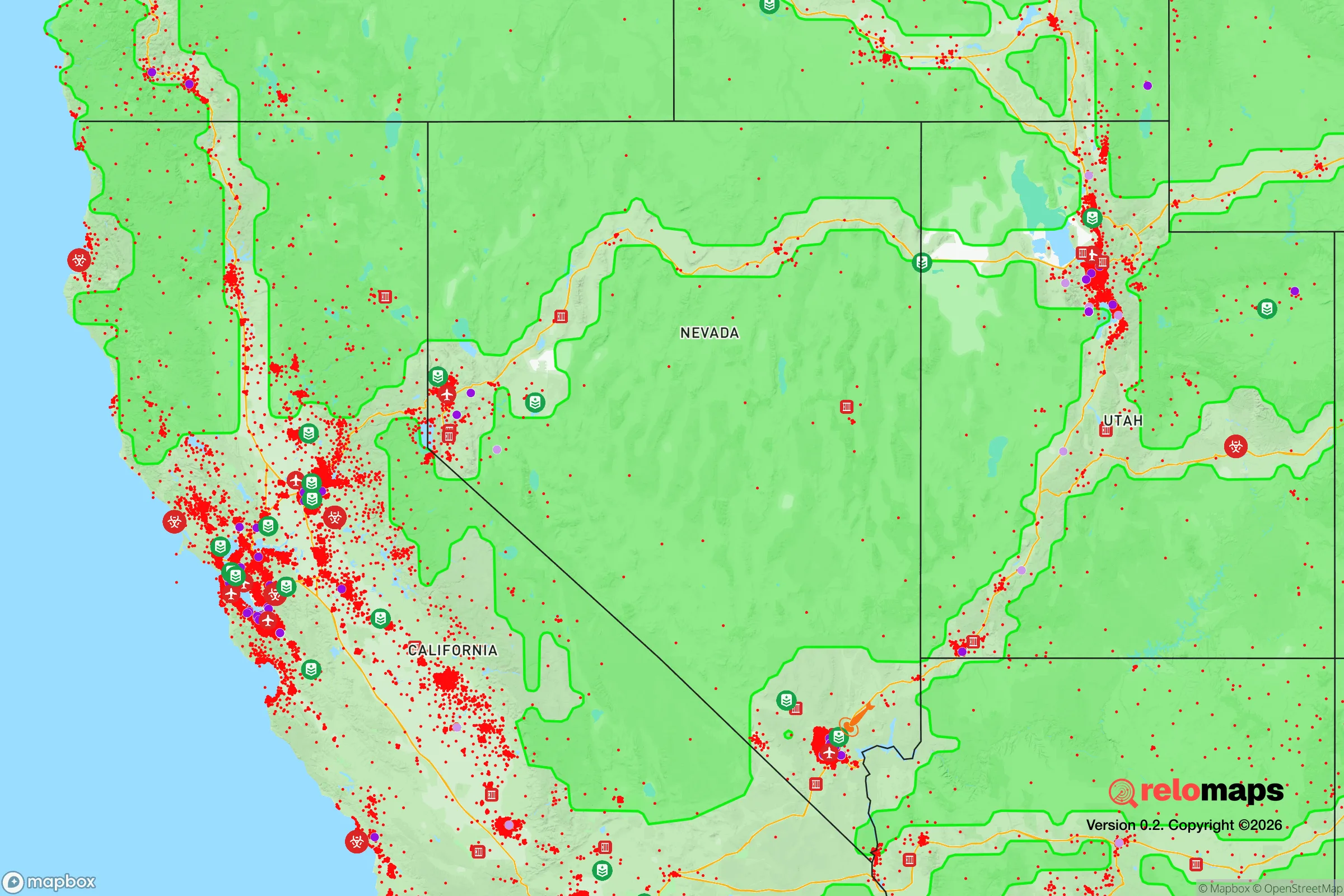
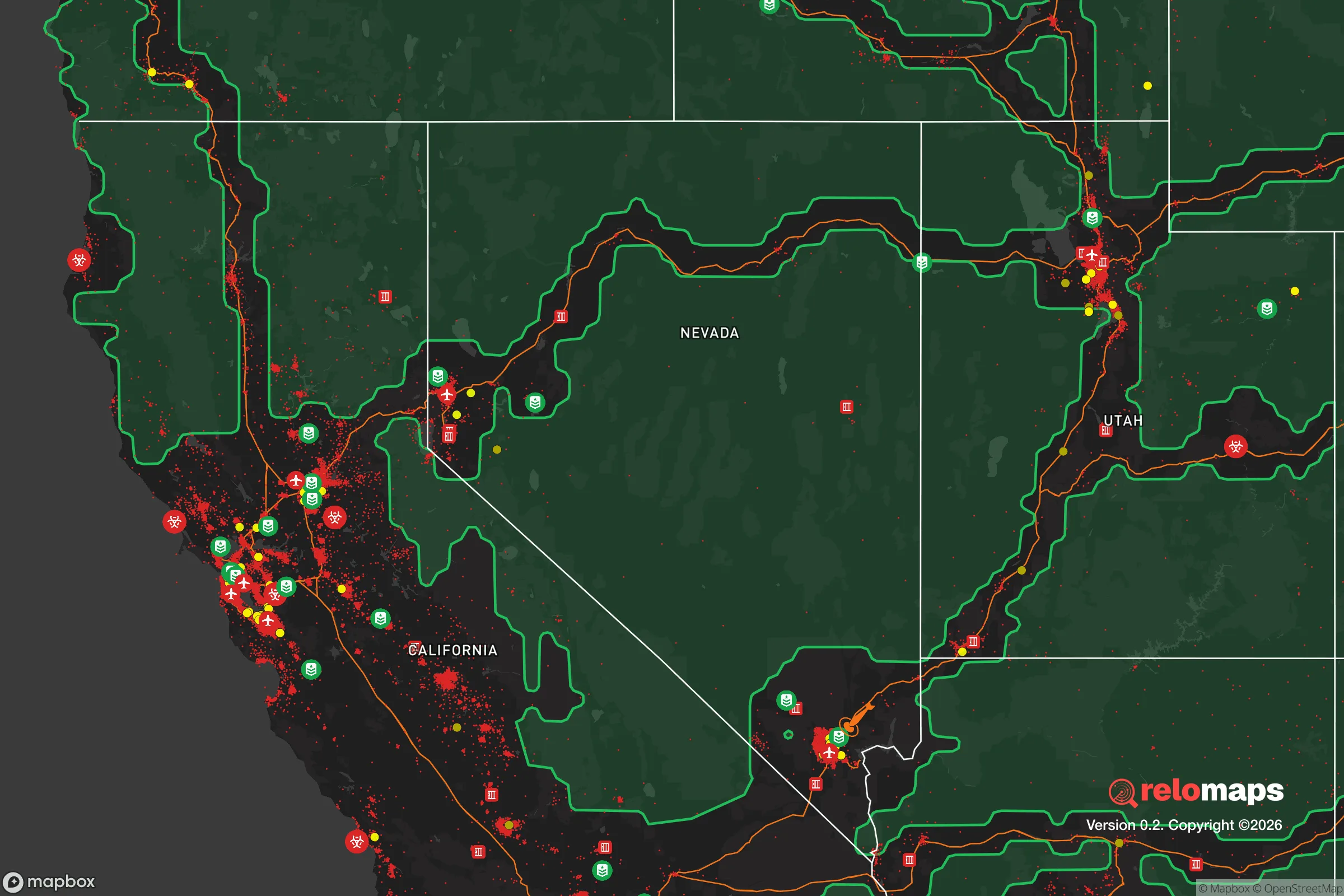


Important Note: For informational purposes only. This does not mean nothing bad ever happens in the green zones. Please use common sense. This is based on public data and modeled with AI. We tried to take a conservative approach but mistakes happen. We update this regularly as new information becomes available.
Solar Generator Recommendations
Backup power matters more here than in safer locations. We've picked three solar generators across budgets and capacity tiers — start with the budget unit if you only need a few essentials, or step up if you want to run a fridge and HVAC for days at a time.

Jackery Portable Power Station Explorer 300
Budget OptionPower on the Go: Weighing only 11 lbs, it's convenient to set up and store with book-sized foldable solar panels

BLUETTI Portable Power Station AC180
Designed for both indoor and outdoor scenarios, AC180 is highly capable as it has a robost capacity and continuous output power.

EF ECOFLOW DELTA Pro Ultra Power Station
Upgraded PickEcoFlow DELTA Pro Ultra is a whole-home energy system designed to grow with your family. Integrated with the Smart Home Panel 2, it scales to meet your evolving energy needs — keeping your home powered, intelligent, and secure through every stage of life.
We earn a commission, at no additional cost to you.
Strategic Assessment Analysis
Henderson, Nevada, often marketed as a master-planned suburb of Las Vegas, presents a deeply contradictory picture for the conservative prepper or survivalist. On one hand, its location in the Mojave Desert offers a degree of natural isolation and a low-humidity environment that is inhospitable to many biological threats. On the other hand, its proximity to the Las Vegas Strip, a global target for terrorism and mass casualty events, and its extreme dependence on fragile infrastructure make it a high-risk, high-reward proposition. For a single individual or family willing to accept the trade-offs, Henderson offers a unique blend of defensible terrain and access to resources, but only if you understand the specific vulnerabilities baked into the landscape.
Geographic position and natural advantages for long-term survival
Henderson sits at the southeastern edge of the Las Vegas Valley, nestled against the McCullough Range and the Lake Mead National Recreation Area. This positioning provides a critical natural buffer: the mountains to the east and south create a physical barrier that limits easy overland access from the open desert, offering a degree of natural defensibility. The area’s arid climate, while harsh, is a double-edged sword. It drastically reduces the risk of vector-borne diseases like Lyme disease or West Nile virus, which plague wetter regions, and the low humidity preserves stored food and ammunition far longer than in the Gulf states. The proximity to Lake Mead, despite its declining water levels, remains a strategic asset. It is the primary water source for the entire valley, and while the Colorado River compact is under immense strain, the lake itself provides a massive, if contested, reservoir. For a relocator, the ability to tap into this water source—legally or otherwise—is a significant advantage over areas reliant solely on groundwater or distant aquifers. The surrounding desert also offers vast, open spaces for off-grid living, though land ownership and water rights are tightly controlled by the federal Bureau of Land Management and the state.
Risks, exposures, and proximity to fallout-relevant landmarks
The most glaring vulnerability for Henderson is its unavoidable proximity to the Las Vegas Strip, a high-value target for any adversary seeking to inflict mass casualties and economic disruption. A coordinated attack on the Strip—whether via a vehicle-borne improvised explosive device, a drone swarm, or a radiological dispersal device—would instantly overwhelm the region’s medical infrastructure, including Henderson’s own St. Rose Dominican and Dignity Health facilities. The fallout from such an event would not be limited to radiation; the resulting panic, road blockages, and resource hoarding would cascade into Henderson within hours. Furthermore, the area sits within a few hundred miles of the Nevada National Security Site (formerly the Nevada Test Site), where decades of above-ground and underground nuclear testing occurred. While the site is now used for subcritical experiments and emergency response training, the presence of residual contamination and the potential for a terrorist strike on the site itself cannot be dismissed. The nearby Nellis Air Force Base, home to the U.S. Air Force Warfare Center, is a dual-edged sword: it provides a robust military response capability, but it also makes the region a legitimate military target in any conflict with a peer adversary. For the prepper, the risk of being caught in a secondary blast radius or a grid-down scenario from an EMP attack on Nellis is a real, calculable threat.
Practical resilience for a relocator: food, water, energy, and defensibility
For a single individual or family looking to establish a resilient homestead, Henderson presents a mixed bag. Water is the single greatest limiting factor. The city’s municipal supply is entirely dependent on the Southern Nevada Water Authority’s infrastructure, which draws from Lake Mead via a series of pumps and tunnels. A prolonged power outage or a deliberate sabotage of the Hoover Dam or the water intake structures would leave the valley with less than a week of stored water. A serious prepper must secure a private well (rare and expensive in the valley) or a rainwater catchment system, though annual rainfall is only about 4 inches. Food storage is more feasible due to the dry climate; freeze-dried and dehydrated goods last exceptionally well here. Local gardening is possible with shade cloth and drip irrigation, but the alkaline soil requires significant amendment. Energy resilience is a bright spot. Nevada has abundant solar resources, and Henderson’s building codes are increasingly friendly to rooftop solar and battery storage. A grid-down scenario would still be a challenge, but a well-designed off-grid solar system with a propane backup generator can provide reliable power for a small household. Defensibility is a mixed picture. The newer master-planned communities like Green Valley and Anthem are designed with limited entry points, which can be a tactical advantage for neighborhood watch or community defense. However, these same choke points can become deadly traps if a mob or organized group decides to target the area. The older, less planned parts of Henderson near Boulder Highway are more porous and harder to secure. For a relocator, the ideal property is on the eastern edge of the city, near the foothills, where you have a clear line of sight to approaching threats and multiple egress routes into the desert.
The overall strategic picture for Henderson is one of calculated risk. It is not a bug-out location for the unprepared; it is a staging ground for the disciplined prepper who understands that self-sufficiency is not optional here—it is mandatory. The area’s dependence on fragile infrastructure, its proximity to high-value targets, and its harsh environment mean that a relocator cannot rely on the government or the local community for support in a crisis. However, for those willing to invest in water storage, solar power, and a defensible property, Henderson offers a unique combination of natural barriers, dry storage conditions, and access to a massive (if contested) water source in Lake Mead. The conservative mindset that values personal responsibility, preparedness, and community defense will find fertile ground here, but only if you treat the city as a base of operations, not a sanctuary. The desert does not forgive mistakes, and Henderson’s comforts are a thin veneer over a landscape that demands respect and constant vigilance. If you are looking for a place to ride out the storm, this is a viable option—but only if you bring your own storm shelter.

* Values derived from national, state, county, city and local statistics and may differ in a specific area. Last updated: 2026-04-15T23:42:49.000Z
Narrative content on this page is AI-generated and may contain mistakes. Verify any details that matter before acting on them.
ReloMaps may earn a commission from affiliate links at no extra cost to you.

