
Photo: Wikipedia
Strategic Assessment of Hermitage, PA
Meaningful friction. Expect exposure to either population pressure, blast zones, or natural disaster risk. Consider buying a retreat property.
What does the Strategic Assessment tell us?
Our Strategic Assessment grades tactical survivability of an area. Major population centers, military targets, fallout zones, natural disasters, and border exposure all drive risk — lower exposure means a more defensible position in a crisis.
This is heavily inspired by Joel Skousen's Strategic Relocation book. Highly recommended you checkout the book ($)What does this tell us?
Our Strategic Assessment grades tactical survivability of an area. Major population centers, military targets, fallout zones, natural disasters, and border exposure all drive risk — lower exposure means a more defensible position in a crisis.
This is heavily inspired by Joel Skousen's Strategic Relocation book. Highly recommended you checkout the book ($)Strategic Pillars

Key Distances
Regional Safe Places
Below is our recommended "safe zones" in Pennsylvania and the surrounding area based on our strategic heuristics. For most people, it's unrealistic to live in a “safe zone” full-time due to work, family or other personal reasons. They tend to be more rural. However, many of these areas are perfect for second homes and retreat properties that double as a vacation home or even a short-term rental.
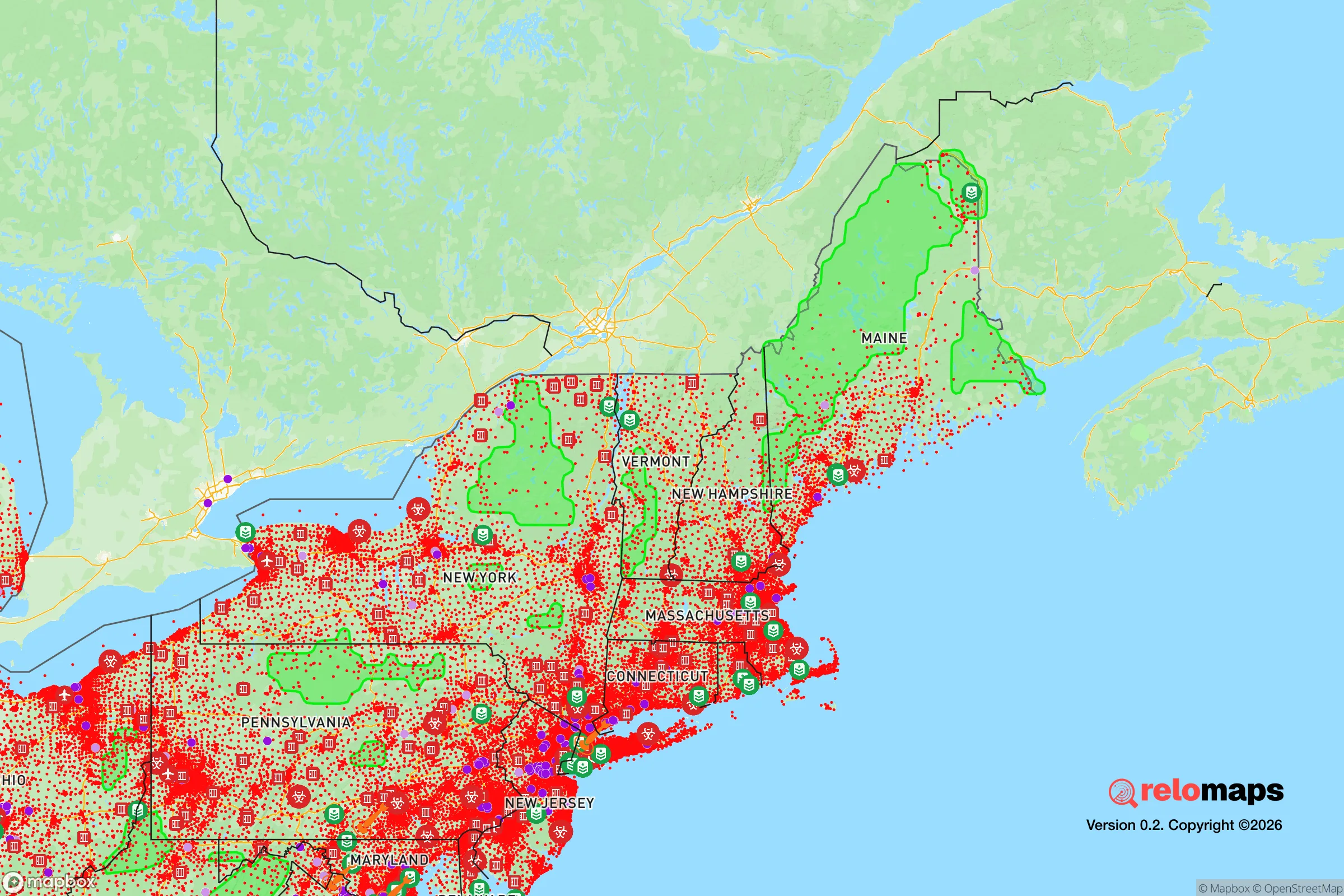
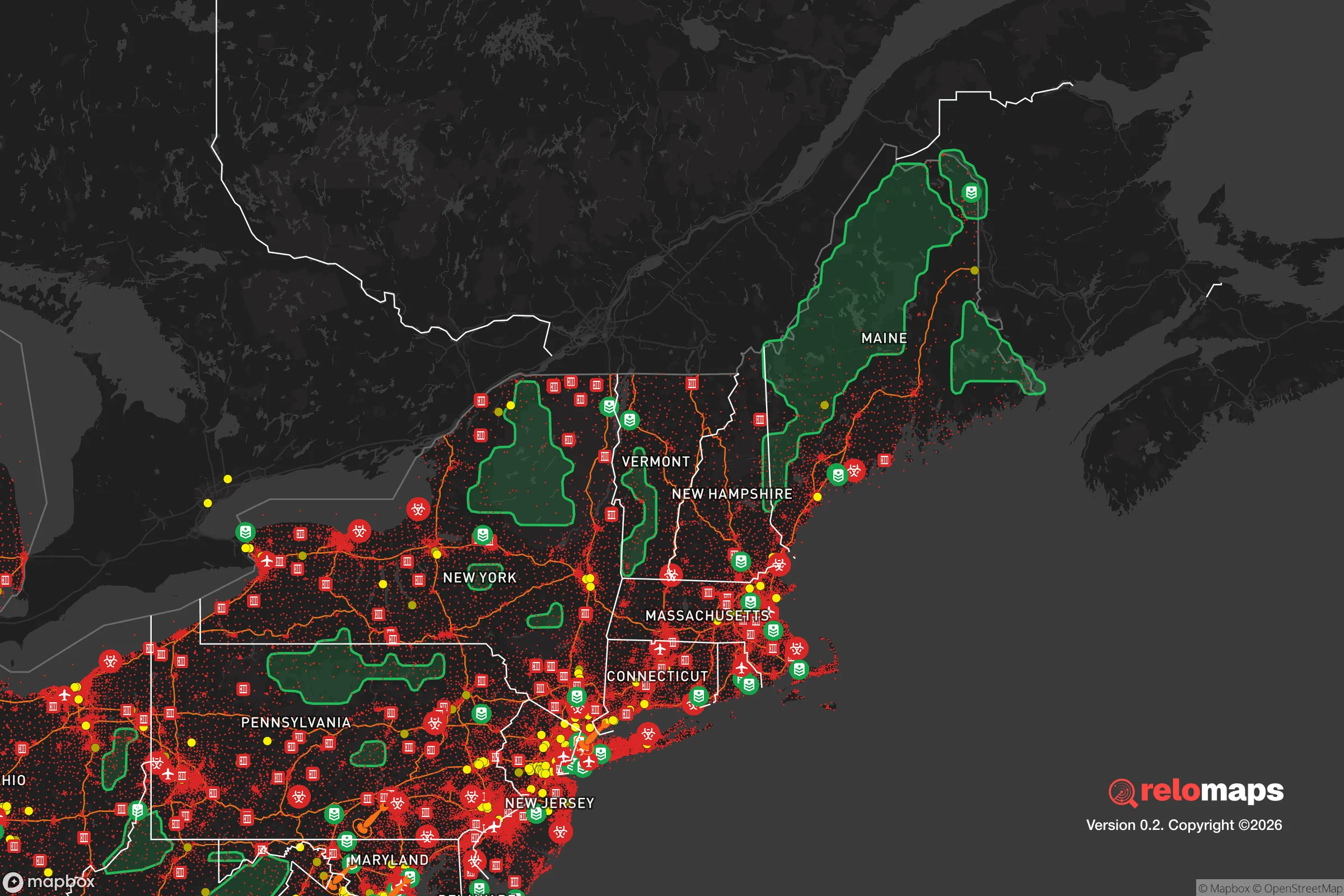


Important Note: For informational purposes only. This does not mean nothing bad ever happens in the green zones. Please use common sense. This is based on public data and modeled with AI. We tried to take a conservative approach but mistakes happen. We update this regularly as new information becomes available.
Solar Generator Recommendations
Backup power matters more here than in safer locations. We've picked three solar generators across budgets and capacity tiers — start with the budget unit if you only need a few essentials, or step up if you want to run a fridge and HVAC for days at a time.

Jackery Portable Power Station Explorer 300
Budget OptionPower on the Go: Weighing only 11 lbs, it's convenient to set up and store with book-sized foldable solar panels

BLUETTI Portable Power Station AC180
Designed for both indoor and outdoor scenarios, AC180 is highly capable as it has a robost capacity and continuous output power.

EF ECOFLOW DELTA Pro Ultra Power Station
Upgraded PickEcoFlow DELTA Pro Ultra is a whole-home energy system designed to grow with your family. Integrated with the Smart Home Panel 2, it scales to meet your evolving energy needs — keeping your home powered, intelligent, and secure through every stage of life.
We earn a commission, at no additional cost to you.
Strategic Assessment Analysis
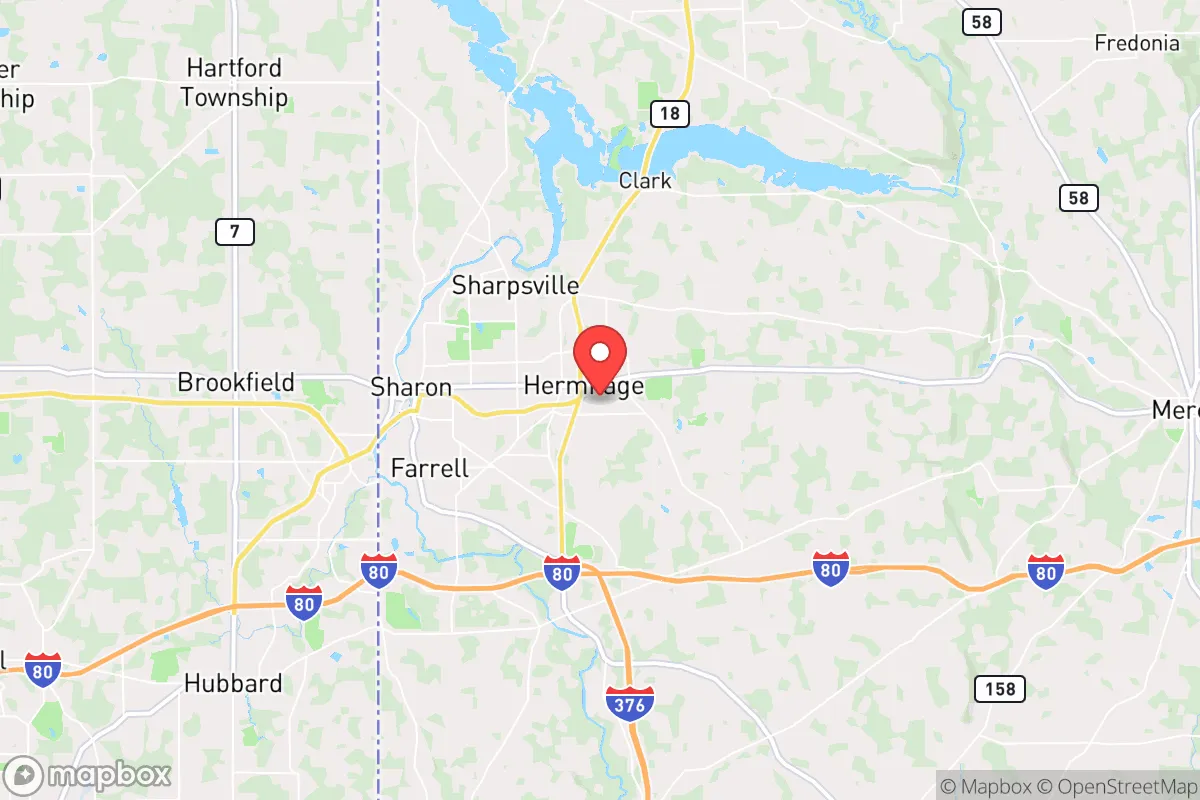
Hermitage, Pennsylvania, offers a surprisingly resilient strategic position for those prioritizing self-reliance and distance from major metropolitan vulnerabilities, sitting squarely in the "Shale Crescent" of western PA. Its location provides a buffer from the immediate fallout zones of larger cities like Pittsburgh (about 75 miles south) and Cleveland (about 70 miles west), while still granting access to their resources in calmer times. For a relocator with a prepper mindset, the area’s low population density, industrial backbone, and proximity to the Great Lakes water supply make it a serious contender for a long-term base of operations.
Geographic position and natural advantages for long-term security
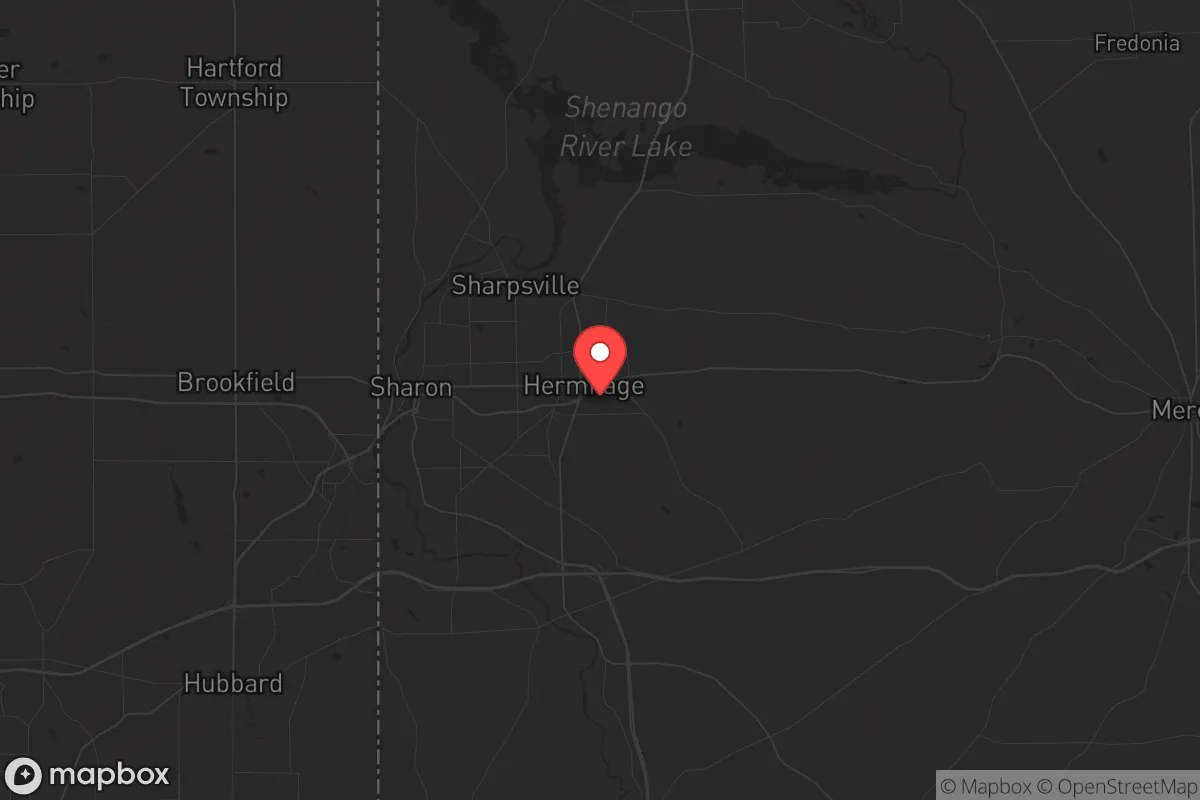
Hermitage sits in Mercer County, a region that benefits from being off the major interstate corridors that would become chokepoints during an evacuation or crisis. Interstate 80 runs just north of the city, providing a viable east-west route, but the city itself is not a primary target for mass transit or logistical disruption. The area is part of the Appalachian Plateau, offering rolling hills and wooded terrain that provide natural cover and defensible positions without the extreme isolation that makes resupply difficult. The Shenango River runs through the city, and the nearby Shenango River Lake (a U.S. Army Corps of Engineers project) offers a substantial freshwater reservoir. For a prepper, access to surface water that isn't solely dependent on municipal infrastructure is a critical advantage, especially when considering long-term drought or grid failure scenarios. The local climate is temperate, with four distinct seasons, meaning you can grow food in the summer and rely on passive solar heating in the winter, but you'll also need to plan for snow and cold snaps that could complicate off-grid living.
Risks, exposures, and proximity to fallout-relevant landmarks
No location is without risk, and Hermitage has specific exposures that a strategic relocator must weigh. The most significant concern is the proximity to the Beaver Valley Nuclear Power Station, located about 40 miles south in Shippingport, PA. While 40 miles provides a substantial buffer against a direct blast or immediate radiation zone, prevailing winds from the southwest could carry fallout toward Mercer County in a major event. You should have a radiation detection kit and a plan for sheltering or moving north or east if that scenario unfolds. Additionally, the region is within 100 miles of the Youngstown Air Reserve Station (Ohio) and the Pittsburgh International Airport, both potential military or logistical targets in a conflict scenario. On the plus side, Hermitage is not near any major petrochemical refining complexes, large-scale ammunition plants, or major military bases that would make it a primary target. The biggest day-to-day risk is more mundane: severe weather, including tornadoes and winter storms, which can knock out power for days. The area is not in a floodplain for the most part, but low-lying areas near the Shenango River could see localized flooding during heavy rains. For a conservative-leaning relocator, the lack of dense urban populations nearby means less risk of civil unrest spilling over from cities like Pittsburgh or Cleveland, though you should still plan for isolated incidents in the county seat of Mercer or Sharon, which have higher poverty rates.
Practical resilience for a relocator: food, water, energy, and defensibility
For a prepper, the practicalities of daily life in Hermitage are encouraging. Water is the single most important resource, and the area has it in abundance. The Shenango River Lake is a reliable surface water source, and the water table in the region is high enough that shallow wells are feasible in many rural parcels. You should still stockpile at least a 90-day supply of bottled water and have a Berkey or similar gravity filter system. Food production is viable—the growing season runs from late April to mid-October, and the soil in Mercer County is a mix of silt loam and clay, which can be amended for vegetable gardens. Local farmers' markets and Amish communities in the surrounding countryside provide a network for bartering and acquiring seeds, livestock, and tools without relying on big-box stores. For energy, the region has decent solar potential (about 4.5 peak sun hours per day), but you'll need a battery bank to handle the overcast winters. Wood heating is the most practical backup—the area is heavily forested, and a wood stove or outdoor boiler can keep you warm even if the grid goes down for weeks. Defensibility is moderate: the terrain is not mountainous, but the patchwork of farmland, woods, and small towns creates natural chokepoints on the two-lane roads. A well-chosen property with a long driveway, a creek or pond for water, and a clear line of sight to the road would be ideal. The local gun culture is strong, and Mercer County has a high rate of firearm ownership, which means you won't stand out as an outlier, but it also means you should expect that many of your neighbors are armed. Community is a double-edged sword—the area has a strong sense of local identity and a "mind your own business" attitude that can be a blessing for privacy, but you'll need to build trust slowly if you want to form a mutual assistance group.
The overall strategic picture for Hermitage is one of balanced resilience with manageable trade-offs. It is not a remote bunker location—you are within a two-hour drive of two major cities, which means you have access to medical centers, supply chains, and evacuation routes in a slow-moving crisis. But in a fast-moving collapse or nuclear event, that proximity becomes a liability. The area's industrial history (steel, manufacturing) means there is a local population with mechanical skills and heavy equipment, which is a huge asset for post-disaster rebuilding. For a conservative-leaning individual or family who wants to be prepared without going full off-grid in the wilderness, Hermitage offers a solid middle ground: good water, decent growing conditions, low crime, and a culture of self-reliance. The biggest gap is the lack of a strong, organized prepper community—you'll likely be building your network from scratch. If you can handle the winters, secure a property with a well and wood heat, and stockpile for at least six months, this area can serve as a viable long-term redoubt. Just keep an eye on that nuclear plant to the south and have a plan to move north if the wind turns bad.

* Values derived from national, state, county, city and local statistics and may differ in a specific area. Last updated: 2026-05-01T02:39:57.000Z
Narrative content on this page is AI-generated and may contain mistakes. Verify any details that matter before acting on them.
ReloMaps may earn a commission from affiliate links at no extra cost to you.

