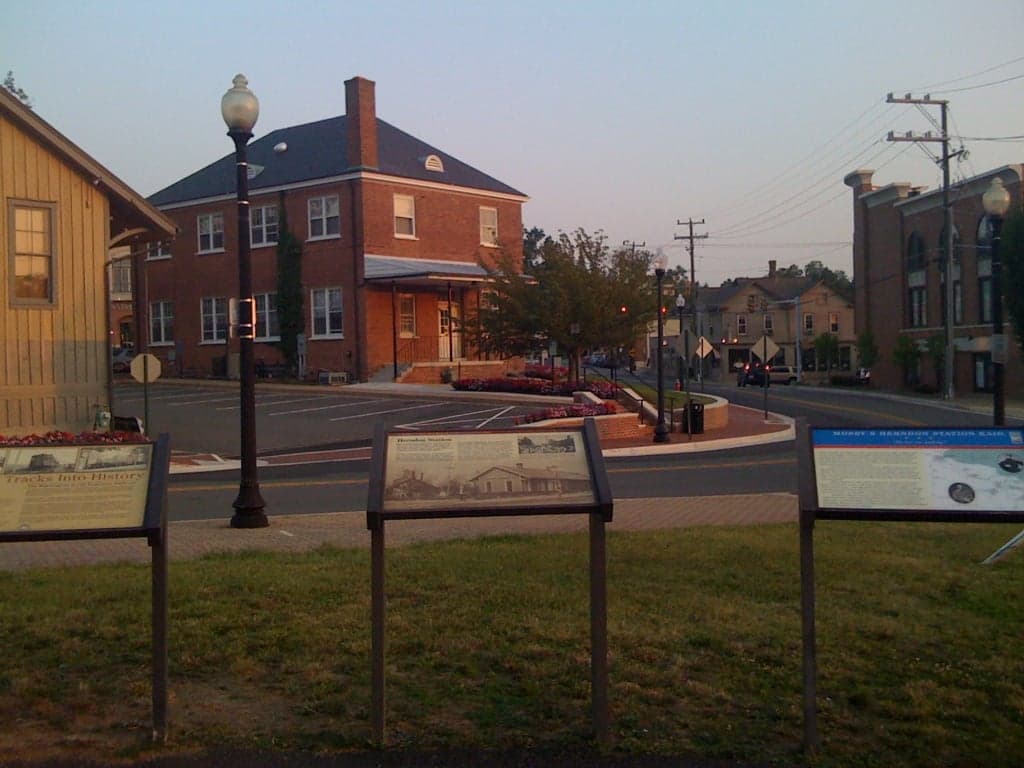
Photo: Wikipedia
Personal Sovereignty in Herndon, VA
Viable for self-reliance. Generally workable, though some barriers may limit total independence.
What does Personal Sovereignty tell us?
Personal Sovereignty measures your capacity for self-reliance and independence with minimal government friction. Higher scores mean fewer barriers between you and the way you want to live... but it assumes you have the space you need and good neighbors.
What does this tell us?
Personal Sovereignty measures your capacity for self-reliance and independence with minimal government friction. Higher scores mean fewer barriers between you and the way you want to live... but it assumes you have the space you need and good neighbors.
State Policy
Energy independence: Importer (20% of energy produced in-state)
Personal Liberty
Homesteading

Personal Liberty Analysis
For the liberty-minded individual or family evaluating Herndon, Virginia, the personal sovereignty picture is a study in contrasts: you get the practical autonomy of a well-connected suburban hub, but you operate under the long shadow of one of the most heavily regulated states in the union. Herndon sits in Fairfax County, a jurisdiction where state-level mandates on taxes, gun laws, and land use frequently override local preferences, creating an environment where self-reliance requires constant vigilance against government overreach. While the town itself has a strong sense of community and some practical advantages for preppers, the overarching legal framework in Virginia—particularly the General Assembly's recent tilt toward progressive control—means that personal freedoms are often conditional, not guaranteed. For a strategic relocation, Herndon offers proximity to federal employment and infrastructure, but the sovereignty trade-offs are significant and demand a clear-eyed assessment.
Tax burden and regulatory posture: how Virginia's fiscal policies affect your autonomy
Virginia's tax posture is a major drag on personal sovereignty, especially for those accustomed to low-tax states. The state income tax is a flat 5.75% on all taxable income, with no standard deduction for single filers—meaning every dollar you earn is subject to state confiscation from the first paycheck. Property taxes in Fairfax County run about $1.10 per $100 of assessed value, which on a median home value of roughly $650,000 translates to over $7,000 annually. That's a heavy recurring cost that funds a sprawling county bureaucracy, not your own preparedness. Sales tax is 6% (5.3% state, 0.7% local), and while groceries are exempt, most gear and supplies for self-reliance—tools, generators, bulk food—are not. The regulatory environment is equally burdensome: Fairfax County enforces strict building codes, zoning ordinances, and environmental restrictions that can block anything from a backyard workshop to a rainwater catchment system without permits. For the prepper, this means your ability to modify your property for resilience is heavily constrained by county approval processes, which can take months and cost thousands in fees. The state's business climate is also hostile to small-scale enterprise; starting a home-based side hustle for barter or income requires navigating a thicket of licenses and inspections. In short, Virginia's tax and regulatory structure is designed to extract maximum revenue and control, leaving less capital and freedom for individual preparedness.
Self-defense and gun law specifics: what you can and cannot do in Herndon
Virginia's gun laws have tightened considerably since 2020, and Herndon residents must navigate a patchwork of state and local restrictions that erode the right to keep and bear arms. The state now requires a background check for all firearm transfers, including private sales, and imposes a one-handgun-per-month limit—a direct impediment to building a robust personal armory. Open carry is legal for adults 18 and older without a permit, but concealed carry requires a permit, which involves a background check and a training course. However, the biggest sovereignty concern is the red flag law (enacted in 2020), which allows a court to issue an Extreme Risk Protective Order (ERPO) to temporarily seize firearms based on a third-party complaint, without a criminal charge or conviction. This is a clear avenue for government overreach, as it bypasses due process and can be triggered by a disgruntled neighbor or family member. Additionally, Fairfax County has its own local ordinances that can restrict firearm possession in county parks and buildings, creating a confusing legal landscape. For the survivalist, the practical takeaway is that you can legally own firearms for self-defense and hunting, but you must be meticulous about compliance—and you should expect that the legal climate will continue to tighten. Magazine capacity limits (over 10 rounds for long guns, over 12 for handguns) were proposed but not yet passed as of 2025, but the trend is clear. If you value unfettered access to firearms, Herndon is not a sanctuary.
Self-reliance and homesteading viability: lot sizes, zoning, and off-grid feasibility
Herndon's suburban density makes traditional homesteading nearly impossible. The typical residential lot is 0.25 to 0.5 acres, with most homes on slab foundations and no room for significant food production or livestock. Zoning in Fairfax County is strict: chickens are allowed only with a permit and limited to four hens (no roosters), and larger livestock like goats or rabbits for meat are prohibited in most residential zones. Gardening is permitted, but homeowners' associations (HOAs) in many Herndon neighborhoods impose additional restrictions on fences, sheds, and even the height of vegetable plants. Off-grid living is effectively illegal: the county requires connection to municipal water and sewer, and solar panels must be grid-tied with net metering approval. Rainwater collection is allowed but limited to 1,000 gallons per property, and any structure for storage requires a building permit. For the prepper seeking true self-reliance—growing food, harvesting water, generating power independently—Herndon is a poor fit. The best you can do is a suburban "deep pantry" approach: stockpiling supplies, installing a backup generator (with noise restrictions), and maintaining a small garden. But the regulatory environment is designed to keep you dependent on centralized systems. If you want acreage for a homestead, you need to look west to Loudoun County or farther into the Shenandoah Valley, where zoning is more permissive and lot sizes start at 2-5 acres.
Personal liberties: parental rights, medical autonomy, speech, and property
On personal liberties, Virginia's state-level policies often override local sentiment, and Herndon is no exception. Parental rights have been a flashpoint: the state's 2020 law requiring school boards to adopt policies on "transgender accommodation" (including allowing students to use facilities matching their gender identity without parental notification) has been a source of tension. While Fairfax County Public Schools have implemented these policies, some parents have pushed back, but the legal framework favors the state's progressive agenda. Medical autonomy is similarly constrained: Virginia has a vaccine mandate for school attendance (with limited religious exemptions), and during the COVID-19 pandemic, the state imposed broad emergency powers that allowed the governor to shut down businesses and mandate masks without legislative approval. These powers remain on the books, meaning future health emergencies could again curtail personal choice. Free speech is protected under the First Amendment, but Fairfax County has been known to enforce noise ordinances and permit requirements for public gatherings, which can chill spontaneous assembly. Property rights are the most concerning: Virginia's zoning and environmental regulations give the county broad authority to restrict land use, and the state's "by-right" development laws can force property owners to accept high-density housing nearby without recourse. For the liberty-minded, the cumulative effect is that your ability to make decisions for your family, your body, and your land is constantly subject to government approval. This is not a place where you can simply live and let live; you must actively defend your rights through legal channels.
Overall, Herndon offers a moderate level of personal sovereignty compared to deep-blue states like California or New York, but it falls far short of the freedom found in states like Texas, Florida, or New Hampshire. The tax burden is high, gun laws are restrictive and trending tighter, homesteading is impractical, and personal liberties are increasingly conditional on state mandates. For the strategic relocator with a survivalist mindset, Herndon is best viewed as a temporary base or a compromise for career necessity—not a long-term haven for self-reliance. If you must be in the D.C. area for work, it's livable with careful planning, but your sovereignty will always be under pressure from a government that sees itself as the primary decision-maker in your life. The smart move is to treat Herndon as a stepping stone to a freer jurisdiction, not a final destination.

* Values derived from national, state, county, city and local statistics and may differ in a specific area. Last updated: 2026-05-01T16:07:47.000Z
Narrative content on this page is AI-generated and may contain mistakes. Verify any details that matter before acting on them.
ReloMaps may earn a commission from affiliate links at no extra cost to you.

