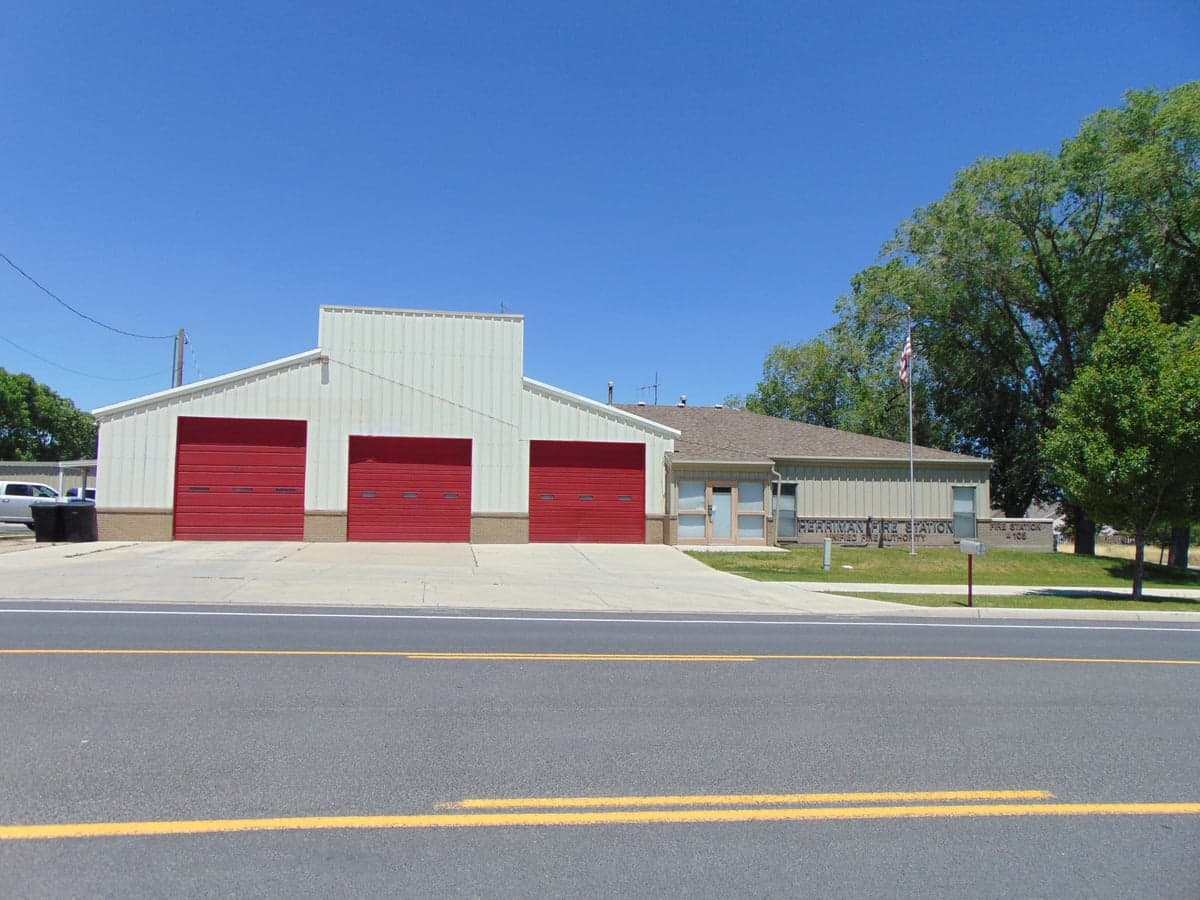
Photo: Wikipedia
Strategic Assessment of Herriman, UT
Workable tactical position. Some exposure to population density or targets, but generally defensible in a crisis.
What does the Strategic Assessment tell us?
Our Strategic Assessment grades tactical survivability of an area. Major population centers, military targets, fallout zones, natural disasters, and border exposure all drive risk — lower exposure means a more defensible position in a crisis.
This is heavily inspired by Joel Skousen's Strategic Relocation book. Highly recommended you checkout the book ($)What does this tell us?
Our Strategic Assessment grades tactical survivability of an area. Major population centers, military targets, fallout zones, natural disasters, and border exposure all drive risk — lower exposure means a more defensible position in a crisis.
This is heavily inspired by Joel Skousen's Strategic Relocation book. Highly recommended you checkout the book ($)Strategic Pillars

Key Distances
Regional Safe Places
Below is our recommended "safe zones" in Utah and the surrounding area based on our strategic heuristics. For most people, it's unrealistic to live in a “safe zone” full-time due to work, family or other personal reasons. They tend to be more rural. However, many of these areas are perfect for second homes and retreat properties that double as a vacation home or even a short-term rental.


Important Note: For informational purposes only. This does not mean nothing bad ever happens in the green zones. Please use common sense. This is based on public data and modeled with AI. We tried to take a conservative approach but mistakes happen. We update this regularly as new information becomes available.
Solar Generator Recommendations
Backup power matters more here than in safer locations. We've picked three solar generators across budgets and capacity tiers — start with the budget unit if you only need a few essentials, or step up if you want to run a fridge and HVAC for days at a time.

Jackery Portable Power Station Explorer 300
Budget OptionPower on the Go: Weighing only 11 lbs, it's convenient to set up and store with book-sized foldable solar panels

BLUETTI Portable Power Station AC180
Designed for both indoor and outdoor scenarios, AC180 is highly capable as it has a robost capacity and continuous output power.

EF ECOFLOW DELTA Pro Ultra Power Station
Upgraded PickEcoFlow DELTA Pro Ultra is a whole-home energy system designed to grow with your family. Integrated with the Smart Home Panel 2, it scales to meet your evolving energy needs — keeping your home powered, intelligent, and secure through every stage of life.
We earn a commission, at no additional cost to you.
Strategic Assessment Analysis
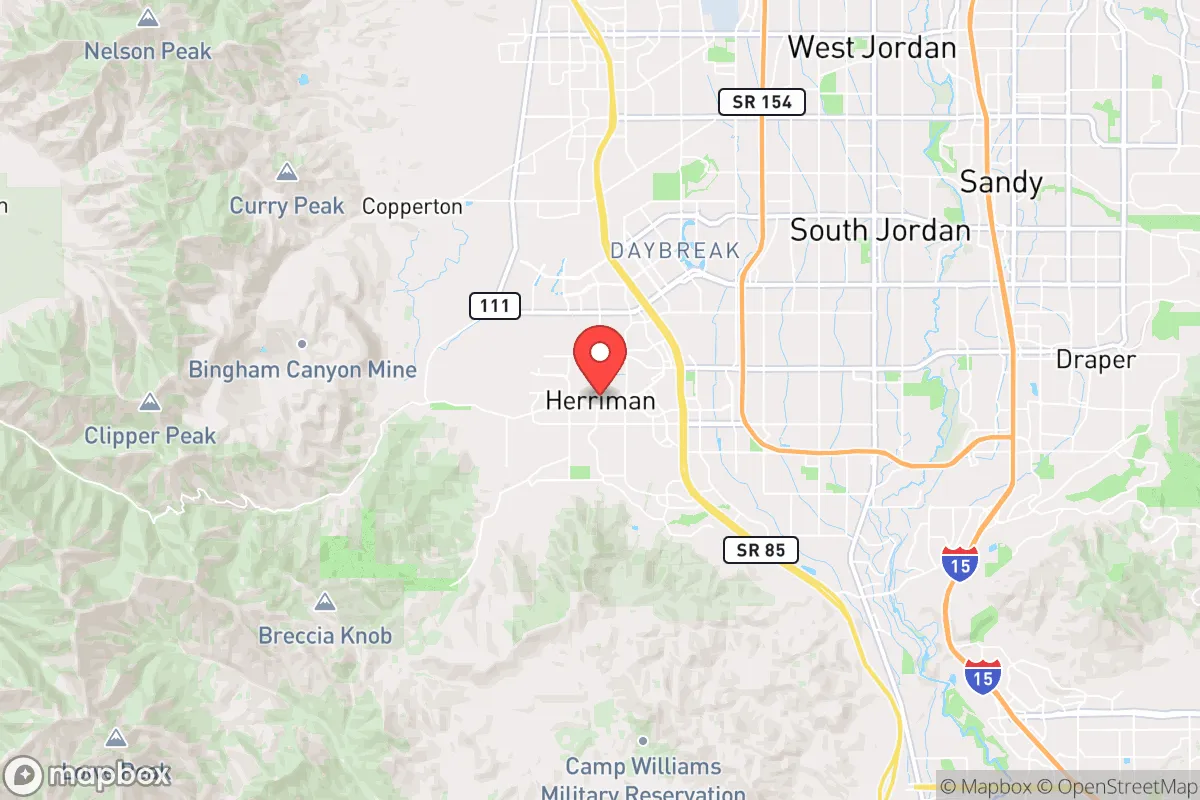
Herriman, Utah, sits in a geographic sweet spot that offers genuine strategic depth for those prioritizing resilience and self-sufficiency. Located roughly 25 miles southwest of Salt Lake City, this rapidly growing city of over 60,000 residents provides a buffer from the immediate chaos of a major metropolitan collapse while still being close enough to access critical supply chains and medical infrastructure if they remain functional. The city’s position at the base of the Oquirrh Mountains, combined with its relatively recent development (most homes built after 2000), means modern infrastructure and a community that’s still forming its identity—an advantage for newcomers looking to integrate into a preparedness-minded network.
Geographic position and natural advantages for long-term survival
Herriman’s primary strategic asset is its location within the Salt Lake Valley’s southwest corner, a natural funnel that channels movement and resources. The Oquirrh Mountains to the west and the Traverse Mountains to the south create a semi-enclosed basin that offers natural defensibility—any large-scale movement of people or vehicles into the area would be limited to a few key corridors, primarily Mountain View Corridor and Bangerter Highway. This chokepoint geography means a small, organized group could monitor or control access far more easily than in sprawling, flat suburbs like West Jordan or South Jordan. The elevation (roughly 5,000 feet) also provides a slight advantage in terms of cooler summer temperatures and reduced wildfire risk compared to lower-elevation Wasatch Front communities, though the area is not immune to fire. Water is the critical variable: Herriman sits within the Jordan River watershed, and while the city draws from the same over-allocated Colorado River system as the rest of the region, its proximity to the Oquirrhs means local groundwater and small mountain springs exist in the foothills. For a relocator, this is a non-trivial advantage—you’re not entirely dependent on a single municipal pipeline that could fail in a grid-down scenario.
Risks, exposures, and proximity to fallout-relevant landmarks
No strategic assessment is honest without confronting the downsides. Herriman’s biggest exposure is its proximity to Hill Air Force Base (roughly 40 miles north) and the Tooele Army Depot (about 30 miles west), both of which are high-value targets in any major conflict scenario. The prevailing winds in the Salt Lake Valley blow from the south and southwest, meaning fallout from a strike on Tooele could drift directly over Herriman. Additionally, the city sits near the Wasatch Fault, which runs through the valley floor—a major earthquake (the “Big One” that seismologists predict) would devastate older infrastructure in Salt Lake City but could also cause liquefaction in Herriman’s newer developments, many of which are built on alluvial soils. The city’s rapid growth has also strained its road network: only two major east-west routes (12600 South and 13400 South) connect Herriman to the rest of the valley, meaning a single accident or civil unrest event could trap residents. For the prepper mindset, this is a red flag—you need multiple egress routes, and Herriman doesn’t have them. The nearby Kennecott Copper Mine (Bingham Canyon) is another double-edged sword: it’s an industrial asset that could be a target for sabotage or a source of toxic dust if operations fail, but it also represents a potential resource for raw materials in a prolonged crisis.
Practical resilience for a relocator: food, water, energy, and defensibility
For a single individual or family looking to establish a resilient household, Herriman offers a mixed bag. Water storage is non-negotiable here—the city’s municipal supply is treated and reliable under normal conditions, but the arid climate (roughly 16 inches of annual precipitation) means you cannot rely on rainfall for gardening or emergency supply. The good news is that many newer homes have basements, which are ideal for storing water barrels and freeze-dried food. The bad news is that HOA restrictions are common in Herriman’s subdivisions, and they often prohibit visible water tanks, large gardens, or solar panels on front-facing roofs. You’ll need to be strategic—look for lots on the city’s west side (near the Oquirrh foothills) where lots are larger and HOAs are less restrictive, or consider the unincorporated areas just south of the city limits in Riverton or Bluffdale. Energy resilience is achievable: the area gets over 200 sunny days per year, making rooftop solar a viable option, but net metering policies with Rocky Mountain Power have become less favorable in recent years. A backup generator running on propane or natural gas is a more practical short-term bet. For food, the Herriman Farmers Market (summer months) and local CSAs from farms in Utah County provide some local sourcing, but the real play is building relationships with Mormon neighbors—the LDS Church’s emphasis on food storage means many households already have a year’s supply of basics, and they’re often willing to share knowledge or trade. Defensibility at the household level is decent: newer construction with stucco and concrete siding is more fire-resistant than wood frame, and the grid-style streets in most subdivisions make it easy to set up perimeter awareness. The biggest vulnerability is community cohesion—Herriman is a bedroom community where many residents commute to Salt Lake City or Lehi, meaning during a crisis, you could see a mass exodus of people trying to get home, clogging the roads and creating opportunities for looting or panic.
The overall strategic picture for Herriman is one of calculated trade-offs. It’s not a remote bug-out location—you’re still within the blast radius of a major event at Hill or Tooele, and the water situation requires serious planning. But for someone who wants to maintain a normal professional life while building a resilient household, it’s one of the better options along the Wasatch Front. The key is to buy on the periphery (west side or south end), invest in underground water storage and a generator, and start networking with the LDS community and local prepper groups (the Utah Preppers Network has a Salt Lake chapter). Avoid the dense subdivisions near the city center, and be realistic about the fact that you’re trading some security for convenience. If the grid holds and society stays stable, Herriman is a great place to raise a family with good schools and low crime. If things go sideways, you’ll have a fighting chance—but only if you’ve done the work before the crisis hits.

* Values derived from national, state, county, city and local statistics and may differ in a specific area. Last updated: 2026-05-03T04:46:24.000Z
Narrative content on this page is AI-generated and may contain mistakes. Verify any details that matter before acting on them.
ReloMaps may earn a commission from affiliate links at no extra cost to you.

