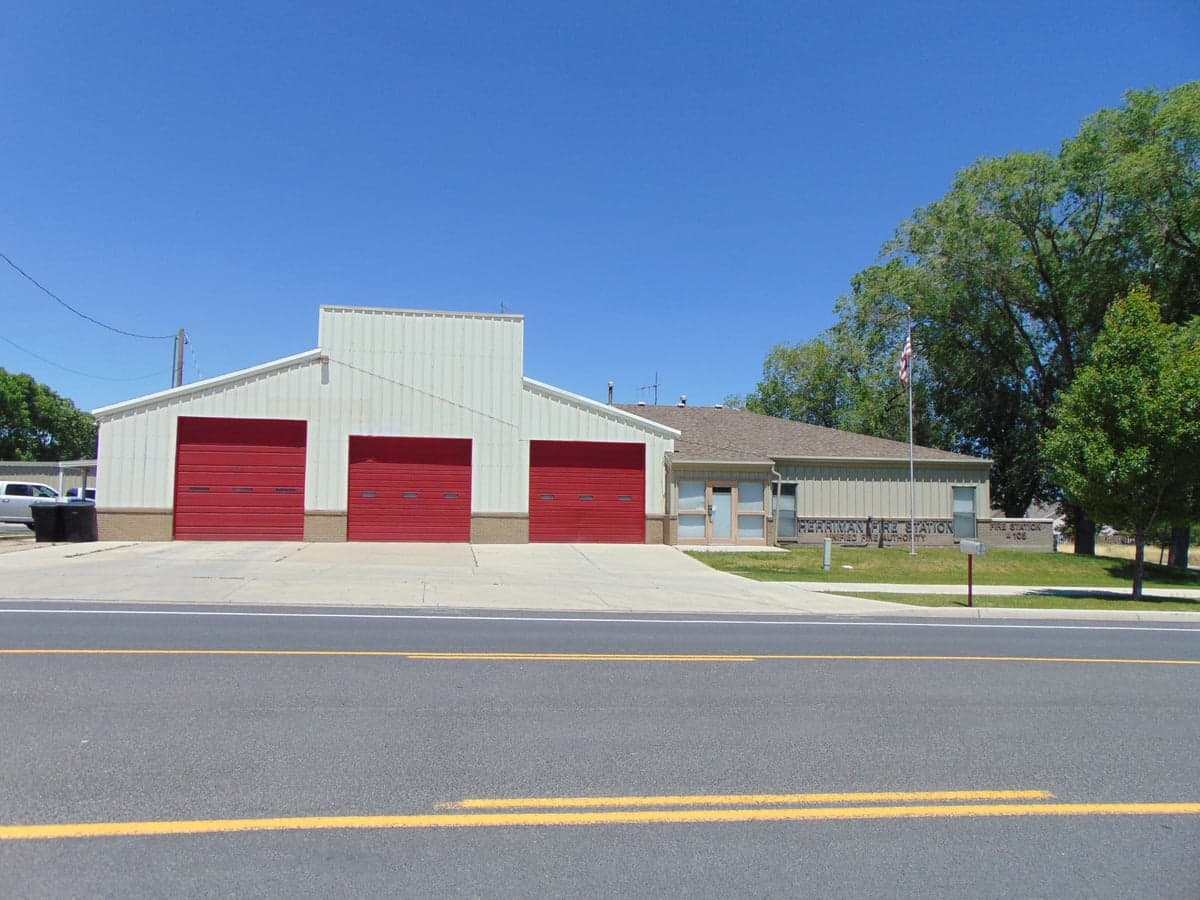
Photo: Wikipedia
Political ClimatePolitical Climate in Herriman, UT
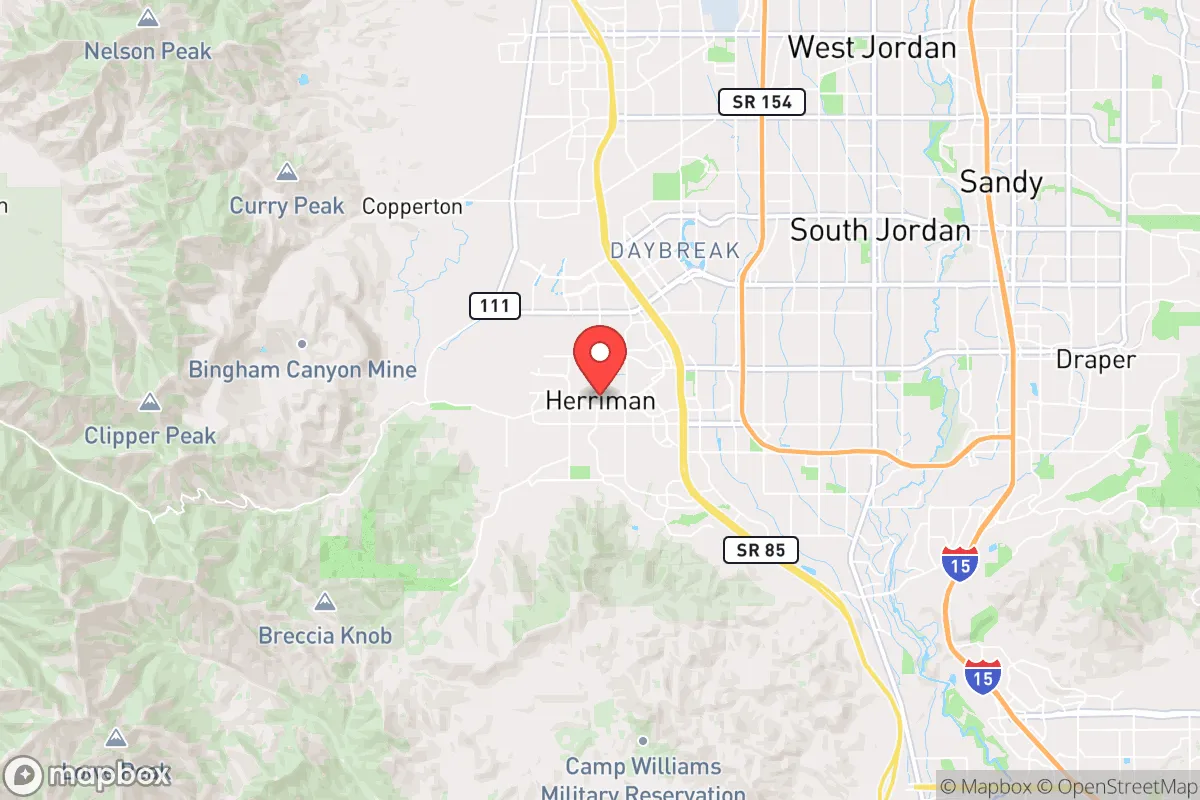
District shown is the primary district for this city’s centroid. Cities may span multiple districts.
Local Political AnalysisPolitical Analysis of Herriman, UT
Herriman, Utah, has long been a solidly conservative community, and that hasn't changed much despite the city's explosive growth. With a Cook PVI of R+14, the city leans heavily Republican, and you can feel it in the local elections, the school board meetings, and even the conversations at the grocery store. But like a lot of fast-growing suburbs along the Wasatch Front, there's a quiet undercurrent of change that has some of us long-time residents paying close attention. The political trajectory here is still firmly right-leaning, but the question is whether that will hold as new folks move in from more moderate areas.
How it compares
To really understand Herriman, you have to look at its neighbors. Drive a few miles north to West Jordan or South Jordan, and you'll start to see a slightly different political mix—still conservative, but with more visible pockets of moderate and even progressive voters. Herriman, by contrast, feels more like a smaller, tighter-knit version of Eagle Mountain or Saratoga Springs, where the conservative values are less negotiable. The difference is stark when you compare it to Salt Lake City proper, which is a blue island in a red state. Herriman residents tend to see that as a cautionary tale: a place where government overreach and progressive policies have crept in, raising taxes and complicating things that used to be simple. We like it here because the city council and mayor generally understand that less government is better government, and they've kept the focus on public safety, infrastructure, and keeping property rights intact.
What this means for residents
For the people living here, the political climate translates into a pretty straightforward daily life. You don't see a lot of political drama in Herriman—no big fights over zoning for high-density housing or debates about defunding the police. The city has kept its growth managed, and the local government tends to stay out of your business. That's a big deal for families who moved here to escape the headaches of bigger cities. Property taxes are reasonable, and there's no city income tax, which is a relief compared to some neighboring towns that have started nickel-and-diming residents. The school board is conservative-leaning, so you don't hear much about controversial curriculum changes or critical race theory being pushed in the classroom. It's the kind of place where the biggest political argument might be over whether to widen a road or add a new park.
That said, there are signs that the political winds could shift. Herriman's population has more than doubled in the last decade, and not everyone moving in shares the same values. Some of the newer developments are bringing in younger families from out of state, and with them come different ideas about everything from land use to local taxes. So far, the city has held the line, but it's something to watch. If you're someone who values personal freedom and wants to keep government small, Herriman is still a safe bet—but it's not immune to the pressures that have changed other Utah suburbs.
Culturally, Herriman is still very much a place where the LDS Church's influence is felt, which reinforces the conservative social norms. That means you'll find a strong emphasis on family, community service, and self-reliance. There's no push for things like sanctuary city status or defunding the police here. The city's biggest policy distinction is its focus on preserving open space and rural character, even as it grows. That's a deliberate choice, and it reflects a community that wants to keep its identity intact. For now, Herriman remains a place where you can breathe easy, knowing your rights aren't being chipped away at—but the key is staying engaged and making sure it stays that way.

State Political ClimatePolitical Climate in Utah
State Political AnalysisPolitical Environment in the State
Utah has long been one of the most reliably conservative states in the nation, with a Republican trifecta controlling the governorship and both legislative chambers for decades. The state’s dominant political coalition is a blend of LDS Church-aligned social conservatism and a pro-business, low-tax libertarian streak, delivering GOP presidential margins of +20 to +30 points in recent cycles. Over the past 10-20 years, however, the state has seen a subtle but real shift: the Wasatch Front’s explosive growth—driven by tech, finance, and in-migration from blue states—has introduced a more moderate, sometimes libertarian-leaning Republicanism, while rural counties have hardened into deep-red strongholds. The overall trajectory is still solidly red, but the internal tensions between traditional social conservatives and a growing class of tech-oriented, privacy-focused voters are reshaping what “conservative” means here.
Urban vs. rural divide
The political map of Utah is a study in contrasts. The Wasatch Front—a corridor stretching from Salt Lake City south through Provo and Orem—is the engine of the state’s economy and its most politically diverse region. Salt Lake County, home to about 40% of the state’s population, has trended purple in recent cycles: it voted for Joe Biden in 2020 by a slim margin, driven by the city’s growing tech sector and a younger, more secular population. But even here, the suburbs—places like Draper, Sandy, and South Jordan—remain reliably red, often voting +15 to +25 points Republican. The real conservative heartland lies in the rural counties: Utah County (Provo/Orem) is a deep-red bastion where BYU’s influence and LDS cultural conservatism produce margins of +40 to +50 points. Further south, counties like Washington County (St. George) and Cache County (Logan) are similarly solid, with St. George emerging as a fast-growing retirement and family destination that amplifies its conservative tilt. The divide isn’t just urban vs. rural—it’s also cultural: the Wasatch Front’s tech corridor (sometimes called the “Silicon Slopes”) attracts libertarian-leaning independents who prioritize low taxes and minimal regulation but are less interested in social issues, while rural Utah remains firmly traditionalist.
Policy environment
Utah’s policy environment is a model of conservative governance, with a few notable wrinkles. The state has a flat income tax rate of 4.85% (down from 5% in 2022), no state-level property tax on vehicles, and a sales tax that caps at around 8.5% in most areas. Regulatory posture is business-friendly: Utah is a right-to-work state, has no state-level minimum wage above the federal $7.25, and offers generous tax credits for tech and manufacturing. Education policy is a mixed bag: the state has a robust school choice program, including a new universal education savings account (ESA) program passed in 2023 that gives families roughly $8,000 per child for private or homeschool expenses. However, the state’s public schools are chronically underfunded, ranking near the bottom nationally in per-pupil spending. Healthcare policy leans conservative: Utah did not expand Medicaid under the ACA until a 2018 ballot initiative forced it, and the state has a strong medical freedom streak—it passed a law in 2023 prohibiting vaccine mandates for private employers and schools. Election laws are secure: Utah requires voter ID, has automatic voter registration at DMVs, and uses paper ballots with risk-limiting audits. The state’s election integrity is widely considered strong, with no major controversies in recent cycles.
Trajectory & freedom
Utah is becoming more free in several key areas, but the trajectory is not uniform. On gun rights, the state is a standout: it passed constitutional carry in 2021, allowing permitless concealed carry for adults 21 and older, and has no state-level magazine capacity restrictions or red flag laws. On parental rights, Utah enacted the “Utah Parental Rights in Education” law in 2023, requiring schools to notify parents of any changes in a child’s emotional or physical health—a direct counter to California-style policies. Medical autonomy saw a win with the 2023 law banning vaccine mandates for employment and education, though the state still allows some public health orders during emergencies. On property rights, Utah has a strong “private property rights” statute that limits eminent domain abuse, but the state’s rapid growth has led to zoning battles in places like Park City and Summit County, where local governments have imposed short-term rental restrictions that some see as government overreach. The biggest red flag for freedom-minded residents is the state’s alcohol and drug laws: Utah maintains some of the strictest alcohol regulations in the country (no liquor sales on Sunday, state-run stores for spirits), and marijuana remains fully illegal for both medical and recreational use. The trend, however, is toward liberalization: a 2024 bill to allow Sunday liquor sales at private clubs passed, and a medical cannabis program (though heavily restricted) was implemented in 2020.
Civil unrest & political movements
Utah has seen relatively little civil unrest compared to coastal states, but there are active movements on both sides. On the right, the “Utah Patriot” movement—a loose coalition of constitutional conservatives, gun rights activists, and anti-mask/anti-vaccine groups—has been visible at state capitol protests since 2020, particularly around election integrity and medical freedom. The state’s immigration politics are moderate by conservative standards: Utah has a “compact” with the federal government that allows local law enforcement to cooperate with ICE, but it also passed a 2023 law prohibiting local governments from declaring themselves “sanctuary cities.” The most visible flashpoint in recent years has been the debate over LGBTQ rights and religious freedom: the 2020 “Utah Compromise” (SB 196) banned conversion therapy for minors while protecting religious expression, but tensions remain high, especially in Salt Lake City where progressive activists have pushed for broader nondiscrimination ordinances. Election integrity controversies have been minimal—Utah’s paper ballot system and audit procedures are widely trusted—but a 2022 law requiring signature verification for mail-in ballots drew criticism from both sides. The state’s secession or nullification rhetoric is muted, though a 2023 “Second Amendment Preservation Act” (modeled on Missouri’s) was introduced but failed, signaling that the legislature is cautious about outright defiance of federal law.
Projection
Over the next 5-10 years, Utah will likely remain a reliably red state, but the internal dynamics will shift. The Wasatch Front’s continued growth—driven by tech in-migration from California, Washington, and Colorado—will inject more libertarian-leaning, privacy-focused voters who care about low taxes and minimal regulation but may be less aligned with traditional social conservatism. This could lead to further liberalization of alcohol laws, a push for medical marijuana (though full legalization remains unlikely), and a softening of the state’s stance on LGBTQ issues. Rural counties will harden further, creating a more polarized internal map. The biggest wildcard is the LDS Church’s influence: as the church’s younger members become more politically diverse, the cultural lockstep that once defined Utah politics may weaken. For a conservative moving in now, expect to find a state that is still deeply red but increasingly divided between a tech-driven, libertarian-leaning Wasatch Front and a traditionalist rural hinterland. The policy environment will remain business-friendly and tax-averse, but watch for fights over zoning, water rights, and school funding as growth strains infrastructure.
Bottom line for a new resident: Utah offers a high degree of personal freedom—especially on gun rights, parental rights, and economic liberty—but it’s not a libertarian paradise. You’ll find strong community values, low crime, and a government that generally stays out of your life, but you’ll also encounter strict alcohol laws, a powerful LDS cultural influence, and a state that is still figuring out how to balance rapid growth with its conservative roots. If you’re moving here for freedom, you’ll get it—just don’t expect to buy a beer on Sunday or find a legal dispensary anytime soon.
* Values derived from national, state, county, city and local statistics and may differ in a specific area. Last updated: 2026-05-03T04:46:24.000Z
Narrative content on this page is AI-generated and may contain mistakes. Verify any details that matter before acting on them.
ReloMaps may earn a commission from affiliate links at no extra cost to you.

