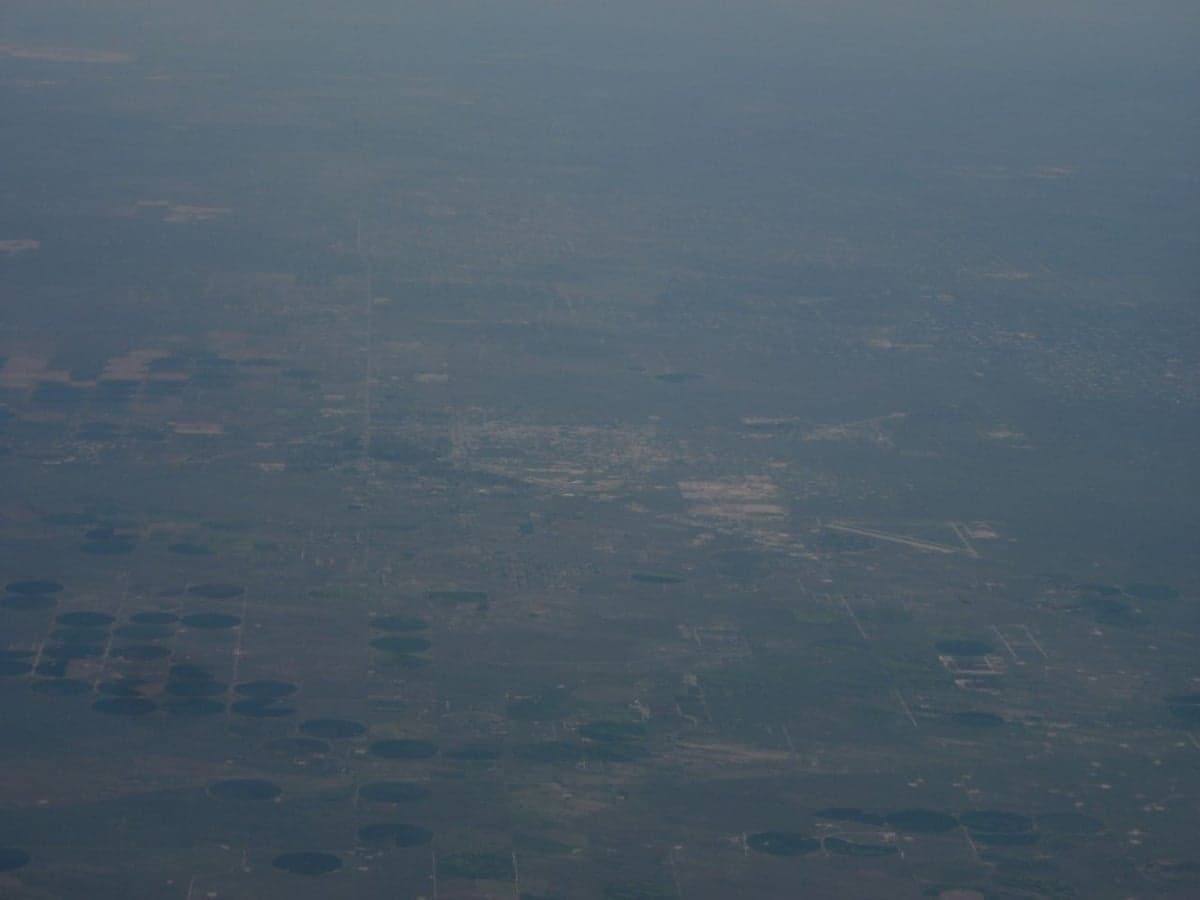
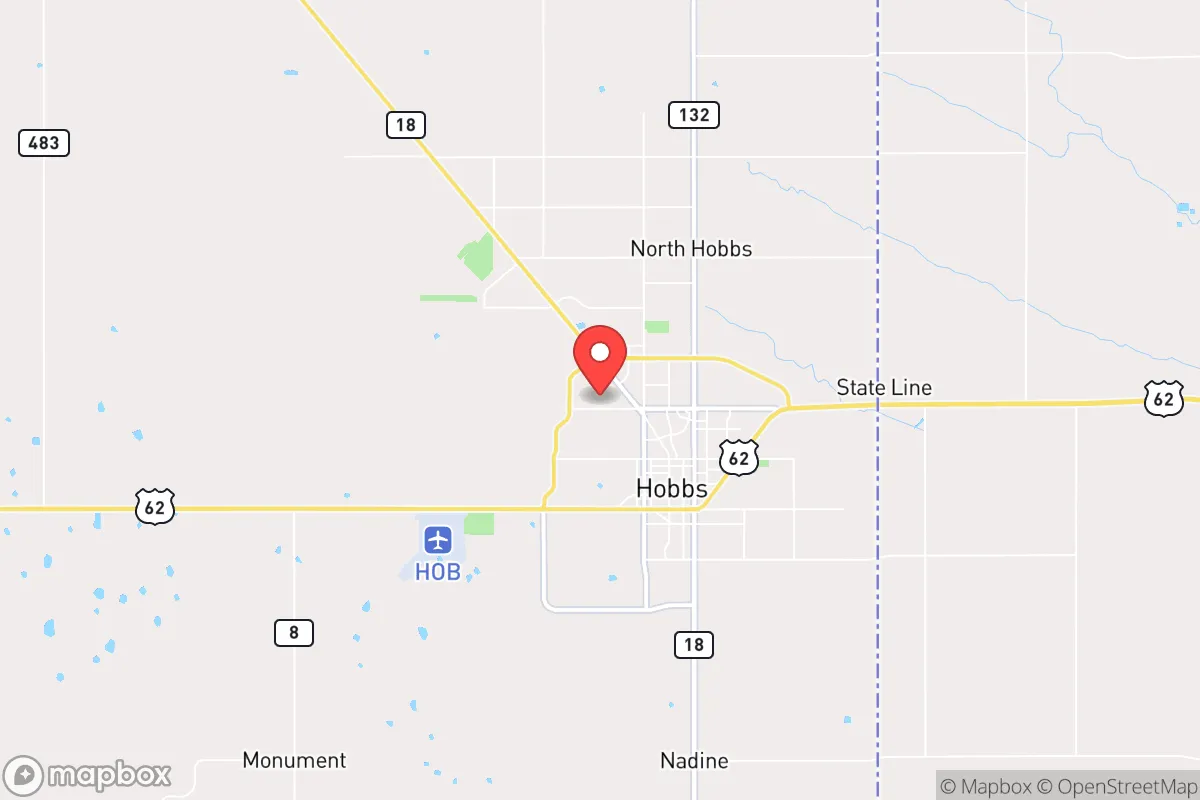
Photo: Wikipedia
Personal Sovereignty in Hobbs, NM
Viable for self-reliance. Generally workable, though some barriers may limit total independence.
What does Personal Sovereignty tell us?
Personal Sovereignty measures your capacity for self-reliance and independence with minimal government friction. Higher scores mean fewer barriers between you and the way you want to live... but it assumes you have the space you need and good neighbors.
What does this tell us?
Personal Sovereignty measures your capacity for self-reliance and independence with minimal government friction. Higher scores mean fewer barriers between you and the way you want to live... but it assumes you have the space you need and good neighbors.
State Policy
Energy independence: Net exporter (250% of energy produced in-state)
Personal Liberty
Homesteading

Personal Liberty Analysis
Hobbs, New Mexico offers a surprisingly robust environment for personal sovereignty when measured against the national trend of expanding government overreach, though it operates within a state that has a mixed record on individual liberties. For the survivalist or prepper-minded individual, the city’s location in the conservative southeastern corner of the state—far from the progressive politics of Santa Fe and Albuquerque—provides a practical buffer against many top-down mandates. The local culture in Lea County leans heavily toward self-reliance, with a strong oil-and-gas economy that rewards hard work and frowns upon excessive regulation. However, you must understand that New Mexico’s state-level policies on taxation, gun control, and medical freedom create a layered sovereignty picture—one where local resistance and practical workarounds often matter more than the law on the books.
Tax burden and regulatory posture for the self-reliant individual
New Mexico’s tax structure is a mixed bag for someone prioritizing financial sovereignty. The state levies a progressive income tax with rates from 1.7% to 5.9% as of 2026, which is moderate compared to high-tax states like California or New York, but still a visible drag on earnings for anyone running a side business or prepping supplies. Property taxes are a bright spot: Lea County’s effective rate hovers around 0.7% of assessed value, among the lowest in the nation, meaning you can own land and a home without the government taking a huge annual cut. Sales tax in Hobbs is roughly 8.4% (state plus local), which stings on gear and bulk purchases, but there’s no state-level estate or inheritance tax—a critical factor for passing assets to the next generation without the state grabbing a share. On the regulatory front, New Mexico is not as business-friendly as Texas just across the state line, but Hobbs benefits from a local culture that treats permits and inspections as nuisances rather than tools of control. The oil and gas industry dominates the local economy, and its operators have successfully pushed back against many state-level environmental rules that would hamper drilling. For the prepper, this means fewer bureaucratic hurdles for building a workshop, storing fuel, or modifying your property—though you’ll still want to check county zoning for any surprises.
Self-defense rights and specific gun laws in New Mexico
New Mexico’s gun laws are a study in contrasts, and Hobbs sits in a county where the sheriff and local officials take a dim view of state-level restrictions. The state requires a background check for all firearm purchases from licensed dealers, but there is no permit required to open carry a firearm in New Mexico, and concealed carry is available to residents 21 and older who complete a training course and obtain a permit. Crucially, New Mexico is a “shall issue” state for concealed carry permits—meaning the government cannot arbitrarily deny your application if you meet the criteria. However, the state has no “stand your ground” law; instead, it follows a “duty to retreat” standard in public spaces, which is a significant limitation for anyone serious about self-defense. Inside your home, the Castle Doctrine applies, so you have no duty to retreat if an intruder enters your dwelling. The practical reality in Hobbs is that law enforcement is generally supportive of the Second Amendment, and local gun culture is strong. You’ll find multiple gun shops and ranges in the area, and private firearm sales between individuals are not regulated by the state—a key loophole for building your arsenal without government tracking. Magazine capacity restrictions and “assault weapon” bans are not on the books at the state level as of 2026, though you should monitor Santa Fe for future attempts. For the survivalist, the biggest concern is the state’s red flag law (extreme risk protection order), which allows law enforcement to seize firearms based on a court petition—a tool that can be abused by bad actors or overzealous officials.
Self-reliance and homesteading viability in Lea County
For the prepper looking to establish a self-sufficient homestead, Hobbs offers surprisingly good conditions, especially if you’re willing to work with the arid climate. Land outside the city limits is relatively cheap, with undeveloped lots starting around $2,000–$5,000 per acre as of 2026, and larger parcels of 10–40 acres are common in the surrounding rural areas. Zoning in unincorporated Lea County is minimal—there are no county-wide building codes, no mandatory inspections for outbuildings, and no restrictions on keeping livestock like chickens, goats, or even cattle on larger plots. Water is the critical constraint: the region averages only about 14 inches of rain per year, so you’ll need to drill a well (typically $10,000–$20,000 for a deep well) or haul water. Off-grid solar is highly viable here, with over 280 sunny days per year, and the state offers a modest solar tax credit (10% of system cost, up to $6,000) that doesn’t require you to be grid-tied. The city of Hobbs itself has relatively lax enforcement of nuisance ordinances compared to more urbanized areas, so you can store supplies, maintain a large garden, and even keep a few firearms without neighbors calling code enforcement. The main downside for homesteaders is the soil quality—it’s sandy and alkaline, requiring significant amendment for vegetable gardening—but with raised beds and drip irrigation, you can produce a meaningful portion of your own food. For the serious survivalist, the proximity to the Texas border (less than 10 miles away) provides an escape route if state-level conditions deteriorate, and the local population density is low enough that you can maintain privacy.
Personal liberties: parental rights, medical autonomy, and property freedom
New Mexico’s record on personal liberties is uneven, but Hobbs’ local culture provides a strong counterweight to state-level overreach. Parental rights are a battleground: the state has mandated comprehensive sex education in public schools and does not require parental consent for a minor to obtain an abortion (a law that remains in effect despite federal uncertainty). However, Lea County is deeply conservative, and the local school board has resisted implementing some state mandates, including certain LGBTQ+ curriculum requirements. For parents who homeschool, New Mexico is relatively permissive—you only need to submit a simple notice of intent and provide 180 days of instruction, with no standardized testing requirements or curriculum approval. Medical autonomy is a mixed picture: the state has no vaccine mandate for adults, but it does require certain immunizations for school attendance (with a philosophical exemption available). The bigger concern for the prepper is that New Mexico has a prescription drug monitoring program and relatively strict pharmacy regulations, making it harder to stockpile medications without a doctor’s cooperation. On property rights, the state has a strong tradition of mineral rights ownership, which matters in oil country—you can own the minerals under your land and lease them to drillers for income. There is no state-level rent control, and landlord-tenant laws favor property owners over tenants, giving you more control if you own rental property. Free speech is protected by the First Amendment, and Hobbs has no local ordinances restricting political expression, signage, or assembly—a stark contrast to cities that have cracked down on protest or public speech.
Overall, Hobbs offers a level of personal sovereignty that is increasingly rare in the United States, particularly for those willing to navigate the gap between state law and local practice. The low property taxes, cheap land, minimal zoning, and strong gun culture create a foundation for self-reliance that few other areas of the Southwest can match. The main threats to your autonomy come from Santa Fe—specifically the red flag law, the duty to retreat standard, and potential future mandates on education or healthcare. But for the strategic relocator who values freedom over convenience, Hobbs represents a viable redoubt: a place where you can own your land, keep your guns, raise your kids without heavy government interference, and build a life that doesn’t require permission from bureaucrats. Compared to states like Colorado or Oregon, where prepper-friendly policies are rapidly eroding, Hobbs stands as a practical choice for anyone who sees the writing on the wall and wants to get ahead of it.

* Values derived from national, state, county, city and local statistics and may differ in a specific area. Last updated: 2026-05-01T06:13:02.000Z
Narrative content on this page is AI-generated and may contain mistakes. Verify any details that matter before acting on them.
ReloMaps may earn a commission from affiliate links at no extra cost to you.

