Photo: Wikipedia
Demographics of Holladay, UT
Affluence Level in Holladay, UT
An upper-middle-class area. Household wealth, education levels, and homeownership run ahead of national benchmarks.
People of Holladay, UT
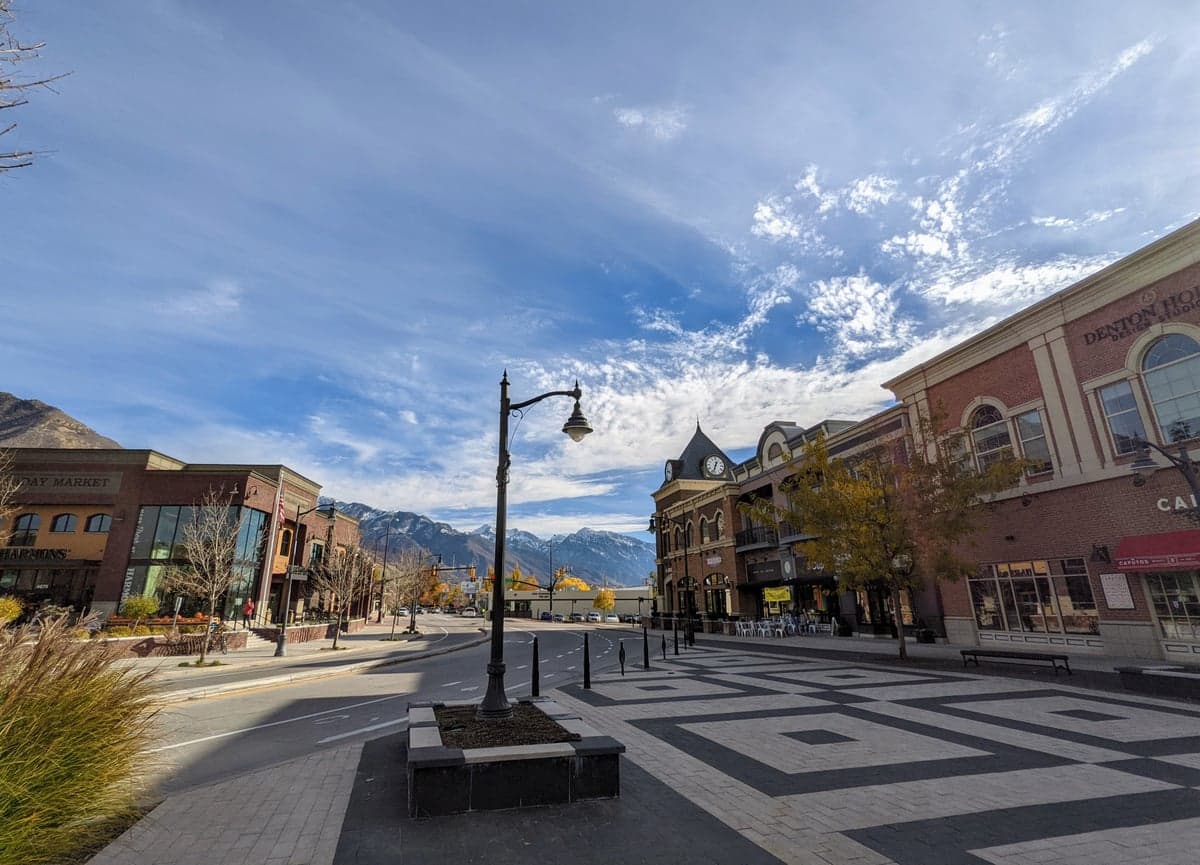
The people of Holladay, Utah, today form a predominantly white, highly educated, and family-oriented community of 31,236 residents, with a notably low foreign-born rate of just 1.9%. The city is characterized by its established, upper-middle-class character, where 57.9% of adults hold a college degree and the population is overwhelmingly native-born. Distinctive identity markers include a strong sense of local history, deep roots in The Church of Jesus Christ of Latter-day Saints (LDS), and a reputation as one of the Salt Lake Valley’s most desirable, tree-lined suburbs.
How the city was settled and grew
Holladay’s human history begins with Mormon pioneers in the late 1840s. The area was originally settled as part of the larger Mormon colonization of the Salt Lake Valley, with families drawn by the promise of irrigated farmland and religious community. The first permanent settlers arrived in 1847, and by 1849, a small farming hamlet had formed. The community was named after John Holladay, an early Mormon bishop who led a group of families to the area. These original settlers were almost exclusively of Northern European descent, primarily English, Scottish, and Scandinavian converts to the LDS Church. They built their homes and farms along what is now Highland Drive and Holladay Boulevard, establishing the historic Holladay Center neighborhood as the original village core. The area remained a rural farming community for decades, with agriculture—especially fruit orchards and dairy farming—as the economic backbone. A second wave of growth came in the early 20th century, when the streetcar line extended into the area, spurring development of the Cottonwood neighborhood as a streetcar suburb for Salt Lake City commuters. By the 1950s, Holladay had transformed into a bedroom community, with new subdivisions like Olympus Cove attracting middle-class families seeking larger lots and mountain views.
Modern era (post-1965)
After the 1965 Immigration and Nationality Act, Holladay saw minimal demographic change compared to the rest of the Salt Lake Valley. The city’s high property values and established character limited the influx of new immigrant groups. The white population remained dominant, with the 2020 census showing 85.8% of residents identifying as white alone. The Hispanic population, at 7.0%, is the largest minority group, concentrated primarily in the Cottonwood Heights area along the city’s western edge, where older, more affordable housing stock exists. East and Southeast Asian communities (1.6%) and Indian subcontinent residents (0.5%) are small but present, with families often settling in the newer developments near Olympus Hills and the Holladay Hills neighborhood, drawn by the highly rated public schools. The Black population (0.8%) remains very small. The post-1965 era was primarily defined by domestic in-migration of white, college-educated professionals from other parts of Utah and the Intermountain West, who were attracted by the city’s low crime rates, strong school system, and proximity to outdoor recreation. This wave filled subdivisions like Spring Creek and Oakwood Estates with families seeking a safe, homogeneous suburban environment.
The future
Holladay’s population is projected to remain stable in size and character over the next 10–20 years. The city is largely built out, with limited land for new development, which will constrain major demographic shifts. The foreign-born population, already very low at 1.9%, is unlikely to grow significantly. The Hispanic share may increase modestly through natural growth and in-migration from nearby areas, but Holladay lacks the affordable housing and rental stock that typically attracts larger immigrant populations. The white, LDS-majority population will likely continue to dominate, though the city may see a slight increase in East/Southeast Asian and Indian families drawn by the school system and professional job opportunities in the Salt Lake tech sector. The city is not homogenizing or tribalizing into distinct enclaves; rather, it is maintaining its character as a stable, upper-middle-class suburb. For someone moving in now, Holladay offers a predictable, low-diversity environment with strong community institutions and excellent public services.
Holladay is becoming a mature, stable suburb where demographic change is slow and incremental. For a conservative-leaning individual or family seeking a safe, well-educated, and culturally homogeneous community with strong LDS influence and top-tier schools, Holladay represents a reliable choice with little risk of rapid demographic transformation.

* Values derived from national, state, county, city and local statistics and may differ in a specific area. Last updated: 2026-05-03T20:34:45.000Z
Narrative content on this page is AI-generated and may contain mistakes. Verify any details that matter before acting on them.
ReloMaps may earn a commission from affiliate links at no extra cost to you.

