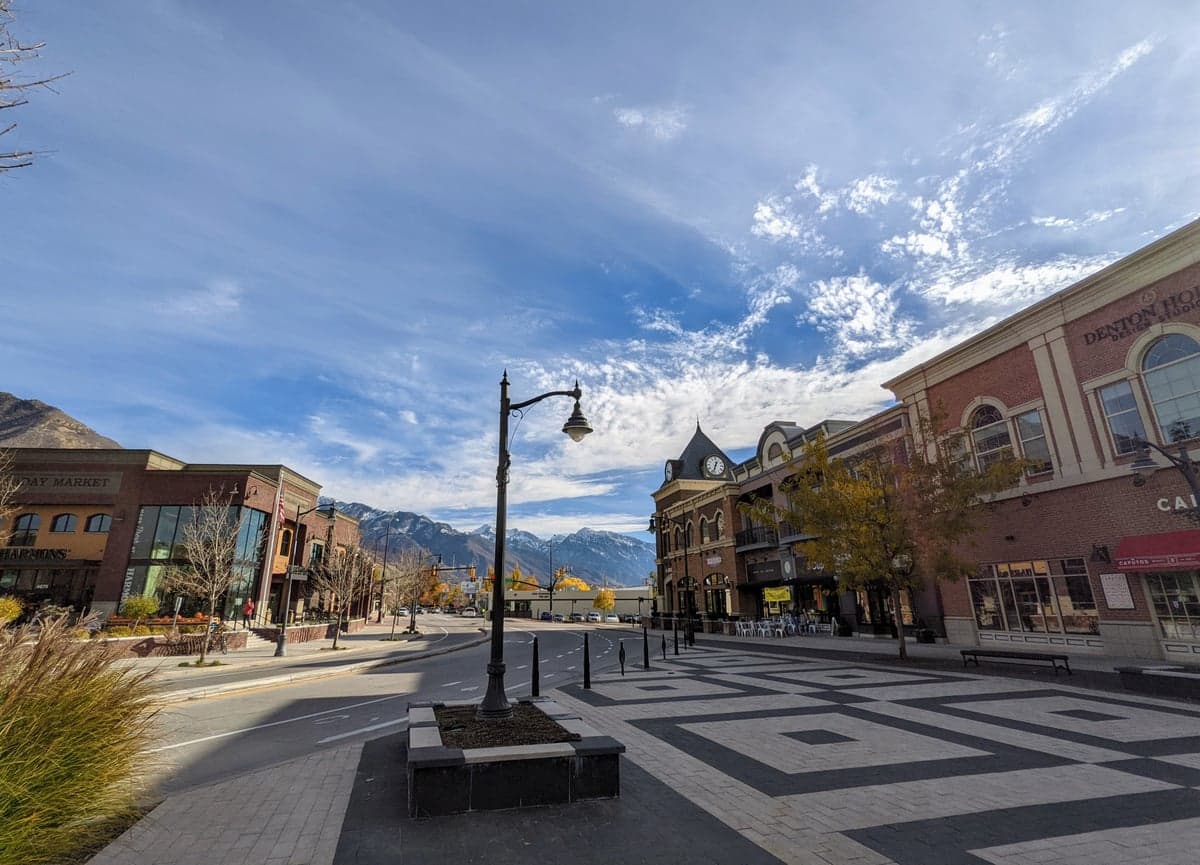
Photo: Wikipedia
Personal Sovereignty in Holladay, UT
Viable for self-reliance. Generally workable, though some barriers may limit total independence.
What does Personal Sovereignty tell us?
Personal Sovereignty measures your capacity for self-reliance and independence with minimal government friction. Higher scores mean fewer barriers between you and the way you want to live... but it assumes you have the space you need and good neighbors.
What does this tell us?
Personal Sovereignty measures your capacity for self-reliance and independence with minimal government friction. Higher scores mean fewer barriers between you and the way you want to live... but it assumes you have the space you need and good neighbors.
State Policy
Energy independence: Self-sufficient (80% of energy produced in-state)
Personal Liberty
Homesteading

Personal Liberty Analysis
Holladay, Utah, offers a notably strong environment for personal sovereignty, particularly when measured against the encroaching regulatory and fiscal overreach seen in many other parts of the country. Nestled in the Salt Lake Valley, this community benefits from Utah’s deeply ingrained culture of self-reliance, a state-level legal framework that generally respects individual autonomy, and a local governance structure that, while not libertarian, tends to favor limited interference in daily life. For the strategic relocator—whether a single individual or a parent—this translates into a place where the default posture is one of personal responsibility, not state paternalism, though it is not without its own municipal codes and HOA-driven neighborhoods that require careful vetting.
Tax burden and regulatory posture: How Utah’s fiscal restraint protects your earnings
Utah’s tax structure is a clear win for personal sovereignty. The state imposes a flat income tax rate of 4.65%, a figure that has been trending downward in recent years and is constitutionally capped to prevent the kind of progressive creep seen in states like California or New York. There is no state-level tax on Social Security benefits, and a retirement income tax credit further shields your nest egg. Property taxes in Holladay are levied at the county level (Salt Lake County) and average around 0.6% to 0.8% of assessed value, which is moderate for the region and far below the burdens found in the Northeast or Midwest. The regulatory posture at the state level is equally favorable: Utah is a right-to-work state, has no state-level OSHA plan (relying on federal oversight, which is generally less aggressive), and has a reputation for streamlined business licensing. However, Holladay itself is a well-established suburb with its own municipal code. You will encounter zoning restrictions, building permits, and noise ordinances that are typical of an incorporated city. The key is that the state’s overall ethos of “leave us alone” tends to bleed into local governance, meaning you are far less likely to face the kind of overbearing, permit-everything mentality found in Boulder or Portland. For the prepper, this means fewer bureaucratic hurdles for things like installing backup power systems or building a secure storage shed—provided you are within city code.
Self-defense and gun law specifics: A legal framework that respects the right to keep and bear arms
Utah is a constitutional carry state, meaning that as of 2021, any law-abiding adult 21 or older can carry a concealed firearm without a permit. This is a bedrock of personal sovereignty. Holladay sits in Salt Lake County, which is more politically mixed than the rural counties, but state preemption laws prevent local governments from enacting their own gun control ordinances. You will not find the kind of magazine capacity bans, “assault weapon” registries, or red flag laws that plague states like Colorado or Washington. The state does have a permit system for those who want reciprocity with other states, but it is shall-issue and relatively inexpensive. For the survivalist-minded, this is critical: your ability to defend your home and person is not subject to the whims of a city council. Additionally, Utah law strongly protects the use of deadly force in self-defense, with a “stand your ground” statute that removes any duty to retreat when you are lawfully present. The only notable restriction is that carrying a firearm into a church or private residence without permission is a class B misdemeanor, but this is a matter of courtesy and legal respect for private property, not government overreach. For parents, this means you can teach your children firearm safety and marksmanship without fear of state interference, as Utah has no safe storage law that criminalizes your personal choices about how to secure your weapons.
Self-reliance and homesteading viability: Lot sizes, zoning, and off-grid feasibility in a suburban setting
Holladay is a mature suburb, not a rural homesteading paradise. The typical lot size ranges from 0.2 to 0.5 acres, with some older neighborhoods offering larger parcels up to an acre. This is enough for a substantial garden, a chicken coop (allowed with restrictions), and perhaps a small greenhouse, but you will not be running livestock or building a standalone off-grid cabin. The city’s zoning code is fairly standard for a bedroom community: single-family residential zones dominate, but accessory dwelling units (ADUs) are permitted, which could be used for a multi-generational living arrangement or a rental income stream. Off-grid feasibility is limited. Holladay is fully connected to municipal water, sewer, and power grids. While you can install solar panels (Utah has net metering), going completely off-grid would likely run afoul of building codes that require a permanent connection to the grid for new construction. Rainwater collection is legal in Utah, but with restrictions—you can collect up to 2,500 gallons on your property without a water right, which is a nod to self-reliance but not a free-for-all. For the serious prepper, Holladay offers a compromise: you can achieve a high degree of self-sufficiency in food production and backup power, but you will remain tethered to suburban infrastructure. The real advantage is the proximity to the Wasatch Front’s vast public lands—within 20 minutes you can be in the Uinta-Wasatch-Cache National Forest, where you can hunt, fish, and practice bushcraft without government interference.
Personal liberties: Parental rights, medical autonomy, free speech, and property rights in practice
Utah has a strong track record on parental rights. The state’s “Parental Rights in Education” laws are among the most protective in the nation, requiring schools to notify parents of any curriculum involving sexuality or gender identity and prohibiting medical interventions on minors without parental consent. This is a direct counter to the overreach seen in states like California or Oregon, where the state can override parental authority. Medical autonomy is more nuanced. Utah did not impose draconian lockdowns during the pandemic, and the state legislature has since passed laws limiting the governor’s emergency powers. However, vaccine mandates are a mixed bag—private employers can still require them, but the state has banned vaccine passports for government services. For the individualist, this means you have more breathing room than in blue states, but you are not in a fully libertarian zone. Free speech is robustly protected under both the U.S. and Utah constitutions, and there are no hate speech laws that criminalize political or religious expression. Property rights are generally respected, but be aware that Holladay has a historic preservation overlay in certain districts, and HOAs are common in newer subdivisions. An HOA can be a double-edged sword: it can protect property values but also impose restrictions on everything from flag displays to vehicle storage. If you value absolute control over your property, seek out a non-HOA neighborhood, which are still plentiful in the older parts of town.
In the broader landscape of American personal sovereignty, Holladay ranks well above the national average. It is not a free county in the mold of rural Idaho or Montana, but it offers a practical balance: low taxes, strong gun rights, decent parental autonomy, and a culture that values self-reliance over state dependency. For the strategic relocator who wants to be near a major city (Salt Lake City is 15 minutes away) while retaining a high degree of personal freedom, Holladay is a solid choice. The key is to be intentional about your neighborhood—avoid HOAs if you can, verify zoning for your specific projects, and understand that while the state has your back, the city will still have its hand in your business. Compared to the regulatory nightmares of the West Coast or the Northeast, this is a haven. Compared to the truly unincorporated wilds of the West, it is a compromise. For most people concerned with government overreach, that compromise is well worth making.

* Values derived from national, state, county, city and local statistics and may differ in a specific area. Last updated: 2026-05-03T20:34:45.000Z
Narrative content on this page is AI-generated and may contain mistakes. Verify any details that matter before acting on them.
ReloMaps may earn a commission from affiliate links at no extra cost to you.

