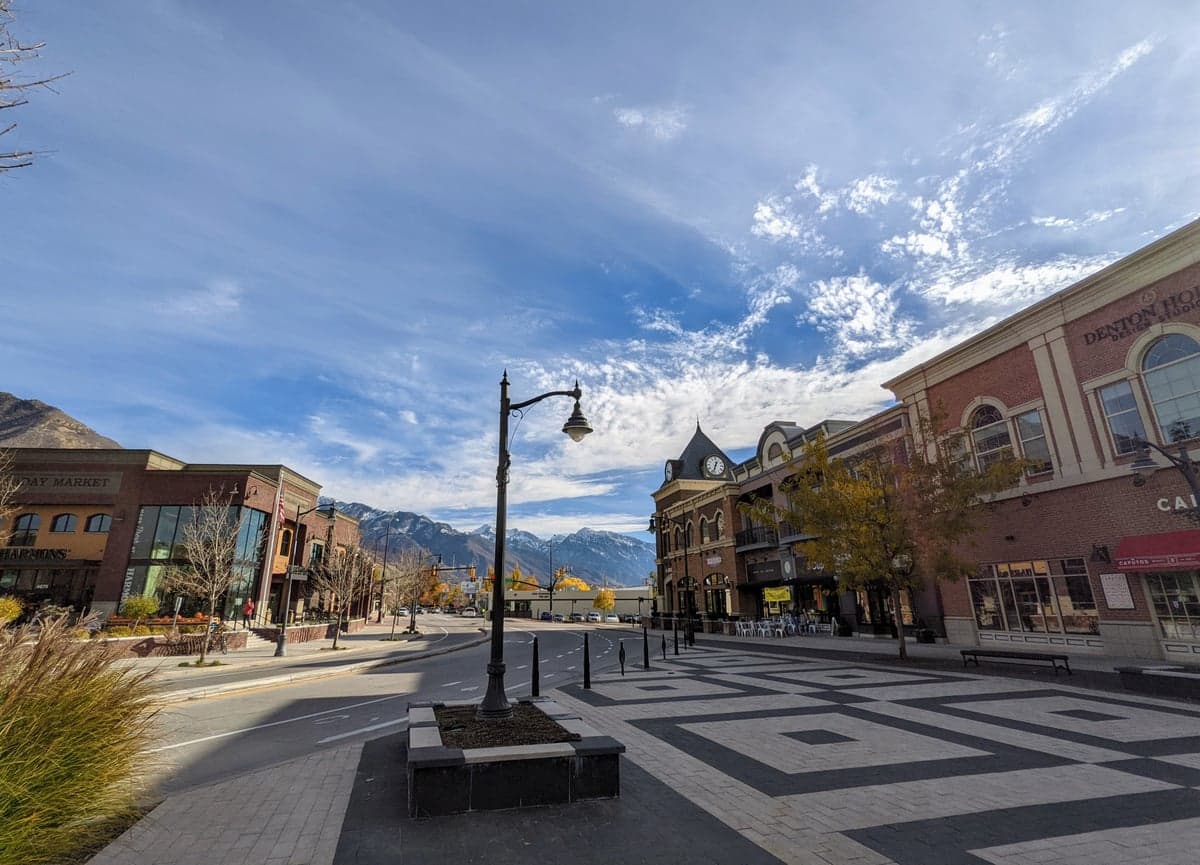
Photo: Wikipedia
Political ClimatePolitical Climate in Holladay, UT
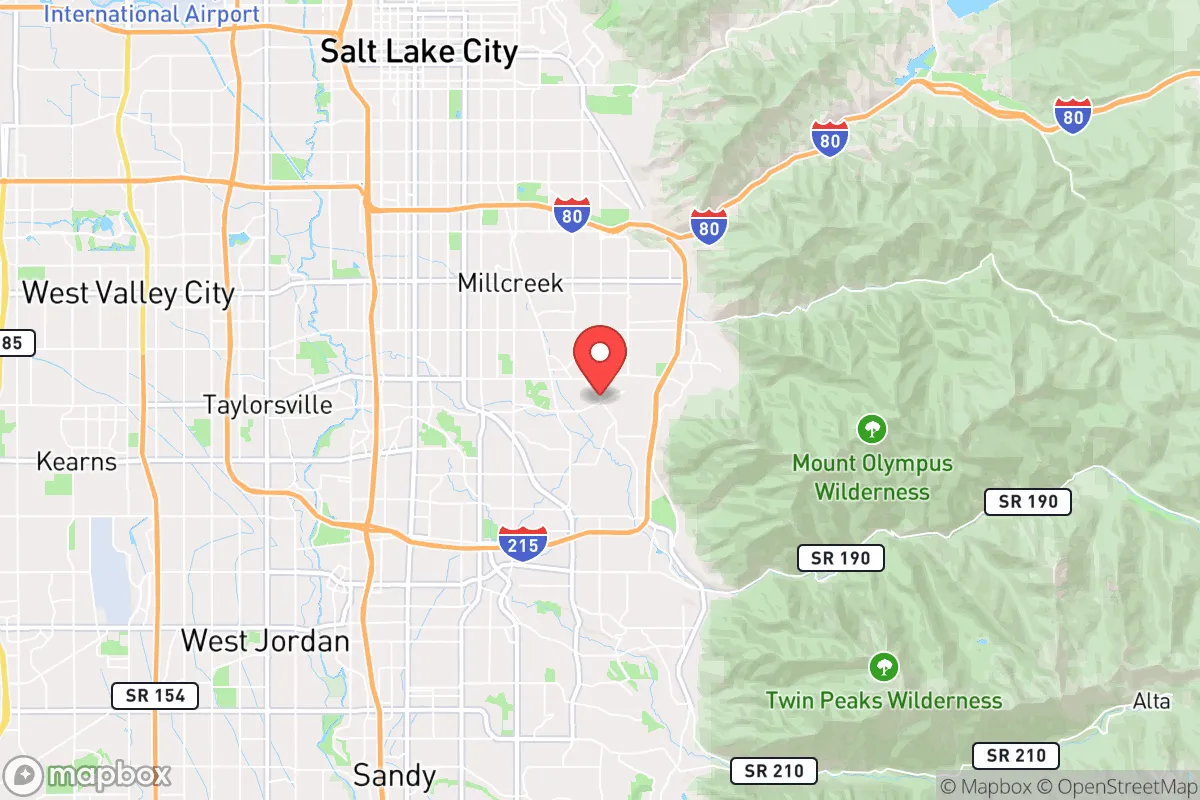
District shown is the primary district for this city’s centroid. Cities may span multiple districts.
Local Political AnalysisPolitical Analysis of Holladay, UT
Holladay, Utah, has long been a reliably conservative community, and by the numbers, it still leans that way with a Cook PVI of R+10. But if you’ve lived here as long as I have, you’ve felt the ground shift under your feet. The old, rock-ribbed Republican consensus that defined this town for decades is being quietly challenged by an influx of folks from the coast and a younger generation who see things differently. It’s not a blue wave—not yet—but it’s a noticeable purple tinge that has me watching local city council meetings a lot more closely than I used to.
How it compares
To understand Holladay’s politics, you have to look at the neighbors. Drive five miles west into Salt Lake City proper, and you’re in a solidly blue urban core where progressive policies on housing, taxes, and public spending are the norm. Head east up into the foothills or south toward Cottonwood Heights, and you’re back in deep-red territory where the biggest political fights are about keeping property taxes low and development at bay. Holladay sits right in the middle—conservative enough to have voted for Trump twice, but liberal enough to have elected a few Democrats to local office in recent cycles. The real contrast is with towns like Draper or Alpine, where the R+10 would look like a moderate compromise. Here, that number feels like a ceiling, not a floor, and I worry it’s cracking.
What this means for residents
For those of us who value limited government and personal freedom, the trend is concerning. The most visible sign is the creeping expansion of city ordinances into what used to be private matters. We’ve seen debates over short-term rental restrictions that go beyond common-sense noise complaints and into outright bans. There’s been talk of stricter landscaping mandates—telling you what you can plant and how much water you can use—that feel less like conservation and more like control. The school board, too, has seen a push for curriculum changes that emphasize social-emotional learning over core academics, which many of us see as government overreach into how we raise our kids. The long-term trajectory, if this keeps up, is a slow erosion of the hands-off, neighborly ethos that made Holladay a great place to raise a family. You don’t notice it year to year, but over a decade, the difference is stark.
What daily life is like for families
On the ground, most days are still pleasant. The parks are clean, the streets are safe, and you can still have a conversation with your neighbor without stepping on a political landmine. But the cultural fault lines are showing. At the grocery store or the soccer game, you’ll hear more people talking about “equity” and “inclusion” in ways that sound good on the surface but often translate into new policies that restrict what you can do with your own property or how your kids are taught. The local paper’s letters page is a battleground between old-guard conservatives and newer, more progressive voices. For now, the conservative majority holds, but it’s a defensive hold. The worry is that as more people move in from places where government is seen as a solution rather than a necessary evil, the character of Holladay will shift from a place that lets you live your life to a place that tells you how to live it. I hope I’m wrong, but I’m not betting the farm on it.

State Political ClimatePolitical Climate in Utah
State Political AnalysisPolitical Environment in the State
Utah is a deeply conservative state, with the GOP holding a supermajority in the legislature and a +29-point Republican lean in the 2024 presidential election, but the picture is more complex than a simple red-state label. The dominant political coalition is a blend of the Church of Jesus Christ of Latter-day Saints (LDS) cultural influence, a growing libertarian-leaning tech sector, and a strong rural conservative base. Over the last 10-20 years, the state has shifted from a reliably red, almost one-party state to one where internal tensions between establishment Republicans and a more populist, freedom-oriented wing are becoming the real story, even as Democrats remain largely irrelevant in statewide races.
Urban vs. rural divide
The political map is starkly divided between the Wasatch Front and everything else. Salt Lake City and Park City are the only reliably blue areas, with Salt Lake County as a whole trending purple but still voting for Trump in 2024. The real Republican engine is the suburban and exurban corridor: Utah County (home to Provo and Orem) is the most reliably conservative large county in the nation, often voting 70%+ Republican. Davis County and Weber County north of Salt Lake are also solidly red, though with a more pragmatic, establishment flavor. The rural counties—San Juan, Carbon, Emery, and Uintah—are deep red, driven by energy extraction, ranching, and a strong LDS cultural presence. The divide isn't just about party; it's about style. Urban conservatives in Salt Lake are more moderate on social issues, while rural and Utah County conservatives are more focused on gun rights, land use, and religious liberty.
Policy environment
Utah’s policy environment is a mixed bag for a freedom-minded conservative. On the plus side, the state has a flat income tax (recently cut to 4.55% from 4.85%), no state-level property tax on vehicles, and a strong right-to-work law. The regulatory posture is generally business-friendly, with minimal zoning in rural areas and a fast-track permitting process for new construction. However, the state’s education policy is a flashpoint: HB 215 (the "Utah Fits All" scholarship program) created a universal school choice voucher system, a huge win for parental rights. But the state also has a heavy-handed alcohol control system (state-run liquor stores) and a strict DUI threshold of .05 BAC, which many see as government overreach. On healthcare, Utah expanded Medicaid under the Affordable Care Act via a voter initiative (Prop 3 in 2018), which the legislature then modified to include a work requirement—a compromise that frustrates both sides. Election laws are solid: voter ID is required, and same-day registration is available, but there are no widespread mail-in ballot controversies like in other states.
Trajectory & freedom
Utah is on a trajectory of expanding personal freedom in several key areas, but with notable exceptions. The biggest win for liberty in recent years was SB 171 (2023), which eliminated the requirement for a concealed carry permit entirely—Utah is now a constitutional carry state. On parental rights, HB 331 (2023) banned transgender surgeries and hormone treatments for minors, a major victory for medical freedom and parental authority. However, the state also passed HB 261 (2024), which restricts diversity, equity, and inclusion (DEI) programs in public universities and government—a move that limits institutional speech but protects individual liberty from ideological coercion. The concerning trend is the growth of the state’s surveillance apparatus: HB 200 (2024) expanded the use of automated license plate readers by law enforcement, and the state’s "SafeUT" app, while popular, creates a centralized reporting system that some worry could be abused. On property rights, the state has been aggressive in using eminent domain for the Inland Port project near Salt Lake City, a major red flag for landowners.
Civil unrest & political movements
Utah has seen relatively little civil unrest compared to other states, but the political movements are real and visible. The most organized activist group on the right is the Utah Patriot Coalition, which focuses on election integrity and school board races. They were instrumental in flipping several school board seats in Utah County in 2022. On the left, the Utah Democratic Party is weak, but activist groups like Alliance for a Better Utah and Utah Rising push for progressive policies, especially on public lands and education funding. Immigration politics are relatively calm—Utah has no sanctuary cities, and the legislature passed HB 116 (2024) requiring local law enforcement to cooperate with ICE. The most visible flashpoint is the Great Salt Lake conservation debate, where environmental activists and developers clash over water rights, with the state legislature leaning heavily toward development interests. You won't see riots, but you will see heated school board meetings and county commission hearings, especially in Washington County (St. George) over growth and water.
Projection
Over the next 5-10 years, Utah will likely become more conservative, but in a different way. The massive in-migration from California and other blue states is actually reinforcing the state’s red lean, as many movers are fleeing progressive policies. The demographic shift is toward a younger, more tech-savvy population that is socially conservative but economically libertarian—think Lehi and Draper, where Silicon Slopes tech workers want low taxes, school choice, and gun rights, but are less interested in the LDS cultural dominance. The rural areas will continue to lose population and political power, while the Wasatch Front suburbs will become the new center of gravity. Expect more fights over water rights, growth management, and the role of the LDS Church in public policy. The biggest wild card is the Olympics in 2034, which will bring massive federal investment and scrutiny, potentially accelerating the state’s shift toward a more moderate, business-friendly conservatism. For a freedom-minded person, the trajectory is mostly positive, but the growth of government surveillance and eminent domain are real concerns.
Bottom line for a new resident: You’re moving to a state where your personal freedoms—gun rights, school choice, low taxes—are generally protected and expanding. But don’t expect a libertarian paradise. The state government is still heavy-handed on alcohol, surveillance, and land use. The culture is overwhelmingly conservative, but it’s a conservatism shaped by LDS values and tech industry pragmatism, not the fire-breathing populism of the Deep South. If you want to live in a place where your neighbors are friendly, your kids can go to a school you choose, and you can carry a gun without a permit, Utah is a solid bet. Just keep an eye on the legislature—they’re friendly to freedom, but they’re still politicians.
* Values derived from national, state, county, city and local statistics and may differ in a specific area. Last updated: 2026-05-03T20:34:45.000Z
Narrative content on this page is AI-generated and may contain mistakes. Verify any details that matter before acting on them.
ReloMaps may earn a commission from affiliate links at no extra cost to you.

