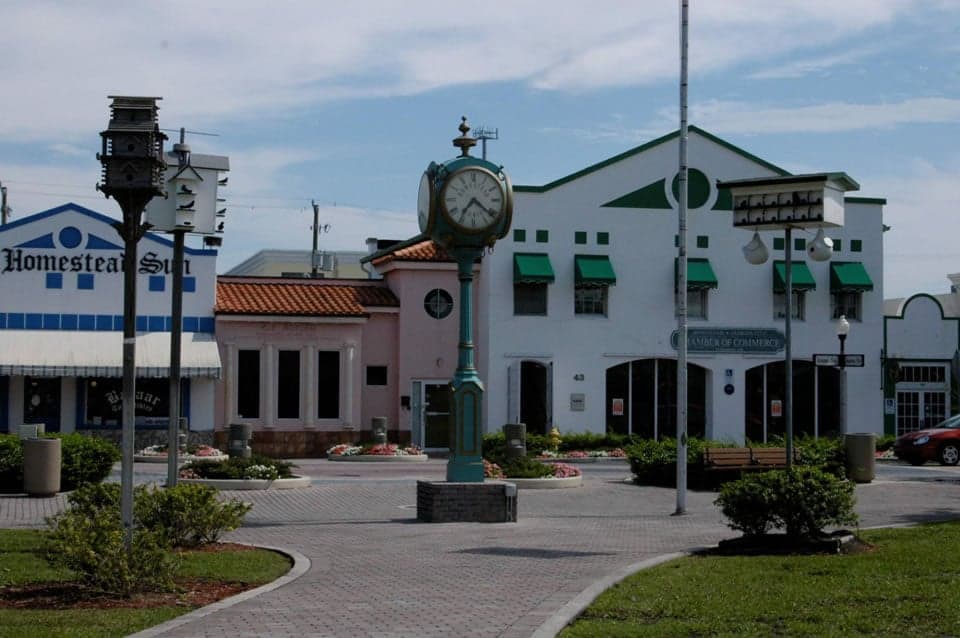
Photo: Wikipedia
Strategic Assessment of Homestead, FL
Multiple tactical vulnerabilities. Population density, target proximity, or disaster risk are likely compounding. A retreat property and exit planning is required.
What does the Strategic Assessment tell us?
Our Strategic Assessment grades tactical survivability of an area. Major population centers, military targets, fallout zones, natural disasters, and border exposure all drive risk — lower exposure means a more defensible position in a crisis.
This is heavily inspired by Joel Skousen's Strategic Relocation book. Highly recommended you checkout the book ($)What does this tell us?
Our Strategic Assessment grades tactical survivability of an area. Major population centers, military targets, fallout zones, natural disasters, and border exposure all drive risk — lower exposure means a more defensible position in a crisis.
This is heavily inspired by Joel Skousen's Strategic Relocation book. Highly recommended you checkout the book ($)Strategic Pillars

Key Distances
Regional Safe Places
Below is our recommended "safe zones" in Florida and the surrounding area based on our strategic heuristics. For most people, it's unrealistic to live in a “safe zone” full-time due to work, family or other personal reasons. They tend to be more rural. However, many of these areas are perfect for second homes and retreat properties that double as a vacation home or even a short-term rental.

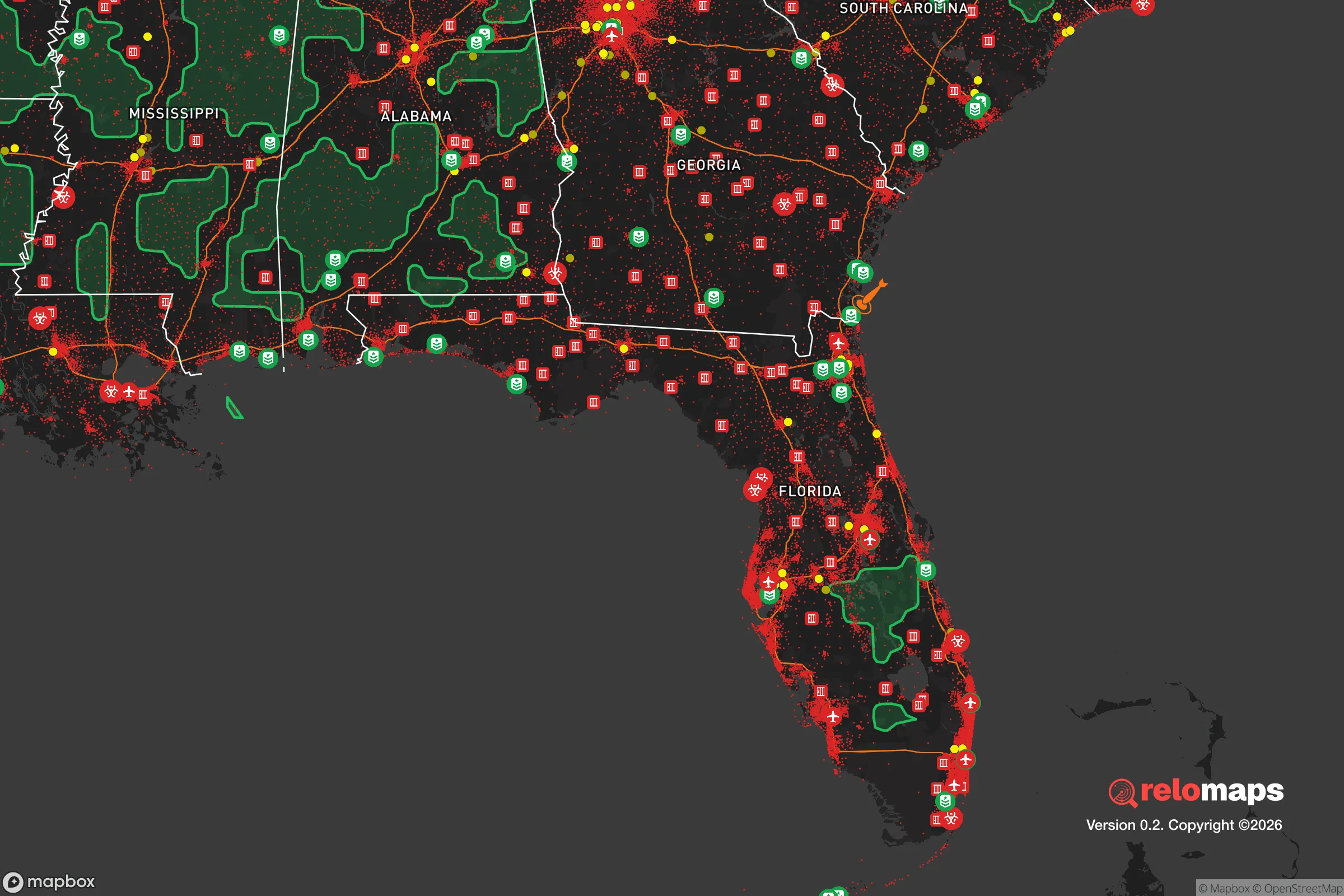


Important Note: For informational purposes only. This does not mean nothing bad ever happens in the green zones. Please use common sense. This is based on public data and modeled with AI. We tried to take a conservative approach but mistakes happen. We update this regularly as new information becomes available.
Solar Generator Recommendations
Backup power matters more here than in safer locations. We've picked three solar generators across budgets and capacity tiers — start with the budget unit if you only need a few essentials, or step up if you want to run a fridge and HVAC for days at a time.

Jackery Portable Power Station Explorer 300
Budget OptionPower on the Go: Weighing only 11 lbs, it's convenient to set up and store with book-sized foldable solar panels

BLUETTI Portable Power Station AC180
Designed for both indoor and outdoor scenarios, AC180 is highly capable as it has a robost capacity and continuous output power.

EF ECOFLOW DELTA Pro Ultra Power Station
Upgraded PickEcoFlow DELTA Pro Ultra is a whole-home energy system designed to grow with your family. Integrated with the Smart Home Panel 2, it scales to meet your evolving energy needs — keeping your home powered, intelligent, and secure through every stage of life.
We earn a commission, at no additional cost to you.
Strategic Assessment Analysis
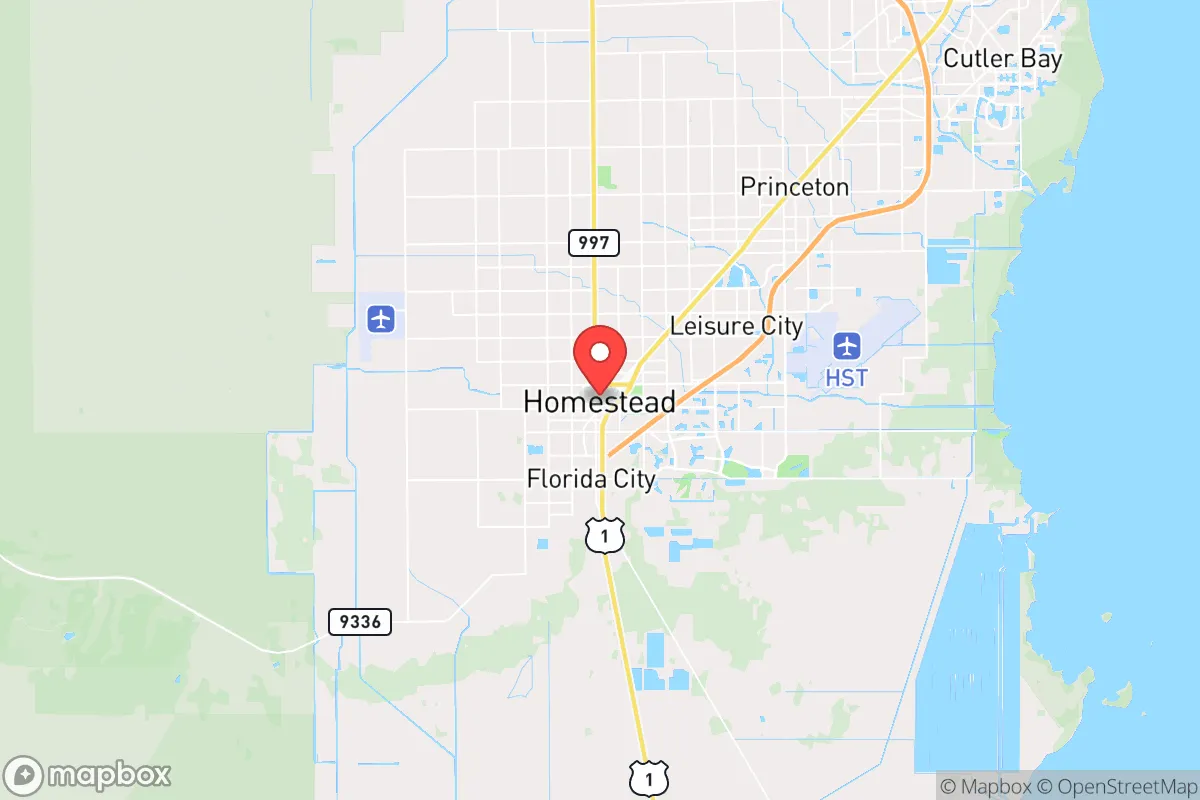
Homestead, Florida, sits at the southern tip of the mainland, roughly 30 miles southwest of downtown Miami, and its strategic value for a prepper or survivalist is a mixed bag of serious advantages and equally serious liabilities. On one hand, you’ve got a subtropical climate that supports year-round food production, a location that’s far enough from the densest urban chaos to offer a buffer, and a community that still has a working-class, agricultural backbone. On the other hand, you’re within easy striking distance of a major metropolitan area that would be a primary target for civil unrest, a nuclear strike, or a coordinated attack, and you’re surrounded by water on three sides, which limits escape routes. This analysis breaks down the real picture for a relocator who’s thinking long-term about resilience, not just a sunny retirement.
Geographic position and natural advantages for long-term survival
Homestead’s biggest asset is its location at the edge of the Florida peninsula, which gives it a natural chokepoint. The only road in and out of the Keys is U.S. 1, and the main arteries north—Florida’s Turnpike and U.S. 1—funnel through a narrow corridor between the Everglades and the Atlantic. That’s a double-edged sword: it makes Homestead a potential bottleneck for movement, but it also means you can control access to the area if you’re positioned correctly. The Everglades National Park to the west and Biscayne National Park to the east create a natural buffer zone of protected land that’s largely undeveloped and difficult to traverse. That’s a huge plus for anyone looking to avoid the sprawl of Miami-Dade County. The climate is subtropical, with an average annual temperature around 75°F, meaning you can grow food almost year-round. The growing season is effectively 365 days, and the soil in the Redland agricultural area—just north of Homestead—is some of the most productive in the state for tropical fruits, vegetables, and nursery stock. For a prepper, that’s a massive advantage: you can establish a food forest or a serious garden without the freeze risks that plague northern states. The area also has a strong agricultural infrastructure, with local farmers’ markets, packing houses, and a community that still knows how to work the land. That’s a cultural asset that’s increasingly rare in Florida’s coastal cities.
Risks, exposures, and proximity to fallout-relevant landmarks
Now for the hard truths. Homestead’s proximity to Miami is the single biggest strategic weakness. Miami is a Tier 1 target for any major conflict, whether it’s a nuclear exchange, a biological attack, or a cyber-induced collapse. The city is a major port, a financial hub, and a dense population center. If a nuke hits downtown Miami, Homestead is about 30 miles away—close enough to face fallout depending on wind patterns, but far enough that you might survive the blast wave if you’re not in a direct line. The real danger is the aftermath: the mass exodus of millions of people fleeing south along U.S. 1 and the Turnpike. Homestead would be a chokepoint for that flow, and that means you’d be dealing with a wave of desperate, hungry, and potentially violent people. The area is also surrounded by water on three sides, which limits escape routes. If you need to bug out, your only options are north (into the chaos) or into the Everglades (which is a swamp with its own survival challenges). There’s no easy way to get out by sea unless you have a boat and a plan. Additionally, Homestead is in a hurricane zone. The 1992 Hurricane Andrew leveled the area, and while building codes have improved, a Category 5 storm would still be catastrophic. The Turkey Point Nuclear Generating Station is about 10 miles north of Homestead, right on the coast. That’s a double-edged sword: it provides power, but it’s also a potential target for sabotage or a natural disaster. A hurricane-induced failure at Turkey Point could release radioactive material, and Homestead is in the likely fallout zone depending on wind direction. For a prepper, that’s a serious consideration—you’d need to monitor wind patterns and have a plan to move north or west if the plant goes down.
Practical resilience for a relocator: food, water, energy, and defensibility
On the practical side, Homestead offers some real opportunities for self-sufficiency, but you have to work for them. Water is the biggest concern. The area gets about 60 inches of rain per year, but the water table is shallow and the soil is porous limestone. That means you can’t rely on a traditional well without careful planning—the water is often brackish or contaminated with saltwater intrusion. You’d need a rainwater catchment system, and that’s feasible given the rainfall, but you’d need storage capacity for the dry season (November through April). The Biscayne Aquifer is the primary freshwater source, but it’s vulnerable to saltwater intrusion and pollution from the urban areas to the north. For a prepper, a deep well with a hand pump or a solar-powered pump is a must, but you’d need to test the water quality regularly. Food is where Homestead shines. The Redland area is full of small farms, nurseries, and u-pick operations. You can grow mangoes, avocados, citrus, bananas, and a wide variety of vegetables. The growing season is long, and you can get multiple harvests per year. The Homestead Farmers Market is a solid resource for seeds, plants, and local produce. For energy, solar is a no-brainer. Florida gets an average of 237 sunny days per year, and the state has net metering policies that make solar panels a good investment. You can also look into small-scale wind turbines, but the area isn’t particularly windy except during storms. Defensibility is a mixed bag. Homestead is a relatively spread-out town with a mix of suburban neighborhoods, agricultural land, and rural areas. If you’re looking for a property that’s defensible, you want something with a good setback from the road, a perimeter fence, and a clear line of sight. The Homestead Air Reserve Base is nearby, which is a potential asset (military presence) and a liability (target). The local population is a mix of long-time residents, agricultural workers, and recent transplants from the north. The community is generally conservative-leaning, with a strong sense of self-reliance, but it’s not a homogeneous enclave. You’ll find a mix of political views, and that’s actually a good thing for resilience—diverse networks are stronger than echo chambers.
The overall strategic picture for Homestead is one of calculated risk. It’s not a bug-out location for a total collapse scenario—the proximity to Miami, the hurricane risk, and the limited escape routes are real liabilities. But for a relocator who’s looking for a place to build a long-term, semi-self-sufficient lifestyle with a buffer from the worst of the urban chaos, it has genuine potential. The key is to buy property in the agricultural zone north of the city, away from the coast and the main evacuation routes. You want to be in the Redland area, where you can grow food, collect rainwater, and have some space between you and the neighbors. You also need to have a solid plan for hurricane season—reinforced construction, a generator, and a bug-out location inland (maybe in the Lake Okeechobee area or central Florida). If you’re willing to accept the risks and put in the work, Homestead can be a viable base for a resilient lifestyle. But it’s not a place for the unprepared or the faint of heart. The bottom line: Homestead is a strategic outpost, not a fortress. It’s a place where you can live well and be ready, but you’ll need to stay sharp and keep your options open.

* Values derived from national, state, county, city and local statistics and may differ in a specific area. Last updated: 2026-09-21T19:02:09.000Z
Narrative content on this page is AI-generated and may contain mistakes. Verify any details that matter before acting on them.
ReloMaps may earn a commission from affiliate links at no extra cost to you.

