Photo: Wikipedia
Find The Best Places To Live
in Homestead
PRO TIP! You can paste a Zillow or Redfin link to get info on that property.
What It's Like Living in Homestead, FL
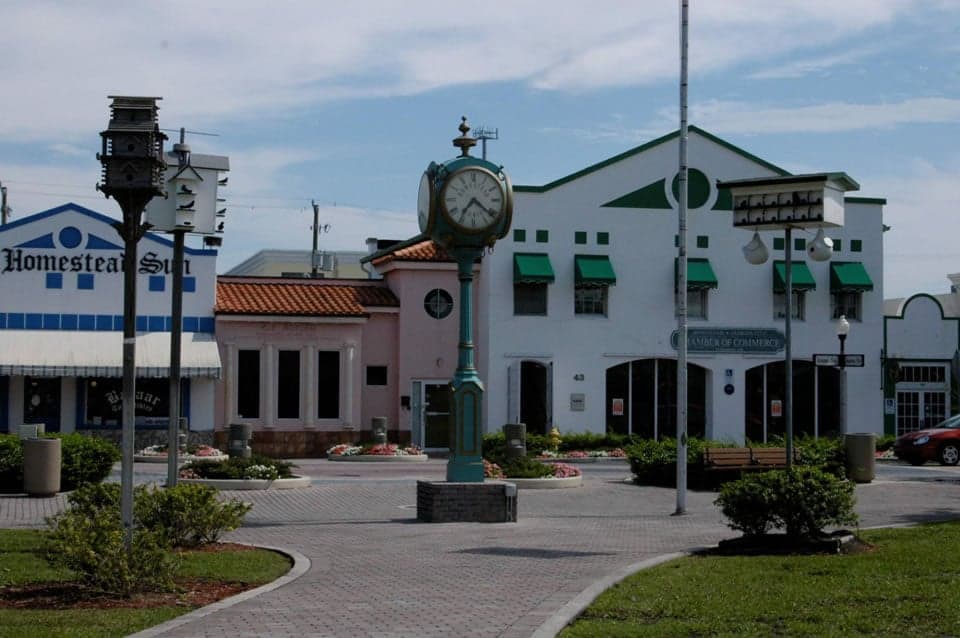
Homestead, Florida, feels like a small-town outpost that got swallowed by Miami’s sprawl but refused to lose its rough-around-the-edges character. It’s a place where you’re as likely to hear Spanish and Creole as English, where the air smells like farmland one minute and Everglades swamp the next, and where the pace is noticeably slower than downtown Miami—even if the commute to get there will test your patience. For the conservative-leaning single or parent looking at relocation, Homestead offers affordability (relatively speaking) and space, but it demands you embrace a very specific, workaday Florida that isn’t about beach clubs or nightlife.
Daily Rhythm: What People Actually Do Here
Most people in Homestead don’t live here for the glamour—they live here because they work in agriculture, logistics, or the service industries tied to the nearby Florida Keys and Everglades tourism. The median age is 32.3, and the median household income sits at $61,975, which means this is a young, working-class town. A typical weekday involves an early start: parents drop kids at school (Miami-Dade County Public Schools, with Homestead High School being the big local anchor), then head to jobs at places like the Homestead Air Reserve Base, the fruit and vegetable packing houses along Krome Avenue, or the retail hubs near Florida City. The average commute is a brutal 37 minutes—and that’s the average; if you work in Kendall or Doral, tack on another 15–20. Weekends are for errands at the Home Depot or Walmart on Campbell Drive, or for escaping to the Everglades National Park entrance just west of town. There’s no “scene” here—people hang out at chain restaurants like Texas Roadhouse or local dives like Mutineer Bar & Grill, a nautical-themed spot on Krome that’s been around forever.
Sports, Community, and the Local Identity
Sports in Homestead are less about pro teams and more about high school football and the unique pull of the Homestead-Miami Speedway. The speedway hosts NASCAR’s season finale every November, and for that week, the town swells with RV crowds and gearheads—it’s the biggest event of the year by far. Outside of that, the local identity is tied to agriculture: the Homestead Rodeo in January and the Redland Summer Fruit Festival (just north in Redland) are the big community gatherings. You’ll see families at the Homestead Bayfront Park on Biscayne Bay, where the water is calm and the picnic shelters are always booked on weekends. The cultural quirk here is a kind of proud, blue-collar independence—people wave to neighbors, but they also keep to themselves. It’s not a place where you’ll find a vibrant arts scene or a farmers’ market that draws crowds; the farmers’ market is literally the produce stands along Krome Avenue, where you buy tomatoes and avocados from the back of a truck.
What’s There to Do (and What’s Missing)
Entertainment options are limited but specific. The Everglades Alligator Farm and the Fruit & Spice Park (in nearby Redland) are the go-to for a low-key afternoon. For a night out, there’s Schnebly Redland’s Winery—a tropical fruit winery that feels more like a backyard party than a tasting room. The Homestead Town Square movie theater is the main indoor draw. But here’s the honest trade-off: if you want a proper restaurant scene, live music, or a bar that isn’t a sports grill, you’re driving 30–40 minutes north to Coral Gables or Coconut Grove. That’s the biggest frustration for longtime residents—the lack of local third places. The pros, though, are real: cost of living is 133 (33% above the US average), which sounds high, but compared to Miami-Dade’s overall index of 140+, it’s a bargain. The median home value of $346,500 gets you a decent single-family home with a yard—something impossible in most of the county. The violent crime rate of 437.1 per 100,000 is higher than the national average, and it’s something residents talk about openly; property crime is the bigger nuisance, with car break-ins and package thefts common in some neighborhoods.
Who Fits In, and Who Should Think Twice
Homestead works best for people who value space, quiet, and a slower pace over convenience and culture. It’s a strong fit for parents who want a house with a yard and don’t mind driving kids to sports practice or school events. The 24.3% college-educated rate is low, which reflects the blue-collar base—this isn’t a town of remote workers or creatives. The weather is classic South Florida: hot and humid from May through October, with afternoon thunderstorms that flood low-lying streets, and a dry, pleasant winter that draws snowbirds to the RV parks. Hurricane season (June–November) is a real concern; Homestead was ground zero for Hurricane Andrew in 1992, and that memory still shapes building codes and insurance costs. For the conservative-leaning reader, this is a place where people are generally self-reliant, church-going (lots of Baptist and Catholic congregations), and skeptical of government overreach. It’s not politically vocal in the way that, say, rural North Florida is—but it’s definitely not Miami Beach. If you’re single and looking for a social life, you’ll find it thin. If you’re a parent wanting a safe, affordable, no-nonsense place to raise kids with access to the Everglades and the Keys, Homestead delivers—just know you’ll be spending a lot of time in the car.

Similar small cities to Homestead
* Values derived from national, state, county, city and local statistics and may differ in a specific area. Last updated: 2026-09-21T19:02:09.000Z
Narrative content on this page is AI-generated and may contain mistakes. Verify any details that matter before acting on them.
ReloMaps may earn a commission from affiliate links at no extra cost to you.

