Photo: Wikipedia
Demographics of Hoover, AL
Affluence Level in Hoover, AL
An upper-middle-class area. Household wealth, education levels, and homeownership run ahead of national benchmarks.
People of Hoover, AL
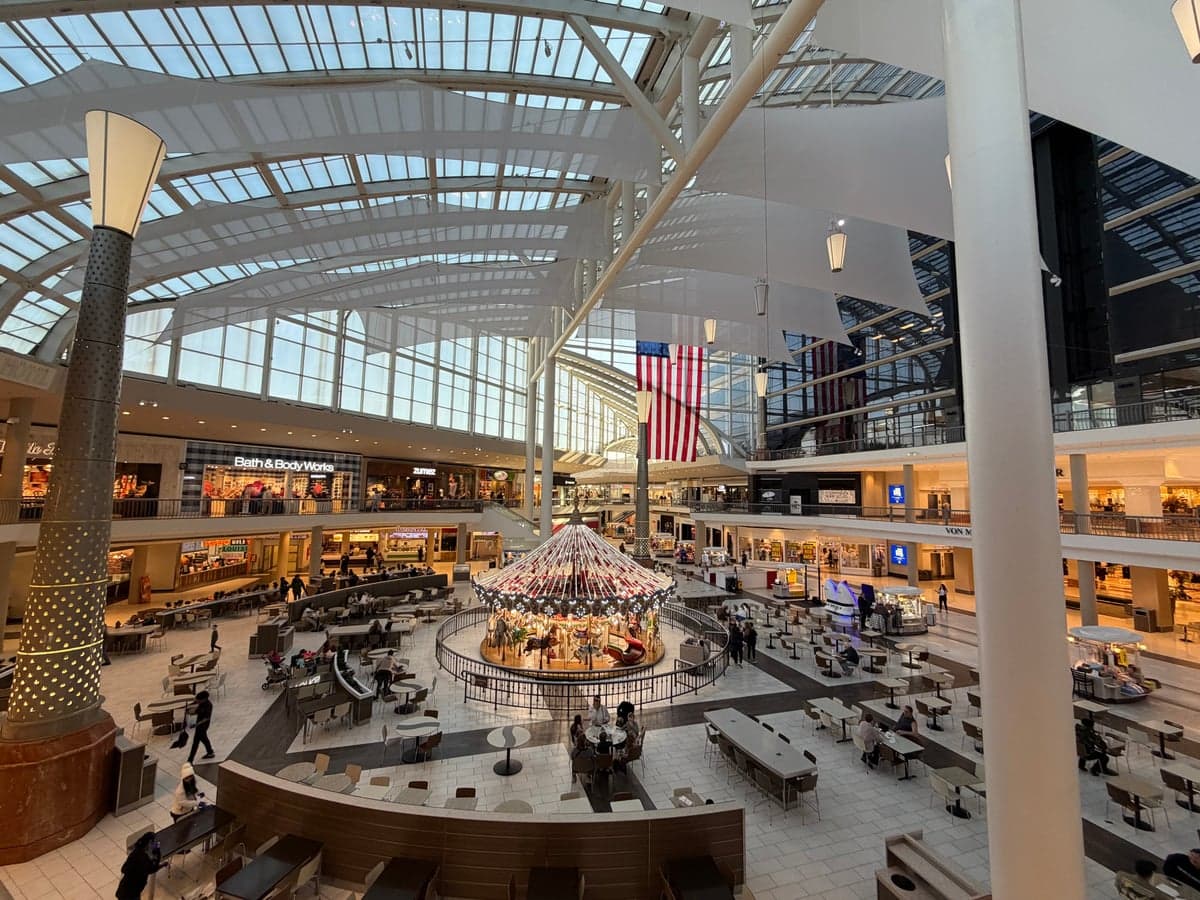
The people of Hoover, Alabama, in 2026 form a predominantly white, highly educated, and affluent suburban population of 92,401, with a notable and growing Black middle class and a small but distinct Asian and Indian professional enclave. The city’s identity is shaped by its role as a planned, post-1960s bedroom community for Birmingham’s white-collar workforce, anchored by the Riverchase master-planned development and the massive Riverchase Galleria mall. With a foreign-born share of just 3.4% and a college education rate of 60.8%, Hoover is a relatively homogeneous, family-oriented suburb where newcomers are typically domestic migrants drawn by top-rated schools and corporate relocations. The population is slowly diversifying along class lines, with distinct neighborhoods reflecting different waves of settlement and economic status.
How the city was settled and grew
Hoover did not exist as a significant settlement before the 20th century. The area was originally rural farmland and mining territory, part of Jefferson County’s mineral-rich landscape that fueled Birmingham’s early industrial boom. The first permanent residents were subsistence farmers and coal miners, mostly of Scots-Irish and English descent, who lived in scattered homesteads along the Shades Valley. The community remained tiny until the post-World War II era, when Birmingham’s expanding white middle class began seeking suburban land. The true founding moment came in the 1960s, when developer John L. “Jack” Hoover (for whom the city is named) began assembling land for what would become the Riverchase planned community. This master-planned development, launched in the early 1970s, was explicitly designed to attract white, college-educated professionals fleeing Birmingham’s urban core. The original Riverchase neighborhoods — Riverchase Estates, Riverchase Landing, and Riverchase Country Club — were built with large lots, golf courses, and deed restrictions that maintained a uniformly affluent, white character through the 1980s. A smaller, older pocket of working-class white families remained in the Bluff Park area along Shades Mountain, a pre-Hoover settlement of modest homes built by miners and railroad workers in the 1920s and 1930s.
Modern era (post-1965)
The post-1965 immigration reforms had minimal direct impact on Hoover’s population, as the city was not a traditional immigrant gateway. Instead, the major demographic shift came from domestic migration: the steady movement of Black professionals and middle-class families from Birmingham into Hoover’s newer subdivisions. By the 1990s, Hoover’s Black population had grown to roughly 10%, concentrated in neighborhoods like Green Valley and Ross Bridge — the latter a large, golf-course community developed in the 2000s that attracted a mixed-race, upper-middle-class population. Today, Black residents make up 19.5% of Hoover’s population, a share that has risen steadily as Birmingham’s Black middle class has suburbanized. The Hispanic population (5.1%) is smaller and more dispersed, with no single ethnic enclave; many are employed in construction, landscaping, and service jobs tied to the Galleria and surrounding retail. The East/Southeast Asian community (2.9%) and Indian-subcontinent community (2.9%) are both small but highly visible in professional fields — medicine, engineering, and information technology — and tend to cluster in newer, higher-end subdivisions such as The Preserve at Ross Bridge and Lake Crest. These groups are overwhelmingly foreign-born professionals on H-1B visas or naturalized citizens, drawn by Hoover’s schools and proximity to Birmingham’s medical and research sectors. The white population (67.3%) remains the majority but is aging, with many original Riverchase residents now retired and their adult children having moved to newer suburbs farther south.
The future
Hoover’s population is likely to continue its slow diversification, but the city is not becoming a melting pot in the traditional sense. Instead, it is tribalizing into distinct, class-stratified enclaves. The wealthiest neighborhoods — Ross Bridge, Lake Crest, and the newer sections of Riverchase — are becoming more racially mixed as affluent Black, Asian, and Indian families move in, while the older, less expensive areas like Bluff Park and Green Valley are seeing a slight increase in Hispanic and lower-income white households. The foreign-born share (3.4%) is low and unlikely to rise dramatically, as Hoover lacks the rental housing stock and entry-level jobs that attract new immigrants. The city’s growth is now driven by infill development and a few remaining greenfield subdivisions, not by annexation. Over the next 10–20 years, Hoover will likely become slightly more diverse at the top of the income ladder while remaining predominantly white and native-born overall. The biggest demographic pressure point is the aging white population: as empty-nesters downsize or move to retirement communities, their homes are being purchased by younger families of all races, but the overall population growth is slowing.
For someone moving to Hoover now, the city offers a stable, safe, and highly educated environment where race is less a barrier to entry than income. The key question is not whether you will fit in racially, but whether you can afford the neighborhoods that define the city’s character. The future Hoover is a place where class, not ethnicity, will be the primary dividing line among its residents.

* Values derived from national, state, county, city and local statistics and may differ in a specific area. Last updated: 2026-04-19T18:54:25.000Z
Narrative content on this page is AI-generated and may contain mistakes. Verify any details that matter before acting on them.
ReloMaps may earn a commission from affiliate links at no extra cost to you.

