
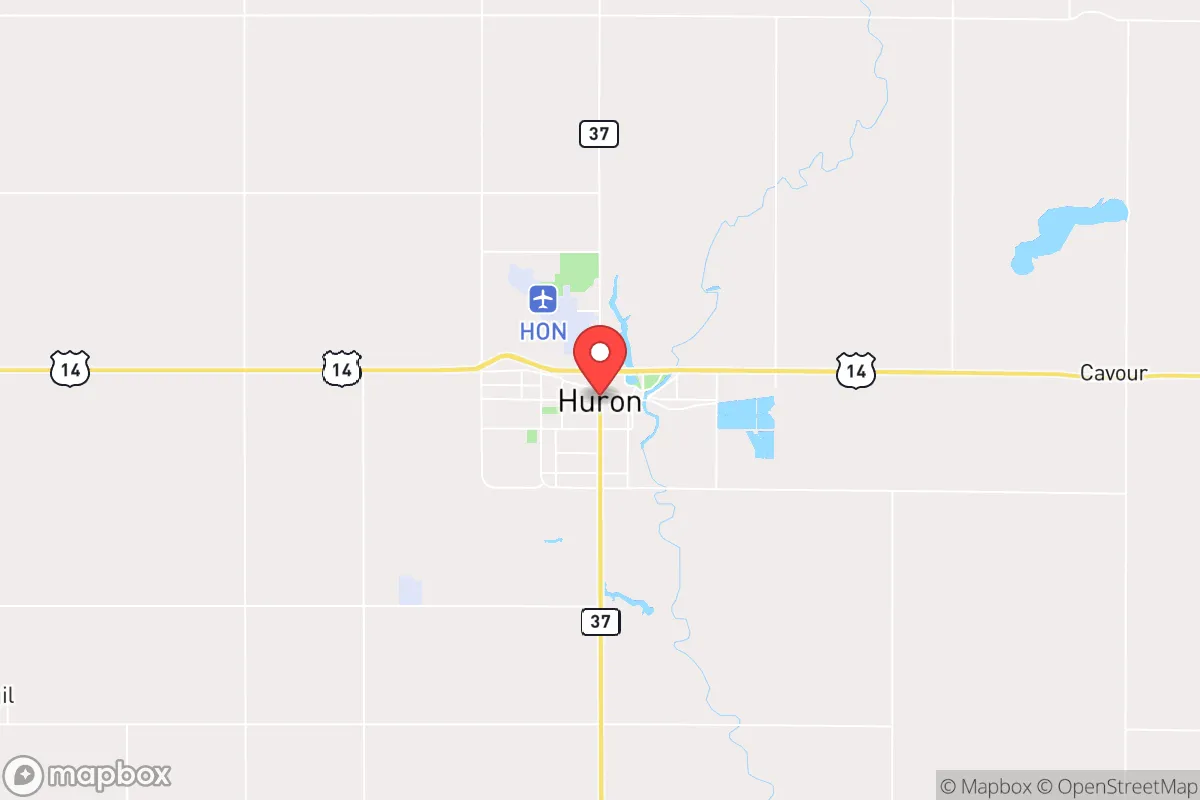
Photo: Wikipedia
Quality of Life in Huron, SD
A high quality of life with strong walkability, manageable living costs, healthy neighborhood signals, and solid amenity access.
What does Quality of Life tell us?
Quality of Life blends cost of living, nearby amenities, socioeconomic signals, and neighborhood character. City-level scores represent the whole municipality; individual neighborhoods can differ.
What does this tell us?
Quality of Life blends cost of living, nearby amenities, socioeconomic signals, and neighborhood character. City-level scores represent the whole municipality; individual neighborhoods can differ.
Cost of Living
33% below national average
The Real Cost of Living in Huron, SD for 2026
| Tier | Individual | Family (4) |
|---|---|---|
| Survival | $13k | $25k |
| Comfortable | $32k | $47k |
| Luxury | $93k+ | $144k+ |
| Elite (Top 5%) | $113k+ | $175k+ |
110%
The Area Signal
A metric tracking the socioeconomic signals of the area.


Hobbies
Explore the areaGroceries
5 within 10 miles
Gas
0 within 10 miles
Hospital
2 within 20 miles
Airport
JFK — John F. Kennedy Memorial
Post Office
USPS — Huron, SD
Critical Amenities
Quality-of-Life Analysis
Huron, South Dakota, offers a notably affordable quality of life that attracts a mix of young families, agricultural workers, and retirees seeking a low-stress, budget-friendly environment. With a cost of living index of 67 (well below the U.S. average of 100), the city provides a financial cushion that is rare in most of the country. The population is predominantly white, with a growing Hispanic community, and the local economy is anchored by agriculture, manufacturing, and healthcare, creating a stable, blue-collar and middle-class demographic.
How housing costs and everyday expenses compare to nearby cities
Huron’s housing market is one of its strongest draws. The median home value sits at $164,700, a figure that is roughly half the national median and significantly lower than in South Dakota’s larger cities like Sioux Falls (where the median exceeds $300,000). Median rent is just $839, making it feasible for single-income households and entry-level workers to live comfortably. The average commute of 17.6 minutes is short, reflecting the city’s compact layout and minimal traffic congestion. Compared to neighboring towns like Mitchell or Brookings, Huron offers slightly lower home prices and rents, though the trade-off is fewer retail and entertainment options. Utility and grocery costs also track below state averages, reinforcing the area’s reputation as a place where a modest salary goes a long way.
Schools, parks, and the daily rhythm of life in Huron
Daily life in Huron centers on a relaxed, community-oriented pace. The Huron School District serves around 2,800 students and includes Huron High School, which offers dual-credit programs through Lake Area Technical College. The city’s parks system, anchored by the sprawling Memorial Park along the James River, provides walking trails, sports fields, and a public pool. The South Dakota State Fair, held annually in Huron, draws tens of thousands of visitors and punctuates the late-summer calendar with concerts, livestock shows, and carnival rides. For everyday errands, residents rely on a mix of national chains (Walmart, Hy-Vee) and local shops along Dakota Avenue. Healthcare is accessible through Huron Regional Medical Center, a 25-bed critical-access hospital. While nightlife is limited to a few bars and a bowling alley, the city’s low crime rate and strong sense of neighborliness make it a practical choice for those who prioritize safety and simplicity over urban excitement.
Huron is best suited for people who value financial breathing room and a slower, more predictable daily routine. Retirees on fixed incomes, remote workers seeking a low-cost base, and families who want a safe environment with decent schools will find the city a solid fit. Those who crave cultural diversity, high-end dining, or a vibrant nightlife scene may feel constrained. For anyone whose priority is stretching a paycheck while enjoying a clean, quiet, and friendly community, Huron delivers on its promise of affordable small-town living in the Great Plains.

Crime in Huron, SD
Lower crime rates than 76% of comparable U.S. locations.
Violent CrimeViolent Crime Analysis
Property CrimeProperty Crime Analysis
Crime Analysis
Huron, South Dakota, presents a mixed safety profile, with property crime rates that significantly exceed both state and national averages, while violent crime remains closer to the national norm. According to the most recent data, the city reports a violent crime rate of 281.2 incidents per 100,000 residents and a property crime rate of 1,378.7 per 100,000. These figures place Huron in a position where residents should be particularly vigilant about theft and vandalism, though the risk of violent confrontation is comparatively lower than in many similarly sized communities.
Crime in context
To understand Huron's safety landscape, it is essential to compare its rates against broader benchmarks. The national average for violent crime is approximately 380 per 100,000, meaning Huron's rate of 281.2 is roughly 26% lower than the U.S. average. However, South Dakota's statewide violent crime rate is around 350 per 100,000, so Huron also fares better than the state as a whole. The picture shifts dramatically with property crime. The national property crime rate sits near 1,950 per 100,000, and South Dakota's is approximately 1,600. Huron's rate of 1,378.7 is notably higher than the state average and only moderately below the national figure, indicating a persistent property crime challenge. This pattern is common in smaller cities that serve as regional economic hubs, where transient populations and commercial activity can elevate opportunities for theft.
What residents experience
In practical terms, Huron residents are most likely to encounter property-related offenses such as larceny-theft, burglary, and motor vehicle theft. These crimes often target unlocked vehicles, unattended personal items, and commercial properties. The violent crimes that do occur are typically concentrated in specific circumstances, such as domestic disputes or incidents involving individuals known to one another, rather than random attacks on strangers. Law enforcement in Huron, including the Huron Police Department, maintains a visible presence and has community policing initiatives, but the city's layout and population density mean that response times and patrol coverage can vary. Residents in neighborhoods closer to the downtown core or near major transportation corridors (like Highway 14) may experience higher incident rates than those in outlying residential subdivisions.
Neighborhood-level variation in Huron is not extensively documented in public data, but anecdotal reports and local crime maps suggest that areas around the industrial zones and the city's central business district see more property crime activity. Newer residential developments on the city's west side and near the James River tend to report fewer incidents. For those considering a move, consulting with local real estate agents or the police department's crime prevention unit can provide more granular insights. Overall, while Huron is not a high-violence city, its property crime rate demands proactive security measures—such as home alarm systems, neighborhood watch participation, and secure storage of valuables—to mitigate risk effectively.
* Values derived from national, state, county, city and local statistics and may differ in a specific area. Last updated: 2026-04-19T05:10:25.000Z
Narrative content on this page is AI-generated and may contain mistakes. Verify any details that matter before acting on them.
ReloMaps may earn a commission from affiliate links at no extra cost to you.

