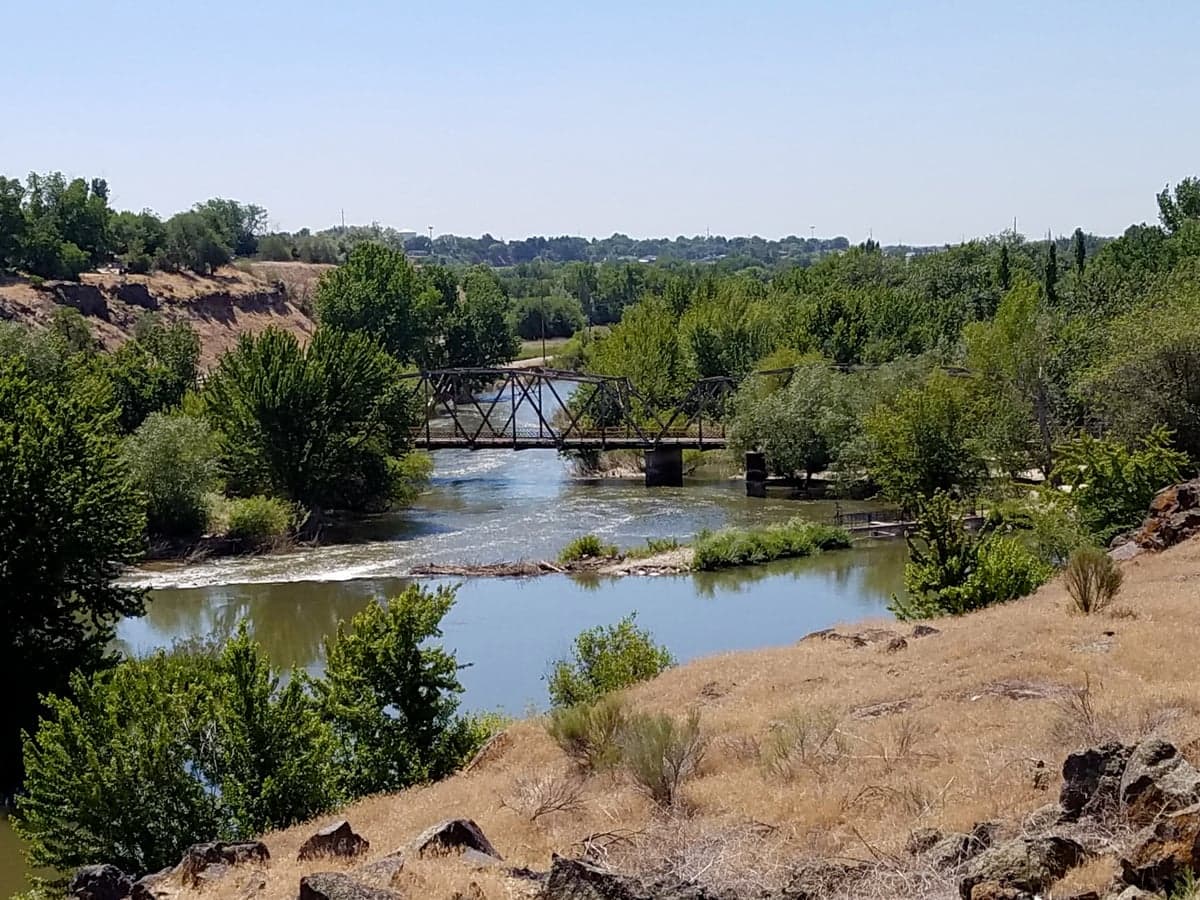
Photo: Wikipedia
Personal Sovereignty in Canyon County
Moderate friction. Expect trade-offs in some aspect of personal liberty and independence.
What does Personal Sovereignty tell us?
Personal Sovereignty measures your capacity for self-reliance and independence with minimal government friction. Higher scores mean fewer barriers between you and the way you want to live... but it assumes you have the space you need and good neighbors.
What does this tell us?
Personal Sovereignty measures your capacity for self-reliance and independence with minimal government friction. Higher scores mean fewer barriers between you and the way you want to live... but it assumes you have the space you need and good neighbors.
State Policy
Energy independence: Importer (25% of energy produced in-state)
Personal Liberty
Homesteading

Personal Liberty Analysis
Canyon County, Idaho, offers a notably high degree of personal sovereignty compared to much of the urbanized West, anchored by a state-level legal framework that actively limits government overreach and prioritizes individual autonomy. For those concerned with preserving self-determination in an era of expanding federal and state mandates, this region presents a compelling balance of rural freedom and accessible infrastructure. The county’s political culture, combined with Idaho’s preemptive laws on firearms, property rights, and parental authority, creates an environment where residents can largely live as they see fit, provided they respect their neighbors’ equal liberties. However, the degree of this sovereignty varies significantly depending on whether you are in the more developed corridor of Nampa and Caldwell versus the outlying areas like Parma, Greenleaf, or the rural stretches near Melba and Notus.
Tax burden and regulatory posture: How the state protects your wallet and choices
Idaho’s tax and regulatory climate is a primary pillar of its personal sovereignty appeal. The state operates under a constitutional framework that requires a supermajority vote in the legislature to raise taxes, and Canyon County benefits from this fiscal discipline. Property taxes are relatively low, with the county’s average effective rate hovering around 0.7% of assessed value—significantly less than neighboring Oregon or Washington. There is no state inheritance tax, no estate tax, and no tax on Social Security benefits. For the self-employed or those running small homestead operations, Idaho’s business regulatory environment is among the most permissive in the nation, with no general business license requirement at the state level and minimal occupational licensing compared to coastal states. In practical terms, this means a family in rural Melba can operate a small farm stand, a welding shop, or a home-based firearms training business without navigating a labyrinth of permits. The county’s planning and zoning departments, particularly in unincorporated areas, are generally deferential to property owners, though the cities of Nampa and Caldwell have more stringent building codes and land-use restrictions. For those seeking maximum autonomy, the unincorporated areas west of the Boise River or north of Highway 20/26 offer the least regulatory friction.
Self-defense and gun law specifics: A constitutional carry stronghold with practical advantages
Canyon County is located in one of the most firearm-friendly states in the country, and the local culture reflects that reality. Idaho is a constitutional carry state, meaning no permit is required to carry a concealed firearm for anyone legally allowed to possess one. The state also has strong preemption laws that prohibit cities and counties from enacting their own gun control ordinances—so whether you are in downtown Nampa or the rural outskirts of Parma, the same legal protections apply. Stand-your-ground laws are in place, and there is no duty to retreat in any place where a person has a lawful right to be. For preppers and survivalists, the practical implications are significant: you can keep firearms in your vehicle, on your person, and in your home without bureaucratic interference. The county sheriff’s office in Caldwell is known for issuing enhanced concealed carry permits (which are recognized in more states) without unnecessary delay. Additionally, Idaho has a robust "red flag" law resistance—no extreme risk protection orders exist in state statute, meaning your firearms cannot be seized without due process based on a third-party complaint. This legal environment makes Canyon County a stronghold for those who view self-defense as a fundamental, non-negotiable right.
Self-reliance and homesteading viability: Lot sizes, zoning, and off-grid feasibility across the county
The viability of a self-reliant lifestyle in Canyon County depends heavily on location, but the opportunities are substantial. In the unincorporated areas around Melba and Notus, agricultural zoning allows for properties as small as 5 acres to qualify for farm tax exemptions, and many parcels are available with existing water rights from the Snake River aquifer. Off-grid living is legally feasible in most rural zones, though the county does require a permit for septic systems and well drilling—reasonable requirements for public health. Solar panels, rainwater collection, and composting toilets are generally unregulated outside city limits. In contrast, the cities of Nampa and Caldwell have more restrictive codes: Nampa, for example, requires connection to municipal sewer and water on lots under one acre, and its zoning code limits livestock to properties of two acres or more. For serious homesteaders, the areas around Greenleaf and Parma offer the best combination of affordable land (often $5,000–$10,000 per acre), minimal zoning, and access to the Payette River for irrigation. The county’s right-to-farm ordinance protects agricultural operations from nuisance lawsuits, which is critical if you plan to keep chickens, goats, or even a few head of cattle. However, be aware that the Treasure Valley’s rapid growth is pushing suburban development westward, so land prices in the Nampa-Caldwell corridor have risen sharply since 2020.
Personal liberties: Parental rights, medical autonomy, speech, and property protections
Idaho has positioned itself as a national leader in protecting parental rights and medical freedom. The state’s "Parents’ Bill of Rights" (Idaho Code § 33-5201) explicitly affirms that parents have the fundamental right to direct their children’s education, healthcare, and moral upbringing. This means no government mandate for school curricula that parents object to, and no requirement for minors to receive medical treatments without parental consent. In Canyon County, the school districts in rural areas like Wilder and Notus tend to be more responsive to parental concerns than the larger Nampa and Caldwell districts, where administrative bureaucracy is thicker. On medical autonomy, Idaho has strong conscience protections for healthcare providers and patients, and the state has banned vaccine passports and discriminatory mandates based on vaccination status. For those concerned about government overreach into personal health decisions, this is a significant advantage. Property rights are also robust: Idaho’s eminent domain laws are among the most restrictive in the nation, and the state’s "private property protection act" requires the government to compensate landowners for any regulatory taking that reduces property value by more than 20%. Free speech is protected by both the state constitution and a culture that values direct, unfiltered expression—you will find political signs, bumper stickers, and public discourse in Canyon County that would be considered provocative in more regulated states.
Overall, Canyon County offers a level of personal sovereignty that is increasingly rare in the United States, particularly for those willing to settle outside the municipal boundaries of Nampa and Caldwell. The combination of constitutional carry, low taxes, strong parental rights, and permissive land-use regulations creates a legal environment where self-reliant individuals and families can largely control their own lives. Compared to the regulatory density of the Pacific Coast states or the urbanized Front Range of Colorado, this region stands out as a refuge for those who prioritize freedom over convenience. The trade-off is that you must be prepared to handle your own emergencies, maintain your own infrastructure, and accept that the county government’s primary role is to stay out of your way—not to provide services. For the strategic relocator with a survivalist mindset, that is precisely the point.

* Values derived from national, state, county, city and local statistics and may differ in a specific area. Last updated: 2026-05-07T22:35:47.000Z
Narrative content on this page is AI-generated and may contain mistakes. Verify any details that matter before acting on them.
ReloMaps may earn a commission from affiliate links at no extra cost to you.

