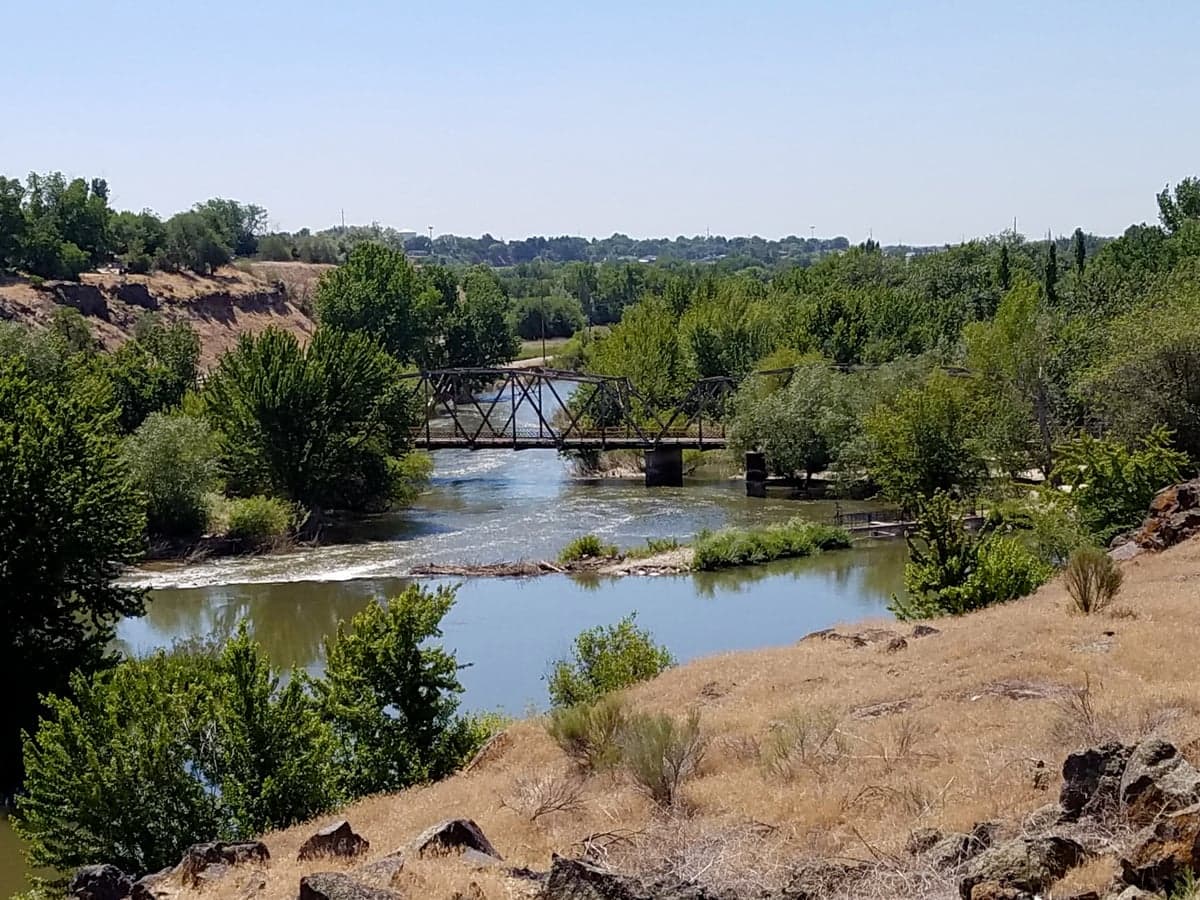
Photo: Wikipedia
Political ClimatePolitical Climate in Canyon County
Showing district-level results — no local-only data available.
Local Political AnalysisPolitical Analysis of Canyon County
Canyon County is one of the most reliably conservative areas in Idaho, with a Cook PVI of R+22 that puts it four points to the right of the state as a whole. That number isn't just a statistic—it reflects a deep, lived-in culture where folks have been voting their values for decades. But if you've been here as long as I have, you've seen the political landscape shift under your feet, especially as the Treasure Valley grows and new people pour in from places like California and Oregon. The county still leans hard red, but the texture of that conservatism is changing, and not always in ways that sit well with longtime residents.
How it compares
Idaho as a whole sits at R+18, which is already deep red, but Canyon County is a full four points more conservative. That gap matters because it means Canyon County is often the engine that drives statewide Republican victories—think of it as the anchor of the conservative vote in the Treasure Valley. But the comparison gets interesting when you look inside the county itself. Nampa and Caldwell are the population centers, and they've historically been rock-solid Republican territory. However, as the suburbs around Boise have expanded, precincts in western Nampa and near the Ada County line have started to show more purple tendencies. You'll see pockets in Melba and Greenleaf that are as red as they come—old farm families, church on Sunday, no-nonsense values. Meanwhile, Middleton and Star, which are growing fast with new subdivisions, have become swing precincts where a few hundred votes can tip a local race. The real concern for conservatives is that these new arrivals often bring progressive voting habits with them, even if they say they moved here for the "freedom."
What this means for residents
For someone who values limited government and personal liberty, Canyon County is still a good place to be—but you have to keep an eye on the trends. County commissioners and the sheriff's office remain solidly conservative, which means you're not seeing the kind of overreach you'd get in a blue state. Property taxes are relatively low, and there's no state income tax, which is a big deal for families and small business owners. But the cultural pressure is real. School board meetings in Nampa have become battlegrounds over curriculum and library books, and that's a sign that the progressive push isn't just a rumor—it's showing up in local elections. If you're the kind of person who believes the government should stay out of your home, your business, and your church, you'll find plenty of allies here. But you'll also find a growing number of neighbors who think the government should be more involved in "fixing" things, and that's where the friction comes from.
The biggest cultural distinction in Canyon County is the strong agricultural and ranching heritage that still defines places like Parma, Notus, and Wilder. These towns are where the old Idaho values—self-reliance, neighborly help, and a healthy skepticism of government—are still the norm. In contrast, the newer developments near the interstate feel more like any suburb in America, with chain stores and HOA rules that can feel like a slow creep of regulation. If you're looking for a place where your rights are respected and your voice matters, Canyon County is still one of the best bets in the West. But don't take it for granted—the political winds are shifting, and the only way to keep things from sliding is to stay involved, vote in every local election, and remind the newcomers why they moved here in the first place.

State Political ClimatePolitical Climate in Idaho
State Political AnalysisPolitical Environment in the State
Idaho is one of the most reliably Republican states in the country, with a Cook Partisan Voting Index of R+18, meaning it votes about 18 points more Republican than the national average. The dominant coalition is a blend of rural conservatives, Mormon cultural conservatives in the southeast, and a growing wave of out-of-state transplants fleeing progressive policies in California, Oregon, and Washington. Over the last 10-20 years, the state has shifted sharply rightward, with the GOP supermajority in the legislature becoming more assertive on cultural and fiscal issues, while the Democratic Party has been reduced to a rump presence in Boise and a handful of college towns.
Urban vs. rural divide
The political map of Idaho is starkly divided between its few urban centers and the vast rural expanse. The Treasure Valley, anchored by Boise, Meridian, and Nampa, is the state’s population engine and the only area where Democrats are competitive. Boise itself has trended leftward in recent cycles, with Ada County flipping from reliably red to a swing county—it voted for Joe Biden in 2020 by a narrow margin. However, the surrounding suburbs like Eagle and Star remain solidly conservative, and the rural counties that make up the rest of the state—like Lemhi County (Salmon), Boundary County (Bonners Ferry), and Oneida County (Malad City)—routinely deliver 80-90% Republican margins. The divide is not just urban vs. rural; it’s also cultural. The southeastern Idaho cities of Rexburg and Idaho Falls are heavily influenced by the LDS Church and vote overwhelmingly Republican, while the northern panhandle towns like Sandpoint and Coeur d’Alene have seen an influx of conservative refugees from Washington and California, reinforcing the red tilt.
Policy environment
Idaho’s policy environment is aggressively conservative. The state has a flat income tax rate of 5.8% (recently cut from 6%), no corporate income tax on pass-through entities, and a strict constitutional limit on property tax increases. The legislature has passed some of the nation’s strongest parental rights laws, including the 2023 “Parents’ Bill of Rights” (HB 93), which requires schools to notify parents of any curriculum involving sexuality or gender identity and prohibits school employees from withholding information about a child’s mental or physical health. On education, the state has expanded school choice through charter schools and the “Empower Idaho” education savings account program, which allows parents to use state funds for private school tuition or homeschooling expenses. Election laws are among the most secure in the country: voter ID is required, same-day registration is not allowed, and the state has purged inactive voters from rolls. Healthcare policy is limited—Idaho has not expanded Medicaid under the Affordable Care Act (though voters passed a ballot initiative in 2018, the legislature has resisted full implementation), and abortion is effectively banned after six weeks under the 2020 “fetal heartbeat” law, with no exceptions for rape or incest. The regulatory posture is light-touch, with no state-level environmental regulations beyond federal minimums, and a right-to-work law that keeps unions weak.
Trajectory & freedom
Idaho is becoming more free in many respects, particularly on gun rights, parental rights, and tax policy. In 2023, the legislature passed a “constitutional carry” law (HB 124), allowing any adult who can legally possess a firearm to carry it openly or concealed without a permit. The state also passed a “Second Amendment Sanctuary” resolution in 2021, declaring that state law preempts any federal gun control measures. On medical autonomy, Idaho has one of the strictest bans on gender-affirming care for minors (HB 71, 2023), and the “Medical Freedom Act” (SB 1137, 2022) prohibits employers and government entities from requiring COVID-19 vaccines. Property rights have been strengthened by a 2021 law limiting the use of eminent domain for economic development. However, there are areas where freedom has contracted: the state’s strict abortion ban has no exceptions for rape or incest, which some residents view as an overreach, and the legislature has repeatedly attempted to limit ballot initiatives, making it harder for citizens to bypass the legislature on issues like Medicaid expansion. The overall trajectory is toward a more libertarian-leaning conservative model, with less government interference in personal choices (guns, education, medical decisions) but more government involvement in moral and cultural issues (abortion, gender identity).
Civil unrest & political movements
Idaho has a history of fringe political movements, but in recent years the mainstream has absorbed much of that energy. The “Constitutional Sheriffs” movement is active in rural counties like Bonner County and Boundary County, where sheriffs have publicly stated they will not enforce federal gun laws or certain state mandates. In 2020, the “Idaho Freedom Foundation” and other groups organized large protests against COVID-19 lockdowns, particularly in Boise and Coeur d’Alene, which were among the largest in the country relative to population. On the left, the “Idaho Women’s March” and “Indivisible” groups have been active in Boise, but their influence is limited. Immigration politics are relatively quiet—Idaho has no sanctuary cities, and the state passed a law in 2023 (SB 1202) requiring law enforcement to cooperate with federal immigration authorities. Election integrity controversies have been minimal; the state’s Republican Secretary of State, Phil McGrane, has maintained high confidence in the system, and there have been no major fraud allegations. The most visible flashpoint for a new resident would be the culture war in schools—particularly in the West Ada School District (Meridian), where school board meetings have been contentious over library books and curriculum. Overall, civil unrest is low compared to coastal states, but the political temperature is high, especially around education and medical freedom.
Projection
Over the next 5-10 years, Idaho is likely to become even more conservative, driven by two demographic forces: the continued influx of conservative refugees from California, Oregon, and Washington, and the out-migration of younger, more liberal residents from Boise to more progressive states. The Treasure Valley will continue to grow, but the new arrivals are overwhelmingly conservative—many are fleeing high taxes, crime, and progressive policies in their home states. This will likely push Ada County back toward the GOP column, while the rural counties remain deeply red. The legislature will continue to pass culturally conservative laws, particularly on education, gender, and abortion, and may attempt to further restrict ballot initiatives. The biggest wildcard is the state’s housing affordability crisis—if home prices continue to rise faster than wages, it could slow in-migration and potentially shift the political calculus. But for now, the trajectory is clear: Idaho is solidifying as a red-state stronghold, with a policy environment that prioritizes individual liberty on guns and taxes, while enforcing traditional values on social issues. A new resident moving in now should expect to find a state that is culturally and politically aligned with the conservative movement, with a government that is actively working to preserve that alignment.
Bottom line for a new resident: If you’re moving to Idaho for freedom from government overreach, you’ll find it—especially on taxes, guns, and education. The state is not perfect; the housing market is tight, wages lag behind the cost of living, and the culture war is real, especially in school districts. But if you value a state where your rights are protected by law and your vote actually counts, Idaho is one of the best bets in the country. Just be prepared for cold winters and a growing population that’s changing the landscape faster than the infrastructure can keep up.
* Values derived from national, state, county, city and local statistics and may differ in a specific area. Last updated: 2026-05-07T22:35:47.000Z
Narrative content on this page is AI-generated and may contain mistakes. Verify any details that matter before acting on them.
ReloMaps may earn a commission from affiliate links at no extra cost to you.

