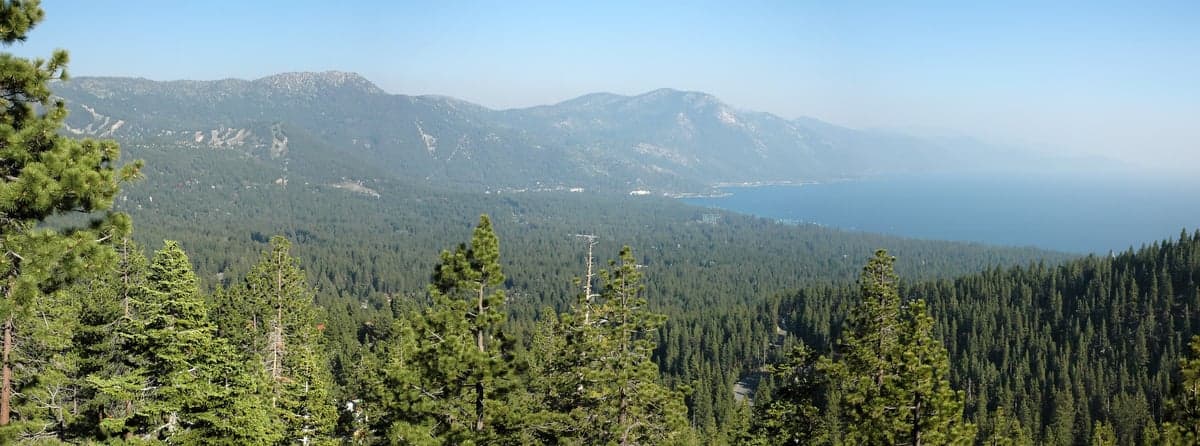
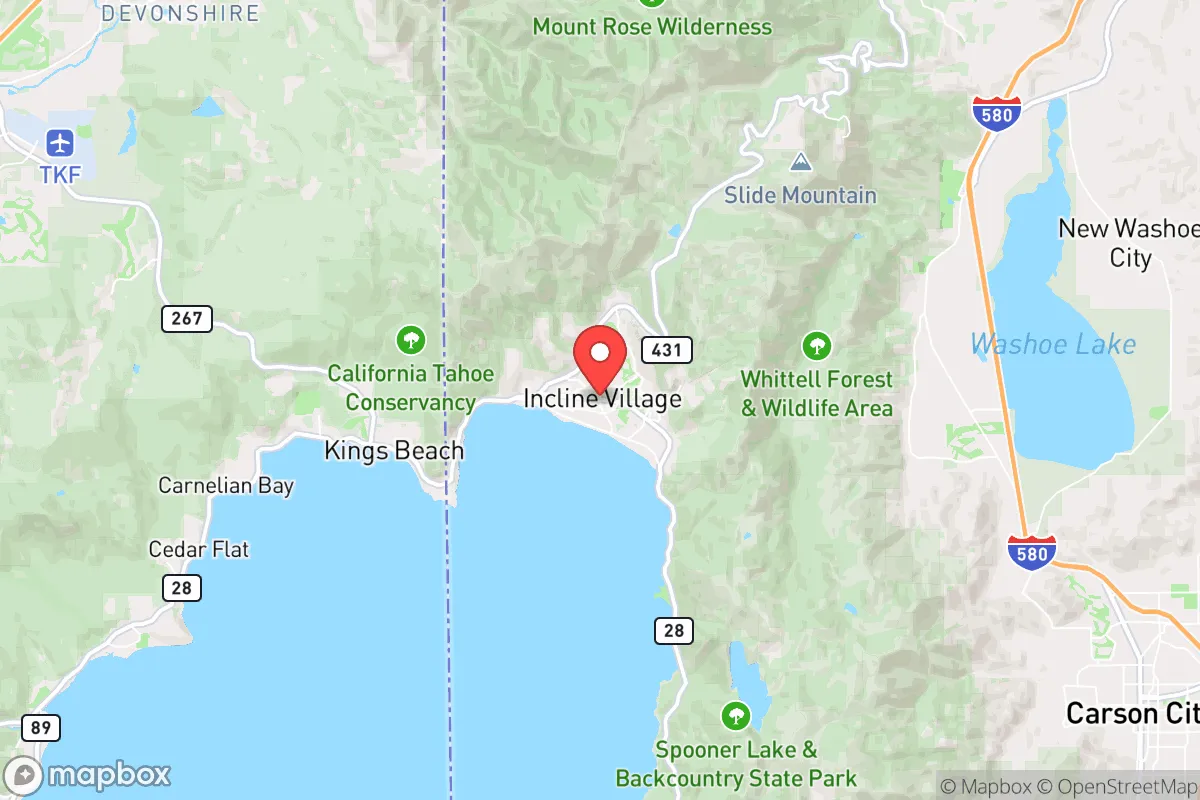
Photo: Wikipedia
Demographics of Incline Village, NV
Affluence Level in Incline Village, NV
A wealthy area with high-earning, well-educated households. Incomes, home values, and educational attainment meaningfully outpace national averages.
People of Incline Village, NV
Incline Village, Nevada, is a small, affluent community of 9,152 residents on Lake Tahoe’s north shore, defined by its high concentration of college-educated professionals (64.1%) and a predominantly white population (70.0%). The village is notably more diverse than its surrounding rural areas, with a significant Hispanic community (20.4%) and small East/Southeast Asian (1.6%) and Indian (0.1%) populations. Its character is shaped by a blend of second-home owners, year-round outdoor enthusiasts, and service-industry workers, creating a distinct identity as a wealthy, recreation-focused enclave with a growing working-class Hispanic presence.
How the city was settled and grew
Incline Village was not a historic mining or railroad town; it is a planned resort community developed almost entirely after 1960. The area’s original inhabitants were the Washoe people, who used the Lake Tahoe basin for summer camps, but no permanent settlement existed on the site until the mid-20th century. The first non-Native arrivals were small numbers of loggers and homesteaders in the late 1800s, but they left little lasting population. The modern story begins in 1960, when the Utah Construction and Mining Company purchased 5,000 acres of forested land along the lake’s northeast shore. The company envisioned a master-planned, high-end resort and residential community, and construction began in earnest in 1961. The first wave of residents were wealthy Californians seeking vacation homes and retirees from the San Francisco Bay Area, drawn by the promise of a private, gated community with direct lake access. The Village Green neighborhood, centered around the original golf course and the Incline Village Community Center, was the first area developed, attracting early buyers with its proximity to the lake and the new Incline Village General Improvement District (IVGID) services. The Tyrolean Village neighborhood, built shortly after, offered more modest condominiums and townhomes, catering to middle-management professionals and ski instructors who worked at the nearby Diamond Peak ski resort. By 1970, the population had reached roughly 2,000, almost entirely white and upper-middle-class.
Modern era (post-1965)
After the Hart-Cellar Act of 1965, Incline Village saw no significant wave of foreign immigration; its growth remained overwhelmingly domestic. The 1970s and 1980s brought a second wave of in-migration from the Bay Area, as tech professionals and entrepreneurs purchased second homes, driving up property values and cementing the village’s reputation as an exclusive enclave. The Mountain Shadows neighborhood, with its larger lots and forested views, became the preferred area for these affluent newcomers, while the Ponderosa Ranch area (formerly a tourist attraction) was redeveloped into luxury single-family homes. The Hispanic population began to grow noticeably in the 1990s and 2000s, driven by demand for service workers in hospitality, construction, and property maintenance. These families settled primarily in the Chimney Beach area and the older, more affordable condominium complexes near the Highway 28 corridor, such as those in the Biltmore neighborhood. Today, the Hispanic community (20.4%) is the largest minority group, concentrated in service-sector jobs and often living in multi-generational households. The East/Southeast Asian population (1.6%) is small but visible, largely composed of professionals in tech and finance who own second homes or have relocated from California. The Indian community (0.1%) is negligible. The Black population (0.4%) remains minimal, reflecting the area’s historic lack of diversity and high cost of living.
The future
Incline Village’s population is likely to continue its slow homogenization along class lines, with the wealthy white professional class remaining dominant. The Hispanic community is growing steadily but slowly, driven by natural increase and continued demand for service labor, though high housing costs (median home price above $1.5 million) limit in-migration. The East/Southeast Asian population may see modest growth as remote work allows more tech workers to relocate from California, but the village’s lack of ethnic infrastructure (no Asian grocery stores, limited cultural institutions) will likely keep numbers low. The Indian community is not expected to grow significantly. The village is not tribalizing into distinct ethnic enclaves; rather, it is becoming a two-tier community: a wealthy, mostly white permanent and second-home population, and a smaller, largely Hispanic service-worker population living in older, denser neighborhoods like the Biltmore and Chimney Beach areas. The next 10-20 years will likely see continued pressure on affordable housing, with the Hispanic population either assimilating into the broader community or being displaced further into Washoe County’s more affordable areas like Reno or Sparks.
Incline Village is becoming an increasingly stratified community, where wealth and property ownership define social boundaries more than race. For a conservative-leaning individual or family moving in now, the village offers a stable, safe, and highly educated environment with strong property values, but newcomers should expect a community where economic status is the primary dividing line and where the service workforce lives in distinct, less visible neighborhoods.

* Values derived from national, state, county, city and local statistics and may differ in a specific area. Last updated: 2026-04-23T04:12:50.000Z
Narrative content on this page is AI-generated and may contain mistakes. Verify any details that matter before acting on them.
ReloMaps may earn a commission from affiliate links at no extra cost to you.

