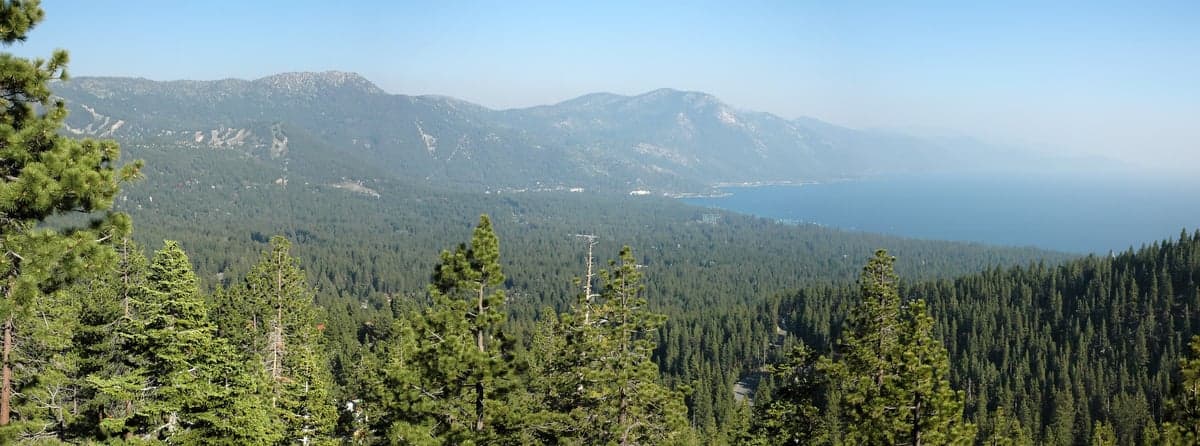
Photo: Wikipedia
Strategic Assessment of Incline Village, NV
Workable tactical position. Some exposure to population density or targets, but generally defensible in a crisis.
What does the Strategic Assessment tell us?
Our Strategic Assessment grades tactical survivability of an area. Major population centers, military targets, fallout zones, natural disasters, and border exposure all drive risk — lower exposure means a more defensible position in a crisis.
This is heavily inspired by Joel Skousen's Strategic Relocation book. Highly recommended you checkout the book ($)What does this tell us?
Our Strategic Assessment grades tactical survivability of an area. Major population centers, military targets, fallout zones, natural disasters, and border exposure all drive risk — lower exposure means a more defensible position in a crisis.
This is heavily inspired by Joel Skousen's Strategic Relocation book. Highly recommended you checkout the book ($)Strategic Pillars

Key Distances
Regional Safe Places
Below is our recommended "safe zones" in Nevada and the surrounding area based on our strategic heuristics. For most people, it's unrealistic to live in a “safe zone” full-time due to work, family or other personal reasons. They tend to be more rural. However, many of these areas are perfect for second homes and retreat properties that double as a vacation home or even a short-term rental.
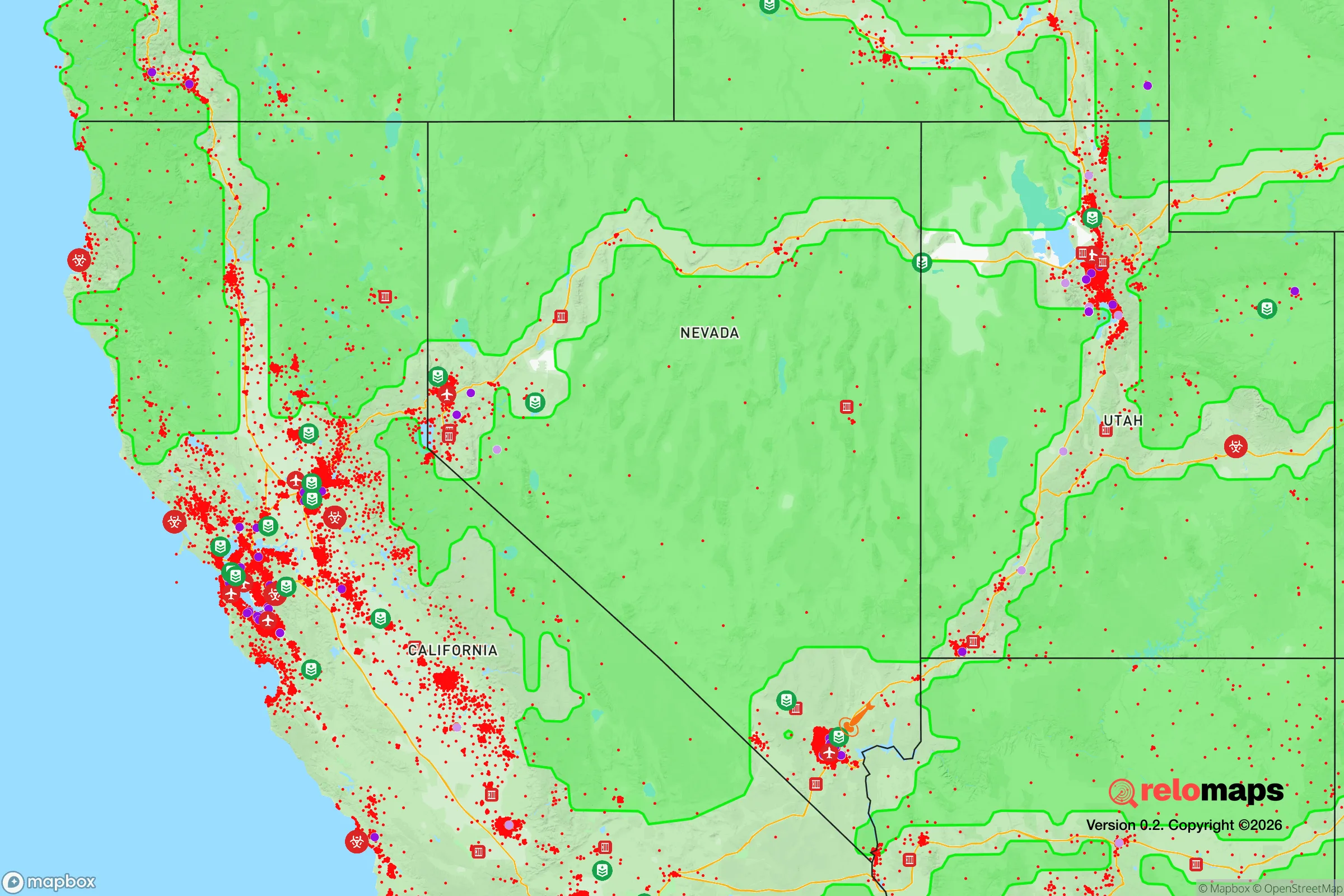
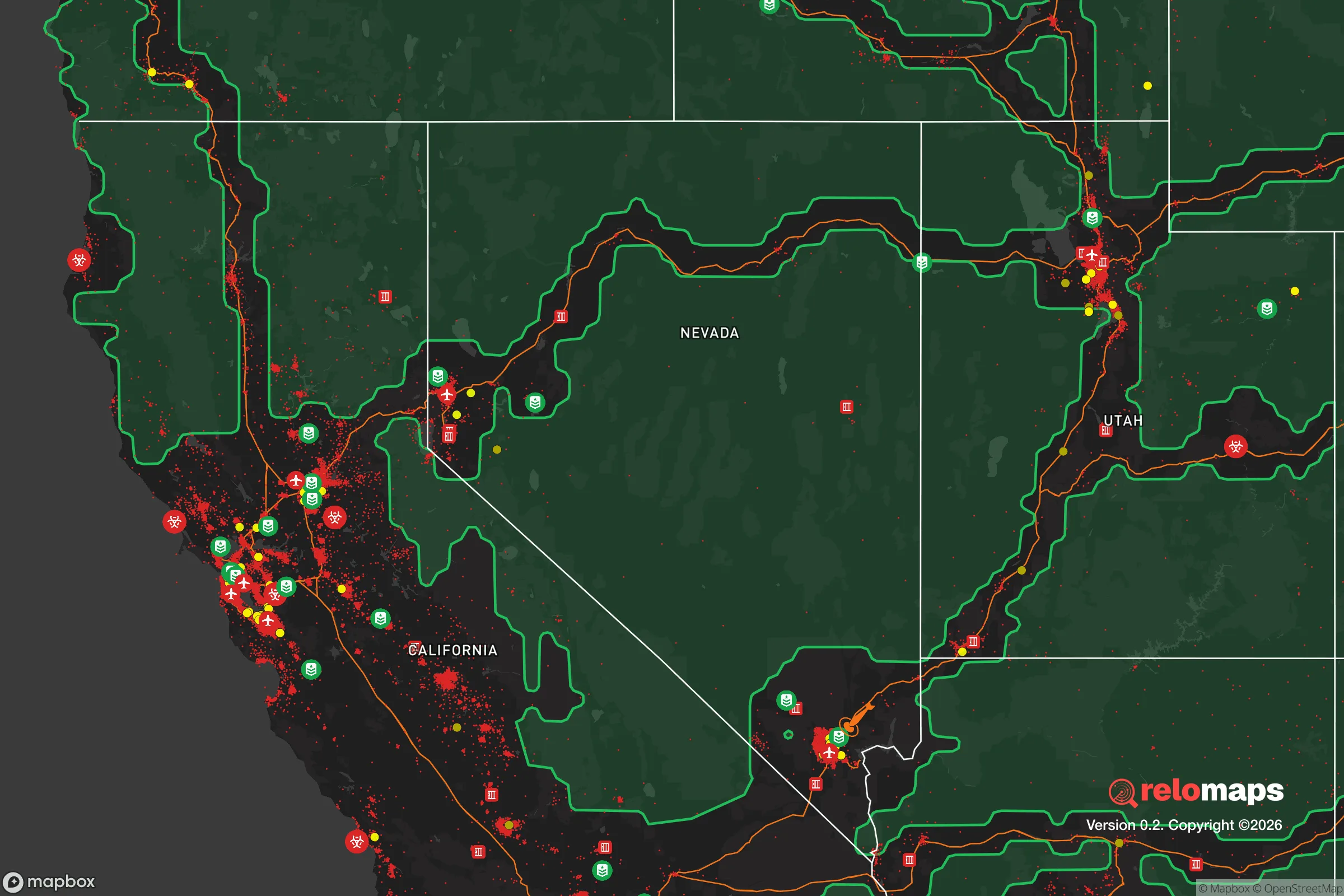


Important Note: For informational purposes only. This does not mean nothing bad ever happens in the green zones. Please use common sense. This is based on public data and modeled with AI. We tried to take a conservative approach but mistakes happen. We update this regularly as new information becomes available.
Solar Generator Recommendations
Backup power matters more here than in safer locations. We've picked three solar generators across budgets and capacity tiers — start with the budget unit if you only need a few essentials, or step up if you want to run a fridge and HVAC for days at a time.

Jackery Portable Power Station Explorer 300
Budget OptionPower on the Go: Weighing only 11 lbs, it's convenient to set up and store with book-sized foldable solar panels

BLUETTI Portable Power Station AC180
Designed for both indoor and outdoor scenarios, AC180 is highly capable as it has a robost capacity and continuous output power.

EF ECOFLOW DELTA Pro Ultra Power Station
Upgraded PickEcoFlow DELTA Pro Ultra is a whole-home energy system designed to grow with your family. Integrated with the Smart Home Panel 2, it scales to meet your evolving energy needs — keeping your home powered, intelligent, and secure through every stage of life.
We earn a commission, at no additional cost to you.
Strategic Assessment Analysis
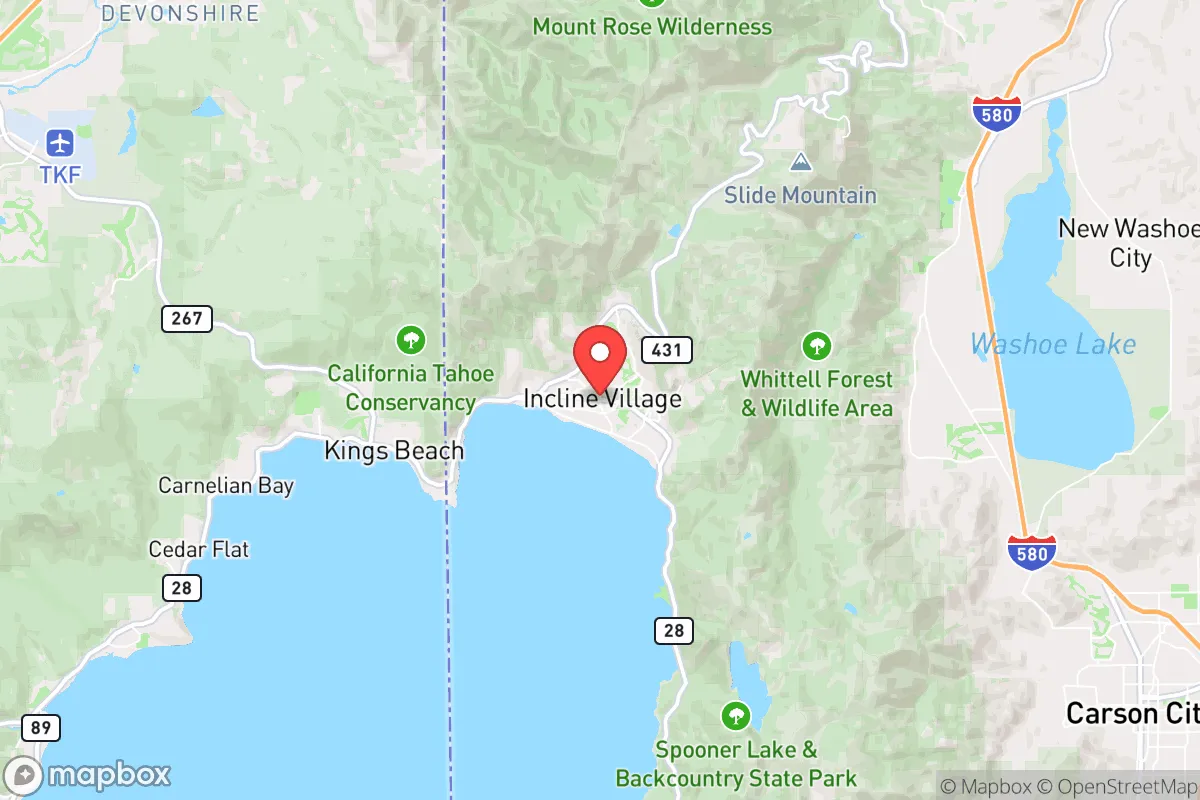
Incline Village, Nevada, sits in a unique strategic pocket that offers genuine resilience advantages for those thinking seriously about long-term preparedness. Perched on the north shore of Lake Tahoe at roughly 6,300 feet elevation, this community is buffered by the Sierra Nevada range and the Lake Tahoe Basin itself, creating natural chokepoints that slow both casual traffic and potential threats. The area’s relative isolation from major metropolitan corridors—about 35 miles from Reno and 200 miles from the San Francisco Bay Area—means that in a crisis, you’re not in the immediate blast radius of a major city, yet you retain access to regional supply lines via Interstate 80 and Highway 431. For a relocator weighing civic unrest, mass casualty events, or natural disasters, Incline Village offers a defensible geography with a small, tight-knit population of roughly 8,000 year-round residents, which inherently reduces the chaos of a mass evacuation scenario.
Geographic position and natural defensive advantages
The Lake Tahoe Basin is a natural fortress. The surrounding mountains create a bowl-like topography with only a handful of paved routes in and out—Highway 28 along the lake’s east shore, Highway 431 over Mount Rose, and Highway 267 through Truckee. In a grid-down or civil unrest event, these routes can be monitored and, if necessary, controlled by local residents or law enforcement. The lake itself provides an immediate, massive freshwater source—Lake Tahoe holds roughly 39 trillion gallons of water, making it one of the most secure water supplies in the western United States. The elevation also offers a climate advantage: summers are mild, winters bring heavy snow (averaging 150-200 inches annually), which naturally discourages transient populations and limits access during the coldest months. For a prepper, that snowpack is a double-edged sword—it provides water storage but also demands serious winter preparedness, including four-wheel-drive vehicles, snow tires, and a home with adequate heating and insulation. The area’s position in Washoe County, which leans conservative relative to the rest of Nevada, also means local governance is less likely to impose the kind of restrictive policies that can hamper self-reliance efforts.
Risks, exposures, and proximity to fallout-relevant landmarks
No location is without vulnerabilities, and Incline Village has several that a strategic relocator must weigh. The most immediate risk is wildfire. The 2007 Angora fire and the 2021 Caldor fire both came within miles of the community, and the surrounding national forest land creates a continuous fuel load. Incline Village sits in a high-risk wildfire zone, and during dry summers, evacuation orders can come with little notice. The area’s single-road access in some neighborhoods compounds this—if Highway 28 is blocked, you’re stuck against the lake. Another exposure is proximity to the Tahoe Reno Industrial Center, roughly 40 miles northeast, which houses data centers, logistics hubs, and the Tesla Gigafactory. While not a direct military target, that facility is a critical piece of national infrastructure and could be a secondary target in a conflict or cyberattack. Additionally, the nearby cities of Reno and Sparks (combined population ~270,000) are within a 45-minute drive. In a mass casualty event or civil unrest scenario, those populations could attempt to flee into the basin, overwhelming local resources. Fallout from a nuclear event at the Nevada National Security Site (about 150 miles southeast) is a low-probability but non-zero concern, though the prevailing winds generally carry fallout eastward, away from the Tahoe Basin. The area’s distance from major military installations—like Naval Air Station Fallon (90 miles east) and Beale Air Force Base (120 miles west)—reduces the risk of being near a primary target, but it doesn’t eliminate the secondary effects of a broader conflict.
Practical resilience for a relocator: food, water, energy, and defensibility
For someone serious about self-reliance, Incline Village offers a mixed bag. Water is the strongest asset: Lake Tahoe provides an essentially unlimited supply of potable water, provided you have a means to pump, filter, and store it. The local utility, North Tahoe Public Utility District, draws directly from the lake, but in a grid-down scenario, a hand-pump or solar-powered pump with a filtration system (e.g., a Berkey or Sawyer filter) turns the lake into a long-term water source. Food security is more challenging. The area has no significant agricultural land—the growing season is short (May to September), and the soil is rocky and acidic. Local grocery stores (Raley’s, Safeway) typically stock 3-5 days of food for the full population, and supply chains are vulnerable to winter road closures. A serious prepper would need to maintain a 3-6 month food cache, supplemented by hunting (mule deer, black bear) and fishing (lake trout, kokanee salmon) with proper licenses. Energy resilience is achievable: the area gets abundant solar radiation (over 300 sunny days per year), and many homes already have solar panels. However, heavy snow can cover panels for days, so a backup generator (propane or diesel) with a 500-gallon tank is a wise investment. Defensibility is the area’s standout feature. The natural bowl geography means that any approach is visible from multiple vantage points. The community is small enough that neighbors know each other, and there are active local preparedness groups and ham radio operators. The Washoe County Sheriff’s Office has a substation in Incline Village, and response times are generally under 10 minutes for emergencies, but in a widespread crisis, you’d be relying on your own network. The biggest practical downside is the cost of entry: median home prices in Incline Village hover around $1.5 million, and property taxes, while lower than California, are still significant. This filters out the transient and unprepared, which is a resilience advantage in itself.
Overall, Incline Village presents a compelling strategic picture for the conservative-minded relocator who values isolation, natural resources, and a like-minded community. The water security alone is a massive advantage over most inland locations, and the geography provides a natural buffer against the chaos of urban collapse. The trade-offs are real: wildfire risk, winter access challenges, high cost of living, and limited local food production. But for someone with the resources to buy in and the discipline to prepare—stockpiling supplies, hardening a home against fire, and building relationships with neighbors—this is one of the few places in the western U.S. where you can be both remote and connected, self-reliant and part of a community. It’s not a bug-out location for the weekend warrior; it’s a long-term strategic base for those who see the writing on the wall and want a fighting chance when things go sideways.

* Values derived from national, state, county, city and local statistics and may differ in a specific area. Last updated: 2026-04-23T04:12:50.000Z
Narrative content on this page is AI-generated and may contain mistakes. Verify any details that matter before acting on them.
ReloMaps may earn a commission from affiliate links at no extra cost to you.

