Photo: Wikipedia
Demographics of Independence, KY
Affluence Level in Independence, KY
A middle-class area roughly in line with national averages across income, home values, education, and employment.
People of Independence, KY
The people of Independence, Kentucky, today form a predominantly white, family-oriented community of 29,024 residents, characterized by a strong sense of local identity and a notably low foreign-born population of just 1.3%. With 92.3% of residents identifying as white and 37.3% holding a college degree, the city presents a largely homogeneous, middle-class profile that leans conservative, with a demographic character shaped more by domestic in-migration from within the region than by international immigration. Distinctive markers include a high rate of homeownership, a deep connection to the city’s rural past, and a population that values proximity to Cincinnati while maintaining a small-town, self-reliant ethos.
How the city was settled and grew
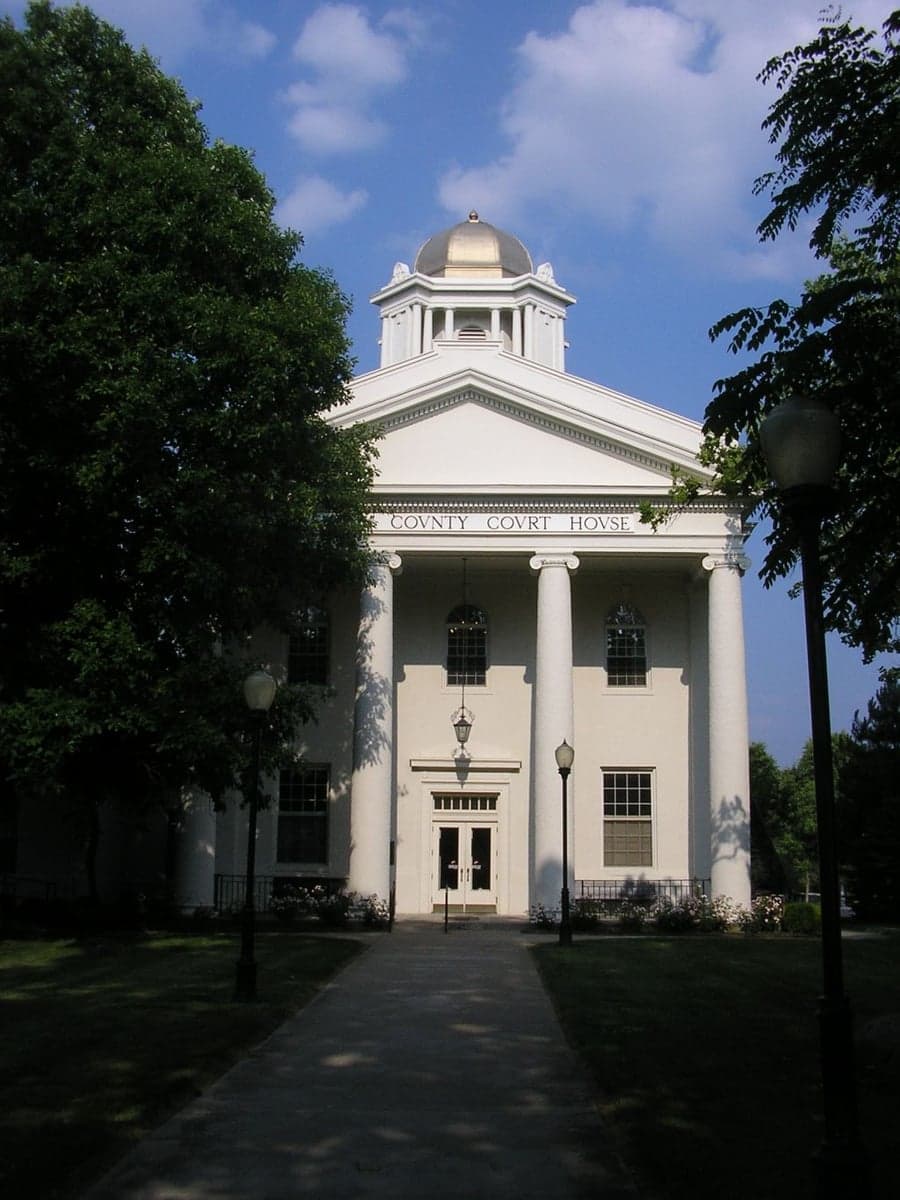
Independence was originally settled in the early 19th century by families of English, Scottish, and German descent who were granted land in the fertile valleys of the Licking River watershed. The city’s name, chosen when it was incorporated in 1840, reflected the frontier spirit of its early inhabitants, who were primarily farmers and tradesmen. The first wave of settlers concentrated in what is now the Old Town Independence district, centered around the courthouse square, which became the civic and commercial hub. A second wave of German Catholic immigrants arrived in the mid-1800s, establishing farms and churches in the Nicholson area, a rural crossroads that still retains a distinct German heritage in its family names and local festivals. By the early 20th century, the population remained small and agrarian, with growth limited to natural increase and the gradual expansion of family farms.
Modern era (post-1965)
The modern transformation of Independence began in earnest after 1965, driven not by international immigration but by the suburbanization of Cincinnati’s white middle class. The completion of Interstate 75 and the expansion of the Dixie Highway corridor made Independence a viable bedroom community for commuters working in Covington, Florence, and Cincinnati. This domestic in-migration was overwhelmingly white and largely from within the Greater Cincinnati region, with families seeking larger lots, lower taxes, and a slower pace of life. The Raintree subdivision, developed in the 1970s and 1980s, became the primary landing zone for these new residents, offering affordable single-family homes on cul-de-sacs. A second major development, Independence Station, built in the 1990s and 2000s, attracted a slightly more affluent cohort, including professionals and small-business owners. The city’s Hispanic population, now 2.0%, began to grow slowly in the 2000s, primarily in the Pioneer Ridge area, as workers in construction and landscaping settled in the region. The Black population, at 1.7%, and the East/Southeast Asian population, at 0.7%, remain very small, concentrated in scattered subdivisions rather than forming distinct ethnic enclaves. The Indian-subcontinent population, at 0.3%, is negligible and largely composed of professionals working in healthcare or technology in nearby Cincinnati.
The future
Demographic projections suggest Independence will continue to homogenize rather than diversify over the next 10–20 years. The foreign-born share, already extremely low at 1.3%, shows no signs of significant growth, as the city lacks the rental housing stock, public transit, and entry-level job base that typically attract immigrant populations. The Hispanic and Black populations are expected to grow slowly, but from such a small base that they will remain single-digit percentages. The white population, while aging, is being replenished by young families moving from more expensive areas of Northern Kentucky and Cincinnati, particularly into newer developments like Villages of Independence and Stonegate. These new subdivisions are drawing a slightly more educated and professional demographic, which may gradually shift the city’s political and cultural character toward a moderate conservatism. The city is not tribalizing into distinct ethnic enclaves; rather, it is consolidating as a predominantly white, family-oriented suburb with a growing emphasis on local schools, parks, and community events.
For someone moving in now, Independence offers a stable, low-crime environment with a population that is culturally cohesive and demographically predictable. The city is becoming more suburban and professional, but it remains a place where neighbors know each other, local government is accessible, and the pace of change is slow. The lack of significant ethnic or cultural diversity means that newcomers who are not white may find a limited social infrastructure, but the community is generally welcoming to families of any background who share its values of self-reliance, civic engagement, and conservative fiscal priorities.

* Values derived from national, state, county, city and local statistics and may differ in a specific area. Last updated: 2026-05-03T20:24:28.000Z
Narrative content on this page is AI-generated and may contain mistakes. Verify any details that matter before acting on them.
ReloMaps may earn a commission from affiliate links at no extra cost to you.

