Photo: Wikipedia
Demographics of Inver Grove Heights, MN
Affluence Level in Inver Grove Heights, MN
An upper-middle-class area. Household wealth, education levels, and homeownership run ahead of national benchmarks.
People of Inver Grove Heights, MN
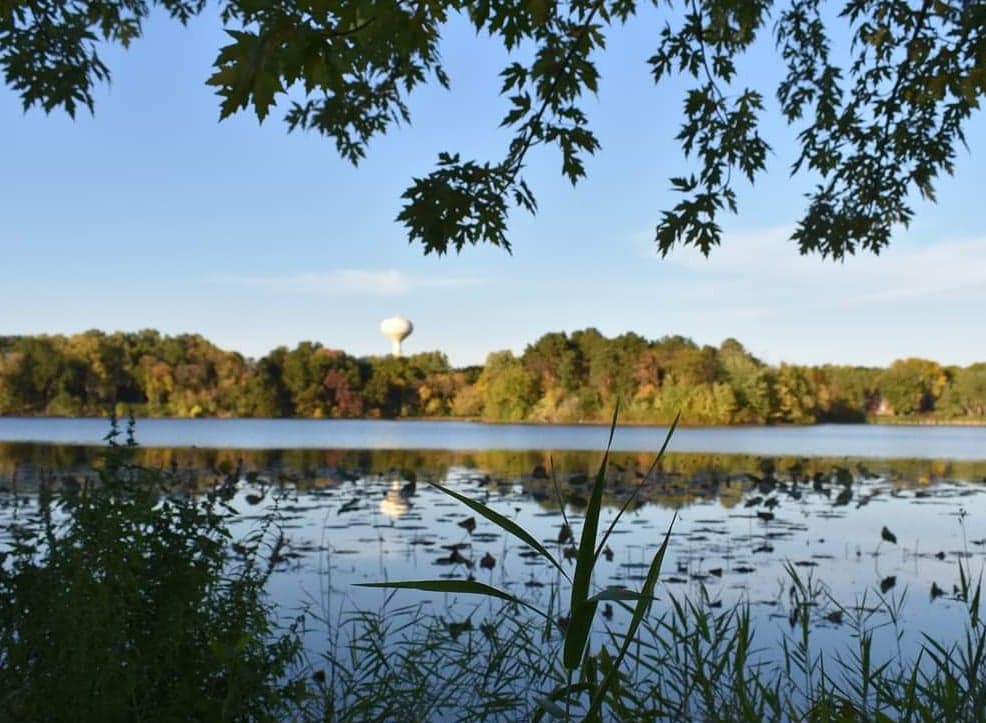
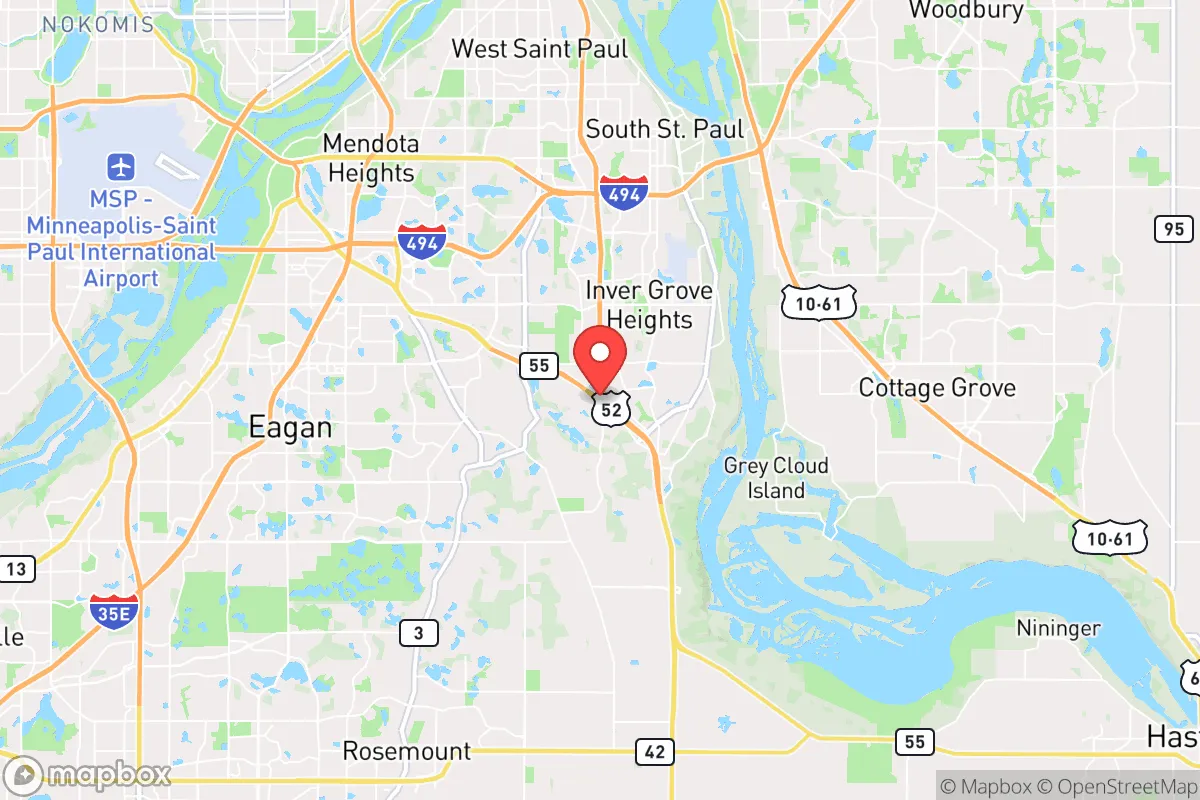
Inver Grove Heights today is a predominantly white, middle-class suburban city of 35,772 residents, marked by a notably higher college attainment rate (43.1%) than the national average and a growing Hispanic minority (13.4%). The city’s character blends older, established neighborhoods along the Mississippi River bluffs with newer subdivisions on the western prairie, creating a community that feels both settled and quietly expanding. Its population is less diverse than the Twin Cities metro as a whole, but the foreign-born share (4.9%) and Asian (3.0%) and Black (5.2%) communities are slowly increasing, reshaping the city’s demographic profile from its historically homogeneous roots.
How the city was settled and grew
Inver Grove Heights was not a frontier settlement but a late-19th-century farming community that grew slowly around the Chicago, Milwaukee & St. Paul Railway line. The original population was almost entirely of German and Irish Catholic stock, drawn by fertile river-bottom land and the promise of dairy and grain farming. The historic Grove Village district, centered near 70th Street and Concord Boulevard, became the first commercial and social hub, anchored by St. Patrick’s Catholic Church (founded 1856) and a cluster of German-owned general stores. A second early node, Pine Bend along the Mississippi, housed a small Scandinavian fishing and lumbering community that later supplied workers for the region’s first industrial plants. The city remained a sparsely populated agricultural township until the 1950s, when the construction of U.S. Highway 52 and the opening of the Pine Bend Refinery (now Flint Hills Resources) in 1954 triggered the first major population wave. Refinery workers—mostly second-generation German and Irish men from St. Paul—built modest homes in the South Grove neighborhood, creating a blue-collar enclave that still defines the city’s political and cultural identity.
Modern era (post-1965)
The post-1965 period brought two distinct demographic shifts. First, the 1970s and 1980s saw a wave of white, middle-class families from St. Paul’s East Side moving into new subdivisions like Valley View and North Creek, drawn by larger lots, lower taxes, and the newly built Inver Hills Community College (1970). These arrivals were predominantly of German and Irish descent, reinforcing the city’s white majority. Second, beginning in the 1990s, the Hispanic population began to grow, concentrated in the Pine Bend and South Grove neighborhoods, where lower housing costs and proximity to refinery and warehouse jobs attracted Mexican and Central American immigrants. The Hispanic share rose from roughly 3% in 1990 to 13.4% today, making it the city’s largest minority group. The Asian population (3.0%) is primarily Hmong and Vietnamese families who moved from St. Paul in the 2000s, settling in the Valley View area near the community college. The Indian-subcontinent population (1.2%) is smaller and more dispersed, largely professionals working in healthcare and tech who arrived after 2010. The Black population (5.2%) includes both African American families from St. Paul and a smaller number of African immigrants, concentrated in the North Creek apartment complexes. Notably, the city’s white share has declined from over 90% in 1990 to 74.0% today, but the change has been gradual and largely peaceful, with no significant ethnic enclaves forming beyond the Hispanic cluster in South Grove.
The future
Inver Grove Heights is likely to continue its slow diversification over the next 10–20 years, driven by two forces: the aging of its white, homeowner population (median age is 38.5, slightly above the metro average) and the continued in-migration of Hispanic and Asian families seeking affordable housing within commuting distance of St. Paul. The city’s housing stock—dominated by single-family homes built between 1960 and 1990—offers few new-build opportunities, so growth will come primarily through turnover of existing homes and the development of a few remaining parcels near the Pine Bend industrial corridor. The Hispanic population is expected to grow to 18–20% by 2040, while the Asian and Black shares may each reach 6–7%. The Indian-subcontinent population will likely remain small (under 2%) unless a major employer relocates to the area. The city is not tribalizing into distinct enclaves; rather, it is experiencing a gradual, metro-typical assimilation pattern, with younger Hispanic and Asian families buying homes in previously all-white neighborhoods like Grove Village and Valley View. The main risk is economic: if the Pine Bend Refinery downsizes, the blue-collar base that anchors the city’s identity could shrink, accelerating white flight to exurbs and leaving a more diverse but poorer population.
For a conservative-leaning individual or family moving in now, Inver Grove Heights offers a stable, low-crime environment with good schools (93% graduation rate at Simley High School) and a tax burden that is moderate by metro standards. The city is becoming more diverse, but at a pace that allows for gradual adjustment rather than sudden change. The key question is whether the next generation of residents will maintain the city’s traditional character—rooted in Catholic parishes, union jobs, and single-family homes—or whether the demographic and economic shifts will push it toward a more transient, rental-heavy future. For now, it remains a solidly middle-class, family-oriented suburb where the old German and Irish stock still sets the tone, but the Hispanic and Asian families moving in are quietly reshaping what that tone means.

* Values derived from national, state, county, city and local statistics and may differ in a specific area. Last updated: 2026-04-24T11:39:36.000Z
Narrative content on this page is AI-generated and may contain mistakes. Verify any details that matter before acting on them.
ReloMaps may earn a commission from affiliate links at no extra cost to you.

