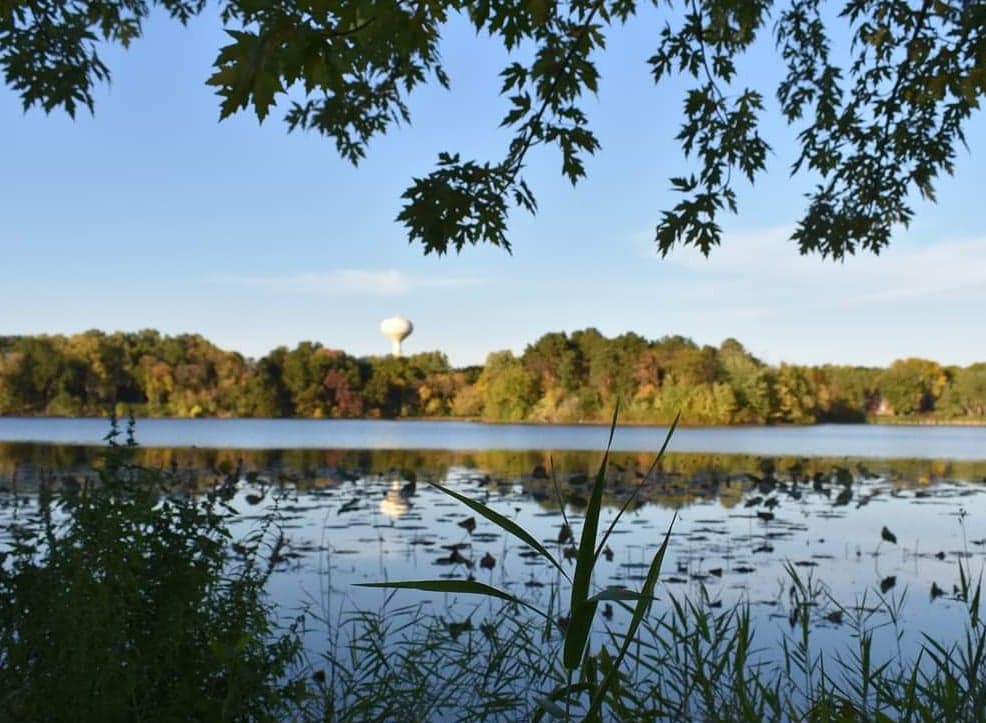
Photo: Wikipedia
Political ClimatePolitical Climate in Inver Grove Heights, MN
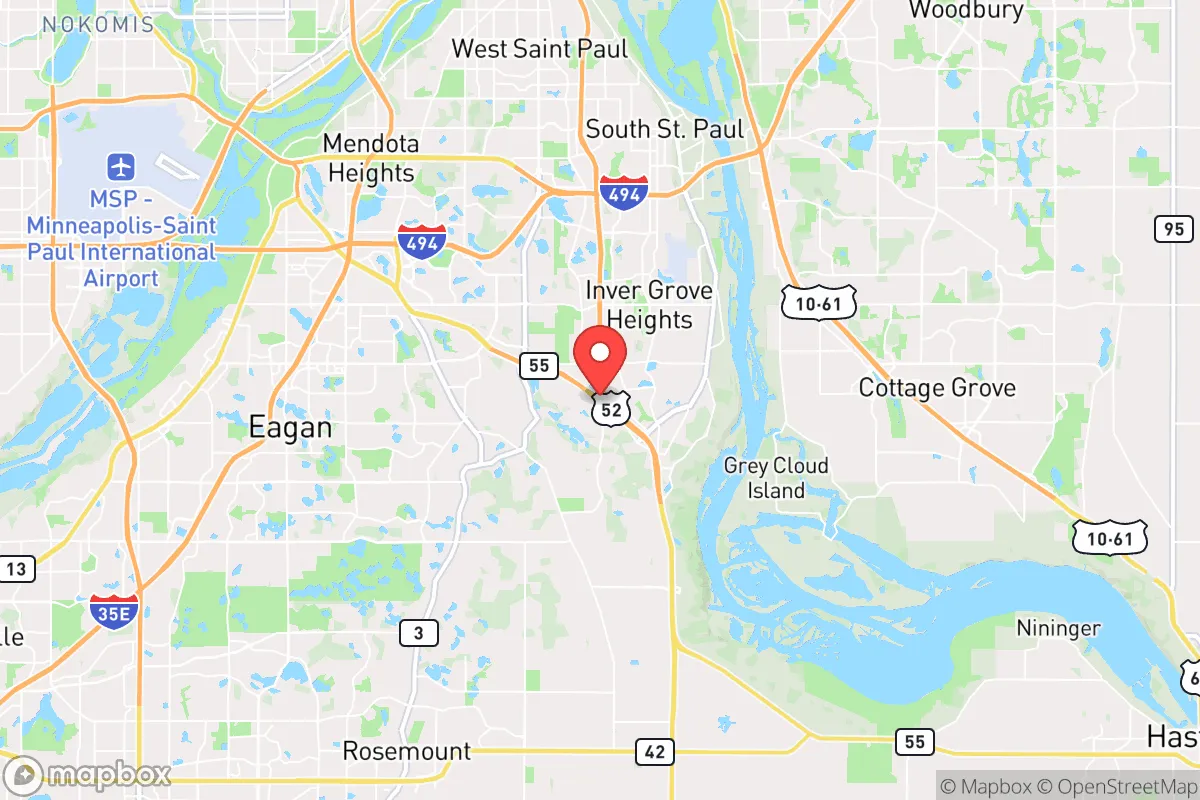
District shown is the primary district for this city’s centroid. Cities may span multiple districts.
Local Political AnalysisPolitical Analysis of Inver Grove Heights, MN
Inver Grove Heights has historically been a bit of a political bellwether in Dakota County, but the winds have shifted noticeably over the last decade. The area’s Cook Partisan Voting Index (PVI) of D+3 tells you it leans Democratic, but that number doesn’t capture the full story—this isn’t Minneapolis or St. Paul. It’s a working-to-middle-class suburb where a lot of folks, myself included, remember when the place was reliably purple, maybe even leaning a little red on local issues. Today, the progressive wave from the core cities has definitely lapped onto our shores, and it’s changing the feel of the place in ways that give a conservative pause.
How it compares
If you drive ten minutes north into West St. Paul or South St. Paul, you’ll find communities that have held onto a more blue-collar, independent streak—places where people still grumble about property taxes and school mandates. Head east toward Cottage Grove, and you’ll see a similar mix, though it’s trending left too. The real contrast is just across the river: go into Washington County, places like Woodbury or Lake Elmo, and you’ll find a much more balanced political environment, with stronger pushback against overreach from the state capitol. Inver Grove Heights sits right on that fault line. We’ve got a city council that’s increasingly comfortable with progressive social policies and zoning changes that feel like they’re imported from the city, while the surrounding townships and smaller communities still vote their conscience on things like school curriculum and land use. It’s a split personality, and it’s getting harder to ignore.
What this means for residents
For a conservative living here, the practical effect is that you’re constantly watching your back. The school board has taken on a more activist tone in recent years, pushing diversity, equity, and inclusion initiatives that sound nice on paper but often translate into less focus on core academics and more on ideological training. Property taxes have crept up steadily, funding programs that many of us never asked for. The city’s approach to housing—mandating more density and affordable units—feels like a backdoor way to change the character of the neighborhood without a real vote. You’re not going to see a protest on every corner, but there’s a quiet frustration among long-time residents who feel like their voice is being drowned out by transplants who moved here for the schools and the safety, then immediately tried to remake the place in the image of the city they left.
On the cultural side, Inver Grove Heights still has some of its old soul. The annual Heritage Days festival, the local VFW post, and the family-owned diners along Highway 52 are reminders that this isn’t a fully gentrified suburb. But the pressure is real. The county government in Hastings has leaned hard into climate action plans and equity frameworks that trickle down into everything from building permits to park programming. If you value local control and want your tax dollars to stay focused on roads, cops, and schools—not social engineering—you’ll find yourself increasingly at odds with the direction things are heading. The long-term trajectory, unless there’s a serious course correction, points toward more of the same: higher taxes, more mandates, and a slow erosion of the independent, live-and-let-live culture that made this area a good place to raise a family in the first place.

State Political ClimatePolitical Climate in Minnesota
State Political AnalysisPolitical Environment in the State
Minnesota has historically been a purple state with a slight blue tilt, but over the last decade it has shifted decisively left, driven by the explosive growth of the Twin Cities metro area and a collapse of rural Democratic support. From 2012 to 2024, the state went from a 7.7-point Democratic margin to a 4.5-point one, but that masks a stark internal realignment: the metro counties of Hennepin, Ramsey, and Washington now produce massive Democratic margins, while Greater Minnesota has swung hard right. For a conservative relocating here, the state offers a tale of two political universes—one urban and increasingly progressive, the other rural and deeply red—with the state government firmly in progressive hands.
Urban vs. rural divide
The political map of Minnesota is a textbook case of the urban-rural chasm. The Twin Cities metro—Minneapolis, St. Paul, and their inner-ring suburbs like Edina and Bloomington—generates roughly 55% of the state's vote and votes about 65-35 Democratic. Hennepin County alone gave Joe Biden a 350,000-vote margin in 2020, enough to offset the entire rest of the state's Republican advantage. Meanwhile, the Iron Range in northeastern Minnesota, once a Democratic stronghold, has flipped hard: St. Louis County (Duluth) went from +15 Democratic in 2012 to +5 in 2024, and rural counties like Itasca and Carlton are now competitive or lean Republican. The southwestern and central farm counties—Nobles, Jackson, and Stearns—vote 65-75% Republican, with Stearns County (St. Cloud) being a notable swing area that has trended right as the city's manufacturing base has diversified. The exurbs, like Chisago County and Wright County, are now reliably red, with Wright County voting +30 Republican in 2024. The divide is so sharp that a resident in Rochester (Olmsted County) lives in a purple island—the Mayo Clinic's workforce keeps it competitive—while the surrounding farm counties are deep red.
Policy environment
Minnesota's state-level policy has lurched left since Democrats took full control of the legislature and governor's office in 2023. The tax structure is among the most progressive in the nation: a top marginal income tax rate of 9.85% kicks in at around $190,000 for single filers, and the state has a statewide sales tax of 6.875% that local jurisdictions can add to. Property taxes are moderate but vary wildly—Hennepin County's effective rate is about 1.1%, while rural counties like Marshall County are closer to 0.8%. The regulatory posture is heavy: Minnesota has a strict environmental review law (the Minnesota Environmental Policy Act) that can delay housing and industrial projects for years, and the state's clean car rules mandate that 100% of new car sales be zero-emission by 2035. Education policy is a flashpoint: the state has universal school choice via open enrollment, but no voucher or education savings account program, and the 2023 "Trans Refuge" law makes Minnesota a sanctuary for gender-affirming care for minors, overriding parental consent in some cases. Healthcare is dominated by the Mayo Clinic and HealthPartners, with a state-run insurance exchange (MNsure) that has relatively high premiums. Election laws are among the most accessible in the country: automatic voter registration, same-day registration, no-excuse absentee voting, and a 2023 law restoring felon voting rights upon release from prison—no waiting period.
Trajectory & freedom
Over the past three years, Minnesota has become demonstrably less free by any conservative measure of personal liberty. The 2023 legislative session was a blitzkrieg of progressive bills: the Minnesota Clean Car Act effectively bans new gas-powered car sales by 2035, the Minnesota Energy Infrastructure Act mandates 100% carbon-free electricity by 2040, and the Minnesota Voting Rights Act (HF 3) expands automatic voter registration and prohibits most voter ID requirements. On gun rights, the state passed universal background checks and a "red flag" law (HF 4300) in 2023, despite the fact that Minnesota already had a permit-to-purchase system. On parental rights, the Trans Refuge law (HF 146) explicitly allows out-of-state minors to receive gender-affirming care without parental notification if they travel to Minnesota, and the Minnesota Department of Education has adopted social-emotional learning standards that critics say undermine parental authority. Property rights took a hit with the 2023 rent control preemption law, which allows cities to impose rent stabilization—Minneapolis already has a rent control ordinance that caps increases at 3% annually. The state also passed a paid family and medical leave law (HF 2) that imposes a 0.7% payroll tax on employers and employees, effective 2026. The only bright spot for conservatives: Minnesota has no state-level occupational licensing for many trades, and the 2023 "Right to Repair" law passed with bipartisan support.
Civil unrest & political movements
Minnesota has been a national flashpoint for civil unrest since the 2020 George Floyd protests, which caused an estimated $500 million in property damage in Minneapolis and St. Paul. The Minneapolis Police Department was defunded by $8 million in 2020, though much of that was later restored. The 2021 trial of Derek Chauvin and the subsequent 2022 conviction of three other officers kept the city in the national spotlight. Since then, organized activist movements have polarized: the Minnesota Freedom Fund and Reclaim the Block remain active on the left, while the Minnesota Gun Owners Caucus and Minnesota Family Council have grown on the right. Immigration politics are heated: Minneapolis and St. Paul are sanctuary cities, and the state's 2023 "Driver's Licenses for All" law allows undocumented immigrants to obtain driver's licenses. The 2022 election integrity controversy over the state's use of ballot drop boxes and no-excuse absentee voting led to a 2023 law (HF 3) that actually expanded those practices, rather than restricting them. Visible flashpoints include the ongoing debate over the Minneapolis 2040 comprehensive plan, which eliminated single-family zoning citywide, and the 2024 controversy over the state's new social studies standards, which critics say emphasize critical race theory. A new resident in the suburbs will notice political yard signs are ubiquitous—especially in Washington County and Dakota County, where local school board races have become proxy wars over curriculum and parental rights.
Projection
Over the next 5-10 years, Minnesota is likely to become more progressive at the state level, driven by continued in-migration to the Twin Cities metro from other blue states and the natural growth of the metro's diverse, young population. The 2024 election results showed Democrats gaining ground in the suburbs—Dakota County went from +2 Democratic in 2020 to +5 in 2024—while rural counties continued to bleed population. The 2026 gubernatorial election will be a key test: if Democrats hold the governorship and the legislature, expect a state-level public option for healthcare, a statewide rent control law, and further gun control measures like a ban on "assault weapons." The 2028 census could cost Minnesota a congressional seat if rural population loss accelerates. For a conservative moving in now, the realistic expectation is that state government will remain hostile to conservative values for at least the next decade, but local control in the exurbs and rural areas will remain strong. The 2023 law allowing cities to impose rent control is already driving development to the outer suburbs, where Wright County and Sherburne County are seeing a boom in new housing starts. The 2024 passage of a constitutional amendment to require a supermajority for tax increases failed, meaning the legislature can raise taxes with a simple majority—a warning sign for property owners.
For a conservative relocating to Minnesota, the bottom line is this: choose your county carefully. If you want a political environment that aligns with your values, look at Wright, Sherburne, or Stearns counties in the exurbs, or Nobles County in the southwest. Avoid Hennepin and Ramsey counties unless you're prepared for high taxes, progressive school boards, and a constant cultural war. The state's natural beauty, strong economy, and excellent schools are real assets, but they come with a government that is actively working to expand its reach into your wallet, your children's education, and your personal medical decisions. If you value low taxes, parental rights, and gun freedom, Minnesota is a state where you'll need to fight for those things—and you'll need to vote every single election to keep the trend from accelerating.
* Values derived from national, state, county, city and local statistics and may differ in a specific area. Last updated: 2026-04-24T11:39:36.000Z
Narrative content on this page is AI-generated and may contain mistakes. Verify any details that matter before acting on them.
ReloMaps may earn a commission from affiliate links at no extra cost to you.

