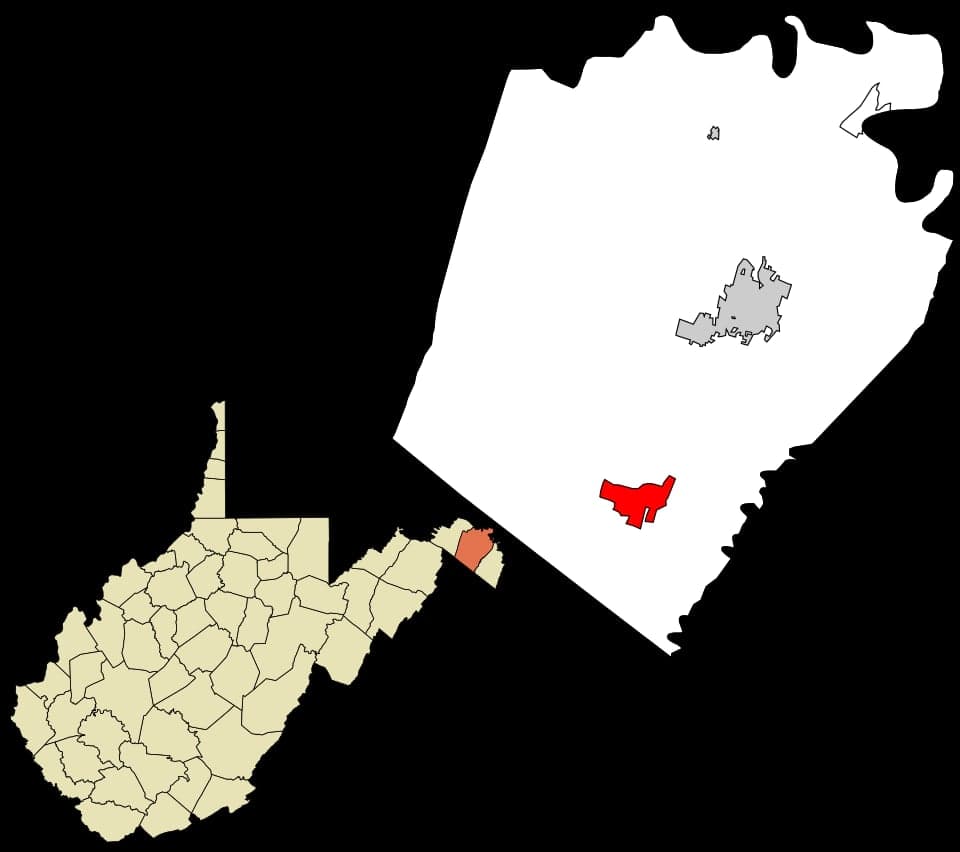
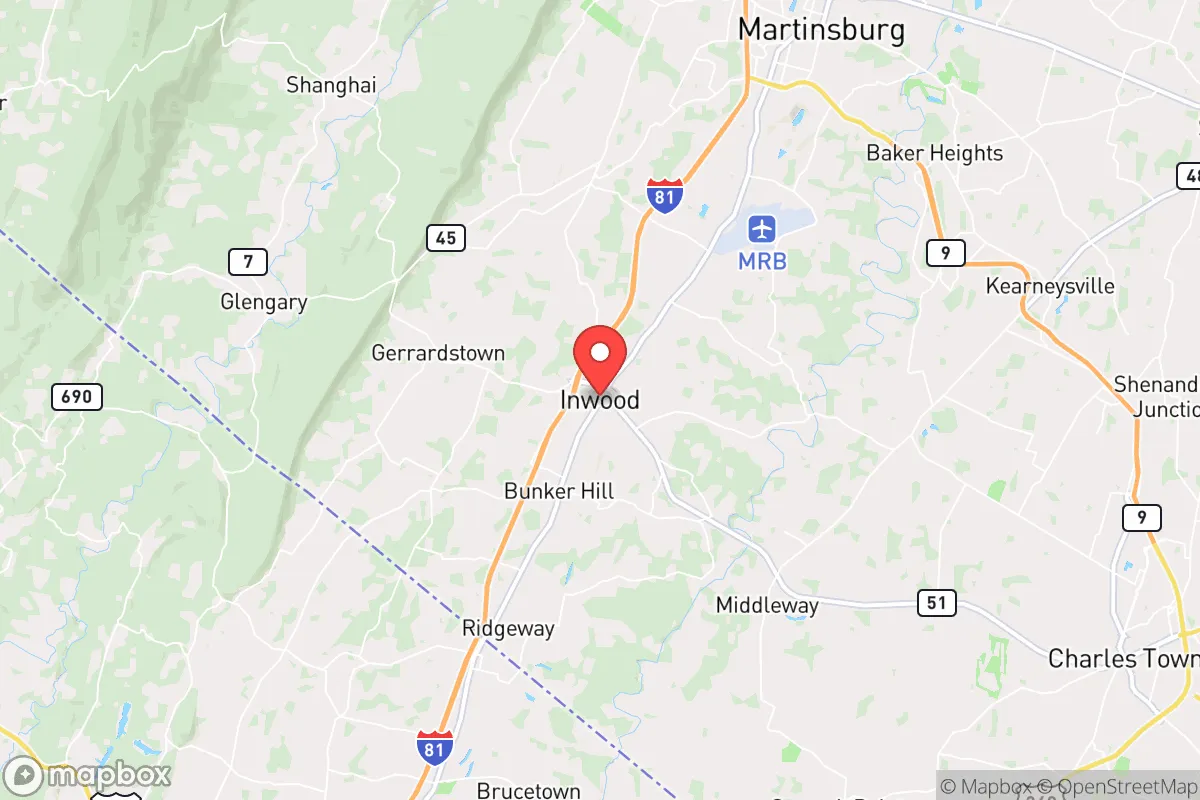
Photo: Wikipedia
Strategic Assessment of Inwood, WV
Workable tactical position. Some exposure to population density or targets, but generally defensible in a crisis.
What does the Strategic Assessment tell us?
Our Strategic Assessment grades tactical survivability of an area. Major population centers, military targets, fallout zones, natural disasters, and border exposure all drive risk — lower exposure means a more defensible position in a crisis.
This is heavily inspired by Joel Skousen's Strategic Relocation book. Highly recommended you checkout the book ($)What does this tell us?
Our Strategic Assessment grades tactical survivability of an area. Major population centers, military targets, fallout zones, natural disasters, and border exposure all drive risk — lower exposure means a more defensible position in a crisis.
This is heavily inspired by Joel Skousen's Strategic Relocation book. Highly recommended you checkout the book ($)Strategic Pillars

Key Distances
Regional Safe Places
Below is our recommended "safe zones" in West Virginia and the surrounding area based on our strategic heuristics. For most people, it's unrealistic to live in a “safe zone” full-time due to work, family or other personal reasons. They tend to be more rural. However, many of these areas are perfect for second homes and retreat properties that double as a vacation home or even a short-term rental.
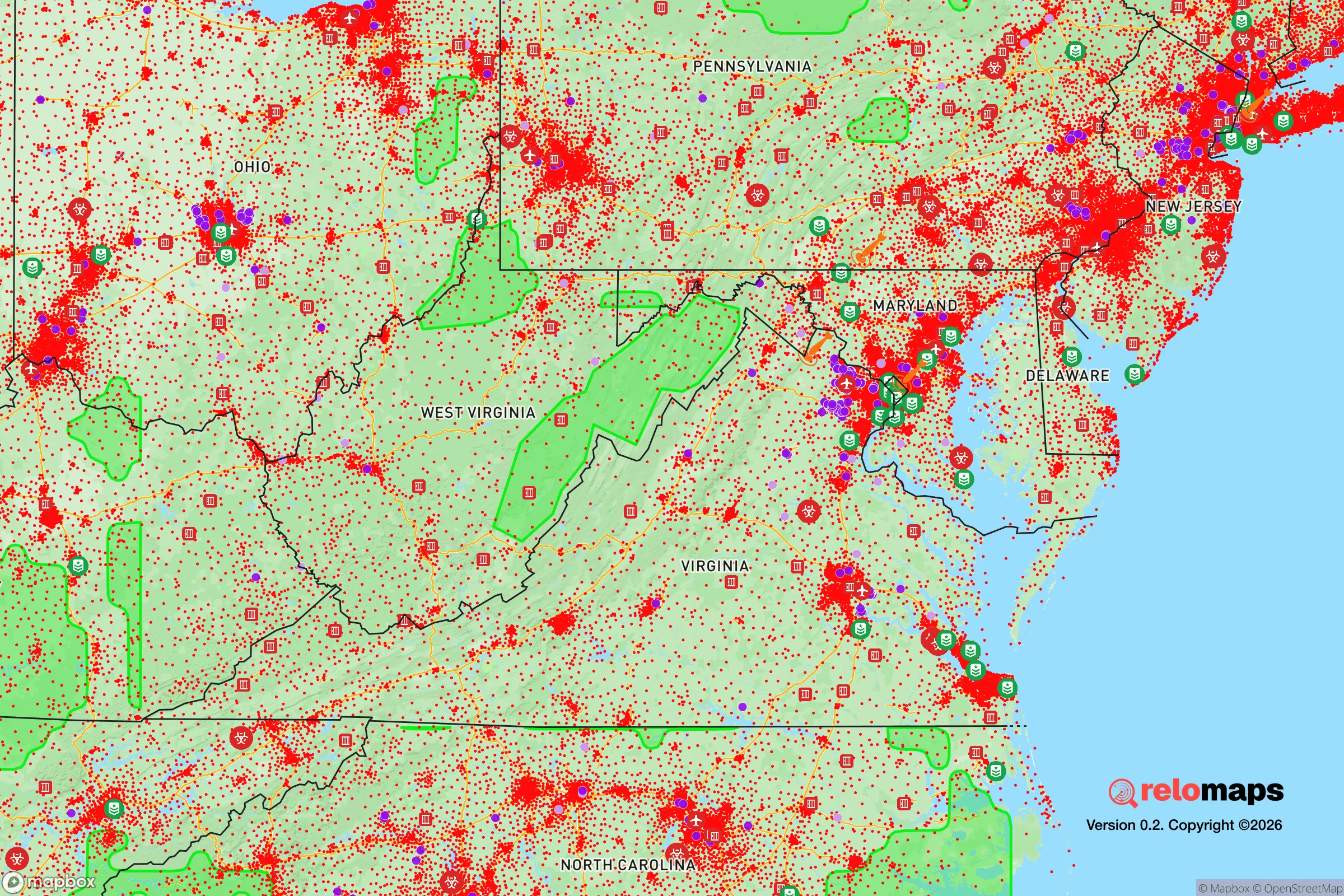
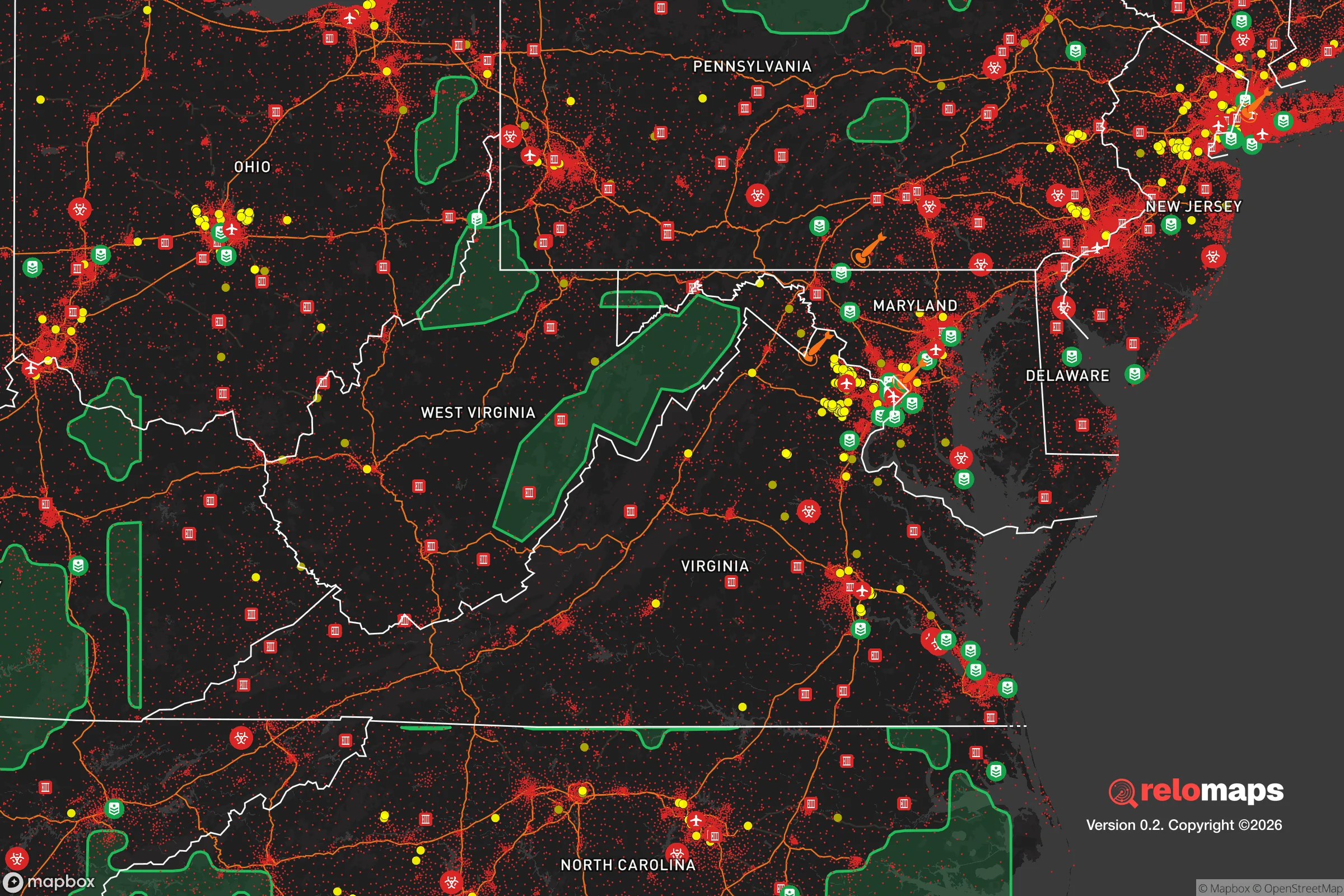


Important Note: For informational purposes only. This does not mean nothing bad ever happens in the green zones. Please use common sense. This is based on public data and modeled with AI. We tried to take a conservative approach but mistakes happen. We update this regularly as new information becomes available.
Solar Generator Recommendations
Backup power matters more here than in safer locations. We've picked three solar generators across budgets and capacity tiers — start with the budget unit if you only need a few essentials, or step up if you want to run a fridge and HVAC for days at a time.

Jackery Portable Power Station Explorer 300
Budget OptionPower on the Go: Weighing only 11 lbs, it's convenient to set up and store with book-sized foldable solar panels

BLUETTI Portable Power Station AC180
Designed for both indoor and outdoor scenarios, AC180 is highly capable as it has a robost capacity and continuous output power.

EF ECOFLOW DELTA Pro Ultra Power Station
Upgraded PickEcoFlow DELTA Pro Ultra is a whole-home energy system designed to grow with your family. Integrated with the Smart Home Panel 2, it scales to meet your evolving energy needs — keeping your home powered, intelligent, and secure through every stage of life.
We earn a commission, at no additional cost to you.
Strategic Assessment Analysis
Inwood, West Virginia, sits in a strategic sweet spot that resilience-minded relocators rarely find: close enough to the Washington D.C. and Baltimore metro areas to access resources and markets, yet far enough to avoid the blast zones, fallout plumes, and civil unrest that would follow a major event. Located in Berkeley County, part of the Eastern Panhandle, Inwood offers a rural buffer with suburban infrastructure—a combination that makes it a serious contender for anyone prioritizing long-term preparedness over convenience. The area’s position along Interstate 81 and near the Potomac River gives it both mobility and a natural water source, while its distance from major military and government targets reduces the likelihood of being caught in a first-strike scenario.
Geographic position and natural advantages for long-term survival
Inwood’s geography is its strongest asset. The town sits in the Shenandoah Valley’s northern reaches, flanked by the Blue Ridge Mountains to the east and the Allegheny Front to the west. This topography provides natural barriers against fallout drift and offers defensible terrain for those who know how to use it. The area’s elevation—roughly 500 to 600 feet above sea level—keeps it above most floodplains, while the surrounding forests and farmland offer cover, timber, and agricultural potential. The Potomac River, about 10 miles north, is a reliable water source, and the numerous creeks and springs in the region mean off-grid water access is feasible with proper filtration. For a relocator, the key advantage is that Inwood is not a primary target: no major military bases, no nuclear power plants within 20 miles, and no major government command centers. The nearest high-value target is the Pentagon and D.C. core, roughly 70 miles east—far enough that a ground burst’s immediate blast radius wouldn’t reach, but close enough that fallout could be a concern depending on wind patterns. Still, the mountains provide a partial shield, and the prevailing westerly winds would push fallout away from Inwood in most scenarios.
Risks, exposures, and proximity to fallout-relevant landmarks
No location is risk-free, and Inwood has its share of exposures. The most significant is its proximity to the Washington D.C. metropolitan area, which is a high-priority target for any adversary. A nuclear detonation in D.C. would produce fallout that could reach Berkeley County within hours, depending on wind direction. The area is also within 50 miles of the Calvert Cliffs Nuclear Power Plant in Maryland, which, while not a military target, could become a secondary hazard if damaged or targeted. Additionally, the I-81 corridor is a major logistics route; in a crisis, it would be choked with refugees fleeing the D.C. suburbs, potentially turning Inwood into a bottleneck. The town’s population of roughly 3,000 is small, but Berkeley County as a whole has grown rapidly—over 130,000 residents as of 2025—meaning the area is no longer the remote hideout it once was. For a prepper, the risk is that Inwood could become a waypoint for desperate people moving west, which would strain local resources and increase the chance of conflict. The good news is that the surrounding rural areas—particularly to the west toward Martinsburg and the Sleepy Creek Wildlife Management Area—offer escape routes into deeper wilderness if needed.
Practical resilience for a relocator: food, water, energy, and defensibility
For someone serious about self-sufficiency, Inwood checks several boxes. The region’s agricultural heritage means fertile soil and a growing season that supports corn, beans, squash, and livestock. Local farmers’ markets and CSAs are common, and the area has a strong hunting culture—deer, turkey, and small game are plentiful in the nearby forests. Water is accessible via wells, springs, and the Potomac, but filtration and storage are non-negotiable given agricultural runoff and potential fallout contamination. Solar potential is decent: the area averages about 200 sunny days per year, and off-grid solar setups are feasible for a well-insulated home. Wood heating is a practical option, with abundant hardwood forests within a short drive. Defensibility is moderate: the terrain offers natural chokepoints along the mountain passes, but the open farmland and suburban sprawl around Inwood itself make it less defensible than a remote cabin in the Monongahela National Forest. A relocator would want to secure a property with good sightlines, a reliable water source, and a location off the main roads—preferably on a dead-end road or near a state forest boundary. The local gun culture is strong, with a high rate of firearm ownership and a supportive legal environment for self-defense, which aligns with a conservative preparedness mindset.
Overall strategic picture for a conservative relocator
Inwood is not a bug-out location—it’s a base of operations. It offers the infrastructure to build a resilient life now, while retaining the ability to retreat deeper into the mountains if things go sideways. The conservative-leaning community, with its emphasis on self-reliance, local governance, and Second Amendment rights, makes it a culturally comfortable fit for those who view preparedness as a civic duty rather than a fringe hobby. The downsides are real: population growth is eroding the area’s rural character, and the proximity to D.C. means that any major event will bring chaos to the region. But for a relocator who wants to be within a few hours of the capital for work or family reasons, while still having a fighting chance at long-term survival, Inwood is one of the better options in the Mid-Atlantic. The key is to act now—secure land with water and defensible terrain, build community with like-minded neighbors, and treat the town as a staging ground rather than a final destination. In a world where the unthinkable becomes thinkable, Inwood gives you options. That’s more than most places can say.

* Values derived from national, state, county, city and local statistics and may differ in a specific area. Last updated: 2026-10-10T16:27:43.000Z
Narrative content on this page is AI-generated and may contain mistakes. Verify any details that matter before acting on them.
ReloMaps may earn a commission from affiliate links at no extra cost to you.

