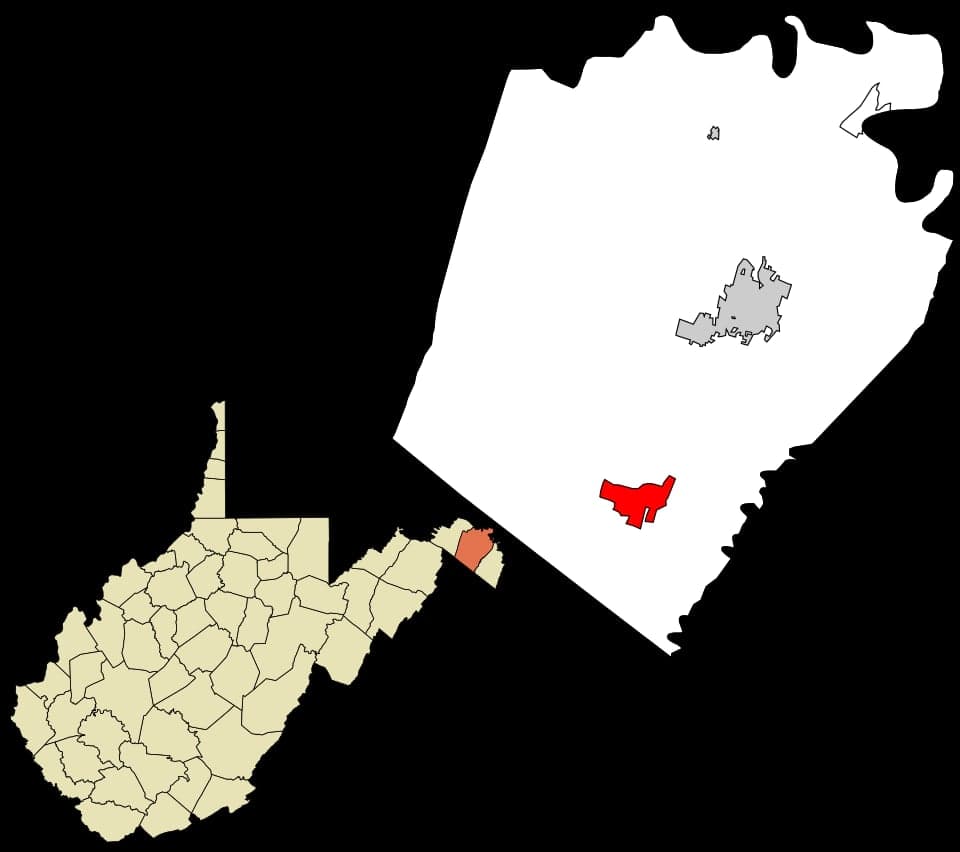
Photo: Wikipedia
Political ClimatePolitical Climate in Inwood, WV
District shown is the primary district for this city’s centroid. Cities may span multiple districts.
Local Political AnalysisPolitical Analysis of Inwood, WV
Inwood, West Virginia, sits deep in reliably red territory, with a Cook PVI of R+20 that reflects a community where conservative values aren't just a preference—they're the baseline. For decades, this Berkeley County area has leaned solidly Republican, and the 2024 election only reinforced that, with the county voting roughly +30 points for the GOP. But if you've lived here as long as I have, you've noticed the political winds shifting, and not always in a way that feels comfortable. The old-school, live-and-let-live conservatism that defined Inwood is being tested by outside pressures, and the trajectory is one of cautious vigilance rather than blind optimism.
How it compares
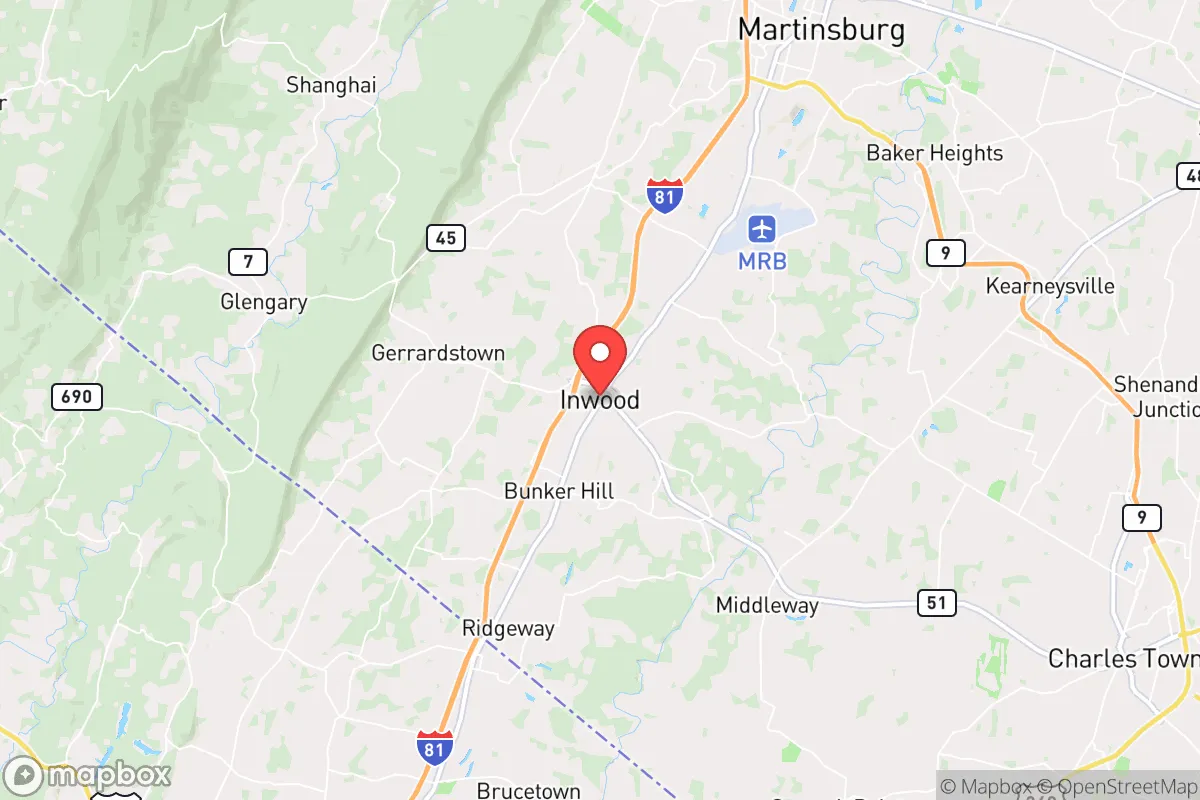
Drive ten miles east into Martinsburg, and you'll feel the difference. Berkeley County's seat has a more moderate, sometimes even progressive tilt, especially among younger transplants commuting to D.C. or working in the growing data-center corridor. Inwood, by contrast, remains a bastion of traditional values—think church suppers, hunting leases, and a deep skepticism of government overreach. Compare us to Shepherdstown, twenty minutes south, and the contrast is stark: that college town leans blue, with a vibe that can feel worlds away from Inwood's rural pragmatism. Even Charles Town, with its historic district and growing arts scene, has a more mixed political palette. Inwood's R+20 rating isn't just a number; it's a daily reality in how people talk about taxes, property rights, and the Second Amendment.
What this means for residents
For folks who value personal freedoms, Inwood's political climate offers a buffer against the kind of top-down mandates that have crept into other parts of the state. You won't see the same push for strict zoning laws or aggressive environmental regulations here—at least not yet. The local school board and county commission still lean conservative, which means decisions about land use, gun rights, and local taxes tend to favor individual liberty over collective planning. But there's a growing unease. As the D.C. exodus brings new residents with different priorities, we're seeing more debates about development, school curriculum, and even mask mandates. The concern isn't that Inwood will flip blue overnight—it's that the slow creep of progressive ideology could erode the very freedoms that make this area worth living in. If you're looking for a place where government stays out of your business, Inwood still fits the bill, but keep an eye on local elections.
Culturally, Inwood remains a place where the flag flies high and the local diner is more likely to discuss hunting season than climate policy. The policy distinctions that matter most here are the ones that protect property rights and limit state interference—like the absence of a state income tax on certain retirement income and relatively loose firearm regulations. But the long-term picture is uncertain. If the trend of suburbanization continues, we could see more pressure for "community standards" that sound nice but often translate to more rules on what you can do with your own land. For now, Inwood is still a pocket of old-school West Virginia conservatism, but the fight to keep it that way is just beginning. Stay involved, vote in every local primary, and don't assume the R+20 rating will protect us forever.

State Political ClimatePolitical Climate in West Virginia
State Political AnalysisPolitical Environment in the State
West Virginia has long been one of the most reliably Republican states in the nation, but that wasn’t always the case. As recently as the 1990s, it was a Democratic stronghold at the state and local level, voting for Bill Clinton twice. The shift began in earnest around 2000, accelerated by the national Democratic Party’s move left on coal, guns, and cultural issues. Today, the state is a deep red, with Donald Trump winning by nearly 39 points in 2020 and by a similar margin in 2024. The dominant coalition is a mix of rural conservatives, union members who broke with their national leadership, and a growing number of out-of-state transplants seeking lower taxes and fewer regulations. The trajectory over the last 20 years has been a steady march rightward, with the state legislature now holding a supermajority of Republicans and the governor’s mansion firmly in GOP hands.
Urban vs. rural divide
The political map of West Virginia is starkly divided between its few small cities and its vast rural expanse. The only real blue dot is Morgantown, home to West Virginia University, where the student population and academic workforce lean left. Monongalia County, which contains Morgantown, voted for Joe Biden in 2020 by about 10 points, making it the only county in the state to do so. Charleston, the capital, is a purple-to-light-blue area, with Kanawha County often splitting tickets — it went for Trump in 2020 but has elected some moderate Democrats locally. Huntington and Wheeling are more conservative than their populations might suggest, with both cities trending redder over the last decade. The real engine of the state’s Republican dominance is the rural and small-town vote. Counties like Mingo, Logan, and McDowell in the southern coalfields, which were once solidly Democratic, now routinely give Republicans 70-80% of the vote. The divide isn’t just about coal — it’s about a cultural disconnect between the university town and the rest of the state, where traditional values and skepticism of federal overreach run deep.
Policy environment
West Virginia’s policy environment is aggressively pro-business and culturally conservative. There is no state income tax on Social Security benefits, and the state has been phasing down its personal income tax — the top rate dropped from 6.5% to 5.12% in 2023, with a goal of elimination by 2028. Property taxes are among the lowest in the nation, capped by the state constitution. The regulatory posture is light: West Virginia is a right-to-work state, has no state-level minimum wage above the federal $7.25, and has streamlined permitting for energy extraction. On education, the state passed a robust school choice law in 2021, creating the Hope Scholarship, which allows parents to use state education funds for private school, homeschooling, or tutoring. The program has grown rapidly, with over 10,000 students enrolled by 2025. Healthcare is a mixed bag: the state expanded Medicaid under the Affordable Care Act, but there is no state-run insurance exchange, and the legislature has resisted further expansion of government-run options. Election laws are straightforward — voter ID is required, early voting is available, and the state has no-excuse absentee voting. There is no ballot harvesting, and drop boxes are limited. The overall environment is one of minimal government interference in daily life, which is exactly what draws many new residents.
Trajectory & freedom
West Virginia is becoming more free in several key areas, particularly when it comes to personal liberty and economic freedom. The state passed constitutional carry (permitless concealed carry) in 2016, and in 2023 it expanded that to allow firearms in vehicles on school property. There is no red flag law, and the state has preempted local governments from enacting their own gun restrictions. On parental rights, the state passed the “Parental Bill of Rights” in 2022, requiring schools to notify parents of any changes to a child’s health or well-being and prohibiting instruction on sexual orientation or gender identity in K-3. The Save Women’s Sports Act, passed in 2021, bans biological males from competing in female sports. Medical autonomy is respected: there are no vaccine mandates for state employees or students, and the legislature banned vaccine passports in 2022. Property rights are strong, with no state-level inheritance tax and a homestead exemption for seniors. The only area where freedom has arguably contracted is in the realm of abortion — the state passed a near-total ban in 2022, with exceptions only for rape, incest, and medical emergencies. For conservative-leaning residents, this is a feature, not a bug. The overall trajectory is toward less government overreach, lower taxes, and more individual control over education and healthcare decisions.
Civil unrest & political movements
West Virginia has a history of labor unrest, but modern political movements are more focused on cultural and constitutional issues. The 2018 teachers’ strike, which shut down schools for nine days, was a rare moment of cross-ideological protest — it was about pay and benefits, not partisan politics. Since then, the state has seen organized activism around Second Amendment rights, with large rallies at the state capitol in Charleston during the 2020 legislative session. There is no sanctuary city movement in West Virginia; in fact, the state passed a law in 2020 requiring local law enforcement to cooperate with federal immigration authorities. Election integrity has been a flashpoint: the 2020 election saw no major controversies, but the legislature passed a series of bills in 2021 tightening voter ID requirements and banning private funding of election administration. There is a small but vocal secessionist movement in the eastern panhandle, where some residents feel culturally aligned with Virginia or Maryland, but it has no real political traction. The most visible political flashpoint for a new resident would be the ubiquity of “Don’t Tread on Me” flags and pro-Trump signage, especially in rural areas. There is no significant left-wing protest infrastructure outside of Morgantown, and even there, it’s muted compared to other college towns.
Projection
Over the next 5-10 years, West Virginia is likely to become even more conservative, driven by two forces: out-migration of younger, more liberal-leaning residents and in-migration of conservatives from high-tax states like California, New York, and Virginia. The eastern panhandle, particularly Berkeley County and Jefferson County, is seeing the fastest growth, as remote workers and retirees flee the D.C. suburbs. These newcomers tend to be culturally conservative and fiscally libertarian, reinforcing the state’s rightward tilt. The coal industry will continue to decline, but natural gas, timber, and tourism will fill some of the gap. The state’s population is aging and shrinking overall, but the political impact of that is a hardening of conservative positions on taxes, guns, and education. The biggest wildcard is the opioid crisis and its long-term effects on the workforce and family structure, but even that has not shifted the political needle. A new resident moving in now should expect to find a state that is deeply red, increasingly free from government overreach, and culturally aligned with traditional values. The only real tension will be between the old guard — union Democrats who still remember the New Deal — and the new wave of libertarian-leaning Republicans. That tension is healthy and keeps the state from becoming complacent.
For someone choosing West Virginia as a relocation destination, the bottom line is this: you are moving to a state that respects your right to live as you see fit, as long as you don’t expect the government to solve your problems. The taxes are low, the gun laws are permissive, the schools are increasingly choice-friendly, and the people are genuinely friendly. The trade-offs are real — limited job diversity, a struggling healthcare system in rural areas, and a climate that can be harsh — but if your priority is freedom from government overreach, West Virginia delivers. Just know that you’ll be living in a place where the political conversation is dominated by coal, culture, and constitutional carry, and where the biggest threat to your liberty is unlikely to come from the statehouse.
* Values derived from national, state, county, city and local statistics and may differ in a specific area. Last updated: 2026-10-10T16:27:43.000Z
Narrative content on this page is AI-generated and may contain mistakes. Verify any details that matter before acting on them.
ReloMaps may earn a commission from affiliate links at no extra cost to you.

