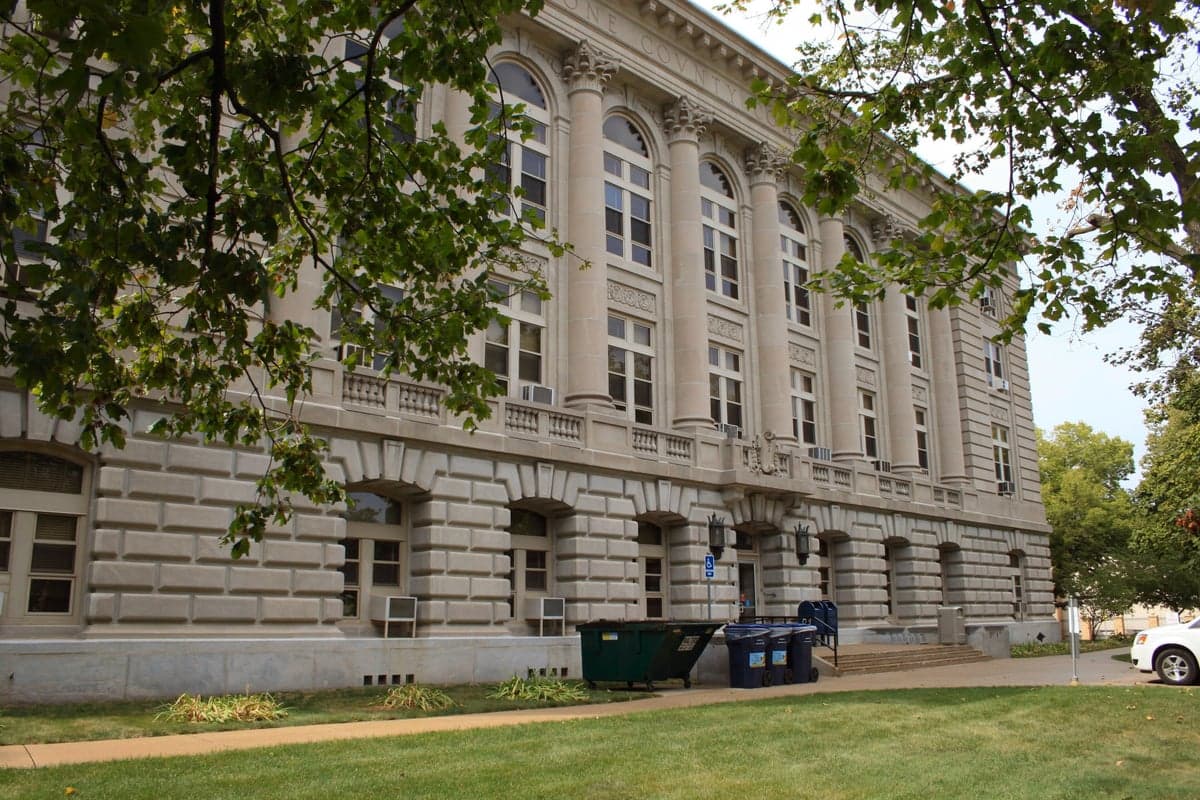
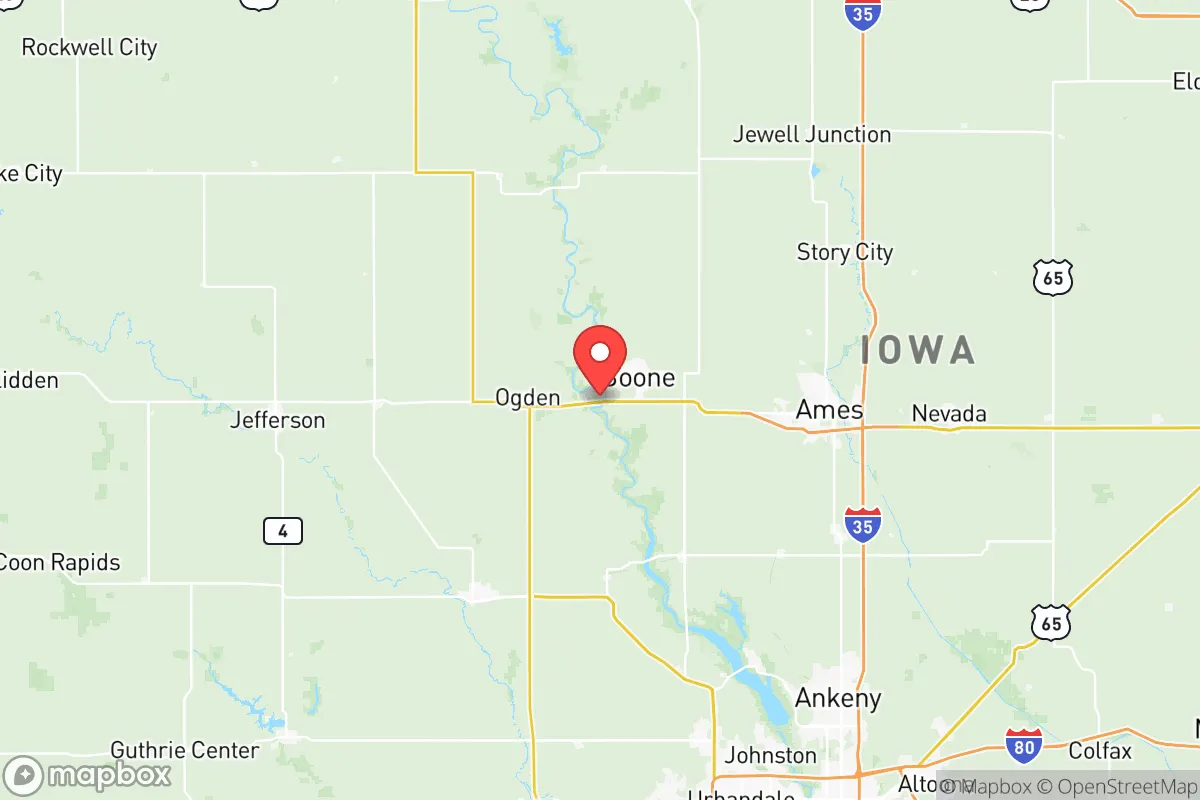
Photo: Wikipedia
Find The Best Places To Live in Boone County
PRO TIP! You can paste a Zillow or Redfin link to get info on that property.
Best Places to Live in Boone County
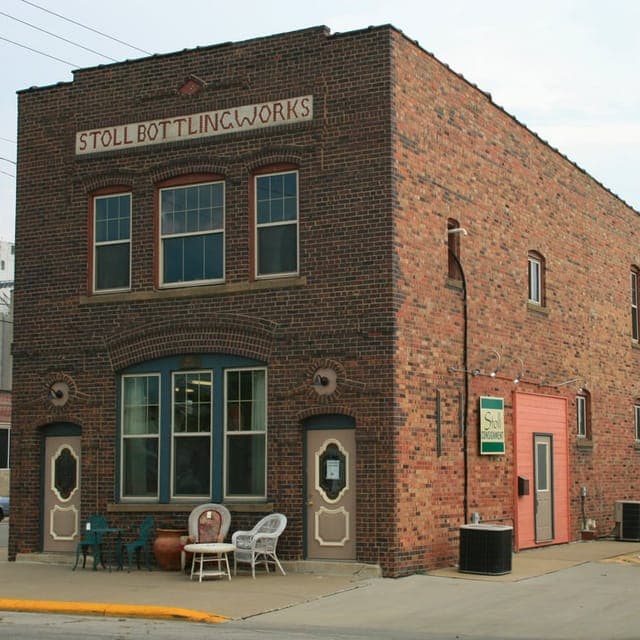
Cities & Towns in Boone County
Cities in Boone County
What It's Like Living in Boone County, IA
Living in Boone County means settling into a part of central Iowa where the pace slows down just enough that you know your neighbors by name, yet you’re never more than 45 minutes from the state capital. The county seat, Boone, anchors the area with a historic downtown and the annual Pufferbilly Days festival, while smaller towns like Ogden, Madrid, and Luther offer their own distinct rhythms. People here tend to be self-reliant, friendly, and rooted in a mix of agriculture and industry—a place where high school sports still pack the bleachers and a $191,200 median home price gives you space that would cost three times as much in Des Moines.
A Slower Pace with a Stronger Sense of Community
Daily life in Boone County revolves around local routines that feel refreshingly un-rushed. In Boone, you’ll find residents grabbing coffee at a downtown café or running errands along Story Street before heading to work—many with a commute averaging just over 22 minutes, a short drive that often stays two-lane and scenic. Ogden and Madrid are even quieter, where the daily rhythm includes a stop at the Casey’s or a chat with the mail carrier. Shopping is practical: you hit Fareway or Hy-Vee for groceries, and for bigger retail runs it’s a straight shot south to Ames or Ankeny. The county’s cost of living index sits at 70—well below the national average—which means a median household income of $79,741 stretches further here than in most of the country. That extra breathing room lets families own homes with yards, keep a boat or an ATV, and still take a vacation each year. Schools are central to community identity; residents rally around Boone High School’s Toreadors and Ogden’s Bulldogs, and parent involvement at events is high.
High School Football, Pufferbilly Days, and Friday Nights
If you want to understand Boone County, look at its calendar. Pufferbilly Days in Boone (every September) draws thousands for a parade, a carnival, and the famous railroad tie-stacking contest—a nod to the town’s deep railroad history. The Union Pacific yards still hum just north of downtown, and the Boone & Scenic Valley Railroad offers tourist excursions that cross the highest double-track railroad bridge in the U.S. Sports are a big deal, but at the high school and college-adjacent level: Friday-night lights at Boone High’s Toreador Stadium are the social event of the week, and over in Madrid the Tigers keep the community’s attention tight. For outdoor recreation, Ledges State Park (just a few miles east of Boone) provides hiking trails through sandstone canyons and a swimming beach on the Des Moines River—a favorite summer escape. There’s no major music venue or pro sports team nearby, but locals make their own fun: the VFW and American Legion halls in Boone and Ogden host fish fries and dart leagues, and small-town bars like The Mucky Duck or The Keg in Boone serve as informal living rooms. If you’re looking for a night out beyond a brewery or a sports bar, you’ll drive to the suburbs of Des Moines—a 35-minute trip that most residents chalk up to simply “how it is.”
The Upsides and the Trade-Offs
Longtime residents will tell you the pros stack up nicely. The violent crime rate of 230.6 per 100,000 is slightly under the state average, and most people leave their doors unlocked in the smaller towns. Housing remains genuinely affordable—even with rising prices, a median home value of $191,200 gets you a three-bedroom ranch or a farmhouse with acreage in places like Luther or Boxholm. The downsides? Shopping diversity is limited: you won’t find an IKEA or a Whole Foods within the county line. For specialty retail or fine dining, you drive. The median age of 42.2 skews a bit older, so younger singles sometimes feel a lack of nightlife or dating options. Winters are classic Iowa—cold, gray, and snowy from December through March, which can cabin fever even the most resilient. And while the 28.7% college-educated rate reflects a solid base of professionals (especially in education, healthcare at the Boone County Hospital, and manufacturing at plants like Boone’s Ag Leader Technology), white-collar job openings are fewer than in Des Moines. For remote workers, though, the internet infrastructure is decent, and the commute trade-off is a no-brainer.
Who Fits In and Who Might Struggle
Boone County suits families who value elbow room and community ties over urban amenities. Parents appreciate that kids can ride bikes safely and that the school systems (Boone Community, Ogden, Madrid, United South Central in the northern tier) are small enough to know every teacher by name. Retirees are drawn to the low cost of living and the slower tempo. Singles or young professionals without a connection to the area may find the social scene thin—you’ll need to join a church, a volunteer group, or a softball league to meet people. The median income of $79,741 supports a comfortable middle-class life, but anyone expecting a six-figure salary in a local role will need to look at Des Moines commuter jobs. That said, if you’re the kind of person who enjoys a potluck at the community center, a Saturday morning at the flea market in Ogden, or watching the sun set over a cornfield with no traffic noise, Boone County feels less like a compromise and more like a homecoming.

* Values derived from national, state, county, city and local statistics and may differ in a specific area. Last updated: 2026-05-20T19:43:41.000Z
Narrative content on this page is AI-generated and may contain mistakes. Verify any details that matter before acting on them.
ReloMaps may earn a commission from affiliate links at no extra cost to you.

