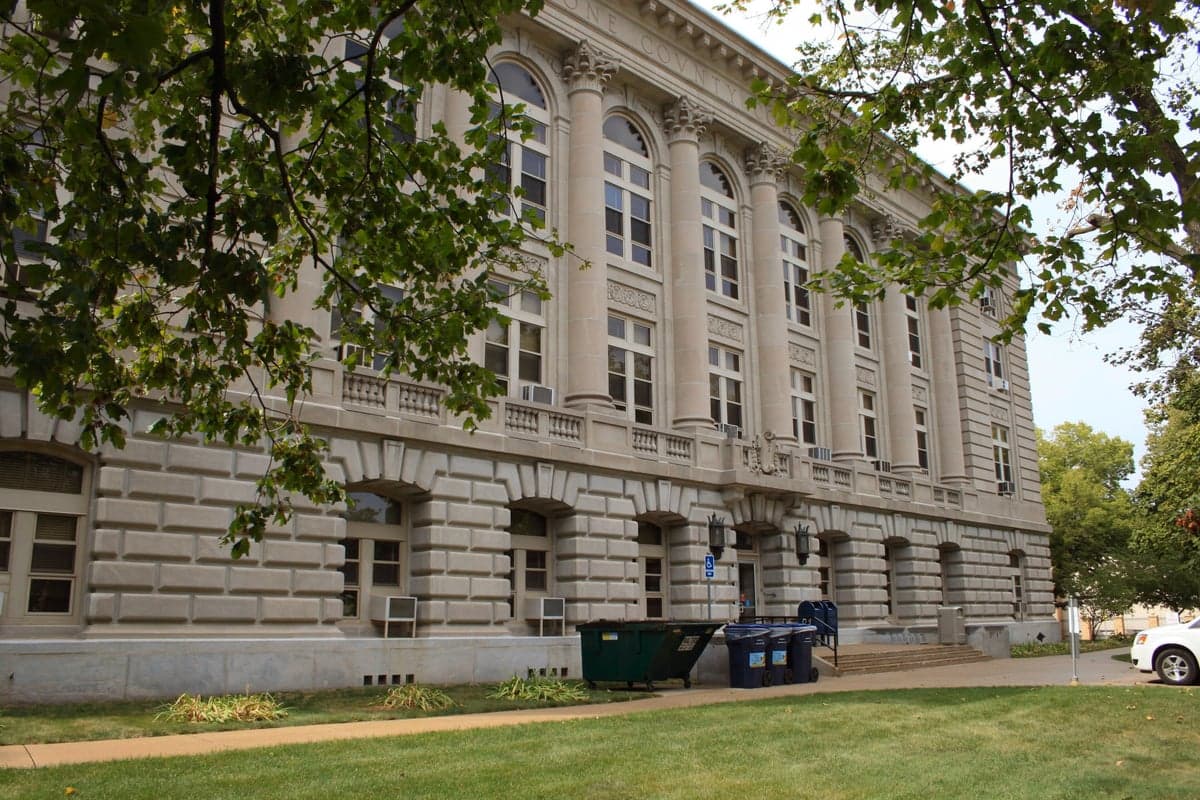
Photo: Wikipedia
Political ClimatePolitical Climate in Boone County
Showing district-level results — no local-only data available.
Local Political AnalysisPolitical Analysis of Boone County
Boone County has long been a rock-solid Republican stronghold, with a Cook PVI of R+15 that places it firmly among the most conservative counties in central Iowa. If you've been around here as long as I have, you'll remember when the county was even more lopsided—party registration used to be a formality in local elections. These days, the margins still hold, but you can see the cracks forming in a few precincts, especially around Boone city itself. The county as a whole hasn't voted for a Democrat at the presidential level since before I can remember, and that's not changing anytime soon. But the direction of the state and the drift of some local communities are worth keeping an eye on.
How it compares
Statewide, Iowa sits at R+6—a solid red state, but one where urban centers like Des Moines, Iowa City, and Cedar Rapids can swing a statewide race if the GOP doesn't turn out. Boone County is more than twice as Republican as the state average. Drive through the small towns—Boxholm, Pilot Mound, Ogden—and you'll see Trump signs in every other yard, even in off-years. The rural farming communities are as reliably red as anyplace in the Midwest. Madrid and Luther are similarly conservative, though Madrid has a sprinkling of Des Moines commuters who lean a little more moderate. The real outlier is Boone city itself. The precincts around downtown and the college area (Iowa Central's Boone campus) sometimes split 60-40 or even 55-45 in favor of Republicans, which is still red but notably less so than the rest of the county. That's where you'll find the swing precincts—the ones that could flip if the county ever trends toward suburbanization. For now, the rural vote overwhelms them.
What this means for residents
For those of us who value limited government and personal freedoms, Boone County's deep-red lean has been a comfort. Local officials—county supervisors, school boards, sheriff—tend to keep taxes low, resist state mandates, and prioritize Second Amendment rights. The school board in the Boone Community School District has generally held the line on parental rights and curriculum transparency, though there have been some unsettling pushes the last couple years to adopt more progressive language in diversity policies. That's the kind of ideological creep that worries me. In a county this conservative, you'd expect those efforts to be shot down, but they keep coming up. If Boone City's blueish precincts grow—say, with more remote workers moving in from Des Moines—those cultural battles could intensify. The county's R+15 rating won't change overnight, but the trajectory of the state as a whole (remember, Iowa was R+6 even before the last cycle) is a warning: even solidly red areas can shift if folks get complacent. Local elections matter more than ever here.
Cultural and policy distinctions
One thing that separates Boone County from, say, a suburban county like Dallas is the deep-rooted distrust of federal overreach. People here remember the farm crisis of the '80s, and they've never forgotten that D.C. bureaucrats don't have their backs. You see it in the way the county rejected wind turbine siting regulations a few years back—locals felt it was a property rights issue, not a policy one. There's also a strong streak of fiscal conservatism: the county's general fund levy is among the lowest in the region. And while Ledges State Park brings in tourists, there's little appetite for the kind of green-energy mandates or land-use restrictions you'd find in more progressive parts of the state. On social issues, Boone County is traditional: school board meetings still open with prayer, and the local churches are the backbone of community life. If you're looking for a place where personal liberty and conservative values are still the norm, this is it—just keep an eye on the precinct maps every four years.

State Political ClimatePolitical Climate in Iowa
State Political AnalysisPolitical Environment in the State
Iowa sits at Cook PVI R+6, a reliably red state that's actually gotten redder over the last decade. In 2020, Trump won it by 8 points; in 2024, that margin stretched to 13 points, driven by rural turnout and suburban shifts that have mostly favored the GOP. The state's politics are dominated by a conservative coalition that controls the governorship, both legislative chambers, and both U.S. Senate seats. But if you scratch the surface, you'll find a place that wasn't always this way — it used to be a classic swing state, and the shift rightward is a relatively recent, deliberate move.
Urban vs. rural divide
The political map of Iowa breaks clean along the urban-rural line, and the urban islands are shrinking relative to the rest. Des Moines (Polk County) is the biggest blue dot, but its suburbs — Ankeny, Waukee, and Urbandale — are increasingly voting Republican as new families move in looking for lower taxes and better schools. Iowa City (Johnson County) remains deep blue, thanks to the University of Iowa, and Cedar Rapids (Linn County) is a purple-ish swing area that's trending redder. The real red strongholds are the rural stretches: Sioux County in the northwest regularly goes 80%+ Republican, and towns like Orange City and Pella are as conservative as they come. Over in the west, Council Bluffs is reliably red, while Dubuque along the Mississippi has been shifting right, partly due to an influx of working-class voters from Illinois. The divide isn't just geographic — it's cultural, with metro spots feeling more like coastal enclaves and the rest of the state holding traditional rural values.
Policy environment
Iowa's policy environment is a conservative's dream, especially if you're coming from a blue state. The state has no estate tax, a flat income tax that dropped to 3.8% in 2025 and is on track to hit 3.5% by 2027, and a sales tax that's reasonable. Property taxes are moderate, though they vary by county. On education, Governor Kim Reynolds pushed through Education Savings Accounts (ESAs) in 2023, giving families state-funded dollars for private or homeschool expenses — a huge win for parental choice. Healthcare is a mixed bag: the state expanded Medicaid under the ACA but has since moved to a managed-care model; private insurance is competitive. Election laws are tight — voter ID is required, early voting windows are shorter than in many states, and in 2021 the legislature limited absentee ballot drop boxes. Right-to-work is still law, and the state has a fetal heartbeat law banning abortion after roughly six weeks, which went into effect in 2023 after a court ruling. For a conservative, this is a policy environment that respects local control, limits government overreach in your wallet, and protects life.
Trajectory & freedom
Iowa is becoming more free by any conservative measure — but you have to watch the details. In 2021, the state enacted permitless carry for handguns, meaning you don't need a license to carry concealed; that's a big expansion of Second Amendment freedom. During COVID, Iowa was one of the first states to end mask mandates and business closures, with Reynolds famously saying "Iowans can make their own decisions." Parental rights got a boost with the Students' Educational Rights Law (2021), which lets parents review curriculum and opt their kids out of objectionable material. However, there are ongoing fights over medical freedom — the state banned gender-transition procedures for minors in 2023, which conservatives see as protecting kids, while progressives howl. Property rights are solid, with no statewide rent control and light zoning in rural areas. The trajectory is clearly toward expanded personal liberty, especially compared to neighboring Minnesota or Illinois. But there's a shadow: federal overreach on environmental regulations (carbon mandates for biofuels) and potential federal preemption on abortion could undermine state-level choices. For now, Iowa is a state where freedom is trending up.
Civil unrest & political movements
Iowa is generally civil, but it's had its flashpoints. In the summer of 2020, Des Moines and Iowa City saw Black Lives Matter protests that included some property damage and clashes with police. Nothing like Portland or Seattle, but it rattled locals. More recently, the state has been a battleground over election integrity — after the 2020 election, grassroots groups in rural counties pushed for tighter ballot security, leading to the 2021 voter ID law. There's no sanctuary city movement here; in fact, Iowa passed a law in 2024 requiring local law enforcement to cooperate with ICE, overriding a few urban holdouts like Johnson County. Organized activist movements are split: the left has strongholds in Iowa City and Ames (home to Iowa State), while the right rallies around pro-life and Second Amendment groups. You won't find secessionist rhetoric, but there's a strong strain of "leave us alone" conservatism, especially in the northwest where Sioux County regularly threatens to become its own thing. Immigration politics are tense in meatpacking towns like Council Bluffs and Waterloo, but enforcement is strict. A newcomer won't see daily unrest — just the occasional rally or protest on the Capitol steps in Des Moines.
Projection
Over the next 5-10 years, Iowa is likely to stay solidly Republican at the state level, but the margins could tighten if suburban Des Moines continues to attract remote workers from Chicago and the coasts. Those new arrivals tend to bring slightly more moderate views, especially on social issues. However, the state's growing Hispanic population in rural areas is often socially conservative, which could offset some blueing. The real wildcard is the continued exodus from Illinois and California — if they keep fleeing high taxes and crime, Iowa will absorb them, and many will vote for the policies they fled. Demographically, Iowa is aging and white, but not as fast as some neighbors; in-migration from red-leaning rust-belters could keep the PVI from slipping. I'd expect another decade of Republican control, with potential fights over property tax caps and school funding as suburbs grow. For a conservative moving in now, expect the state to be reliably red in 2035, but pay attention to local city council races — those can flip left in Des Moines and Iowa City, affecting zoning and policing.
Bottom line: If you're looking for a state that respects your gun rights, keeps taxes low, protects parental authority, and doesn't meddle in your life, Iowa delivers. It's not perfect — watch out for local government overreach in blue cities, and keep an eye on federal environmental rules that could hurt Iowa agriculture. But for a conservative individual or family, this is one of the safest bets in the Midwest. Come for the values, stay for the low cost of living and the fact that your vote actually counts here.
* Values derived from national, state, county, city and local statistics and may differ in a specific area. Last updated: 2026-05-20T19:43:41.000Z
Narrative content on this page is AI-generated and may contain mistakes. Verify any details that matter before acting on them.
ReloMaps may earn a commission from affiliate links at no extra cost to you.

