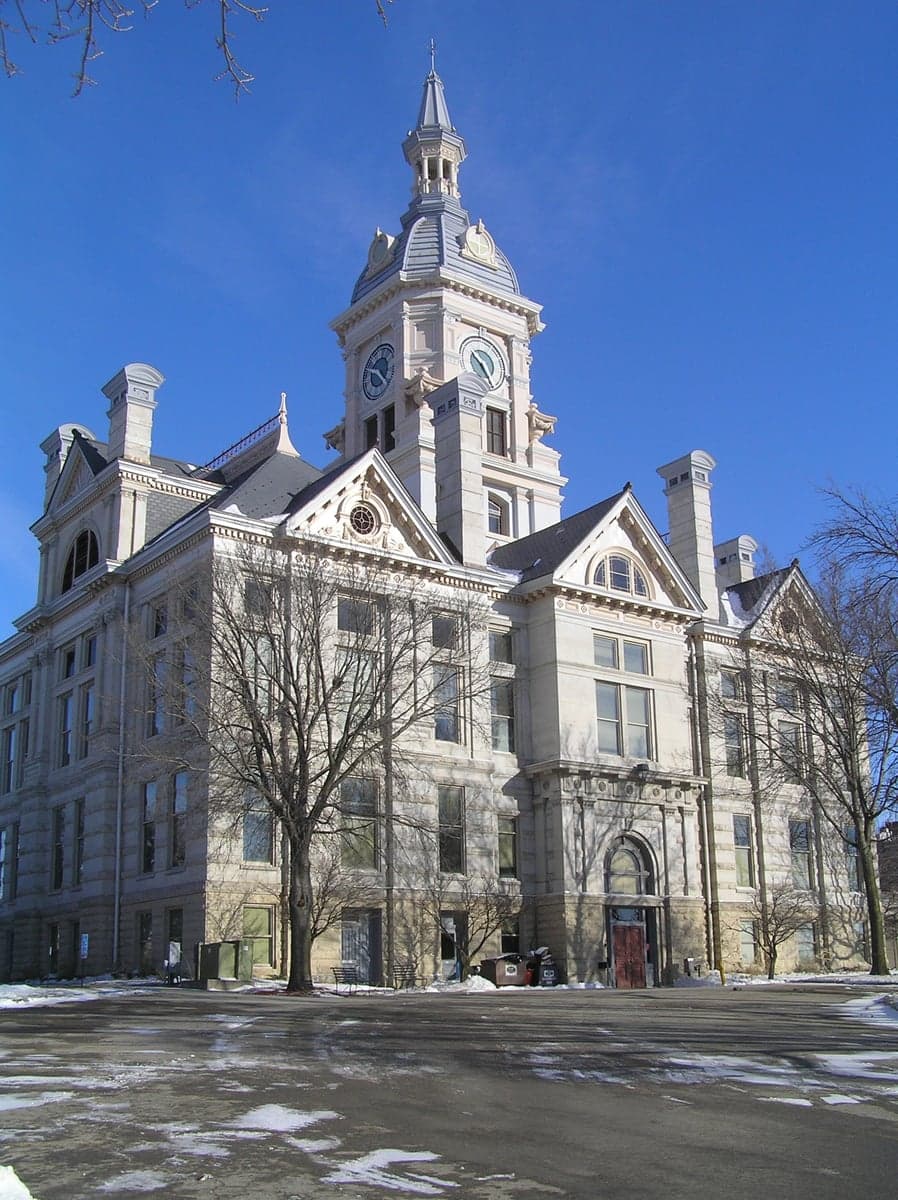
Photo: Wikipedia
Personal Sovereignty in Marshall County
Viable for self-reliance. Generally workable, though some barriers may limit total independence.
What does Personal Sovereignty tell us?
Personal Sovereignty measures your capacity for self-reliance and independence with minimal government friction. Higher scores mean fewer barriers between you and the way you want to live... but it assumes you have the space you need and good neighbors.
What does this tell us?
Personal Sovereignty measures your capacity for self-reliance and independence with minimal government friction. Higher scores mean fewer barriers between you and the way you want to live... but it assumes you have the space you need and good neighbors.
State Policy
Energy independence: Importer (50% of energy produced in-state)
Personal Liberty
Homesteading

Personal Liberty Analysis
Marshall County, Iowa, offers a notably high degree of personal sovereignty compared to the increasingly restrictive environments found in many urban and coastal jurisdictions, making it a serious consideration for those prioritizing autonomy. The county’s rural character, combined with Iowa’s generally pro-liberty state-level framework, creates a buffer against the kind of government overreach that is eroding freedoms elsewhere. For single individuals and parents looking to live life on their own terms—with minimal interference in how they raise their children, defend their homes, or manage their property—this area presents a compelling, if not perfect, balance of freedom and practicality.
Tax burden and regulatory posture in Marshall County and surrounding towns
Iowa’s state-level tax climate is a mixed bag, but Marshall County’s local implementation leans toward restraint. The state’s individual income tax rate is a flat 3.9% as of 2026, down from a more progressive structure, and the corporate rate is a flat 5.5%. Property taxes in Marshall County are moderate, with the average effective rate hovering around 1.4% of assessed value, which is slightly below the state average. Towns like Marshalltown, the county seat, have a more developed tax base that keeps rates reasonable, while smaller communities such as Liscomb and Laurel benefit from lower mill levies due to minimal municipal services. The regulatory posture here is distinctly hands-off: there are no county-level business licensing requirements beyond state basics, and zoning is largely permissive outside of Marshalltown’s limited urban growth boundary. For a prepper or survivalist, this means fewer hurdles for building a workshop, storing supplies, or running a small home-based enterprise without bureaucratic meddling. The state’s recent push to eliminate property taxes on machinery and equipment for small manufacturers further signals a pro-business, anti-red-tape environment.
Self-defense and gun law specifics in Marshall County communities
Iowa is a constitutional carry state, and Marshall County fully embraces that ethos. Since 2021, no permit is required to carry a concealed firearm for any law-abiding adult 21 or older, and the county sheriff’s office issues permits for reciprocity purposes without undue delay. In Marshalltown, gun ownership is common, and local gun shops like J&J Firearms report steady business from both hunters and those focused on personal defense. The smaller towns of Gilman and Haverhill are even more gun-friendly, with a culture where open carry is unremarkable and shooting on private property is generally accepted, provided it’s done safely. There are no county-level restrictions on magazine capacity, firearm types, or ammunition sales—only state and federal laws apply. Stand-your-ground laws are in effect, and there is no duty to retreat in any place where a person is lawfully present. For parents, this means teaching children firearm safety is a normal part of life, not a political statement. The only notable restriction is that private property owners can prohibit carry on their premises, but this is rarely enforced in rural areas. Compared to states with red-flag laws or waiting periods, Marshall County offers a straightforward, low-friction environment for exercising the right to keep and bear arms.
Self-reliance and homesteading viability across Marshall County
Homesteading and off-grid living are not just possible in Marshall County—they are a way of life for many. The county’s agricultural zoning allows for a wide range of self-sufficient activities, from raising livestock to installing solar panels without the permitting headaches common in more regulated areas. Lot sizes vary significantly: in Marshalltown, standard residential lots are around 0.25 acres, but just outside town, parcels of 1 to 5 acres are common and affordable, often selling for $5,000 to $15,000 per acre. In Le Grand and State Center, you can find 10- to 40-acre tracts that are ideal for a full homestead, with well water and septic systems already in place. Off-grid feasibility is high: the county has no restrictions on rainwater collection, and solar installations are permitted without special permits, though grid-tied systems require utility approval. Composting toilets and alternative waste systems are allowed under state health codes, but you’ll need a permit from the county environmental health office. The biggest practical consideration is winter—Iowa’s cold climate demands a reliable heat source, but wood stoves are common and legal. For a prepper, the ability to store food, water, and fuel without zoning interference is a major advantage. The county’s agricultural extension office even offers free workshops on canning, livestock care, and soil management, reinforcing a culture of self-reliance rather than dependency.
Personal liberties: parental rights, medical autonomy, speech, and property
Marshall County’s social and legal climate strongly favors individual liberty in key areas. Parental rights are robust: Iowa law requires parental consent for medical treatment of minors, and the state has passed legislation prohibiting school districts from withholding information about a child’s health or well-being from parents. In Marshalltown, the school board has been notably resistant to federal overreach, maintaining local control over curriculum and library materials. Medical autonomy is less clear-cut—Iowa has not enacted broad medical freedom laws, but there are no vaccine mandates for adults, and religious exemptions for children are honored. The county’s healthcare system, centered on UnityPoint Health – Marshalltown, is generally non-intrusive, though rural access to alternative medicine is limited. Free speech is well-protected: there are no local hate speech ordinances or permit requirements for public gatherings, and the county courthouse lawn is a common site for political demonstrations. Property rights are a standout: Iowa’s private property rights laws limit eminent domain abuse, and Marshall County’s zoning board is known for granting variances for non-standard uses, such as building a bunker or a private shooting range. The only friction point is that the county does enforce building codes for new construction, but these are minimal compared to urban areas. For a conservative-leaning individual, the ability to speak freely, raise children without government interference, and control one’s own medical decisions is a significant draw.
Overall, Marshall County ranks as a strong contender for personal sovereignty in the Midwest, especially when compared to the regulatory-heavy environments of the coasts or even larger Iowa cities like Des Moines. The combination of constitutional carry, low taxes, permissive zoning, and a culture of self-reliance creates a buffer against the creeping government overreach that many preppers and conservatives fear. While no location is a perfect libertarian utopia—state income tax and some building codes remain—the county’s practical, hands-off approach to governance makes it a viable base for those seeking to live with maximum autonomy. For single individuals and parents alike, Marshall County offers a place where the government is more of a background presence than a daily obstacle, allowing you to focus on what matters: building a resilient, self-determined life.

* Values derived from national, state, county, city and local statistics and may differ in a specific area. Last updated: 2026-05-12T17:59:37.000Z
Narrative content on this page is AI-generated and may contain mistakes. Verify any details that matter before acting on them.
ReloMaps may earn a commission from affiliate links at no extra cost to you.

