Photo: Wikipedia
Political ClimatePolitical Climate in Marshall County
Showing district-level results — no local-only data available.
Local Political AnalysisPolitical Analysis of Marshall County
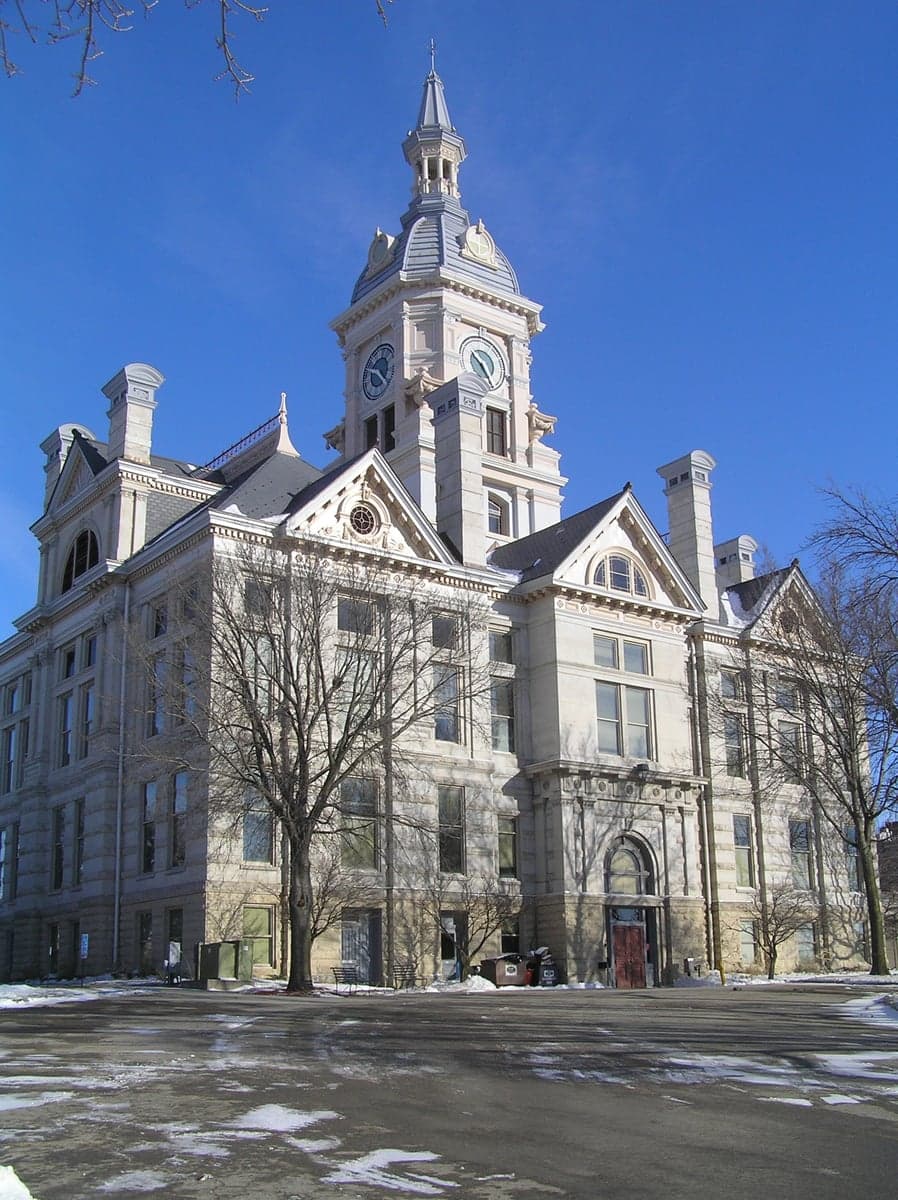
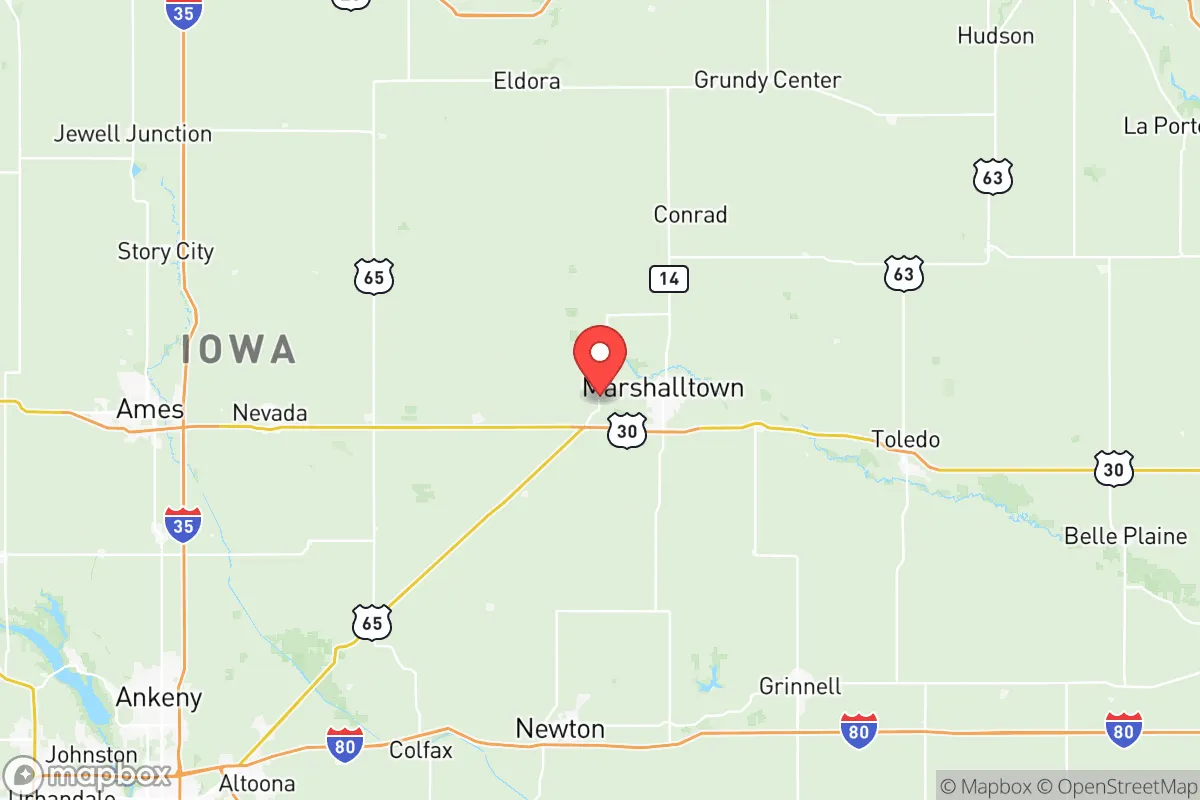
Marshall County, Iowa, is a solidly conservative area with a Cook PVI of R+15, meaning it votes about 15 points more Republican than the national average. That’s a full nine points redder than the state of Iowa as a whole, which sits at R+6. But don’t let that county-wide number fool you into thinking it’s a monolith—there’s a real split between the rural towns and the county seat, Marshalltown, and that divide has been getting sharper over the last decade.
How it compares
When you stack Marshall County up against the rest of Iowa, the difference is stark. The state as a whole has been trending purple in recent cycles, with places like Polk County (Des Moines) and Johnson County (Iowa City) pulling hard to the left. Marshall County, by contrast, has held its ground. The rural towns—Liscomb, Laurel, and Clemons—are deep red, often voting 70-80% Republican in statewide races. State Center and Gilman are similar, though they have a few more swing precincts that can tip depending on the candidate. The real outlier is Marshalltown itself, which has a growing Hispanic population and a more moderate-to-liberal lean, especially in the wards around the meatpacking plants and the downtown core. In 2024, Marshalltown’s precincts split almost evenly, while the surrounding townships gave Republicans a 30-point margin. That’s a big shift from 20 years ago, when the whole county was reliably red across the board.
What this means for residents
For folks who value limited government and personal freedoms, the overall conservative tilt is a comfort—but there are warning signs. The influx of progressive ideas into Marshalltown, pushed by some city council members and school board candidates, has led to debates over things like library policies and diversity initiatives that feel like government overreach to many long-time residents. You’re seeing more talk about “equity” in local schools and zoning changes that favor developers over property rights. The county supervisors, thankfully, have held the line on tax increases and kept the county’s budget lean, but the pressure is mounting. If you’re moving here from a blue state, you’ll find the county government mostly stays out of your business—no mask mandates, no vaccine passports, no nonsense. But keep an eye on Marshalltown city elections; that’s where the real fight is.
Culturally, Marshall County is still a place where neighbors help neighbors and the Fourth of July parade in Le Grand is a bigger deal than any political rally. The gun culture is strong—you’ll see “Come and Take It” flags on trucks in Haverhill and Ferguson—and the local churches are packed on Sundays. That said, the county’s growing diversity, especially in Marshalltown, has brought some friction. The meatpacking plants have drawn workers from Central America and Southeast Asia, and while most folks get along fine, there’s a quiet worry that the county’s small-town character is being diluted. The biggest policy distinction from the rest of Iowa is that Marshall County has been slower to adopt the kind of “smart growth” zoning and environmental regulations you see in Johnson or Linn counties. Here, you can still build a shed on your own land without a permit from three different boards. For now, that’s the kind of freedom that keeps people here—but it’s worth watching how long it lasts.

State Political ClimatePolitical Climate in Iowa
State Political AnalysisPolitical Environment in the State
Iowa has been a reliably Republican state for over a decade, with a Cook PVI of R+6, but it wasn’t always this way. As recently as 2012, the state was a true battleground, splitting its electoral votes and electing Democrats to statewide office. Over the last 10-15 years, a combination of rural realignment, suburban drift, and aggressive conservative policymaking has shifted the state’s center of gravity firmly rightward. Today, the dominant coalition is a mix of evangelical voters in small towns, fiscal conservatives in the suburbs, and a growing number of working-class transplants from blue states who are fleeing progressive policies. The trajectory has been steady and deliberate, with the state moving from purple to deep red in presidential races and state legislative control.
Urban vs. rural divide
The political map of Iowa is a textbook case of the urban-rural split. The state’s two major metros—Des Moines and Iowa City—are the blue islands in a sea of red. Des Moines and its inner suburbs like West Des Moines and Urbandale lean Democratic, driven by a growing professional class and younger voters. Iowa City, home to the University of Iowa, is the state’s most liberal stronghold, regularly electing progressive candidates and pushing for policies like rent control and sanctuary city ordinances. But outside these corridors, the landscape flips hard. Rural counties like Sioux, Lyon, and Plymouth in the northwest routinely vote 70-80% Republican. The real story is in the suburbs that used to be swing areas—places like Ankeny, Waukee, and Johnston. These fast-growing communities north and west of Des Moines have shifted right over the past decade, driven by families moving from more expensive states and reacting to national Democratic policies on education and crime. The 2020 election saw Dallas County, a fast-growing suburban county west of Des Moines, flip from blue to red, a trend that has only solidified since.
Policy environment
Iowa’s policy environment is aggressively conservative by design. The state has a flat income tax of 3.8% that is scheduled to drop to 3.65% in 2026, with a path to a single rate of 3.5% by 2027. Property taxes are relatively low compared to the national average, and there is no inheritance tax. The regulatory posture is business-friendly, with a right-to-work law on the books and minimal zoning restrictions outside of major metros. On education, Iowa passed a universal school voucher program in 2023, allowing any family to use public funds for private or homeschool expenses—a major win for parental rights. Healthcare is a mixed bag: the state expanded Medicaid under the Affordable Care Act, but has since imposed work requirements for able-bodied adults. Election laws have been tightened significantly since 2020, with strict voter ID requirements, reduced early voting windows, and a ban on private funding for election administration. These policies have drawn criticism from the left but are popular among conservatives who view them as safeguards against fraud.
Trajectory & freedom
Iowa is becoming more free in the areas that matter most to conservatives. The state passed a permitless carry law for firearms in 2021, allowing any law-abiding adult to carry a concealed weapon without a license. In 2023, the legislature passed a near-total ban on abortion after six weeks, though it was temporarily blocked by the courts before being upheld. Parental rights were strengthened with a law requiring schools to notify parents of any changes to a student’s health or well-being, effectively banning classroom discussions of gender identity without parental consent. On the economic front, the state eliminated the inheritance tax and capped property tax growth. However, there are warning signs. The state’s medical marijuana program remains highly restrictive, and recreational cannabis is illegal. Some conservatives grumble about the state’s continued participation in federal programs like SNAP and Medicaid expansion, which they see as federal overreach. But overall, the trend is toward expanding personal liberty in the traditional sense—gun rights, school choice, and tax freedom.
Civil unrest & political movements
Iowa has not seen the kind of large-scale civil unrest that has plagued coastal states, but there have been flashpoints. In 2020, Black Lives Matter protests in Des Moines and Iowa City turned violent, with property damage and clashes with police. The state’s response was swift: the legislature passed a law in 2021 increasing penalties for rioting and blocking efforts to defund the police. Immigration politics are a simmering issue. While Iowa is not a border state, the influx of migrants to meatpacking towns like Storm Lake and Postville has created tension. The state passed a law in 2024 requiring local law enforcement to cooperate with federal immigration authorities, effectively banning sanctuary policies. Election integrity remains a hot topic. The 2020 election in Iowa was relatively smooth, but the state’s Republican Secretary of State has pushed for ongoing audits and stricter voter roll maintenance. There is a growing movement among rural counties to explore “constitutional sheriff” doctrines, where local sheriffs refuse to enforce state or federal laws they deem unconstitutional. This is most visible in counties like Fremont and Ringgold, where sheriffs have publicly stated they will not enforce gun control measures.
Projection
Over the next 5-10 years, Iowa is likely to become even more conservative. The demographic trends favor the GOP: the state’s rural population is aging and shrinking, but the suburban growth in places like Ankeny and Waukee is being driven by families from blue states who are explicitly seeking conservative governance. The University of Iowa and Iowa State University will continue to produce a liberal-leaning youth vote, but many of those graduates leave the state after college. The in-migration from Illinois, California, and Minnesota is overwhelmingly conservative, and these new residents are voting in local elections. The state’s tax cuts will continue to attract businesses and remote workers, further entrenching the economic freedom agenda. The only wild card is the potential for a national Democratic wave that could flip a few suburban House seats, but the state legislature is gerrymandered to protect Republican majorities. Expect more laws on school choice, gun rights, and election integrity. The abortion ban is here to stay. Iowa is on a path to becoming a model for red-state governance.
For a new resident, the bottom line is this: Iowa offers a stable, predictable political environment where conservative values are not just tolerated but actively promoted. You will find lower taxes, more school choice, and fewer restrictions on gun ownership than in almost any other state in the Midwest. The trade-off is that you will be living in a state where the culture wars are real and ongoing—you will see campaign signs, hear debates at the county fair, and feel the tension between the blue cities and the red countryside. But if you are looking for a place where your vote actually counts and your values are reflected in the law, Iowa is one of the safest bets in the country. Just be prepared for cold winters and even colder shoulders if you move to Iowa City.
* Values derived from national, state, county, city and local statistics and may differ in a specific area. Last updated: 2026-05-12T17:59:37.000Z
Narrative content on this page is AI-generated and may contain mistakes. Verify any details that matter before acting on them.
ReloMaps may earn a commission from affiliate links at no extra cost to you.

