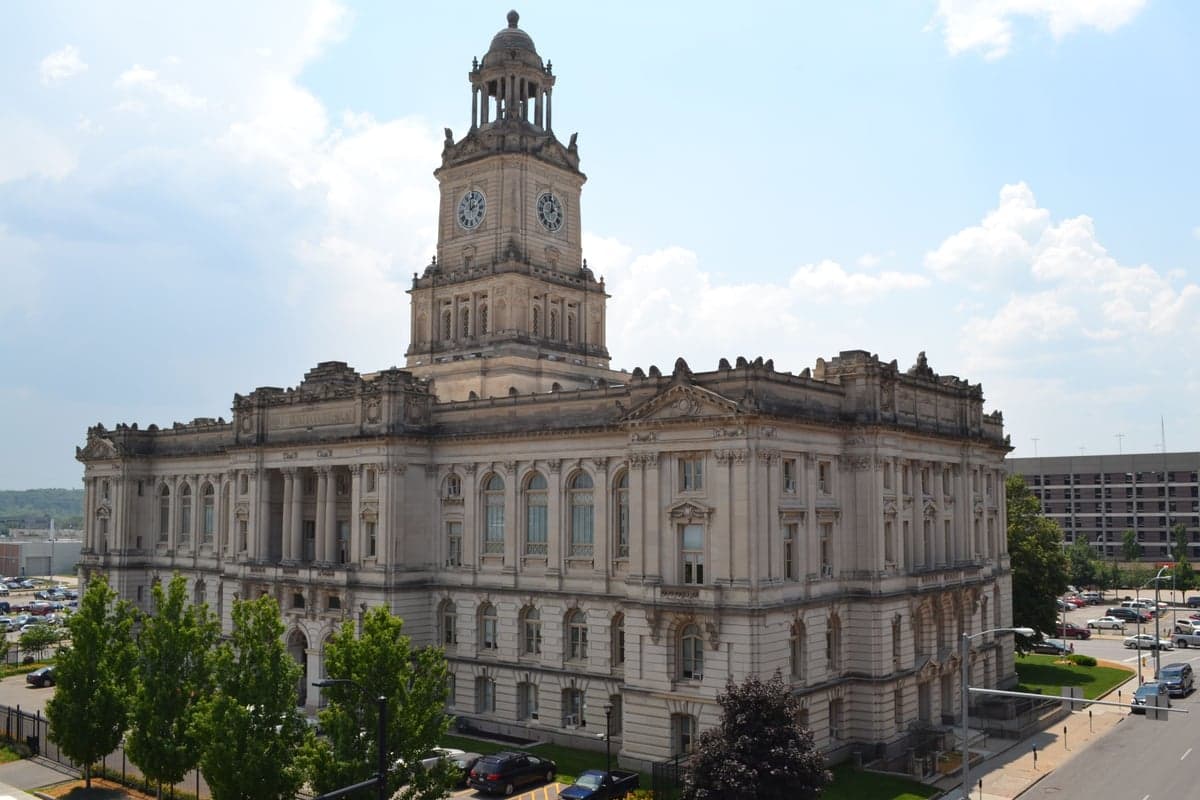
Photo: Wikipedia
Demographics of Polk County
Affluence Level in Polk County
A middle-class area roughly in line with national averages across income, home values, education, and employment.
People of Polk County
Polk County, Iowa, is home to nearly 500,000 residents, making it the state’s most populous and economically dominant county. Its population is character is defined by a blend of Midwestern stability and steady metropolitan growth, anchored by the state capital, Des Moines. The population is predominantly white (74.1%) but has become notably more diverse over the past three decades, with a Hispanic population of 10.0%, a Black population of 7.4%, and growing East/Southeast Asian (3.7%) and Indian (1.1%) communities. The county’s identity is shaped by its role as a government, insurance, and finance hub, attracting a college-educated workforce (39.5%) while retaining a strong sense of local, family-oriented community.
Settlement & growth (pre-1960)
Before American settlement, the land that is now Polk County was inhabited by the Sauk and Meskwaki (Fox) nations, who used the area for hunting and seasonal camps along the Des Moines and Raccoon Rivers. The first permanent American presence came with the 1843 treaty that opened the region to Euro-American settlement. Fort Des Moines was established in 1843 at the confluence of the two rivers, and the city was officially platted in 1846, the same year Iowa became a state. The county was named after President James K. Polk, reflecting the expansionist spirit of the era.
The first major wave of settlers were Yankees from New England and New York, who arrived in the 1840s and 1850s, establishing the town of Des Moines as a political and commercial center. They were soon joined by German immigrants, who formed a significant community in the northern part of the county, particularly in the towns of Ankeny and Altoona, where they worked as farmers and craftsmen. Irish immigrants also arrived in the 1850s and 1860s, many finding work on the railroads and in the growing city of Des Moines, settling in neighborhoods like the near south side. A smaller wave of Scandinavian immigrants, mostly Swedes and Norwegians, settled in rural areas around Grimes and Johnston in the late 19th century, drawn by agricultural opportunities.
The late 19th and early 20th centuries saw the arrival of Southern and Eastern European groups, including Italians and Poles, who clustered in Des Moines’ industrial and working-class neighborhoods, such as the East Side and the area around the state capitol. The Great Migration of African Americans from the South began in earnest during World War I and accelerated through the 1940s, as Black families moved to Des Moines for jobs in meatpacking, manufacturing, and the railroads. This community concentrated in the King-Irving and River Bend neighborhoods of Des Moines. The Dust Bowl of the 1930s also brought a smaller number of white migrants from Oklahoma and Arkansas, who settled in the county’s rural fringes and working-class suburbs.
Modern era (post-1965)
The 1965 Hart-Cellar Act fundamentally reshaped Polk County’s demographics, though the changes were gradual compared to coastal regions. The first significant post-1965 immigrant group was the Vietnamese, who arrived as refugees after the fall of Saigon in 1975. They established a small but resilient community in Des Moines, particularly in the Beaverdale and Merle Hay areas, working in manufacturing and starting family-owned restaurants and nail salons. A second wave of Southeast Asian refugees, including Lao and Hmong families, arrived in the 1980s, settling in Des Moines and Urbandale.
Hispanic immigration accelerated in the 1990s and 2000s, driven by demand for labor in construction, meatpacking, construction, and agriculture. The majority of this population is of Mexican origin, with smaller numbers from Central America. They have formed a vibrant community in Des Moines’ South Side and in the suburbs of West Des Moines and Clive, where Spanish-language businesses, churches, and cultural centers are now common. The Hispanic population grew from roughly 2% in 1990 in 1990 to 10.0% today, making it the county’s largest minority group.
Domestic migration has also reshaped the county. Since the 1980s, Polk County has attracted a steady stream of white and Black professionals from the Rust Belt states of Illinois, Ohio, and Michigan, drawn by the region’s relatively strong economy and lower cost of living. This in-migration has fueled suburban expansion, with Ankeny and Waukee emerging as the fastest-growing cities in the county. Ankeny’s population has more than quadrupled since 1990, reaching over 70,000, while Waukee has grown from a small farm town to a suburb of over 25,000. These suburbs are predominantly white and family-oriented, with high homeownership rates and strong school systems.
The East/Southeast Asian community (3.7%) has grown more recently, driven by professionals in the insurance and finance sectors. Chinese, Korean, and Indian families have settled in West Des Moines and Johnston, often in newer subdivisions near corporate campuses. The Indian community is distinct from the Indian subcontinent population (1.1%), which is smaller but also professional, with many working in healthcare and technology. Both groups are highly educated and tend to integrate into the broader suburban culture rather than forming dense ethnic enclaves.
The future
Polk County’s population is projected to continue growing, driven by both domestic in-migration and natural increase among younger families. The county is not tribalizing into distinct ethnic enclaves; rather, it is suburbanizing into a relatively integrated, if still predominantly white, metropolitan area. Hispanic and Black populations are growing but are spread across the county, with no single group dominating any one suburb. The East/Southeast Asian and Indian communities are small and professional, and are likely to assimilate into the broader middle-class culture rather than forming separate enclaves.
The biggest demographic shift on the horizon is the aging of the white population, which is older on average than the Hispanic and Black populations. This will gradually increase the county’s diversity over the next two decades, as younger minority families have more children and the older white cohort passes on. The suburbs of Ankeny, Waukee, and Bondurant will continue to absorb most of the growth, while the city of Des Moines itself may see a modest revival of its urban core as young professionals seek walkable neighborhoods.
For someone moving to Polk County now, the region offers a stable, family-friendly environment with a growing but manageable level of diversity. The cultural identity remains Midwestern and conservative-leaning, but the influx of professionals from other states and the growth of immigrant communities are slowly broadening the county’s social and political landscape. The next 10-20 years will likely see a continuation of this trend: a slow, steady diversification of the population, but within a framework that remains anchored by the county’s historic white, Protestant, and agricultural roots.

* Values derived from national, state, county, city and local statistics and may differ in a specific area. Last updated: 2026-05-19T05:11:42.000Z
Narrative content on this page is AI-generated and may contain mistakes. Verify any details that matter before acting on them.
ReloMaps may earn a commission from affiliate links at no extra cost to you.

