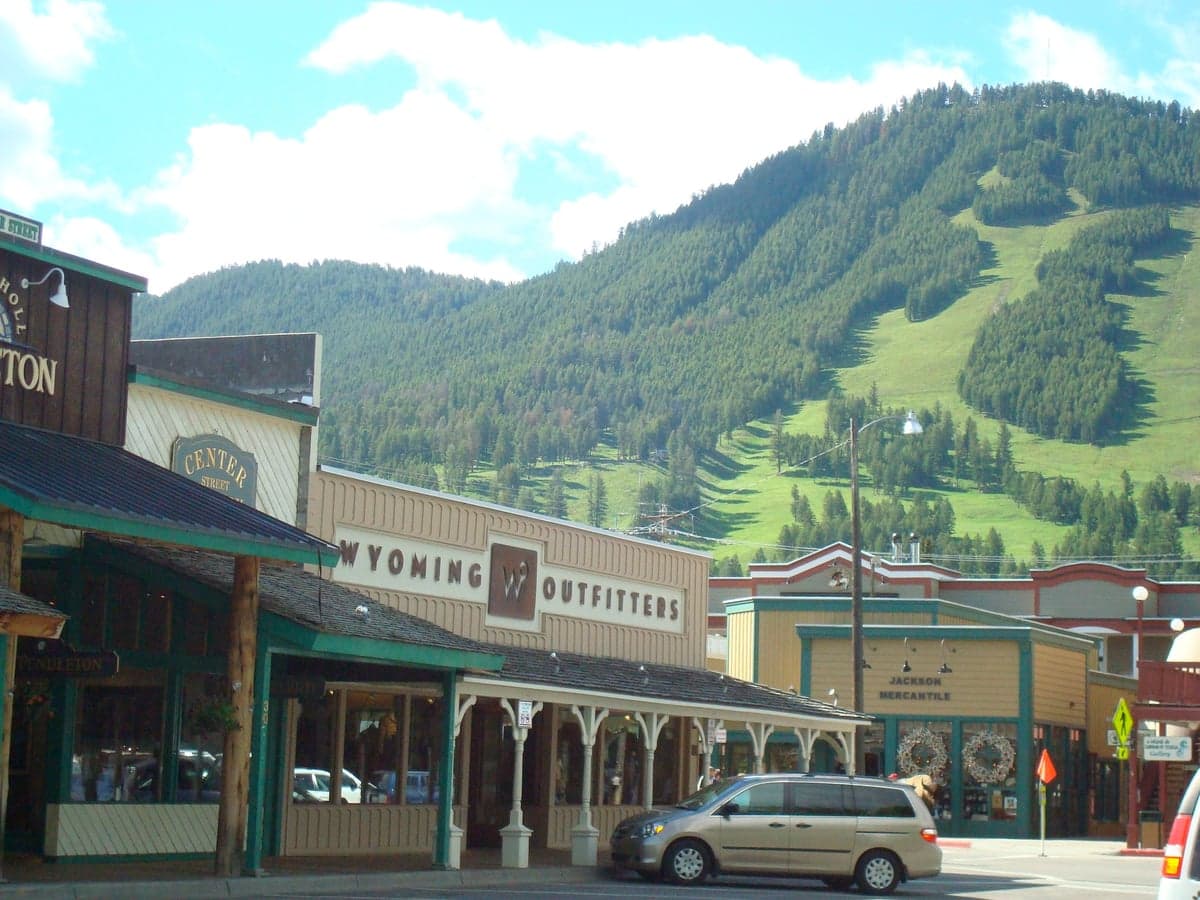
Photo: Wikipedia
Strategic Assessment of Jackson, WY
Workable tactical position. Some exposure to population density or targets, but generally defensible in a crisis.
What does the Strategic Assessment tell us?
Our Strategic Assessment grades tactical survivability of an area. Major population centers, military targets, fallout zones, natural disasters, and border exposure all drive risk — lower exposure means a more defensible position in a crisis.
This is heavily inspired by Joel Skousen's Strategic Relocation book. Highly recommended you checkout the book ($)What does this tell us?
Our Strategic Assessment grades tactical survivability of an area. Major population centers, military targets, fallout zones, natural disasters, and border exposure all drive risk — lower exposure means a more defensible position in a crisis.
This is heavily inspired by Joel Skousen's Strategic Relocation book. Highly recommended you checkout the book ($)Strategic Pillars

Key Distances
Regional Safe Places
Below is our recommended "safe zones" in Wyoming and the surrounding area based on our strategic heuristics. For most people, it's unrealistic to live in a “safe zone” full-time due to work, family or other personal reasons. They tend to be more rural. However, many of these areas are perfect for second homes and retreat properties that double as a vacation home or even a short-term rental.
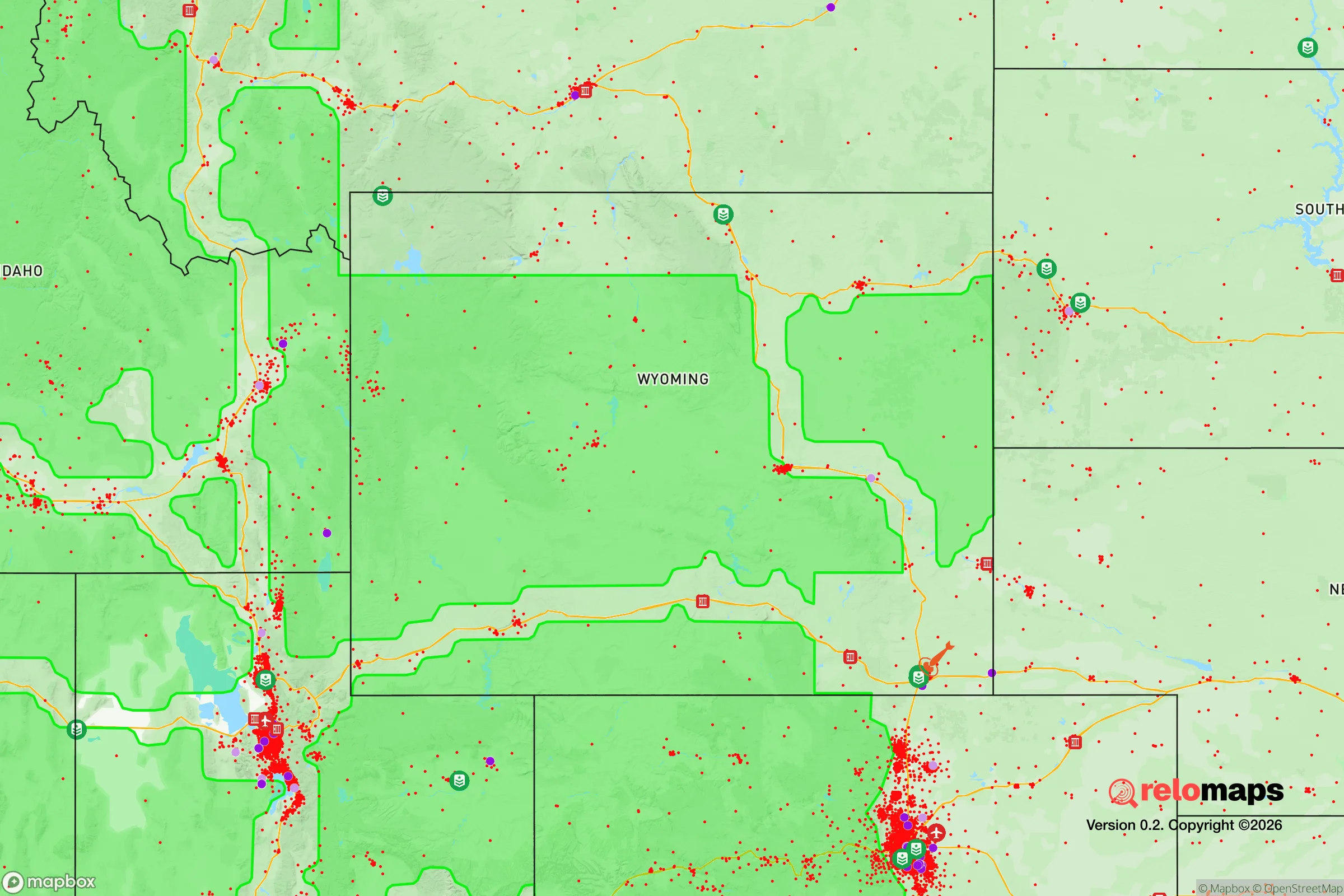
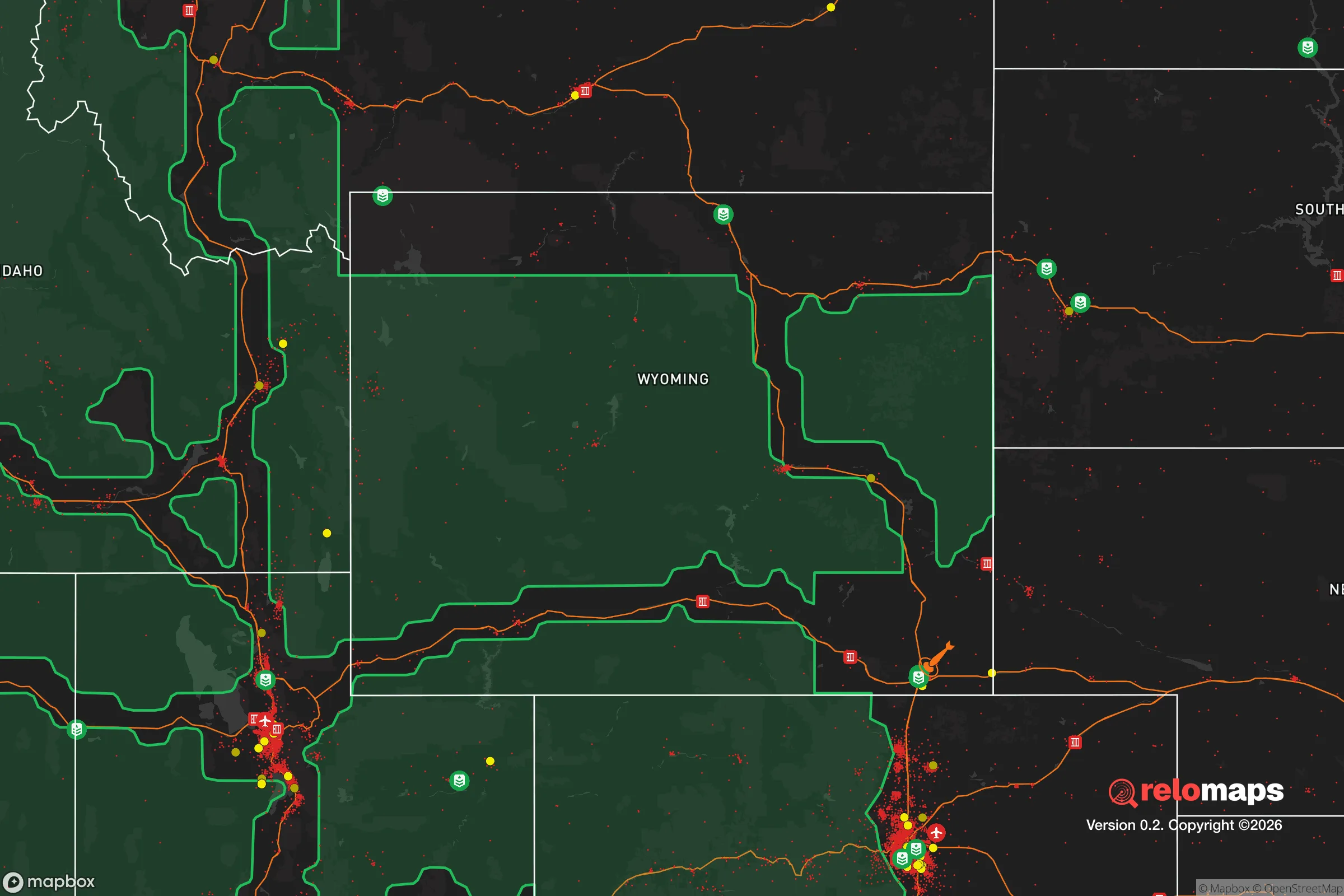


Important Note: For informational purposes only. This does not mean nothing bad ever happens in the green zones. Please use common sense. This is based on public data and modeled with AI. We tried to take a conservative approach but mistakes happen. We update this regularly as new information becomes available.
Solar Generator Recommendations
Backup power matters more here than in safer locations. We've picked three solar generators across budgets and capacity tiers — start with the budget unit if you only need a few essentials, or step up if you want to run a fridge and HVAC for days at a time.

Jackery Portable Power Station Explorer 300
Budget OptionPower on the Go: Weighing only 11 lbs, it's convenient to set up and store with book-sized foldable solar panels

BLUETTI Portable Power Station AC180
Designed for both indoor and outdoor scenarios, AC180 is highly capable as it has a robost capacity and continuous output power.

EF ECOFLOW DELTA Pro Ultra Power Station
Upgraded PickEcoFlow DELTA Pro Ultra is a whole-home energy system designed to grow with your family. Integrated with the Smart Home Panel 2, it scales to meet your evolving energy needs — keeping your home powered, intelligent, and secure through every stage of life.
We earn a commission, at no additional cost to you.
Strategic Assessment Analysis
Jackson, Wyoming, sits in a unique strategic position that combines extreme natural beauty with serious logistical challenges for anyone thinking long-term about resilience. The valley is a natural fortress, but that fortress comes with single points of failure that could turn it into a trap. For a relocator with a prepper mindset, Jackson offers genuine advantages in defensibility and resource isolation, but only if you understand the specific vulnerabilities baked into its geography and infrastructure. This isn't a place you can just show up and survive; it demands a plan.
Geographic position and natural advantages for long-term security
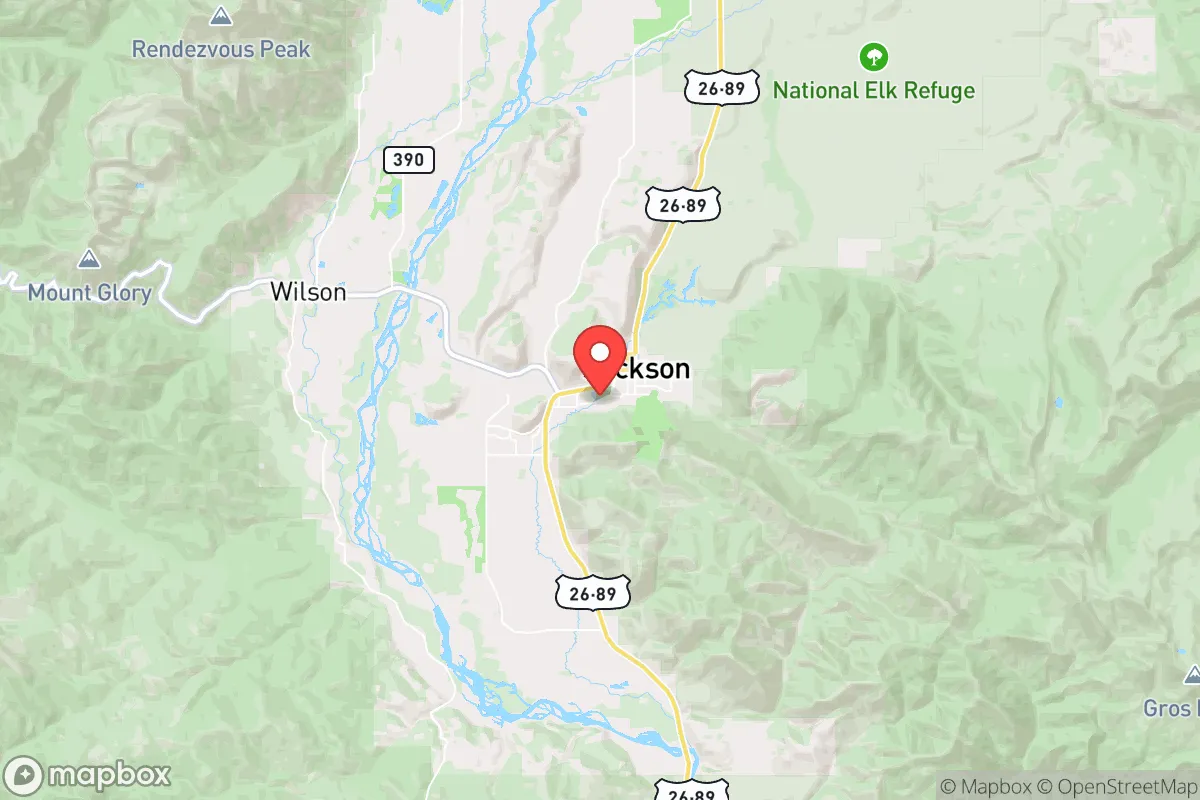
Jackson Hole is a high-altitude valley ringed by the Teton and Gros Ventre mountain ranges, with only a handful of road corridors in and out. The primary access routes are US-89/191 through the Snake River Canyon to the south, and US-26/287 over Togwotee Pass to the east. Both are narrow, winding, and easily blocked by a single accident, avalanche, or deliberate action. From a defensive standpoint, that's a feature, not a bug. The valley's natural bowl shape means you can monitor approach routes from multiple high points, and the surrounding national forest and wilderness areas provide vast, unpopulated buffer zones. The area sits far from any major metropolitan center—over 275 miles from Salt Lake City, the nearest large city—which drastically reduces exposure to the kind of cascading infrastructure failures that hit dense urban cores during a crisis. The local water supply is robust, fed by snowmelt from the Tetons and the Gros Ventre watershed, and the Snake River runs through the valley year-round. For a relocator prioritizing resource independence, that's a solid foundation.
Risks, exposures, and proximity to fallout-relevant landmarks
The same isolation that makes Jackson defensible also creates critical exposure points. The valley is a classic "choke point" geography: if the southern route through the Snake River Canyon is compromised, the only other paved exit is over Togwotee Pass, which sits at nearly 9,600 feet and is frequently closed by snow from November through May. In a winter crisis, you could be effectively trapped for weeks. The area is also in seismic zone 3, with the Teton Fault running directly beneath the valley floor. A major earthquake—the kind geologists say happens here every few thousand years—could collapse the canyon road, rupture natural gas lines, and trigger landslides that block every exit. Jackson is also within 100 miles of the Idaho National Laboratory, a major nuclear research facility, and within 200 miles of the Nevada National Security Site. While not immediate fallout zones, prevailing westerly winds could carry particulate matter into the valley in a worst-case scenario. The town itself is a high-profile tourist destination, which means it would attract desperate people during a national emergency—summer population swells to over 30,000, straining local food and fuel supplies even in normal times. For a relocator, the risk isn't the wilderness; it's the crowd that will try to flee into it.
Practical resilience for a relocator: food, water, energy, and defensibility
Jackson's practical resilience is a mixed bag that requires serious advance work. The local growing season is brutally short—only about 60 frost-free days—which means you cannot rely on subsistence agriculture without a greenhouse and cold-frame system. The soil is rocky and alkaline, so raised beds with imported soil are the norm for serious gardeners. Water is plentiful but requires filtration; surface water from the Snake River or its tributaries carries giardia and other pathogens, and well drilling in the valley can cost $15,000 to $30,000 depending on depth and bedrock. Energy is a bright spot: the area has excellent solar exposure despite the latitude, and many off-grid properties already use solar arrays with battery backup. Propane is widely available for heating and cooking, but delivery can be unreliable during heavy snow years. Defensibility is high if you choose your property wisely. The valley has numerous dead-end roads and private lanes that offer natural security, and the surrounding national forest provides a buffer that is difficult to traverse on foot. However, local law enforcement is thin—Teton County has roughly 40 deputies for a county larger than Rhode Island—so in a prolonged crisis, you are largely on your own. The nearest Level 1 trauma center is in Idaho Falls, 90 miles away, and the local hospital, St. John's, is a critical access facility with limited surgical capacity. For a relocator, the calculus is clear: Jackson offers a defensible redoubt with good water and energy potential, but only if you arrive with stored food, medical supplies, and a realistic plan for winter self-sufficiency.
The overall strategic picture for Jackson is one of high reward paired with high maintenance. It is not a place for someone looking for an easy retreat; it demands physical fitness, mechanical aptitude, and a willingness to deal with extreme cold and isolation for months at a time. For a conservative-minded relocator who values self-reliance and wants to be far from the chaos of coastal cities, the valley offers a genuine sanctuary—but only if you treat it as a base camp, not a vacation home. The single greatest threat is not the environment or even the seismic risk; it is the complacency of assuming the area's beauty translates into safety. Jackson will protect you from the masses, but it will not protect you from yourself. If you arrive prepared, with stored supplies, a defensible property, and a community of like-minded neighbors, it is one of the strongest strategic positions in the lower 48. If you arrive expecting the government or the tourist economy to save you, you will be part of the problem.

* Values derived from national, state, county, city and local statistics and may differ in a specific area. Last updated: 2026-04-21T11:34:32.000Z
Narrative content on this page is AI-generated and may contain mistakes. Verify any details that matter before acting on them.
ReloMaps may earn a commission from affiliate links at no extra cost to you.

