 Popular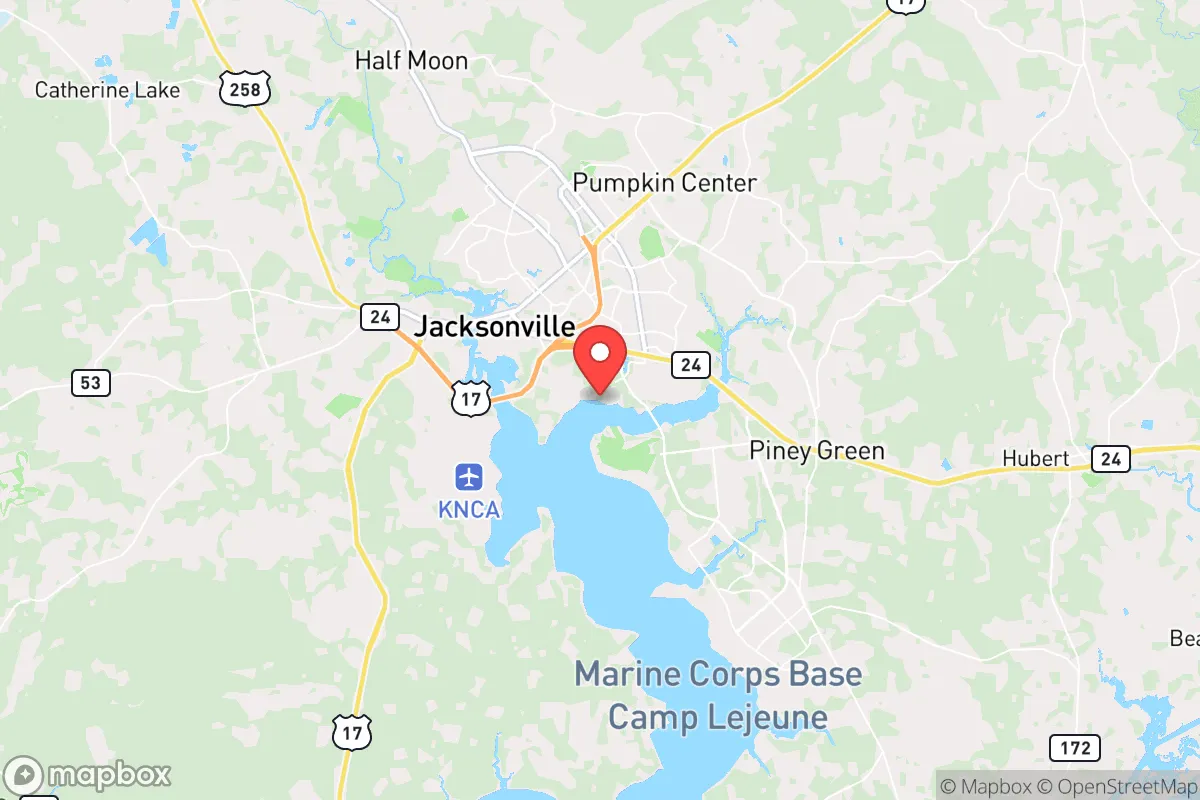
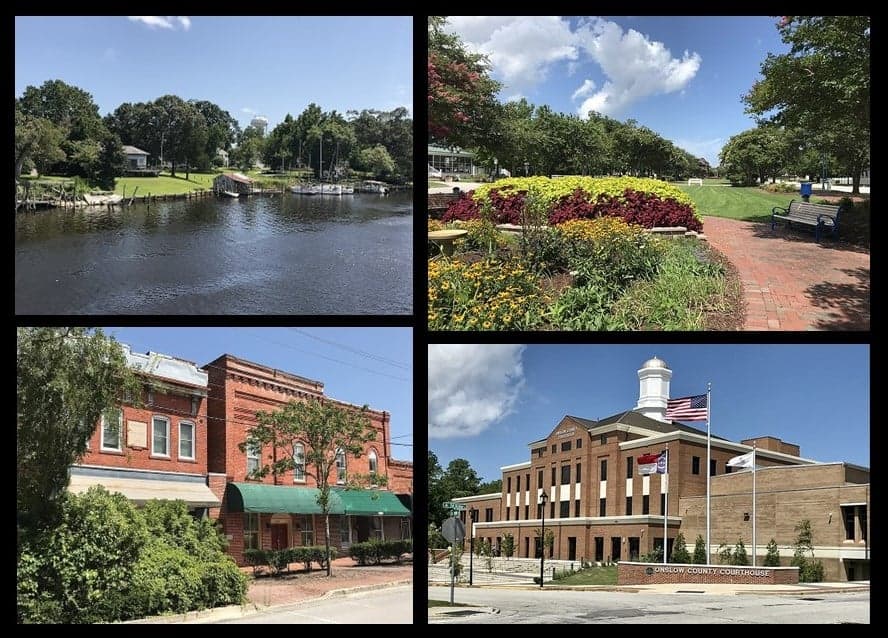
Photo: Wikipedia
Personal Sovereignty in Jacksonville, NC
Viable for self-reliance. Generally workable, though some barriers may limit total independence.
What does Personal Sovereignty tell us?
Personal Sovereignty measures your capacity for self-reliance and independence with minimal government friction. Higher scores mean fewer barriers between you and the way you want to live... but it assumes you have the space you need and good neighbors.
What does this tell us?
Personal Sovereignty measures your capacity for self-reliance and independence with minimal government friction. Higher scores mean fewer barriers between you and the way you want to live... but it assumes you have the space you need and good neighbors.
State Policy
Energy independence: Importer (15% of energy produced in-state)
Personal Liberty
Homesteading

Personal Liberty Analysis
Jacksonville, North Carolina, offers a notably high degree of personal sovereignty compared to many coastal and urban areas, largely due to its military culture, rural-adjacent setting, and North Carolina’s generally permissive state-level framework. For those prioritizing autonomy—whether from government overreach, taxation, or social mandates—this Onslow County hub provides a practical environment where self-reliance is not just tolerated but expected. The presence of Camp Lejeune instills a population accustomed to discipline and personal responsibility, which translates into a local culture that pushes back against unnecessary bureaucratic intrusion. While no location is a libertarian utopia, Jacksonville’s combination of state preemption laws, relatively low regulatory density, and a community that values preparedness makes it a serious contender for those seeking to minimize external control over their lives.
Tax burden and regulatory posture: How much the state and county take
North Carolina operates under a flat income tax rate of 4.5% as of 2026, which is competitive nationally and avoids the progressive brackets that punish higher earners. Onslow County’s property tax rate sits around 0.67% of assessed value, well below the national average, meaning your land and improvements are not a constant target for revenue extraction. Sales tax in Jacksonville is approximately 7%, which is moderate but includes exemptions on groceries and prescription drugs—a practical nod to keeping necessities affordable. The state’s regulatory posture is business-friendly, with right-to-work laws and limited occupational licensing burdens compared to states like California or New York. For the survivalist or prepper, this means fewer hoops to jump through when starting a side business, storing supplies, or modifying your property. However, be aware that North Carolina does have a state building code that applies even in rural areas, so off-grid construction may require permits and inspections—though enforcement in unincorporated parts of Onslow County is often lax compared to city limits. The key takeaway: the tax burden here is manageable, and the regulatory climate does not actively work against personal initiative.
Self-defense and gun law specifics: What you can carry and where
North Carolina is a shall-issue state for concealed carry permits, meaning if you meet the basic requirements—background check, fingerprinting, and an 8-hour training course—the sheriff’s office must issue the permit. There is no discretionary denial based on an official’s opinion. Open carry is legal without a permit for anyone who can legally possess a firearm, which is a significant advantage for those who prefer not to jump through bureaucratic hoops. Jacksonville itself is surrounded by military installations, so gun culture is deeply embedded; you will find multiple gun shops, ranges, and a community that treats the Second Amendment as a non-negotiable right. Stand-your-ground laws are in effect, with no duty to retreat in any place you have a lawful right to be. Castle doctrine applies to your home and vehicle. One practical consideration: because of Camp Lejeune, there are federal restrictions on carrying firearms onto the base itself, but that is a federal matter, not a local infringement. For daily life in Jacksonville, you can carry openly or concealed (with permit) in most public spaces, including restaurants that serve alcohol (as long as you are not drinking). Magazine capacity is not restricted, and there is no state-level assault weapons ban. This is a jurisdiction that respects the right to keep and bear arms without the constant erosion seen in blue states.
Self-reliance and homesteading viability: Lot sizes, zoning, and off-grid feasibility
Jacksonville’s zoning is a mixed bag depending on whether you are inside city limits or in the unincorporated county. Inside the city, standard residential lots are typically a quarter-acre or less, and the city enforces codes on structures, setbacks, and even grass height—so full-scale homesteading is not practical. However, the real opportunity lies in the surrounding areas of Onslow County, particularly toward Richlands, Hubert, or along Highway 17 north of town. Here, you can find parcels of 1 to 5 acres at prices that are still reasonable by national standards—often under $20,000 per acre. Zoning in these areas is agricultural or rural residential, which permits livestock, gardens, and outbuildings without the need for endless variances. Off-grid feasibility is moderate: the climate is temperate enough for solar panels to be effective year-round, and well water is common in rural areas. However, North Carolina does require septic systems to be permitted and inspected, and the state has some of the stricter well-drilling regulations in the Southeast. Rainwater collection is legal but must not create a nuisance. For the prepper, the biggest hurdle is not the law but the hurricane risk—Jacksonville is in the coastal plain, so any off-grid setup must account for storm hardening and flood elevation. Overall, if you are willing to live 15–20 minutes outside of town, you can achieve a significant degree of self-sufficiency without constant government interference.
Personal liberties: Parental rights, medical autonomy, speech, and property
North Carolina has a strong track record on parental rights, with laws that affirm parents’ authority over their children’s education, healthcare, and upbringing. The state does not have a universal vaccine mandate for schoolchildren—exemptions for medical and religious reasons are available—and Jacksonville’s school board has generally resisted controversial curriculum overreach. Medical autonomy is more nuanced: while the state did not impose prolonged lockdowns or vaccine passports during the pandemic, it does have a certificate-of-need (CON) law that restricts the number of healthcare facilities, which can limit your options for alternative or direct-primary care. On speech and assembly, North Carolina is a solidly First Amendment-friendly state, with no hate-speech laws that criminalize opinion, and Jacksonville’s public spaces are open for lawful protest or expression without the permit hurdles seen in larger cities. Property rights are protected by state law, including the right to use your land for lawful purposes without excessive zoning overlays. One notable liberty: North Carolina is a “Dillon’s Rule” state, meaning local governments only have powers explicitly granted by the state, which limits city councils from passing overreaching ordinances on things like short-term rentals or backyard chickens without state authorization. For the conservative-minded individual, this means your rights are generally protected from local activist agendas.
In the broader landscape of American personal sovereignty, Jacksonville ranks favorably—especially when compared to the Pacific Northwest, the Northeast corridor, or California. The military presence creates a culture of preparedness and mutual respect for firearms, the tax burden is manageable, and the regulatory environment does not actively punish self-reliance. The main trade-offs are the hurricane risk and the need to live outside city limits for serious homesteading, but these are logistical challenges, not sovereignty violations. For a single individual or family looking to live with minimal government intrusion while maintaining access to jobs, healthcare, and community, Jacksonville represents a solid, no-nonsense option in a country where such places are becoming harder to find.

* Values derived from national, state, county, city and local statistics and may differ in a specific area. Last updated: 2026-05-03T20:24:53.000Z
Narrative content on this page is AI-generated and may contain mistakes. Verify any details that matter before acting on them.
ReloMaps may earn a commission from affiliate links at no extra cost to you.

