 Popular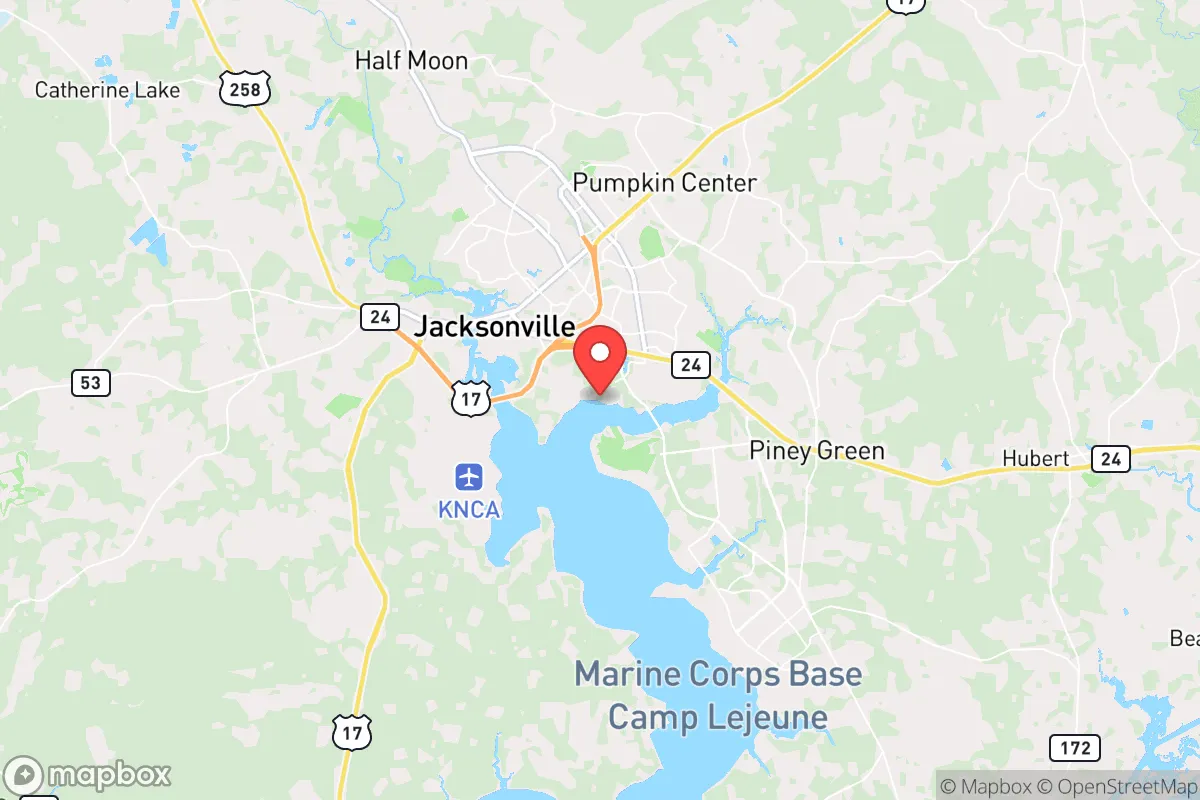
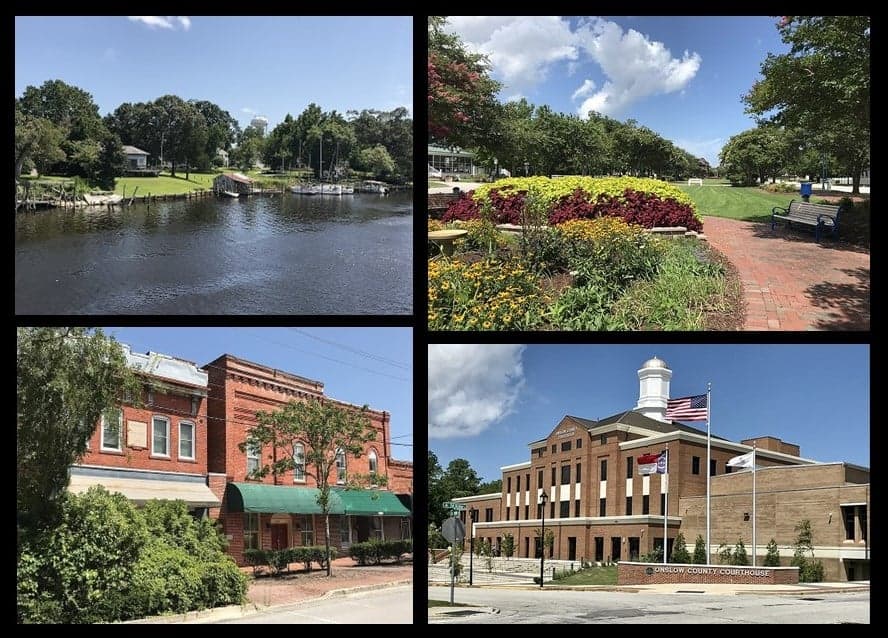
Photo: Wikipedia
Political ClimatePolitical Climate in Jacksonville, NC
District shown is the primary district for this city’s centroid. Cities may span multiple districts.
Local Political AnalysisPolitical Analysis of Jacksonville, NC
Jacksonville, North Carolina, has long been a solidly conservative community, and that hasn't changed much. The Cook PVI rating of R+10 tells you the story right off the bat—this is a place where Republican candidates can reliably count on winning by a comfortable margin. But it’s not just about the numbers; it’s about the culture. The heavy presence of Camp Lejeune means you’ve got a population that’s deeply tied to the military, national security, and a sense of duty. That naturally leans folks toward valuing personal responsibility, limited government, and a healthy skepticism of federal overreach. You don’t see a lot of hand-wringing about progressive social experiments here; people are more concerned with keeping the streets safe, the schools decent, and the taxes low.
How it compares
Drive 45 minutes west to Fayetteville, and you’ll find a similar military-heavy demographic, but it’s a little more mixed politically—still red, but not as deep. The real contrast is if you head east toward the coast, say to Wilmington or the beach towns. Those areas have seen an influx of retirees and out-of-state transplants, and they’ve gotten noticeably more purple over the last decade. Jacksonville, though? It’s held steady. The surrounding Onslow County is even more conservative than the city itself, with rural communities that vote like clockwork for the GOP. The only real pocket of blue you’ll find is around the university, but that’s a small bubble. For the most part, if you’re looking for a place where your vote actually counts for something—and where you won’t feel like a stranger in your own town—Jacksonville is still that place.
What this means for residents
For the people who live here, the political climate translates into a pretty straightforward daily life. You’re not going to see the city council trying to impose radical zoning laws or push for “equity” initiatives that sound good on paper but end up costing you money and freedom. The local government tends to take a hands-off approach: keep the roads paved, the water clean, and the cops funded. There’s a real sense that your personal choices—whether it’s how you raise your kids, what you do on your property, or how you spend your paycheck—are your own business. That’s a big deal for military families who already deal with enough federal bureaucracy. The downside? If you’re hoping for a lot of public transit or bike lanes, you’ll be disappointed. But most folks here would rather have lower taxes and fewer regulations than a government that tries to micromanage their lives.
One thing that’s worth keeping an eye on is the slow creep of progressive influence from the state level. Raleigh has been pushing some policies—like expanded voting by mail and certain DEI mandates in schools—that don’t sit well with the local vibe. So far, Jacksonville has resisted the worst of it, but it’s a reminder that you can’t take your freedoms for granted. The long-term outlook is cautiously optimistic: as long as the military presence stays strong and the transplants don’t flood in like they have in other coastal towns, this area will likely remain a conservative stronghold. It’s not flashy, but it’s stable, and that’s exactly how most residents like it.

State Political ClimatePolitical Climate in North Carolina
State Political AnalysisPolitical Environment in the State
North Carolina has long been the quintessential swing state of the Southeast, but over the last 10-20 years, it has settled into a reliably red-leaning posture, though by a razor-thin margin. The state voted for Donald Trump in both 2016 and 2020 by roughly 1.3 points, and in 2024, that margin widened slightly to about 3 points, signaling a slow but real rightward shift driven by in-migration from the Northeast and Midwest. The dominant coalition is a mix of rural conservatives, suburban moderates, and a growing population of fiscally conservative transplants, but the state’s political identity is increasingly defined by the tug-of-war between its booming urban centers and its vast, culturally traditional countryside.
Urban vs. rural divide
The political map of North Carolina is a textbook case of the urban-rural chasm. The state’s three major metros—Charlotte, Raleigh-Durham, and Greensboro-Winston-Salem—are blue islands in a red sea. Mecklenburg County (Charlotte) and Wake County (Raleigh) have grown explosively, adding hundreds of thousands of new residents since 2010, and they vote Democratic by double digits. Durham County is even more progressive, often tipping 80-20 in favor of Democrats. Meanwhile, the rural counties in the east—like Robeson, Columbus, and Bladen—and the mountain counties in the west—like Watauga, Ashe, and Mitchell—are deeply red, often voting 70-30 or higher for Republicans. The real battleground is the suburban ring counties: Union (south of Charlotte), Cabarrus (northeast of Charlotte), and Johnston (southeast of Raleigh) have all shifted rightward as transplants seeking lower taxes and better schools move in. Fayetteville, home to Fort Liberty (formerly Fort Bragg), is a political wildcard: its large military and veteran population leans conservative, but the city itself has a significant minority population that votes Democratic, making it a perennial swing area.
Policy environment
North Carolina’s policy environment is a mixed bag, but it has trended conservative over the last decade. The state has a flat income tax rate of 4.5%, which is being phased down to 3.99% by 2027, making it one of the more tax-friendly states in the region. There is no state tax on Social Security benefits, and the standard deduction is generous. Property taxes are low by national standards, averaging about 0.78% of assessed value. The regulatory posture is business-friendly: North Carolina is a right-to-work state, and the state legislature has consistently resisted expanding Medicaid (though it finally did so in 2023 under a compromise). On education, the state has a robust school choice program, including Opportunity Scholarships that can be used for private school tuition, and a growing charter school sector. HB 2, the 2016 “bathroom bill,” was a flashpoint that cost the state billions in lost business, but it was repealed in 2017 and replaced with a compromise that left local governments unable to pass their own non-discrimination ordinances—a win for conservatives who wanted to prevent progressive city councils from imposing mandates. Election laws are moderately restrictive: voter ID is required (passed in 2018, implemented in 2023), and early voting is generous (17 days). The state has not gone as far as Georgia or Texas on election integrity, but it has tightened absentee ballot rules and banned ballot harvesting.
Trajectory & freedom
On the freedom front, North Carolina has been a net positive over the last five years, but there are warning signs. The biggest win for personal liberty was the 2023 expansion of gun rights: the legislature overrode Governor Roy Cooper’s veto to pass SB 41, which eliminated the requirement for a permit to purchase a handgun (permitless carry for concealed weapons was already law). This was a major rollback of government overreach. On parental rights, the state passed the Parents’ Bill of Rights (HB 755) in 2023, requiring schools to notify parents of any changes in a child’s health or well-being, including gender identity or sexual orientation—a direct challenge to progressive school districts like those in Chapel Hill and Durham. Medical autonomy saw a setback: the state’s 12-week abortion ban (with exceptions for rape, incest, and life of the mother) was passed in 2023, which conservatives see as a protection of life but some libertarians view as government overreach. Property rights remain strong: North Carolina is a “Dillon’s Rule” state, meaning local governments have only the powers explicitly granted by the state, which has prevented cities like Asheville and Raleigh from enacting rent control or aggressive zoning mandates. The biggest threat to freedom is the state’s growing debt burden—the pension system is underfunded by about $30 billion—which could force future tax hikes.
Civil unrest & political movements
North Carolina has seen its share of political flashpoints, but nothing on the scale of Portland or Seattle. The 2020 protests in Charlotte and Raleigh over George Floyd’s death were large but largely peaceful, though there were isolated incidents of looting and property damage. The most organized activist movement on the left is the Moral Monday movement, which has been staging protests at the state legislature since 2013 over voting rights, Medicaid expansion, and education funding. On the right, the NC GOP and grassroots groups like NC Values Coalition have been effective at mobilizing around school choice and parental rights. Immigration politics are relatively quiet compared to border states: North Carolina has no sanctuary cities, and the state legislature passed a law in 2015 (HB 318) requiring sheriffs to honor ICE detainer requests. The most visible flashpoint for a new resident would be the ongoing battle over school curriculum: in 2023, the state board of education adopted new social studies standards that emphasize “critical thinking” over “critical race theory,” a win for conservatives. Election integrity remains a hot topic: the 2020 election in North Carolina was close but clean, though the state’s voter ID law was challenged in court and upheld in 2023. There is no serious secession or nullification rhetoric here—North Carolinians are too pragmatic for that.
Projection
Over the next 5-10 years, North Carolina is likely to become slightly more conservative, but not dramatically so. The in-migration pattern is key: most new residents are coming from blue states like New York, New Jersey, and California, but they are not all liberals. Many are fiscally conservative families fleeing high taxes and crime, and they are settling in the exurbs of Charlotte and Raleigh, which are already red-leaning. The urban cores will continue to get bluer, but the rural areas will stay deeply red, and the suburbs will shift right. The state’s 16 electoral votes will remain competitive, but the GOP’s structural advantages—gerrymandered congressional maps, a Republican-controlled legislature, and a conservative-leaning state supreme court—mean that policy will continue to trend right. The biggest wildcard is the state’s growing Hispanic population, which is currently voting about 60-40 Democratic but could shift if the GOP continues to make inroads with working-class voters. A new resident moving in now should expect a state that is broadly free, with low taxes, strong gun rights, and a robust school choice system, but with persistent cultural battles over education and medical autonomy in the cities.
For a conservative-leaning individual or family, North Carolina offers a compelling mix: low taxes, strong property rights, and a political system that, while not perfect, has consistently pushed back against progressive overreach. The key is to choose your location wisely—stick to the suburban and exurban counties like Union, Cabarrus, or Johnston, and you’ll find a community that shares your values. Avoid the urban cores of Durham and Chapel Hill unless you’re prepared for a cultural fight. The state is not Texas or Florida in terms of conservative purity, but it’s a solid, stable choice for someone who wants freedom without the chaos of a deep-blue state.
* Values derived from national, state, county, city and local statistics and may differ in a specific area. Last updated: 2026-05-03T20:24:53.000Z
Narrative content on this page is AI-generated and may contain mistakes. Verify any details that matter before acting on them.
ReloMaps may earn a commission from affiliate links at no extra cost to you.

