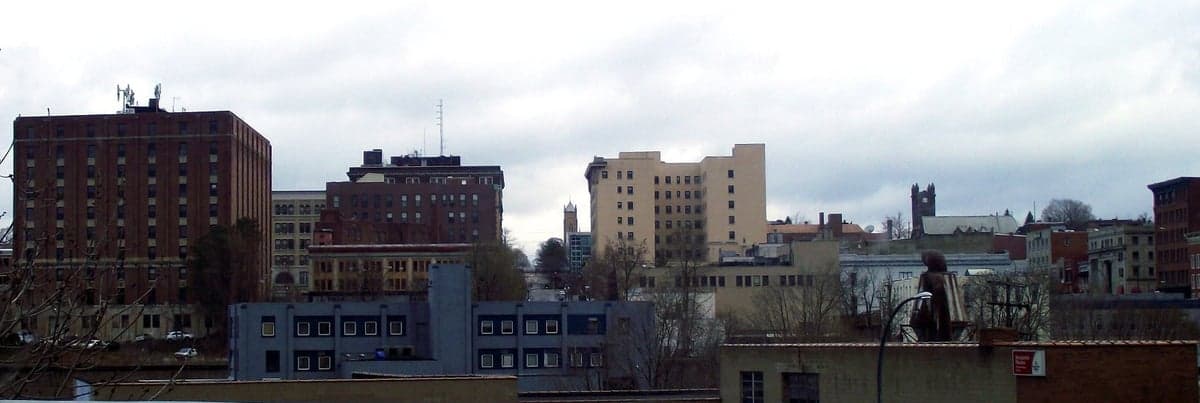
Photo: Wikipedia
Demographics of Jamestown, NY
Affluence Level in Jamestown, NY
A below-average socioeconomic profile. Incomes, home values, and educational attainment trail the U.S., with higher poverty and unemployment.
People of Jamestown, NY
Jamestown, New York, is a city of 28,401 residents that remains predominantly white (77.1%) but has seen notable Hispanic growth (13.5%) in recent decades, giving it a more diverse character than many of its rural neighbors. The city’s population density and compact urban form reflect its industrial-era origins, while a significant share of college-educated residents (23.2%) hints at a modest professional class. Distinctive identity markers include a strong Swedish-American heritage, a working-class ethos rooted in furniture and metalworking, and a small but growing Hispanic community concentrated in specific neighborhoods.
How the city was settled and grew
Jamestown’s founding and early growth were driven by the furniture industry, which drew waves of European immigrants from the mid-19th century through the early 20th century. The city was incorporated in 1827, but its real boom began after the Civil War, when Swedish immigrants arrived in large numbers to work in the burgeoning furniture factories. These Swedish settlers established a strong cultural footprint in the Lakeview and Northside neighborhoods, building churches, social clubs, and a tight-knit community that defined the city’s character for generations. Italian immigrants followed in the 1890s and early 1900s, settling primarily in the Eastside neighborhood, where they worked in the factories and established their own Catholic parishes. A smaller wave of Polish and Irish immigrants also arrived, adding to the city’s ethnic mosaic. By 1930, Jamestown’s population peaked at over 45,000, making it a bustling industrial hub in western New York.
Modern era (post-1965)
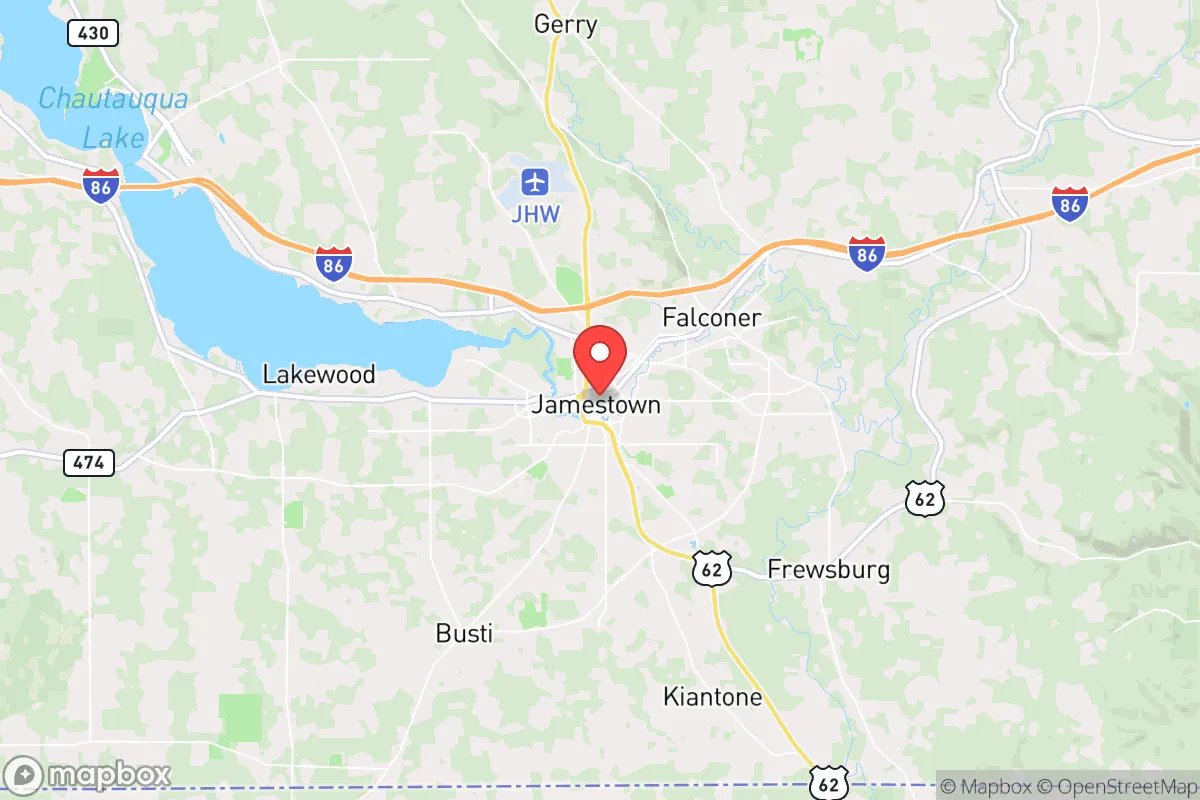
After the 1965 Immigration and Nationality Act, Jamestown saw limited new immigration compared to larger cities, but domestic shifts reshaped its demographics. The decline of the furniture and manufacturing industries after the 1970s triggered a steady population loss, with many white working-class families leaving for the Sun Belt or nearby suburbs. The city’s foreign-born population remains very low at just 1.2%, reflecting its limited appeal to international migrants. However, a growing Hispanic community—now 13.5% of the population—has emerged, with many families settling in the Falconer Street corridor and parts of the Southside neighborhood. This growth is driven by domestic migration from Puerto Rico and other U.S. territories, as well as some direct immigration from Central America. The Black population (3.8%) and East/Southeast Asian population (0.4%) remain small, with no single ethnic enclave dominating. The Indian subcontinent population (0.2%) is negligible. Suburbanization has been limited; most of the city’s housing stock remains in its historic neighborhoods, with newer development concentrated in the Westside near the Chautauqua Mall.
The future
Jamestown’s population is likely to continue its slow decline, with the white majority aging and out-migration persisting among younger adults. The Hispanic community is the only segment showing clear growth, and it is expected to increase its share of the population over the next 10–20 years, potentially reaching 18–20% by 2040. This growth is not creating distinct ethnic enclaves but rather blending into existing neighborhoods, particularly the Southside and Falconer Street areas, where Hispanic-owned businesses and churches are becoming more visible. The city is not tribalizing into separate enclaves; instead, it is slowly homogenizing into a more Hispanic-influenced working-class community. The East/Southeast Asian and Indian populations are expected to remain very small, as Jamestown lacks the professional job base or university presence to attract them. The city’s future demographic trajectory points toward a smaller, older, and more Hispanic population, with the white share declining gradually.
For someone moving to Jamestown now, the city offers a low-cost, quiet environment with a strong sense of local history, but limited ethnic diversity and a shrinking job base. The growing Hispanic community is adding cultural vibrancy to the Southside and Falconer Street areas, while the historic Swedish and Italian neighborhoods retain their character. The city is becoming a more Hispanic-influenced working-class community, but it remains overwhelmingly white and will likely stay that way for the foreseeable future.

* Values derived from national, state, county, city and local statistics and may differ in a specific area. Last updated: 2026-05-01T05:40:29.000Z
Narrative content on this page is AI-generated and may contain mistakes. Verify any details that matter before acting on them.
ReloMaps may earn a commission from affiliate links at no extra cost to you.

