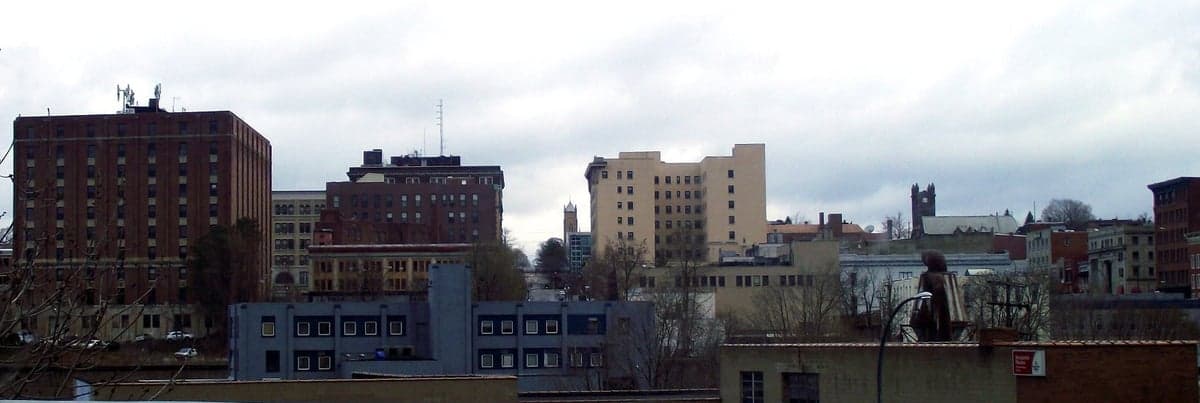
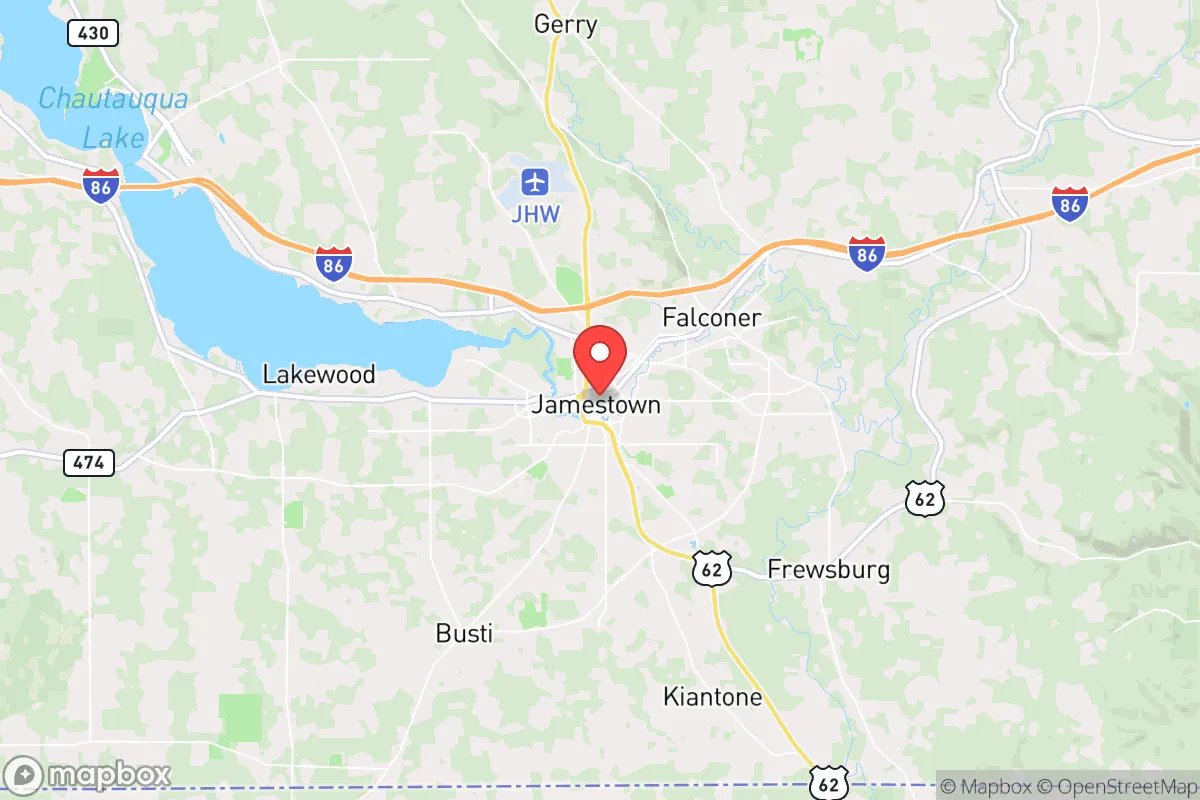
Photo: Wikipedia
Quality of Life in Jamestown, NY
A high quality of life with strong walkability, manageable living costs, healthy neighborhood signals, and solid amenity access.
What does Quality of Life tell us?
Quality of Life blends cost of living, nearby amenities, socioeconomic signals, and neighborhood character. City-level scores represent the whole municipality; individual neighborhoods can differ.
What does this tell us?
Quality of Life blends cost of living, nearby amenities, socioeconomic signals, and neighborhood character. City-level scores represent the whole municipality; individual neighborhoods can differ.
Cost of Living
50% below national average
The Real Cost of Living in Jamestown, NY for 2026
| Tier | Individual | Family (4) |
|---|---|---|
| Survival | $12k | $23k |
| Comfortable | $20k | $30k |
| Luxury | $80k+ | $124k+ |
| Elite (Top 5%) | $94k+ | $146k+ |
150%
The Area Signal
A metric tracking the socioeconomic signals of the area.
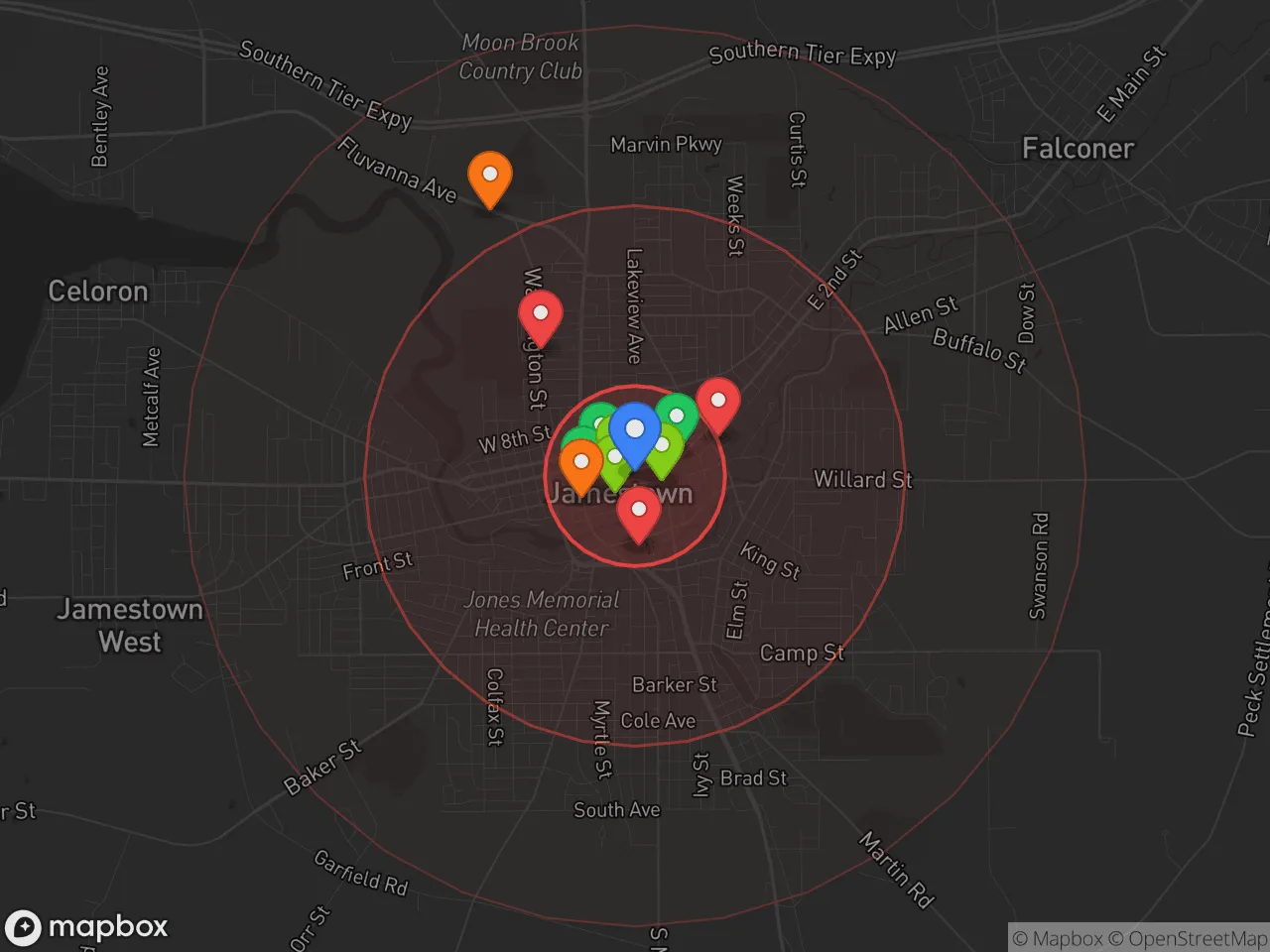
Hobbies
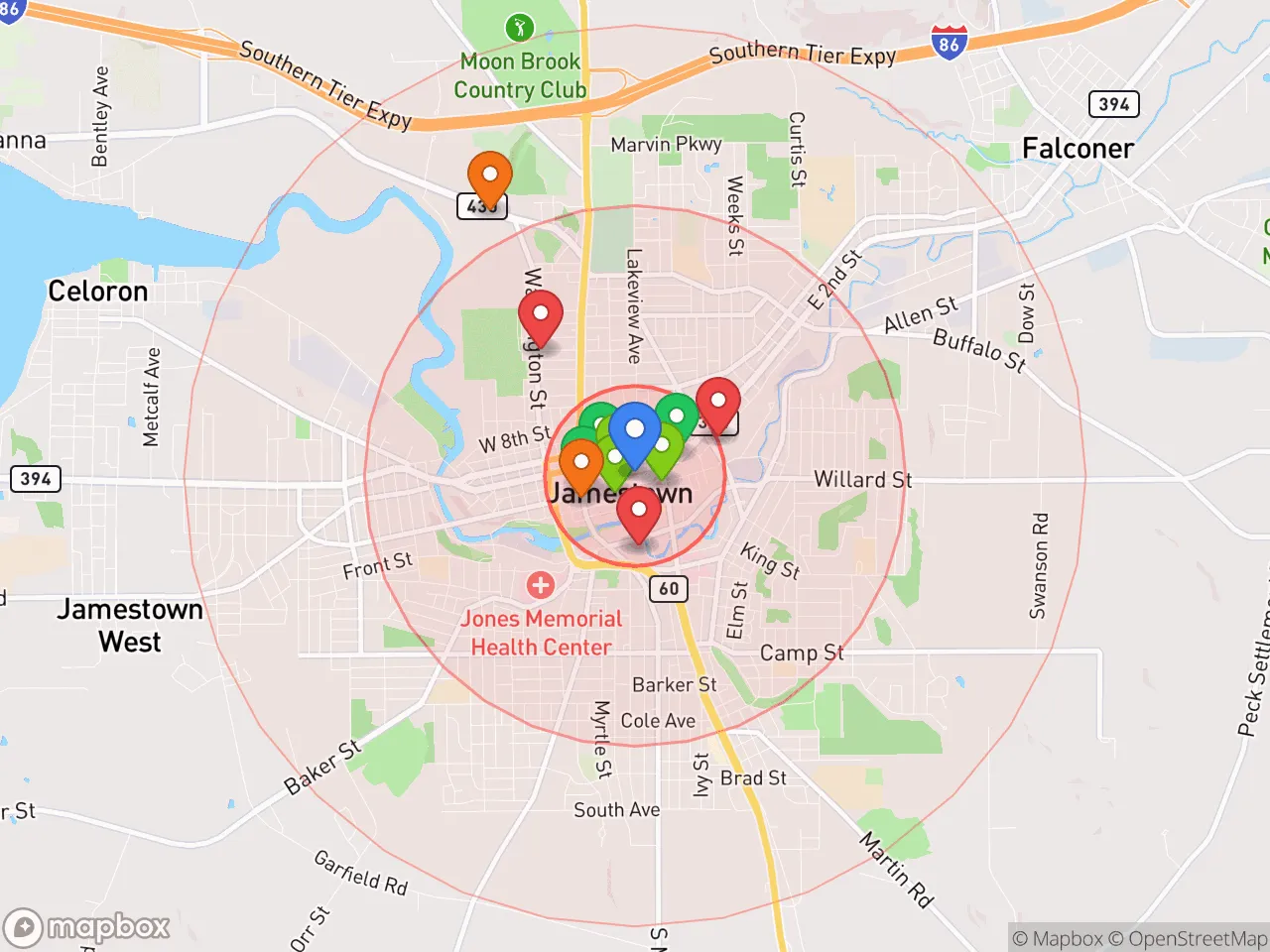
Explore the areaGroceries
4 within 10 miles
Gas
20 within 10 miles
Hospital
4 within 20 miles
Airport
Pittsburgh International Airport
Post Office
USPS — Jamestown, NY
Critical Amenities
Quality-of-Life Analysis
Jamestown, New York, offers a distinctly affordable quality of life that attracts a mix of working-class families, retirees on fixed incomes, and remote workers seeking a low-cost base. The city’s cost of living index sits at 50—half the national average—making it one of the most budget-friendly communities in the Northeast. Residents tend to be long-established locals, with a growing number of newcomers drawn by the area’s quiet pace and proximity to the Chautauqua Lake region.
How housing costs and affordability compare to nearby cities
Jamestown’s housing market is exceptionally accessible. The median home value is $79,100, compared to roughly $200,000 in Buffalo (70 miles north) and $250,000 in Erie, Pennsylvania (40 miles west). Median rent runs $755 per month, well below the national median of $1,200. This affordability extends to utilities and groceries, both of which are 15–20% cheaper than the U.S. average. The average commute is just 14.9 minutes, far shorter than the national average of 26 minutes, meaning less time in traffic and lower transportation costs. For context, a household earning $40,000 annually can comfortably afford a mortgage here, whereas the same income would be stretched thin in Buffalo or Rochester.
What daily life is like for families and professionals
Daily life in Jamestown centers on a compact downtown with local diners, the Reg Lenna Center for the Arts, and the National Comedy Center—a major draw for visitors and residents alike. The Jamestown Public Schools district serves roughly 4,500 students, with a graduation rate near 80%, while private options include the Montessori School of Jamestown. For outdoor recreation, the Chautauqua Institution (20 minutes south) offers summer lectures, concerts, and lake access. Healthcare is anchored by UPMC Chautauqua, a 321-bed hospital. The city’s rhythm is slow and neighborly; most errands can be done within a 10-minute drive. However, retail and dining options are limited compared to larger metros, and residents often travel to Erie or Buffalo for major shopping or specialty medical care.
Jamestown is best suited for those who prioritize low costs and a quiet lifestyle over urban amenities. Remote workers, retirees, and young families on a budget will find the housing and commute times especially appealing. Professionals seeking nightlife, high-end dining, or rapid career growth may feel constrained, but for anyone comfortable with a small-city pace and a strong sense of community, Jamestown delivers a stable, affordable foundation.

Crime in Jamestown, NY
Higher crime rates than 63% of comparable U.S. locations.
Violent CrimeViolent Crime Analysis
Property CrimeProperty Crime Analysis
Crime Analysis
Jamestown, New York, faces a crime challenge that significantly exceeds both state and national averages, with a violent crime rate of 659.1 per 100,000 residents and a property crime rate of 2,516.3 per 100,000. These figures place the city in a concerning position for prospective residents, particularly when considering the broader context of Chautauqua County and the influence of progressive judicial policies in New York State. The data suggests that safety is a primary consideration for anyone evaluating a move to this small city in the western part of the state.
Crime in context
Jamestown's violent crime rate is nearly double the national average of roughly 380 per 100,000 and substantially higher than New York State's overall rate, which is suppressed by New York City's low violent crime numbers. The property crime rate of 2,516.3 per 100,000 also exceeds the national average of approximately 1,950 per 100,000. These statistics are particularly troubling given that Jamestown is a small city (population roughly 28,000) and not a dense urban center. The elevated rates are consistent with trends seen in many upstate New York communities that have experienced economic decline and are subject to the state's broader criminal justice reforms. New York's bail reform laws, enacted in 2019 and subsequently modified, have been criticized for reducing judicial discretion and leading to the release of repeat offenders, a policy approach that directly correlates with higher crime rates in cities like Jamestown. Progressive district attorneys and judges in the region, who often prioritize diversion programs over incarceration, contribute to a cycle where property and violent offenders face minimal consequences, increasing risks for law-abiding residents.
What residents experience
For those living in Jamestown, the daily reality involves a heightened awareness of personal and property security. The violent crime rate translates to a tangible risk of assault, robbery, and aggravated assault, particularly in certain neighborhoods and during late-night hours. Property crime is the more pervasive concern, with theft, burglary, and motor vehicle theft being common occurrences. Residents often report that car break-ins and package thefts are routine, especially in areas near the city's core and along major corridors like Washington Street and Fairmount Avenue. The local police department, while responsive, is stretched thin by the volume of calls. The presence of progressive judicial policies means that even when arrests are made, offenders frequently receive lenient sentences or are released on their own recognizance, eroding public trust in the justice system. This environment creates a sense of impunity among some criminals and a corresponding sense of vulnerability among residents, who may feel that reporting crimes is futile.
Neighborhood-level variation is significant in Jamestown. The most concentrated crime occurs in the central and south-central parts of the city, particularly around the downtown area and the neighborhoods near the Chadakoin River. Areas like the Northside and the more suburban fringes, such as those near the Chautauqua Mall or along the outskirts toward Lakewood, generally experience lower crime rates. However, even in these safer pockets, property crime remains a concern. Prospective residents should prioritize specific street-level research, consulting local police crime maps and speaking with current residents, as block-by-block differences can be stark. The safest choice is often to live just outside the city limits in the surrounding towns of Ellicott, Busti, or Kiantone, where crime rates drop dramatically and the influence of progressive city-level policies is less pronounced.
* Values derived from national, state, county, city and local statistics and may differ in a specific area. Last updated: 2026-05-01T05:40:29.000Z
Narrative content on this page is AI-generated and may contain mistakes. Verify any details that matter before acting on them.
ReloMaps may earn a commission from affiliate links at no extra cost to you.

