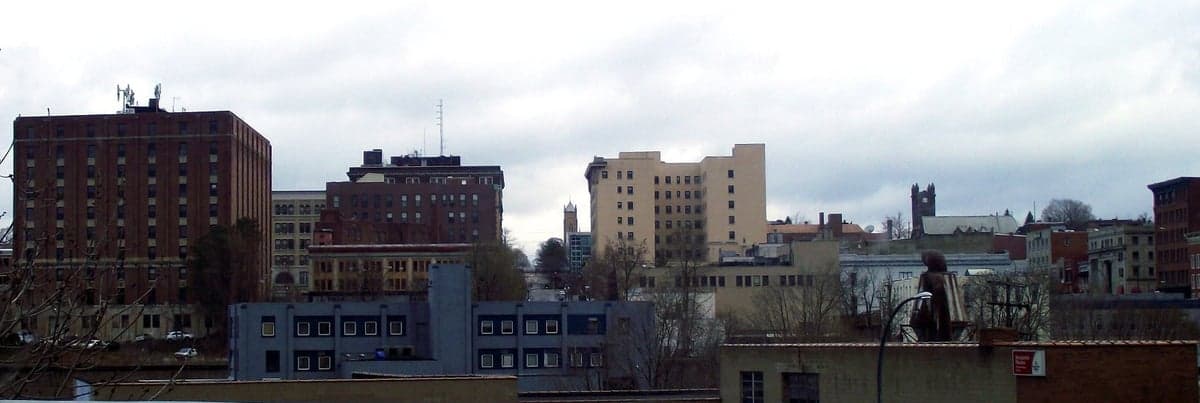
Photo: Wikipedia
Political ClimatePolitical Climate in Jamestown, NY
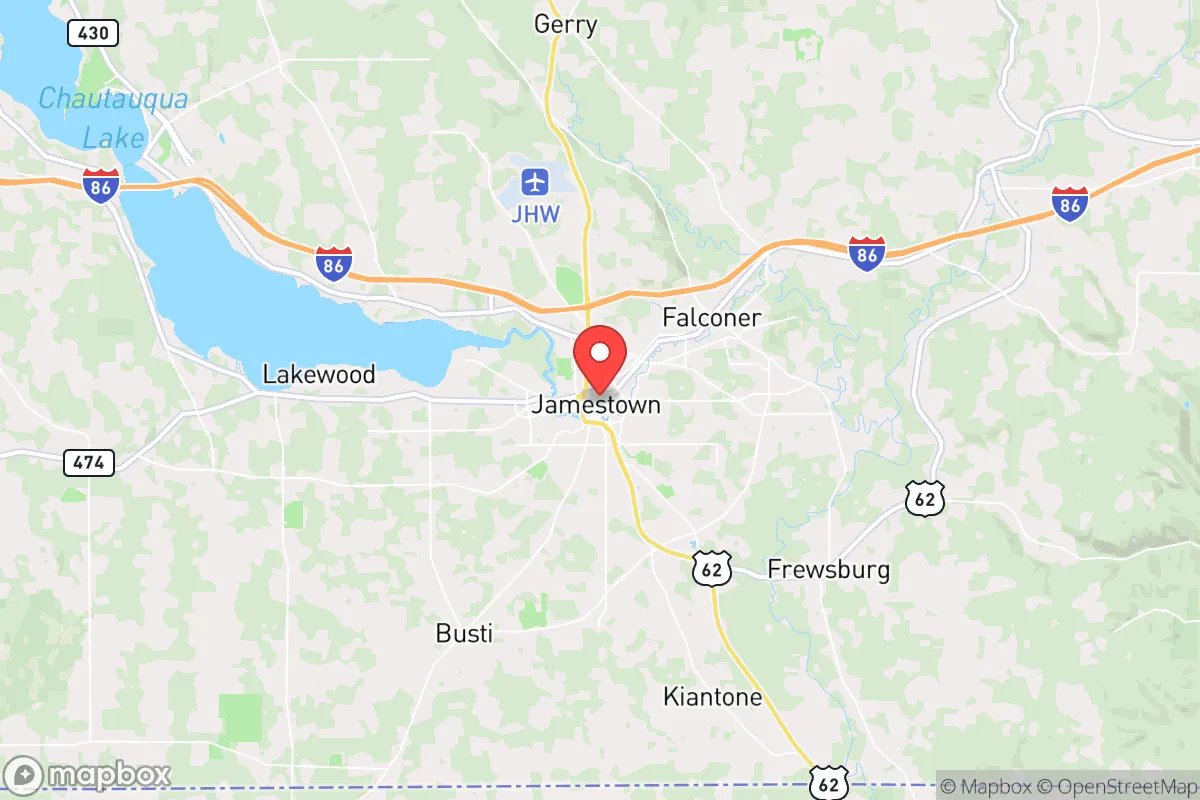
District shown is the primary district for this city’s centroid. Cities may span multiple districts.
Local Political AnalysisPolitical Analysis of Jamestown, NY
Jamestown, New York, has long been a place where folks value their independence and don't take kindly to being told how to live their lives. With a Cook PVI of R+10, the area leans solidly Republican, and that's been the case for a good while now. You can feel it in the air—people here are wary of government overreach, whether it's from Albany or Washington, and they tend to vote accordingly. The trajectory has been a slow but steady shift toward the right, especially as the surrounding rural areas push back against progressive policies that feel out of touch with local values.
How it compares
If you drive just a few miles north to Dunkirk or east to Olean, you'll find a similar conservative bent, though maybe not as pronounced as in Jamestown. The real contrast comes when you head toward Buffalo, about an hour north. Buffalo's been leaning more progressive in recent years, with a lot of talk about social programs and green initiatives that don't always sit well with folks down here. Even within Chautauqua County, the city of Jamestown itself is a bit more moderate than the outlying towns like Ashville or Sherman, where you'll see even stronger Republican turnout. But overall, this area is a red island in a blue state, and that's something residents take pride in—they're not afraid to push back against the Albany agenda.
What this means for residents
For the people living here, the political climate means a lot of things in day-to-day life. First off, there's a strong sense of personal freedom—you're not going to see the kind of strict mandates or heavy-handed regulations that you might in bigger cities. The local government tends to keep its nose out of your business, whether it's about how you run your small business, what you do on your property, or how you choose to educate your kids. That said, there's a growing concern among long-time residents about the creeping influence of progressive ideology, especially in the schools and local media. Some folks worry that if the trend toward more government control continues, it could erode the very freedoms that make this area a great place to raise a family. The near-term outlook is stable, but the long-term depends on whether the community can hold the line against outside pressures.
One thing that sets Jamestown apart is its cultural conservatism—you'll find a lot of churches, a strong hunting and fishing tradition, and a general skepticism of anything that feels like a top-down solution. The local policy debates often revolve around property taxes, land use, and keeping the government out of healthcare choices. There's also a notable distrust of the state's gun laws, which many see as an infringement on Second Amendment rights. If you're looking for a place where you can live your life without a lot of interference, Jamestown fits the bill. But keep an eye on the school board meetings and local elections—that's where the real battles over personal freedoms are playing out, and it's worth staying involved if you want to keep things on the right track.

State Political ClimatePolitical Climate in New York
State Political AnalysisPolitical Environment in the State
New York State has been a reliably blue stronghold for decades, but the political reality on the ground is far more fractured than the statewide numbers suggest. The Democratic coalition dominates thanks to a massive population advantage in New York City and its immediate suburbs, while the rest of the state—particularly Upstate—has been trending redder or at least purple. Over the last 20 years, the state has shifted from a moderate blue to a deep progressive blue, driven by the city’s growing leftward tilt and a series of one-party rule policies that have alienated rural and suburban voters. If you’re considering a move here, you need to understand that the political climate is not one-size-fits-all; it’s a tale of two states.
Urban vs. rural divide
The political map of New York is essentially a battle between the five boroughs of New York City and everything else. Manhattan, Brooklyn, and the Bronx are among the most progressive jurisdictions in the country, routinely voting 80-90% Democratic. Buffalo and Rochester lean blue but are more moderate, while Albany is a government-town bubble. The real action is in the suburbs and rural areas. Long Island’s Nassau and Suffolk counties have flipped from swing to reliably red in recent cycles, driven by backlash against progressive criminal justice reforms and high taxes. Upstate, counties like Erie (Buffalo), Monroe (Rochester), and Onondaga (Syracuse) are now competitive, with rural towns and small cities like Utica, Binghamton, and Plattsburgh voting heavily Republican. The Hudson Valley is a microcosm: Westchester and Rockland are blue, but Orange, Putnam, and Dutchess counties are trending red as families flee the city’s policies. The divide isn’t just geographic—it’s cultural. City dwellers prioritize transit, density, and social programs; rural and suburban residents care about property rights, school choice, and low taxes.
Policy environment
New York’s policy environment is a case study in progressive governance, and it’s a major reason conservatives look elsewhere. The state has the highest combined state and local tax burden in the nation, with income taxes topping 10.9% for top earners and property taxes among the highest in the country. The regulatory posture is aggressive: the Climate Leadership and Community Protection Act mandates a 100% zero-emission electricity grid by 2040, driving up energy costs. Education policy is dominated by the teachers’ unions, with no school choice programs and a strict charter school cap. Healthcare is heavily regulated, with the state running its own health insurance exchange and expanding Medicaid to cover illegal immigrants. Election laws are among the most permissive: no-excuse absentee voting, early voting, and automatic voter registration. Gun laws are among the strictest in the nation, including a 2013 SAFE Act that banned assault weapons and high-capacity magazines, and a 2022 law requiring a concealed carry permit that effectively bans carry in most public places. For a conservative, this is a high-tax, low-freedom environment.
Trajectory & freedom
New York is becoming less free by almost any measure, and the trend has accelerated since 2020. The 2019 Criminal Justice Reform Act eliminated cash bail for most non-violent offenses, leading to a surge in repeat offending and a perception of lawlessness that has driven many families to the suburbs or out of state. The 2022 Concealed Carry Improvement Act (a response to the Supreme Court’s Bruen decision) made it nearly impossible to carry a firearm in public, requiring “good moral character” affidavits and banning carry in “sensitive locations” like parks, theaters, and even private businesses unless they post a sign. Parental rights took a hit with the 2023 “Safe Schools” law, which requires schools to allow students to use bathrooms and locker rooms matching their gender identity without notifying parents. Medical autonomy was curtailed by the 2019 Reproductive Health Act, which removed nearly all restrictions on late-term abortion and allowed non-doctors to perform procedures. Property rights are under constant threat from rent control expansions and the 2019 Housing Stability and Tenant Protection Act, which eliminated vacancy decontrol and made it harder for landlords to evict problem tenants. The state is also a sanctuary state, with the 2017 “Green Light” law allowing illegal immigrants to get driver’s licenses and the 2021 “New York for All” law limiting cooperation with federal immigration authorities. Every session brings new restrictions on personal freedom.
Civil unrest & political movements
New York has been a flashpoint for political activism on both sides. The 2020 Black Lives Matter protests in New York City were among the largest and most destructive in the country, with looting and property damage that led to a $1 billion police budget cut. The “Defund the Police” movement had real teeth here, though it has since been partially reversed after crime spikes. On the right, the “Second Amendment Sanctuary” movement saw over 50 counties pass resolutions opposing the SAFE Act, though they have no legal force. The 2022-2023 migrant crisis has been a major flashpoint: Mayor Eric Adams and Governor Kathy Hochul have bused thousands of migrants to suburban counties like Rockland and Orange, sparking lawsuits and protests. Election integrity is a live issue: the 2020 election saw widespread use of mail-in ballots without signature verification, and the state’s voter rolls are notoriously bloated. The “New York State of Mind” secession movement in the Southern Tier and Western New York has gained some traction, with counties like Allegany and Steuben voting to explore leaving the state, but it remains a symbolic gesture. A new resident will notice the constant tension between the city’s progressive activism and the rest of the state’s resistance.
Projection
Over the next 5-10 years, New York will likely become more progressive and less free, but with a growing backlash that could reshape the map. The city’s population is slowly declining as high taxes and crime push people to Florida, Texas, and the Carolinas, but the state’s political power remains concentrated in the five boroughs. The 2020 census cost New York a congressional seat, and the trend is likely to continue. The 2026 gubernatorial election could be a bellwether: if a moderate Democrat or a Republican wins, it would signal a shift, but the state’s gerrymandered districts and supermajority legislature make real change unlikely. The migrant crisis will continue to strain resources and fuel suburban resentment. Expect more gun control, more tax hikes, and more mandates on businesses and schools. The “right to shelter” mandate, unique to New York, will keep the state a magnet for homeless and migrant populations. For a conservative moving in now, the next decade will feel like a slow-motion squeeze on personal freedom, with the only relief being a move to a red-leaning county or out of state entirely.
Bottom line for a new resident: If you’re a conservative, New York is a tough place to live unless you can afford to live in a red enclave like Staten Island, the North Country, or the Southern Tier. You’ll pay high taxes, deal with restrictive gun laws, and watch your children’s schools adopt progressive curricula without your input. The political climate is hostile to traditional values, and the trend is getting worse. If you’re moving here for a job or family, pick your county carefully—and keep an exit strategy in mind. The state is beautiful, but the politics are a dealbreaker for many.
* Values derived from national, state, county, city and local statistics and may differ in a specific area. Last updated: 2026-05-01T05:40:29.000Z
Narrative content on this page is AI-generated and may contain mistakes. Verify any details that matter before acting on them.
ReloMaps may earn a commission from affiliate links at no extra cost to you.

